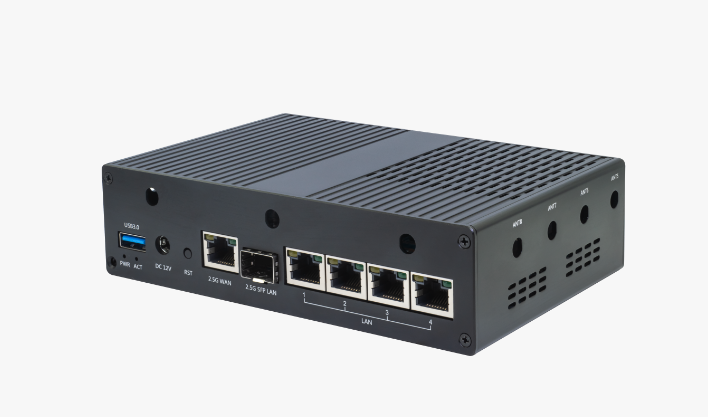
The KSZ9477 driver was added to the cortexa53 kernel to support the
Gateworks Venice product family which has a board with this switch. Now
that the kmod-dsa-ksz9477 driver is available as a package remove the
static configuration ad add the package.
This resolves an issue caused by having the switch driver static and the
PHY driver as a module such that the PHY driver was not registered early
enough to be used causing some errata to not be worked around.
Signed-off-by: Tim Harvey <tharvey@gateworks.com>
Link: https://github.com/openwrt/openwrt/pull/22120
Signed-off-by: Robert Marko <robimarko@gmail.com>
(cherry picked from commit 231553b280)
75bedc5 wireless-regdb: Update regulatory info for Australia (AU) for 2025
a6e5195 wireless-regdb: Update broken link in regulatory.bin(5) manpage
9e8c67f wireless-regdb: Update regulatory info for Malaysia (MY) for 2024
61a4637 wireless-regdb: Update regulatory info for Malaysia (MY) for 2025
5cefe55 wireless-regdb: Update regulatory info for Tunisia (TN) on 6GHz for 2025
1a729ae wireless-regdb: Update regulatory info for Canada (CA) for 2025
ea20dfa wireless-regdb: update regulatory database based on preceding changes
Link: https://github.com/openwrt/openwrt/pull/22150
Signed-off-by: Hauke Mehrtens <hauke@hauke-m.de>
(cherry picked from commit 7c5e329b54)
Due to a missing include, the constant UINT_MAX is undefined. This
fixes issues when building v25.12.0-rc5. Including a newer version of
iproute2 would include the patch, but causes other building issues.
Signed-off-by: Jonas Lochmann <openwrt@jonaslochmann.de>
Link: https://github.com/openwrt/openwrt/pull/22128
Signed-off-by: Hauke Mehrtens <hauke@hauke-m.de>
(cherry picked from commit 5f063d18bd)
The TP-Link EAP683-UR is identical to the EAP683-LR. Add it as ALT0
variant.
Signed-off-by: Stijn Tintel <stijn@linux-ipv6.be>
(cherry picked from commit 708dcca80a)
Add support for the TP-Link EAP683-LR, an AX6000 Ceiling Mount WiFi 6
AP.
Hardware:
* SoC: MediaTek MT7896AV
* RAM: 1GiB DDR4 (Samsung K4A8G165WC-BCTD)
* Flash: 128MiB SPI-NAND (ESMT F50L1G41LB)
* Ethernet: 1x 10/100/1000/2500 Mbps PoE-PD (MaxLinear GPY211C)
* WiFi: MT7976AN/MT7976GN 2.4/5GHz 4T4R
* LEDS: 3x blue connected to a single GPIO line
* Buttons: 1x reset
* BLE/Thread/Zigbee: CC2652
Stock firmware uses a random MAC address for ethernet, label MAC for
2.4 and label MAC + for 5GHz.
Installation via bootloader:
* Solder JST??? connector on J255, alternatively solder wires on the
TP13-TP15 pads. Pinout: TP13: TX, TP14: RX, TP15: GND, TP16: VCC.
The pins for J255 are in the same order.
* Interrupt boot process by repeatedly pressing Ctrl+b during boot
* In the boot menu, select U-Boot console
* Ensure the U-Boot environment variable "tp_boot_idx" is not set:
# setenv tp_boot_idx
# saveenv
* Boot the OpenWrt initramfs:
# tftpboot openwrt-mediatek-filogic-tplink_eap683-lr-initramfs-kernel.bin
# bootm
* copy openwrt-mediatek-filogic-tplink_eap683-lr-squashfs-sysupgrade.bin
to /tmp and install it using sysupgrade
Flashing via OEM firmware is currently not supported. The
tplink-safeloader utility does not recognize the OEM firmware:
DEBUG: can not find fwuphdr
Firmware image partitions:
base size name
Segmentation fault (core dumped)
To revert to the OEM firmware, you can set the U-Boot environment
variable "tp_boot_idx" to 1 via bootloader, or using fw_setenv via
OpenWrt. This should result in booting from the ubi1 partition, which
OpenWrt should not touch. Then use the web interface to upgrade
firmware: System > Firmware Update.
The OEM firmware uses 0x800000 for the runtime_backup partition size.
This causes the following warning:
mtd: partition "runtime_backup" extends beyond the end of device "nmbm_spim_nand" -- size truncated to 0x600000
This is due to the NMBM reserved blocks. Use 0x600000 in our DTS.
Thanks to init Lab's user890104, who soldered jumper wires on the TTL
pads for me so I could have serial console. My soldering skills just
aren't good enough to pull that off without risk damaging things.
Signed-off-by: Stijn Tintel <stijn@linux-ipv6.be>
(cherry picked from commit f1749142ca)
This reverts commit 72f43ac220.
The NVMEM codepath does not perform automatic byte conversion. It can be
fixed but the upstream version is quite different from the local
mac80211 patch. Revert until mac80211 gets updated and the whole mess
can get squared away.
Signed-off-by: Rosen Penev <rosenp@gmail.com>
Link: https://github.com/openwrt/openwrt/pull/22091
Signed-off-by: Robert Marko <robimarko@gmail.com>
(cherry picked from commit b270580dea)
Remove incomplete SPI flash definitions from affected device tree files.
These fragments only defined address-cells and size-cells without any
actual flash configuration (partitions, compatible string, etc.).
After applying openwrt/openwrt#20942 ("kernel: of: fix bad cell count error
for SPI flash node"), the kernel properly handles SPI flash nodes without
requiring these incomplete definitions in device-specific DTS files.
This cleanup eliminates unnecessary code that was likely a workaround for
the previous kernel issue.
Signed-off-by: Mieczyslaw Nalewaj <namiltd@yahoo.com>
Link: https://github.com/openwrt/openwrt/pull/22036
Signed-off-by: Robert Marko <robimarko@gmail.com>
(cherry picked from commit 313d563664)
Ensure that the BSS start_disabled option is always cleared, so that
interfaces come up properly.
Signed-off-by: Felix Fietkau <nbd@nbd.name>
(cherry picked from commit b7cd16dba3)
Without initializing pwd_group, it's set to 0, which is reserved value.
When EAP-PWD is used in wpa_supplicant/eapol_test, next error is seen:
EAP-PWD: Server EAP-pwd-ID proposal: group=0 random=1 prf=1 prep=0
EAP-pwd: Unsupported or disabled proposal
Signed-off-by: Yaroslav Isakov <yaroslav.isakov@gmail.com>
(cherry picked from commit 9d78b2f53c)
Secondary BSSes inherit the alloc value which bypasses
NL80211_ATTR_VIF_RADIO_MASK in nl80211_create_iface() and causes the
kernel to default new interfaces to all radios.
The ucode bss_create fallback fails to correct this because
the interface is already UP.. the kernel rejects SET_INTERFACE with
-EBUSY.
Signed-off-by: Chad Monroe <chad@monroe.io>
(cherry picked from commit 50d3d287e4)
The target name of meraki_mx64-a0 in
target/linux/bcm53xx/image/Makefile used not to be consistent with the
one defined in target/linux/bcm53xx/base-files/lib/upgrade/platform.sh
and generates warning for "Image check failed" during sysupgrade.
This commit would also make the target name for meraki_mx64-a0 to
conform to the openwrt standard.
Signed-off-by: Edward Chow <equu@openmail.cc>
Link: https://github.com/openwrt/openwrt/pull/22034
Signed-off-by: Hauke Mehrtens <hauke@hauke-m.de>
(cherry picked from commit 625f01cd80)
The Linux kernel assumes that the u-boot environment covers the full
partition, but it only covers 0x1000 bytes. Linux checks the CRC and
does this over the full partition. This fails like this:
```
u-boot-env-layout 1f000000.spi:flash@0:partitions:partition@30000:nvmem-layout: Invalid calculated CRC32: 0xfcac8c41 (expected: 0x14e6335a)
u-boot-env-layout 1f000000.spi:flash@0:partitions:partition@30000:nvmem-layout: probe with driver u-boot-env-layout failed with error -22
```
Define the u-boot environment with a length of 0x1000 bytes to calculate
the CRC only over this area.
When replicating the u-boot environment with these parameters it
generates the same CRC:
```
mkenvimage -p 0 -b -s 0x1000 -o output.bin input.txt
```
Fixes: https://github.com/openwrt/openwrt/issues/21696
Fixes: 5e3a602def ("ath79: sitecom,wlrx100: use nvmem")
Link: https://github.com/openwrt/openwrt/pull/22030
Signed-off-by: Hauke Mehrtens <hauke@hauke-m.de>
(cherry picked from commit 68a466b698)
The TARGET_CPPFLAGS contain the include paths used by OpenWrt. This also
contains the including of the fortify sources headers. If they are not
provided, the applications will not use fortify sources headers when
compiled against musl. Add them to cmake builds too. cmake does not
support a special CPPFLGS option [0], just add them to CFLAGS and
CXXFLAGS like we also do it for meson and normal make.
This should fix fortify sources support for cmake builds.
I found this explanation for the flags:
* CFLAGS: C flags, passed during compile AND link
* CXXFLAGS: C++ flags, passed during compile AND link
* CPPFLAGS: pre-processor flags, passed ONLY during compile
* LDFLAGS: linker flags, passed ONLY during link
[0]: https://gitlab.kitware.com/cmake/cmake/-/issues/12928
Link: https://github.com/openwrt/openwrt/pull/22042
Signed-off-by: Hauke Mehrtens <hauke@hauke-m.de>
(cherry picked from commit 7bf8d568f6)
Some applications might activate -Werror=format-nonliteral when building
their application. This breaks fortify headers build. Tell GCC to ignore
such warnings for this code.
This fixes the libubox and ucode build:
```
/include/fortify/stdio.h: In function 'snprintf':
/include/fortify/stdio.h:101:9: error: format not a string literal, argument types not checked [-Werror=format-nonliteral]
101 | return __orig_snprintf(__s, __n, __f, __builtin_va_arg_pack());
| ^~~~~~
/include/fortify/stdio.h: In function 'sprintf':
/include/fortify/stdio.h:110:17: error: format not a string literal, argument types not checked [-Werror=format-nonliteral]
110 | __r = __orig_snprintf(__s, __b, __f, __builtin_va_arg_pack());
| ^~~
/include/fortify/stdio.h:114:17: error: format not a string literal, argument types not checked [-Werror=format-nonliteral]
114 | __r = __orig_sprintf(__s, __f, __builtin_va_arg_pack());
| ^~~
cc1: all warnings being treated as errors
ninja: build stopped: subcommand failed.
```
Link: https://github.com/openwrt/openwrt/pull/22042
Signed-off-by: Hauke Mehrtens <hauke@hauke-m.de>
(cherry picked from commit b237266640)
RIPE Atlas Probe v5 is a network measurement device based on Turris MOX.
u-boot bootscript supports booting both from the original Turris BTRFS
layout and default OpenWrt ext4 boot + root partition layout.
Specifications:
* SoC: Marvell ARMADA 3720
* RAM: 512 MiB, DDR3
* eMMC: 4G
* Ethernet: 1x 1GbE
MAC:
LAN MAC: label on board
Flash instructions:
* For using the default ext4 layout, boot into a live system using
tftpboot in u-boot and flash an OpenWrt SD image onto /dev/mmcblk0.
* For the Turris layout, put the new rootfs into subvolume '@', not
forgetting to add Image, device tree, and boot.scr to /boot.
Misc:
* USB connection is only for power. For UART access use the pin header:
1: GND
2: +1.8V
5: TX
6: RX
* Flashing the image onto Turris Shield won't work. Use Turris MOX image
instead.
Signed-off-by: Tomáš Macholda <tomas.macholda@nic.cz>
Link: https://github.com/openwrt/openwrt/pull/20031
(cherry picked from commit 0271f2ee36)
Signed-off-by: Trix Taiclet <git@trix.moe>
Link: https://github.com/openwrt/openwrt/pull/22048
Signed-off-by: Hauke Mehrtens <hauke@hauke-m.de>
This allows services to dynamically configure MLO interfaces without
using UCI.
Signed-off-by: Felix Fietkau <nbd@nbd.name>
(cherry picked from commit 0a8bccf85d)
This helps for setups where the wifi interfaces are added dynamically
via procd data by avoiding automatically bringing up interfaces with
the default config. Internally, they are treated pretty much the same
by netifd.
Signed-off-by: Felix Fietkau <nbd@nbd.name>
(cherry picked from commit 79a0aebd81)
Add optional chaining when accessing device config in the wifi-iface
loop to handle cases where a referenced device doesn't exist.
Signed-off-by: Felix Fietkau <nbd@nbd.name>
(cherry picked from commit 8b994ed397)
When storing device-level data, wdev_set_data() spread the entire wdev
object into handler_data. Since handler_config.data is set from the
previous handler_data[wdev.name] before each setup, this created
exponentially growing nesting with each reload, eventually causing
"nesting too deep" JSON parse errors.
Fix by initializing cur to a simple object containing only the device
name instead of the entire wdev object.
Signed-off-by: Felix Fietkau <nbd@nbd.name>
(cherry picked from commit 68c2ab8f5f)
Extract survey fetching into get_survey() and store results in iface.survey,
allowing access to full survey info (not just noise) for later use.
Signed-off-by: Felix Fietkau <nbd@nbd.name>
(cherry picked from commit e855f32bdd)
Moved interface discovery and data population into an exported update()
function that can be called on-demand to refresh wireless interface
information. This allows using iwinfo.uc as a library inside daemons.
Signed-off-by: John Crispin <john@phrozen.org>
(cherry picked from commit 26eab84f81)
63413daa8760 uclient-http: fix HTTP authentication after deferred header processing
4fa6fae02f74 uclient-fetch: Extract opt_post variable
8df3120639a4 uclient-fetch: Use HEAD for --spider
0392dfc8e8c4 uclient-fetch: Support of --method, --body-data and --body-file
115c92824b6d uclient-fetch: add OPTIONS request type
a1531e89f6c2 uclient-fetch: support for WebDAV methods
Fixes: https://github.com/openwrt/uclient/issues/14
Signed-off-by: Felix Fietkau <nbd@nbd.name>
(cherry picked from commit 88f3c0eeb0)
b3ee1209a3d0 uclient-http: reset fd to -1 after close in disconnect
9c2ad269c42b uclient-http: fix seq field check to use correct field
80c9bd29c233 uclient-http: fix hang on HTTP to HTTPS redirect
931bbfeb2c92 ucode: fix memory leak when using ssl context
Fixes: https://github.com/openwrt/uclient/issues/11
Fixes: https://github.com/openwrt/uclient/issues/13
Signed-off-by: Felix Fietkau <nbd@nbd.name>
(cherry picked from commit 9d496dfb98)
d324c0503040 libubox: send warnings to stderr
5a65cb5a79b7 libubox: document positional arguments
8c7b489daa02 libubox: add anonymous strings, ints, et al in arrays
5ec7ff2effb3 uloop: use volatile sig_atomic_t for do_sigchld flag
0efa2cd3b74c usock: check SO_ERROR after poll in usock_inet_timeout()
1a73ded9f738 usock: fix timeout handling in usock_inet_timeout()
1aa36ee774c8 usock: implement RFC 8305 Happy Eyeballs for usock_inet_timeout()
Fixes: https://github.com/openwrt/uclient/issues/8
Signed-off-by: Felix Fietkau <nbd@nbd.name>
(cherry picked from commit 7bc8aa492f)
Check /var/run/uci/ before /etc/config/ so that overlay configs
also trigger service reload events.
The overlay directory takes precedence, and uci show already handles
merging overlay + base configuration correctly.
Signed-off-by: John Crispin <john@phrozen.org>
(cherry picked from commit aaa2d9f1e5)
When a remote peer's connection drops (device powered off, unetmsgd
crash, network failure), network_rx_cleanup_state silently removed
the remote publish/subscribe handles without notifying local
subscribers. This meant local clients had no way to detect that a
remote peer had disappeared.
Call handle_publish for each channel where a remote publish handle
is removed during connection cleanup, so local subscribers receive
the publisher change notification and can react accordingly.
Signed-off-by: John Crispin <john@phrozen.org>
(cherry picked from commit 7fd71f2c74)
handle_publish() notifies local subscribers about publisher state
changes. The publish/subscribe handler in network_socket_handle_request()
was calling it for both remote publish and subscribe changes, but
subscriber changes are not relevant to local subscribers.
Guard the handle_publish() calls with a msgtype == "publish" check,
matching the local client paths in unetmsgd-client.uc which already
have this guard.
Signed-off-by: Felix Fietkau <nbd@nbd.name>
(cherry picked from commit e0722d0ac4)
When both peers connect simultaneously, the RX side can authenticate
before the TX handshake completes. network_check_auth() was sending a
ping on the unauthenticated TX channel, which gets rejected by the
remote's pre-auth handler as "Auth failed", killing the connection and
triggering an endless reconnect cycle.
Check chan.auth before interacting with the TX channel. If TX auth
hasn't completed yet, just schedule a reconnect timer - auth_data_cb
already handles state sync when TX auth completes.
Signed-off-by: Felix Fietkau <nbd@nbd.name>
(cherry picked from commit 212040b5ca)
network_close() only closed the listening socket without shutting down
established RX/TX connections. This left remote state in
core.remote_publish/core.remote_subscribe for hosts on the removed
network, causing stale entries in channel listings and failed routing
attempts.
Close all RX and TX channels before removing the network, which also
triggers remote state cleanup via network_rx_socket_close().
Signed-off-by: Felix Fietkau <nbd@nbd.name>
(cherry picked from commit 389a79d972)
The cleanup condition checked != instead of ==, inverting the logic.
This caused two problems:
When an authenticated RX connection disconnected, remote state for that
host was never cleaned up since the stored entry matched the one being
closed.
When a stale unauthenticated connection from a peer closed, any existing
authenticated connection from the same peer was incorrectly deleted and
its remote state wiped.
Signed-off-by: Felix Fietkau <nbd@nbd.name>
(cherry picked from commit f09596f84f)
When a remote peer's publish registrations arrive via RX before the
local TX connection is authenticated, handle_publish fires but the
subscriber can't reach the remote publisher yet since the TX channel
isn't ready.
Suppress publish notifications on the RX side when no authenticated TX
channel exists for the remote host. After TX authentication completes,
re-trigger handle_publish only for topics that the specific peer
publishes and that have local subscribers.
Signed-off-by: John Crispin <john@phrozen.org>
Signed-off-by: Felix Fietkau <nbd@nbd.name>
(cherry picked from commit 3efcf444a1)
The condition checked !data.networks instead of !data.networks[name],
making it always false since data.networks was already validated earlier
in the function. Networks removed from unetd were never closed.
Signed-off-by: Felix Fietkau <nbd@nbd.name>
(cherry picked from commit a2368e0f69)
channel.disconnect() already closes the fd via ubus_shutdown(),
so calling socket.close() afterwards is redundant and causes EBADF.
Signed-off-by: Felix Fietkau <nbd@nbd.name>
(cherry picked from commit bdc3c1a820)
Add a 10-second timeout for outgoing auth requests to prevent
connections from getting stuck when the remote peer goes silent
after the hello handshake but before responding to auth.
Signed-off-by: Felix Fietkau <nbd@nbd.name>
(cherry picked from commit 8a304d051f)
The network may be deleted before the disconnect callback fires.
Check for null to avoid crash when accessing net.tx_channels.
Signed-off-by: Felix Fietkau <nbd@nbd.name>
(cherry picked from commit f631d1576d)
This should not be defaulted to anything in the schema.
What seemed like a minor cleanup actually broke this
as the schema defines a default value already. I did
not notice as I had this explictly set in my config.
Fixes: 70ba7512 ("wifi-scripts: ucode: allow sae_pwe to be modified for AP mode")
Signed-off-by: Rany Hany <rany_hany@riseup.net>
Link: https://github.com/openwrt/openwrt/pull/22043
Signed-off-by: Hauke Mehrtens <hauke@hauke-m.de>
(cherry picked from commit f012e8d50a)
Some Android devices have issues with H2E causing downgrades to PSK
when using WPA2/3. With WPA3 it doesn't work reliably whatsoever.
My Samsung A55/6 for example has the following behavior:
daemon.info hostapd: lan5g: STA <redacted> IEEE 802.11: authenticated
daemon.notice hostapd: SAE: <redacted> indicates support for SAE H2E, but did not use it
daemon.info hostapd: lan2g: STA <redacted> IEEE 802.11: authenticated
daemon.info hostapd: lan2g: STA <redacted> IEEE 802.11: associated (aid 1)
daemon.notice hostapd: lan5g: Prune association for <redacted>
daemon.notice hostapd: lan2g: AP-STA-CONNECTED <redacted> auth_alg=open
daemon.info hostapd: lan2g: STA <redacted> RADIUS: starting accounting session 8234C696AAC1AE7D
daemon.info hostapd: lan2g: STA <redacted> WPA: pairwise key handshake completed (RSN)
daemon.notice hostapd: lan2g: EAPOL-4WAY-HS-COMPLETED <redacted>
This is also brought up in the issue: https://github.com/openwrt/openwrt/issues/9963
Ultimately this allows users to have the option to at the very least
disable H2E.
Unrelated: a minor cleanup was done so that ieee80211w uses set_default instead.
There is no functional change on that front.
Signed-off-by: Rany Hany <rany_hany@riseup.net>
Link: https://github.com/openwrt/openwrt/pull/22021
Signed-off-by: Hauke Mehrtens <hauke@hauke-m.de>
(cherry picked from commit 70ba7512e7)
- uclient-fetch timeout bumped from 5s to 15s. If we do not do this
we get flagged by HE as the update request is expensive and takes
more than 5s to execute. Currently 5s timeout causes uclient-fetch
to be killed prematurely as can be seen by the following log:
10:34:57 user.notice 6in4-henet: update 1/3: timeout
10:35:07 user.notice 6in4-henet: update 2/3: timeout
10:35:17 user.notice 6in4-henet: update 3/3: timeout
10:35:22 user.notice 6in4-henet: update failed
The above is the worst case, what usually happens is:
10:53:59 user.notice 6in4-henet: update 1/3: timeout
10:54:06 user.notice 6in4-henet: update 2/3: abuse
10:54:06 user.notice 6in4-henet: updated
- We now use an exponential backoff starting from 5 seconds.
- Detect ca-bundle so we don't use --no-check-certificates
unnecessarily.
- The while loop was changed so we don't retry unnecessarily
after the final failure.
- Worst-case total time the update operation might take before
bailing out is:
(sum(15 + (5 × (2^(x − 1))), 1, 2) + 15) seconds = 1 min
Signed-off-by: Rany Hany <rany_hany@riseup.net>
Link: https://github.com/openwrt/openwrt/pull/22016
Signed-off-by: Hauke Mehrtens <hauke@hauke-m.de>
(cherry picked from commit 862b46dd8f)
Mark T4240RDB u-boot variants as device-built and avoid installing them into rootfs.
Without this buildbot crashes during package install with:
ERROR: unable to select packages:
u-boot-fsl_T4240RDB-nor (no such package):
required by: world[u-boot-fsl_T4240RDB-nor]
u-boot-fsl_T4240RDB-sdboot (no such package):
required by: world[u-boot-fsl_T4240RDB-sdboot]
Fixes: c5d3d5fe28 ("package: u-boot: initial support for qoriq arch")
Signed-off-by: Pawel Dembicki <paweldembicki@gmail.com>
Link: https://github.com/openwrt/openwrt/pull/21514
Signed-off-by: Robert Marko <robimarko@gmail.com>
(cherry picked from commit 20727f89d5)
Link: https://github.com/openwrt/openwrt/pull/21477
Signed-off-by: Hauke Mehrtens <hauke@hauke-m.de>
This fixes a previous commit for Sophos XG 210r3 which was missing
board_name mapping and adds support for the SG related version and the
XG/SG 230r2 which is the same hardware with a faster processor.
Sophos board_name mapping was modified to support all Sophos
SG/XG devices.
Sophos SG/XG 210r3 and SG/XG 230r2 are rackmounted x86 based firewall
with 6 RJ-45 gigabit ethernet ports (eth0-5) and 2 SFP gigabit ethernet
ports (eth6, eth7) all running Intel NICs supported by igb driver. The 210r3
and 230r2 only differ in the processor used. This board update maps
eth1 (marked as WAN) as wan and eth0 and eth2-5 as lan. Leaving the
two SFP ports unmapped.
Fixes: 4880e8e338 ("x86: add board mapping for Sophos XG 210r3")
Signed-off-by: Raylynn Knight <rayknight@me.com>
Link: https://github.com/openwrt/openwrt/pull/21959
Signed-off-by: Hauke Mehrtens <hauke@hauke-m.de>
(cherry picked from commit d0c82dbb17)
Add dependencies for Turris MOX board modules directly as
DEVICE_PACKAGES. (So that users don't have to add them manually.)
The device uses an SD card for primary storage so space shouldn't be an
issue.
Signed-off-by: Tomáš Macholda <tomas.macholda@nic.cz>
Link: https://github.com/openwrt/openwrt/pull/21151
Signed-off-by: Hauke Mehrtens <hauke@hauke-m.de>
(cherry picked from commit bbfee76d1d)
This was a regression introduced in the recent alignment changes and led
to failures when reading (i.e. 'mkndx') certain packages like follows:
ERROR: python3-botocore-1.31.7-r1.apk: unexpected end of file
It affected packages with a header size greater than the read buffer
size of 128KB but less than 160KB (128KB + (128KB / 4)).
In those cases, we'd attempt a 0 byte read, leading to APKE_EOF.
Based on some tests of files across multiple archs and feeds, it seems
the only packages meeting those criteria were python3-botocore and
golang-github-jedisct1-dnscrypt-proxy2-dev.
Fixes: 64ec08eee1 ("apk: backport upstream fixes for unaligned access")
Signed-off-by: Matt Merhar <mattmerhar@protonmail.com>
Link: https://github.com/openwrt/openwrt/pull/21992
Signed-off-by: Robert Marko <robimarko@gmail.com>
(cherry picked from commit 8c6ed4e927)
Link: https://github.com/openwrt/openwrt/pull/22001
Signed-off-by: Hauke Mehrtens <hauke@hauke-m.de>
Use the added support for generating per device targz rootfs so that images
generated for Methode devices when CONFIG_TARGET_MULTI_PROFILE and
CONFIG_TARGET_PER_DEVICE_ROOTFS are set, we actually get the targz rootfs
that respects DEVICE_PACKAGES.
Currently, buildbot generated images have no networking, LM75 nor I2C
working, as the generated images do not include required kmods that are
listed in DEVICE_PACKAGES.
While at it, there is no need for tar to run in verbose mode.
Fixes: 7dff6a8c89 ("mvebu: uDPU: add sysupgrade support")
Signed-off-by: Robert Marko <robert.marko@sartura.hr>
(cherry picked from commit ef92265772)
Currently, for targets that use the CONFIG_TARGET_ROOTFS_TARGZ a single
rootfs tarball is generated for the subtarget based of $(TARGET_DIR).
However, this means that it does not respect DEVICE_PACKAGES like other
rootfs images.
So, lets augment CONFIG_TARGET_ROOTFS_TARGZ by adding a proper targz fstype
so that per device rootfs is generated under lock.
This is required so that devices that use custom sysupgrade archives like
Methode devices, can actually include a per device rootfs so when building
for multiple devices and with CONFIG_TARGET_PER_DEVICE_ROOTFS set the built
image actually includes the listed DEVICE_PACKAGES.
Signed-off-by: Robert Marko <robert.marko@sartura.hr>
(cherry picked from commit d89cb72c23)
Refresh the patches to make them apply cleanly again.
Fixes: 105eb9ca95 ("kernel: add cake-mq support")
Signed-off-by: Hauke Mehrtens <hauke@hauke-m.de>
(cherry picked from commit 30ac12f4b4)
Bootlog has the following line:
mt7915e 0000:01:00.0: missing precal data, size=403472
It is because precal was not included in the previous NVMEM conversion.
Fix this by adding it to the dts.
Fixes: dbc2923cbe ("mediatek: filogic: convert Acer Predator W6 to use NVMEM framework")
Signed-off-by: Zhi-Jun You <hujy652@protonmail.com>
Link: https://github.com/openwrt/openwrt/pull/21894
Signed-off-by: Hauke Mehrtens <hauke@hauke-m.de>
(cherry picked from commit c62bab29d5)
Bootlog has the following line:
mt7915e 0000:01:00.0: missing precal data, size=403472
It is because precal was not included in the previous NVMEM conversion.
Fix this by adding it to the common dts.
Fixes: dbc2923cbe ("mediatek: filogic: convert Acer Predator W6 to use NVMEM framework")
Signed-off-by: Zhi-Jun You <hujy652@protonmail.com>
Link: https://github.com/openwrt/openwrt/pull/21894
Signed-off-by: Hauke Mehrtens <hauke@hauke-m.de>
(cherry picked from commit eb369b267d)
Bootlog has the following line:
mt798x-wmac 18000000.wifi: missing precal data, size=403472
It is because precal was not included in the previous NVMEM conversion.
Fix this by adding it to the common dtsi.
Fixes: dbc2923cbe ("mediatek: filogic: convert Acer Predator W6 to use NVMEM framework")
Signed-off-by: Zhi-Jun You <hujy652@protonmail.com>
Link: https://github.com/openwrt/openwrt/pull/21894
Signed-off-by: Hauke Mehrtens <hauke@hauke-m.de>
(cherry picked from commit 3f430451b1)
This is patch is identical in form and purpose as the IB-4220-B
patch. We switch over to a single "firmware" partition.
All reference design-based machines are now converted and we can
drop the legacy set-up code.
It turns out that the reference design also uses the flash layout
with a 3072KB kernel so augment the sysupgrade to do the right
thing also here.
Link: https://github.com/openwrt/openwrt/pull/21820
(cherry picked from commit c579e1d04c)
Link: https://github.com/openwrt/openwrt/pull/21973
Signed-off-by: Linus Walleij <linusw@kernel.org>
To optimize the flash usage and to make firmware upgrades
simpler, catenate the three firmware partitions "Kern",
"Ramdisk" and "Application" into one, and use all of this
for the combined MTD-splitted kernel+rootfs.
This works fine as long as the kernel is placed in the
beginning of this firmware partition and we leave the
RedBoot partition as is, so the boot loader still can load
the kernel from the first two RedBoot partitions.
Using the RedBoot partitions "as is" can be considered
harmful, because when you flash to a RedBoot partition the
file size is used for downsizing of the partition and make
firmware upgrades fail if they are larger than the RedBoot
partition size after flashing, despite there is actually
flash there. So overriding with fixed partitions is just
generally a good idea.
Link: https://github.com/openwrt/openwrt/pull/21820
(cherry picked from commit 387752dc76)
Link: https://github.com/openwrt/openwrt/pull/21973
Signed-off-by: Linus Walleij <linusw@kernel.org>
The problem is the following: we have three fixed partitions
in a RedBoot partition for kernel, initrd and rootfs. On the
surface this looks good.
But we have little flash and want to use it efficiently. We want
to use the OpenWrt "firmware" partition scheme where the kernel,
initramfs and sqashfs+jffs2 rootfs is appended, leaving maximum
space for a writeable rootfs.
To do this we will override the existing RedBoot partition table
with one that merges the three separate partitions into one
"firmware" partition.
RedBoot is still booting the system. It still needs to read the
first two parts "as if" these were the kernel and initrd. This
works fine, because the kernel still comes first.
We already have hacks in place to merge the two kernel and initrd
into one binary image and execute it. This is done by prepending
a "prolog" to the kernel that does the necessary copying in
memory and then jumps to execute the kernel.
Since this "prolog" copying routine is just 92 bytes but has 512
bytes allocated, we can trivially create a firmware format that
can be used for splitting the image into kernel and rootfs
using a tagging scheme that can be done directly by scripting
so we don't need any special binary programs.
This splitter implements that idea.
This will be used on the Gemini platform and was tested on the
Raidsonic IB-4220-B.
Link: https://github.com/openwrt/openwrt/pull/21820
(cherry picked from commit 5ac8f14ccb)
Link: https://github.com/openwrt/openwrt/pull/21973
Signed-off-by: Linus Walleij <linusw@kernel.org>
The firmware update file can get big, so instead of extracting
the whole file into the tmp folder potentially running out of space
and make the upgrade fail, stream from tar xvf -O directly to the
mtd write command.
Refactor the checking of partitions and the actual upgrade into
two steps when we are at it.
Link: https://github.com/openwrt/openwrt/pull/21782
(cherry picked from commit 1977301b5f)
Link: https://github.com/openwrt/openwrt/pull/21973
Signed-off-by: Linus Walleij <linusw@kernel.org>
The redboot partition parser gets upset if a partition
doesn't end on an even erase block and marks the partition
read-only.
Fix this by always padding the three firmware items to
128kb.
It is no longer required for the filesystem to be padded
to 6144kb, so we pad this to just 128kb like the kernel
images.
Link: https://github.com/openwrt/openwrt/pull/21750
(cherry picked from commit db7a2fb217)
Link: https://github.com/openwrt/openwrt/pull/21973
Signed-off-by: Linus Walleij <linusw@kernel.org>
The Storlink reference designs sometimes fail upgrade because
not the entire partition is used, so the size isn't equal to
the actual flash space available for the partition.
Fix this by calculating the actual partition sizes by measuring
across the partition offsets instead.
Link: https://github.com/openwrt/openwrt/pull/21750
(cherry picked from commit 04bc0b6d3f)
Link: https://github.com/openwrt/openwrt/pull/21973
Signed-off-by: Linus Walleij <linusw@kernel.org>
The gemini is using split squashfs/jffs2 root filesystems on
all devices, so without CONFIG_BLK_DEV_LOOP the device does
not gain a writeable root filesystem with these boot messages:
mount_root: unable to create loop device
mount_root: jffs2 not ready yet, using temporary tmpfs overlay
and then it never gets out of that. Fix this so we get writeable
rootfs again.
Link: https://github.com/openwrt/openwrt/pull/21748
(cherry picked from commit b8dc7ac9c6)
Link: https://github.com/openwrt/openwrt/pull/21973
Signed-off-by: Linus Walleij <linusw@kernel.org>
The Raidsonic devices do not use a 2048k kernel "Kern"
partition like the Storlink reference designs. Instead
it uses a 3072k partition to fit a slightly
larger kernel.
Sadly the current OpenWrt Gemini kernel is still bigger
than 3072k so we need to make use of the Ramdisk
partition as well.
Create a special "copy-kernel" version that can deal
with the Raidsonic 3072k kernels. Tested on the
Raidsonic IB-4220-B booting kernel v6.12.66.
Fix a copy/paste error in the image generation makefile
while we are at it.
Link: https://github.com/openwrt/openwrt/pull/21686
(cherry picked from commit 691aa70e16)
Link: https://github.com/openwrt/openwrt/pull/21973
Signed-off-by: Linus Walleij <linusw@kernel.org>
The Gemini reference design-derived devices uses a partition
format which is predictable and we can exploit this to offer
some proper upgrade path.
The kernel for these contains a hack to use this partition
format unaltered by combining the partitions "Kern" and "Ramdisk"
to one image with all of the kernel+ramdisk in memory.
Then the "Application" which is used for the rootfs go into its
own partition.
Standard flash layout:
Kern 2048k |
Ramdisk 6144k | = 9216k
Application 6144k | = 15360k
Following the pattern of the factory image we create three
images named zImage, rd.gz and hddapp.tgz (these filenames
are misleading! They are just required by the old firmware.)
and flash each individually with "mtd" during upgrades.
Since the IB-4220-V has a different layout with a bigger kernel
space we parameterize this so we can handle this too. (More
fixes are needed for that device though.)
A way to upgrade older OpenWrt on these platforms to the latest
and greatest will be to copy the file
target/linux/gemini/base-files/lib/upgrade/platform.sh
to /lib/upgrade/platform.sh
on your running system and then run sysupgrade from the image
produced after this patch.
The script is picky to sanity check the partitions before
commencing upgrade.
This was tested with a full sysupgrade on the iTian SQ201.
Link: https://github.com/openwrt/openwrt/pull/21680
(cherry picked from commit 0b0cd4efe2)
Link: https://github.com/openwrt/openwrt/pull/21973
Signed-off-by: Linus Walleij <linusw@kernel.org>
These devices share the same "compatible" in device tree causing some
incompatibilities (sysupgrades, ASU profile identification), assign a
unique "compatible" and "model" to each variant.
Context:
Commit [1] added each variant's dts compatible to the SUPPORTED_DEVICES
field of the other variant to make easy sysupgrades between these
physically indistinguishable devices variants possible.
But there were found three issues which does not allow this:
- the sysupgrade's stricter check still used in some sysupgrade
paths(this check is being replaced(and redundant) with the newer fwtool's
SUPPORTED_DEVICES check using the info in images METADATA), this check
will fail when sysupgrading from a different board_name(compatible dts)
that the image was created for (image profile name).[2]
- ASU needs unique "dts compatible" to identify the devices profile.
- and an ASU's profile identification limitation when several devices from
a common target share SUPPORTED_DEVICES entries.[3]
There is a proposal for these issues but not yet implemented [4][3].
Until these issues are fixed we won't allow "easy" sysupgrades between
these two device variants.
Commit [5] avoided the ASU profile identification limitation but
missed the required two unique dts compatibles in order to make the two
variants fully work, although not allowing easy sysupgrade between them.
[1]: 8d30e07180
[2]: sysupgrade stricter check https://github.com/openwrt/openwrt/issues/20566#issuecomment-3583555482
[3]: ASU proposal https://github.com/openwrt/asu/pull/1533
[4]: allow easy sysupgrade proposal https://github.com/openwrt/openwrt/pull/20947
[5]: b71f4665cd
Fixes: b71f466 ("mediatek: filogic: fix supported_devices list for gl-mt2500")
Fixes: 8d30e07 ("mediatek: filogic: fix for new GL.iNet GL-MT2500/GL-MT2500A hardware revision")
Fixes: https://github.com/openwrt/openwrt/issues/20566
Fixes: https://github.com/openwrt/asu/issues/1525
Signed-off-by: Mario Andrés Pérez <mapb_@outlook.com>
Link: https://github.com/openwrt/openwrt/pull/21842
Signed-off-by: Hauke Mehrtens <hauke@hauke-m.de>
(cherry picked from commit 7aa1f7e814)
When config_change is set during an active setup (e.g. by a concurrent
reconf call), wdev_mark_up() attempted to call setup() while still in
"setup" state. Since setup() requires state "up" or "down", it silently
returned, leaving the state as "setup". The subsequent wdev_setup_cb()
then treated this as a setup failure, triggering an unnecessary
teardown+restart cycle.
Fix this by removing the config_change handling from wdev_mark_up() and
moving it to wdev_setup_cb() instead. wdev_mark_up() now always
transitions to "up" state. When wdev_setup_cb() runs afterwards and
finds the device already "up" with config_change set, it initiates a
clean re-setup from the "up" state where setup() can run.
Signed-off-by: Felix Fietkau <nbd@nbd.name>
(cherry picked from commit 3553eda283)
The xrx200 ethernet driver falls back to a random MAC address on any
error from of_get_ethdev_address(), including -EPROBE_DEFER. When the
MAC address comes from an nvmem layout driver (such as u-boot-env on
NAND), the nvmem cell may not be available yet at first probe attempt.
Fix this by propagating EPROBE_DEFER so the driver probe is deferred
until the nvmem cell becomes available.
Tested on Zyxel P-2812HNU-F1 (NAND, u-boot-env nvmem layout).
Signed-off-by: Burak Aydos <byhexadecimal@gmail.com>
Link: https://github.com/openwrt/openwrt/pull/21861
Signed-off-by: Hauke Mehrtens <hauke@hauke-m.de>
(cherry picked from commit 50e7e5c80d)
Commit 78bf3a5f44 ("realtek: dsa: Fix rate control initialization") enabled
code setting up the "storm control" feature. This casued a speed regression
on rtl838x, reducing the effective max speed per port from line rate to around
500 Mbits/s.
Storm control is a policy feature with a number of input parameters depending
on use case and environment. It is not possible to define a meaningful static
policy in the driver. The problem isn't just the arbitrary limits in the
current code. Such features require userspace interfaces.
Drop this code for now. It wasn't missed while it was disabled.
Fixes: 78bf3a5f44 ("realtek: dsa: Fix rate control initialization")
Link: https://github.com/openwrt/openwrt/issues/21692
Signed-off-by: Bjørn Mork <bjorn@mork.no>
Link: https://github.com/openwrt/openwrt/pull/21877
Signed-off-by: Robert Marko <robimarko@gmail.com>
(cherry picked from commit 3972aeaf7c)
Link: https://github.com/openwrt/openwrt/pull/21900
Signed-off-by: Hauke Mehrtens <hauke@hauke-m.de>
Setup for DSA QOS on RTL839x accesses unitialized memory. For some
reason the handover of the priv structure was realized via global
intermediate variable switch_priv. During refactoring for adbb9a6
("realtek: dsa: rtl83xx: fix init section mismatch") this was not
noticed. Since then RTL839x devices crash during startup.
Fix this by using standard handover via function parameters.
Fixes: e81affb9 ("realtek: dsa: rtl83xx: fix init section mismatch")
Signed-off-by: Markus Stockhausen <markus.stockhausen@gmx.de>
Link: https://github.com/openwrt/openwrt/pull/21703
Signed-off-by: Robert Marko <robimarko@gmail.com>
(cherry picked from commit ac96463944)
Link: https://github.com/openwrt/openwrt/pull/21900
Signed-off-by: Hauke Mehrtens <hauke@hauke-m.de>
Compilation currently spits this message:
WARNING: modpost: vmlinux: section mismatch in reference:
rtl83xx_sw_probe+0x6a4 (section: .text.rtl83xx_sw_probe)
-> rtl83xx_setup_qos (section: .init.text)
That means that we have a "normal" function caller (can be
called during the whole uptime) and a "initialization" function
callee (only available during init.
Fix this and directly fix the unwanted family checks.
Fixes: 012e0091 ("realtek: dsa: avoid use-after-free")
Signed-off-by: Markus Stockhausen <markus.stockhausen@gmx.de>
Link: https://github.com/openwrt/openwrt/pull/21690
(cherry picked from commit adbb9a6423)
Link: https://github.com/openwrt/openwrt/pull/21900
Signed-off-by: Hauke Mehrtens <hauke@hauke-m.de>
The realtek target uses some functions marked __init for initialization.
However, that means they can only be called once when compiled in and
afterwards the memory occupied by them is freed and potentially reused.
Some "impossible" (code at a given location can't crash in the way it
does) crashes can be caused by this because upon re-execution of those
functions, garbage gets executed. Such re-execution can happen for
deferred probes or repeated probes.
Signed-off-by: Carl-Daniel Hailfinger <c-d.hailfinger.devel.2006@gmx.net>
Link: https://github.com/openwrt/openwrt/pull/21504
Signed-off-by: Stijn Tintel <stijn@linux-ipv6.be>
(cherry picked from commit a91c3abe83)
Link: https://github.com/openwrt/openwrt/pull/21900
Signed-off-by: Hauke Mehrtens <hauke@hauke-m.de>
This commit fixes non-working USB port:
---
[ 5.294036] xhci-mtk 11200000.usb: error -EPERM: Failed to get supply 'vbus'
[ 5.301163] xhci-mtk 11200000.usb: error -EPERM: Failed to get regulators
[ 5.307938] xhci-mtk 11200000.usb: probe with driver xhci-mtk failed with error -1
---
While testing the USB power on/off functionality during the previous
commit, I didn't sufficiently test the actual operation of the USB
devices.
Fixes: ff5e66a920 ("mediatek: add support for Routerich BE7200")
Signed-off-by: Mikhail Zhilkin <csharper2005@gmail.com>
Link: https://github.com/openwrt/openwrt/pull/21795
(cherry picked from commit 2651a6ced9)
Signed-off-by: Mikhail Zhilkin <csharper2005@gmail.com>
Link: https://github.com/openwrt/openwrt/pull/21882
Signed-off-by: Hauke Mehrtens <hauke@hauke-m.de>
This commit adds support for the Cudy AP3000 Wall v1.
SoC: MediaTek MT7981b
RAM: 256MiB
Flash: spi-nand spi0.0: 128 MiB
Wifi: MediaTek MT7981 2x2 DBDC 802.11ax 2T2R (2.4 / 5)
LEDs: 1 LED in two colors (red & white)
Buttons: 1 reset, 1 led on/off
Ethernet: 5x 1GbE
Power: PoE powered (standalone)
The stock firmware is a customized variant of OpenWrt, which implements
a signature check that only allows flashing official firmware. Cudy offers
intermediate OpenWrt firmware images on their website [1][2] which do not
implement the signature check. After flashing the intermediate image the
upstream official OpenWrt image can be installed.
The stock firmware can be recovered via TFTP using the U-Boot based boot
loader[3]. Set up a TFTP server on your computer with IP 192.168.1.88/24
serving the stock firmware from Cudy's website renamed to "recovery.bin".
Press and hold the reset button while powering on the device, wait for the
TFTP server to send the recovery.bin file, then release the reset button.
The router will take a couple of minutes to reboot and set up the stock
firmware.
[1] https://www.cudy.com/blogs/faq/openwrt-software-download
[2] https://drive.google.com/drive/folders/1BKVarlwlNxf7uJUtRhuMGUqeCa5KpMnj
[3] https://www.cudy.com/en-us/blogs/faq/how-to-recovery-the-cudy-router-from-openwrt-firmware-to-cudy-official-firmware
Signed-off-by: Derek Denk <derek.denk@live.com>
Link: https://github.com/openwrt/openwrt/pull/21266
(cherry picked from commit afad4c71f8)
Link: https://github.com/openwrt/openwrt/pull/21890
Signed-off-by: Hauke Mehrtens <hauke@hauke-m.de>
Bc-bocun Chen of MediaTek has discovered a memory leak in the error path
in our downstream patch for mtk_eth_soc which adds support for the 10G
PCS and PHY paths of the MT7988 SoC.
Fix this by freeing the at this point already allocated netdev resources
before returning the error.
Fixes: 4cb6bd9a6d ("mediatek: switch to pending XFI 10G Ethernet drivers")
Reported-by: Bc-bocun Chen <bc-bocun.chen@mediatek.com>
Signed-off-by: Daniel Golle <daniel@makrotopia.org>
(cherry picked from commit 4d71c767c4)
The D-Link DIR-1360 A1 is an AC1300 router based on the MT7621AT SoC.
Specifications :-
* SoC: MediaTek MT7621AT
* RAM: 256 MB DDR3
* Flash: 128 MB SPI NAND (Winbond W29N01HV)
* WiFi: MT7615D (2.4 GHz + 5 GHz DBDC)
* Ethernet: 5x 10/100/1000 Mbps (1x WAN, 4x LAN)
* USB: 1x USB 3.0
* Buttons: Reset, WPS
* LEDs: Power (White/Orange), Internet (White/Orange), USB, 2.4G/5G WLAN
MAC addresses are retrieved from the 'factory' partition via NVMEM.
LAN: 0xe000 (gmac0)
WAN: 0xe006 (gmac1)
WLAN: 0xe00c (pcie0)
Flash Instruction :-
1-Set a static IP on your PC (e.g., 192.168.0.10, Gateway 192.168.0.1).
2- Power off the router and connect your PC to a LAN port.
3- Hold the Reset button and power on the router; continue holding for 5 seconds.
4- Access the Recovery UI at http://192.168.0.1 in your browser.
5- Upload the OpenWrt factory.bin image and wait for the reboot.
With these definitions in place, the DIR-1360 A1 boots reliably, exposes all hardware features correctly, and can be flashed via both the OEM recovery interface and standard OpenWrt upgrade paths.
Signed-off-by: Aryaman Srivastava <aryamansrivastava895@gmail.com>
Link: https://github.com/openwrt/openwrt/pull/21616
(cherry picked from commit 7a8e2efed5)
Link: https://github.com/openwrt/openwrt/pull/21826
Signed-off-by: Hauke Mehrtens <hauke@hauke-m.de>
The ucode wifi-scripts unconditionally set ieee80211w=1 for psk-sae
and eap-eap2 auth types, ignoring any user-configured value. This
caused ieee80211w=2 (MFP required) to be silently downgraded to 1
(MFP optional) when using sae-mixed encryption.
Change the logic to only set the default of 1 when ieee80211w is not
already configured by the user.
Fixes: https://github.com/openwrt/openwrt/issues/21751
Signed-off-by: Felix Fietkau <nbd@nbd.name>
(cherry picked from commit 1bbb60184d)
Signed-off-by: Hauke Mehrtens <hauke@hauke-m.de>
The u-boot-env partition on the Zyxel P-2812HNU-F1 is 128 KiB but
the actual environment data is only 8 KiB (0x2000 bytes). Without
the env-size property, the u-boot,env nvmem layout driver assumes
env-size equals the full partition size and computes an incorrect
CRC32 over the entire 128 KiB, causing all nvmem cell reads to fail
silently.
Add env-size = <0x2000> so the CRC32 is computed over the correct
8 KiB region, allowing nvmem-cells (such as ethaddr) to be read
properly by the kernel.
Signed-off-by: Burak Aydos <byhexadecimal@gmail.com>
Link: https://github.com/openwrt/openwrt/pull/21780
Signed-off-by: Robert Marko <robimarko@gmail.com>
(cherry picked from commit 6952844436)
Signed-off-by: Hauke Mehrtens <hauke@hauke-m.de>
Add pending uboot support for the HINLINK H28K.
This fixes the rockchip build again.
Signed-off-by: Chukun Pan <amadeus@jmu.edu.cn>
(cherry picked from commit 384127320e)
Signed-off-by: Hauke Mehrtens <hauke@hauke-m.de>
Migration of the eDPU DTS to upstream one broke the eDPU plus model
since the required ethernet aliases are missing and U-Boot then cannot
find the required ethernet nodes.
So, after sending the required fix upstream, lets apply it in OpenWrt
as well.
Fixes: 9852dda410 ("mvebu: move DTS diff into a patch for Methode uDPU")
Signed-off-by: Robert Marko <robert.marko@sartura.hr>
(cherry picked from commit 3353827fb5)
The mobility_domain value generated by ucode differed from the previous
shell script implementation. The legacy shell script used `echo` on the
SSID, which appended a trailing newline.
To maintain roaming compatibility with pre-25.12 releases and OpenWrt
forks in default configuration, update the ucode logic to include this
newline character when generating the default value.
Fixes: #21731
Signed-off-by: Youfu Zhang <zhangyoufu@gmail.com>
Link: https://github.com/openwrt/openwrt/pull/21732
Signed-off-by: Hauke Mehrtens <hauke@hauke-m.de>
(cherry picked from commit 1d0e2859c5)
Add the loop module and mkfs tool to use f2fs/ext4
based overlays. This fixes the following bug:
mount_root: unable to create loop device
mount_root: no usable overlay filesystem found, using tmpfs overlay
Fixes: 99545b4bb1 ("d1: add new target")
Signed-off-by: Chukun Pan <amadeus@jmu.edu.cn>
(cherry picked from commit 1e7950a45d)
The USB of most d1 devices works in otg or peripheral mode.
Enable this feature to use usbgadget and fix musb errors:
musb-sunxi 4100000.usb: Invalid or missing 'dr_mode' property
musb-sunxi 4100000.usb: probe with driver musb-sunxi failed with error -22
Fixes: 99545b4bb1 ("d1: add new target")
Signed-off-by: Chukun Pan <amadeus@jmu.edu.cn>
(cherry picked from commit 81580cc92c)
KERNEL_DCB was introduced in 40f1db9cb1, however the dcb utility is not
enabled for iproute2. Although DCB is not generally available among
Ethernet cards, not having the dcb utility renders it completely
unchangeable.
On aarch64, it takes ~85.3KiB.
Signed-off-by: David Yang <mmyangfl@gmail.com>
Link: https://github.com/openwrt/openwrt/pull/21606
Signed-off-by: Hauke Mehrtens <hauke@hauke-m.de>
(cherry picked from commit f0f5525b75)
The `syn_flood` option name is deprecated, `synflood_protect` should
be used instead. firewall3 and firewall4 both support this option since
a long time. LuCI already replaces the option name.
0abcb39b62
Suggested-by: rparge in OpenWrt forum
Link: https://github.com/openwrt/openwrt/pull/21642
Signed-off-by: Hauke Mehrtens <hauke@hauke-m.de>
(cherry picked from commit 2ae350b725)
Now that DCB is enabled by default, it makes sense to include it on
lan969x.
While we are here, lets include ip-bridge as these devices are switches
and the Busybox applet does not expose enough functionality.
These devices have no space constraints.
Signed-off-by: Robert Marko <robert.marko@sartura.hr>
(cherry picked from commit 51710e9dd4)
Switchdev driver used by microchipsw supports DCB and has not storage
constraints, so enable kernel and driver DCB support by default.
Signed-off-by: Robert Marko <robert.marko@sartura.hr>
(cherry picked from commit 4c0c7442db)
Update the DTS to the latest pending upstream version, it looks like this
should get merged soon upstream.
Signed-off-by: Robert Marko <robert.marko@sartura.hr>
(cherry picked from commit 19e097e18a)
Interrupts for DWC3 node were completely mixed up - SPI interrupt 62 is
not listed in reference manual at all. It was also causing dtbs_check
warnings:
ipq5018-rdp432-c2.dtb: usb@8af8800 (qcom,ipq5018-dwc3): interrupt-names:0: 'pwr_event' was expected
ipq5018-rdp432-c2.dtb: usb@8af8800 (qcom,ipq5018-dwc3): interrupt-names: ['hs_phy_irq'] is too short
Warning itself was introduced by commit 53c6d854be4e ("dt-bindings: usb:
dwc3: Clean up hs_phy_irq in binding"), but this was trying to bring
sanity to the interrupts overall, although did a mistake for IPQ5018.
IPQ5018 does not have QUSB2 PHY and its interrupts should rather match
ones used in IPQ5332.
Correct it by using interrupts matching the bindings and reference
manual.
Signed-off-by: Krzysztof Kozlowski <krzysztof.kozlowski@oss.qualcomm.com>
Signed-off-by: George Moussalem <george.moussalem@outlook.com>
Link: https://github.com/openwrt/openwrt/pull/21454
Signed-off-by: Robert Marko <robimarko@gmail.com>
(cherry picked from commit e1a9636959)
In IPQ5018, the reference clock to the CMN PLL block from the on-board
Wi-Fi has its divider set to 2. This divider wasn't taken into
consideration when calculating the CMN PLL clock rate which meant the
resulting clock rate was doubled.
With the reference clock divider being accounted for in the driver,
correct the assigned clock rate to 4.8GHz.
Signed-off-by: George Moussalem <george.moussalem@outlook.com>
Link: https://github.com/openwrt/openwrt/pull/21453
Signed-off-by: Robert Marko <robimarko@gmail.com>
(cherry picked from commit d6ab889e45)
Add missing dt-bindings/include files needed for compilation of driver.
Enable compilation of the CMN PLL driver by adding the symbols to
Kconfig and Makefile.
Fixes: 468975a985 ("qualcommax: ipq50xx: backport upstreamed patches for adding ipq5018 CMN PLL support")
Signed-off-by: George Moussalem <george.moussalem@outlook.com>
Link: https://github.com/openwrt/openwrt/pull/21453
Signed-off-by: Robert Marko <robimarko@gmail.com>
(cherry picked from commit fdce6f99be)
This is tri-band WiFi6E capable router. Also Zyxel Nebula managed so no real local GUI. To open device 4 screws must be located uder the label.
Four latches are on front and two on each side. Better start from ethernet port side where 3 small latches are easy to handle.
FCC shows It's identical to WSQ65 sold as Zyxel Multy M6E but that's nowhare to be found yet. WSQ65 is not covered by this PR
Speficiations:
* SoC: Qualcomm IPQ5018
* RAM: 1GB DDR3
* Flash: Winbond W25N02KWZEIR 256MB
* UART: PCB "J3" is located left from front LED strip
(VCC/TX/RX/ /GND) 3.3V 115200n8
* Wi-Fi1: IPQ5018 (2x2 2.4 Ghz 802.11b/g/n/ax)
* Wi-Fi2: QCN6102 (2x2:2 5 Ghz 802.11an/ac/ax)
* Wi-Fi3: QCN6122 (2x2:2 6 Ghz 802.11an/ac/ax)
* Ethernet: QCA8337 4xLAN 1Gbit / 1xWAN 1Gbit
* Buttons: WPS , Reset
* LEDs: 13 in total
RGB power, RGB wan, RGB status (cloud), RGB wifi, Green wps
* FCCID: I8803891
*Flash Instructions starts with getting root:
connect uart to J3 connector next to the front LEDs
go to failsafe when this shows up in log:
"Press the [f] key and hit [enter] to enter failsafe mode"
execute:
mount_root
passwd -d root
reboot
logon as root:
look for 'Please press Enter to activate this console.'
login is root password is empty
execute:
fw_setenv DebugFlag=0x1
fw_setenv bootdelay=0x2
passwd -d root
backup ubi partition "rootfs" into safe space
reboot
*OpenWrt installation
stop uboot and execute:
setenv ipaddr 192.168.1.1
setenv serverip 192.168.1.10
tftpboot *-factory.ubi
flash rootfs
reset
or:
tftpboot *-initramfs-uImage.itb
bootm
use sysupgrade as usual
*restore OEM from backup
stop uboot and execute:
setenv ipaddr 192.168.1.1
setenv serverip 192.168.1.10
tftpboot *-initramfs-uImage.itb
bootm
transfer rootfs.bin backup and execute:
ubiformat /dev/mtd16 -y -f /tmp/rootfs.bin
Signed-off-by: Robert Senderek <robert.senderek@10g.pl>
Link: https://github.com/openwrt/openwrt/pull/21042
(cherry picked from commit f948f71300)
Link: https://github.com/openwrt/openwrt/pull/21440
Signed-off-by: Robert Marko <robimarko@gmail.com>
On some SoCs like RK3399, U-Boot no longer export the serial
address in $stdout variable, it has been changed to something like
`stdout=serial,vidconsole` since video supported was added. So
detect $soc variable instead, this also makes the script more clear.
Addtional note: rk3566 is reported as rk3568, rk3582 is reported as
rk3588 in $soc.
Signed-off-by: Tianling Shen <cnsztl@immortalwrt.org>
Link: https://github.com/openwrt/openwrt/pull/21610
Signed-off-by: Hauke Mehrtens <hauke@hauke-m.de>
(cherry picked from commit 609deedd87)
Hardware:
- RK3528 SoC
- 1x USB 2.0
- 8/32GB eMMC
- 1/2/4GB LPDDR4
- 1x 1GbE RTL8111H
- 1x 1GbE RTL8211F
- MicroSD card slot
Installation:
Use dd or balenaEtcher to flash the firmware.
Note:
The RK3528 SoC does not support MSI-X, so it can't
adjust the interrupts of r8169 to other CPU cores.
Signed-off-by: Chukun Pan <amadeus@jmu.edu.cn>
(cherry picked from commit e8997e7e03)
Use the unique MAC address in EEPROM for eth0.
The MAC address of RTL8111H (eth1) is correct.
Signed-off-by: Chukun Pan <amadeus@jmu.edu.cn>
(cherry picked from commit 7a07d38f33)
The WAN(eth1) port LED on the Radxa E20C is completely off.
Since the r8169 driver supports configuring LEDs, using it.
Signed-off-by: Chukun Pan <amadeus@jmu.edu.cn>
(cherry picked from commit dccfc10957)
Broadcom BCM43602 needs certain NVRAM variables to be set to function. Add
a quirk for it and add ASUS RT-AC3200 which has got Broadcom BCM43602 to
the quirk. Thanks to Tom Brautaset for finding the needed variables.
Signed-off-by: Chester A. Unal <chester.a.unal@arinc9.com>
(cherry picked from commit cd2ad6c464)
Add ASUS RT-AC3200 and ASUS RT-AC5300 to the set wireless LED behaviour
quirk. ASUS RT-AC3200's wireless chip is different than ASUS RT-AC5300's,
the environment variables for it are 0:ledbh10 and 1:ledbh10.
Signed-off-by: Chester A. Unal <chester.a.unal@arinc9.com>
(cherry picked from commit 64b6293eb7)
ASUS RT-AC3200 and ASUS RT-AC5300 are AC3200 and AC5300 routers,
respectively, featuring 5 Ethernet ports over the integrated Broadcom
switch.
ASUS RT-AC3200 hardware info:
* Processor: Broadcom BCM4709A0 dual-core @ 1.0 GHz
* Switch: BCM53012 in BCM4709A0
* DDR3 RAM: 256 MB
* Flash: 128 MB
* 2.4GHz: BCM43602 3x3 single chip 802.11b/g/n SoC
* 5GHz: BCM43602 3x3 two chips 802.11a/n/ac SoC
* Ports: 4 LAN Ports, 1 WAN Port
ASUS RT-AC5300 hardware info:
* Processor: Broadcom BCM4709C0 dual-core @ 1.4 GHz
* Switch: BCM53012 in BCM4709C0
* DDR3 RAM: 512 MB
* Flash: 128 MB
* 2.4GHz: BCM4366 4x4 single chip 802.11b/g/n SoC
* 5GHz: BCM4366 4x4 two chips 802.11a/n/ac SoC
* Ports: 4 LAN Ports, 1 WAN Port
Flashing instructions:
* Boot to CFE Recovery Mode by holding the reset button while power-on.
* Connect to the router with an ethernet cable.
* Set IPv4 address of the computer to 192.168.1.2 subnet 255.255.255.0.
* Head to http://192.168.1.1.
* Reset NVRAM.
* Upload the OpenWrt image.
CFE bootloader may reject flashing the image due to image integrity check.
In that case, follow the instructions below.
* Rename the OpenWrt image as firmware.trx.
* Run a TFTP server and make it serve the firmware.trx file.
* Run the URL below on a browser or curl.
http://192.168.1.1/do.htm?cmd=flash+-noheader+192.168.1.2:firmware.trx+flash0.trx
Signed-off-by: Chester A. Unal <chester.a.unal@arinc9.com>
(cherry picked from commit 4284d56568)
WiFi 6E (802.11ax) clients cannot discover 6GHz APs operating at
320MHz because the HE Operation element contains uninitialized
center frequency values.
For EHT320 mode, the code sets eht_oper_centr_freq_seg0_idx but not
the corresponding HE values. Later, the HE values are copied from
VHT values, but VHT is not used on 6GHz, leaving he_oper_chwidth
and he_oper_centr_freq_seg0_idx at 0. This causes WiFi 6E clients
to see incorrect channel width information, making the AP invisible
to them during scanning.
Fix this by:
1. Setting he_oper_chwidth to 3 (160MHz) for EHT320 mode
2. Computing he_oper_centr_freq_seg0_idx based on the 160MHz segment
that contains the primary channel
3. Preserving these pre-set values instead of overwriting them with
uninitialized VHT values
WiFi 7 clients continue to see 320MHz operation via the EHT Operation
element, while WiFi 6E clients can now discover and connect at 160MHz.
Signed-off-by: Ryan Chen <rchen14b@gmail.com>
Link: https://github.com/openwrt/openwrt/pull/21588
Signed-off-by: Robert Marko <robimarko@gmail.com>
(cherry picked from commit a8bdb1e6d6)
Due to PTP conflicts with CONFIG_ALL_KMODS which causes the end images
to end up with no switchdev driver included, lets switch to using the
switchdev and PHY drivers as modules instead.
Fixes: 88a404a2d1 ("microchipsw: add support for Microchip LAN969x switches")
Signed-off-by: Robert Marko <robert.marko@sartura.hr>
(cherry picked from commit b300a9e63d)
Package the Microchip SparX-5 switchdev driver as a module.
Signed-off-by: Robert Marko <robert.marko@sartura.hr>
(cherry picked from commit 9a4c6550a7)
This adds support for the Airpi AP3000M 5G CPE based on MediaTek MT7981B.
Specifications:
SoC: MediaTek MT7981B (dual-core ARM Cortex-A53)
RAM: 1GB DDR4
Storage: 8GB or 16GB eMMC
Ethernet: 1x 2.5GbE LAN, 1x 1GbE WAN
Wireless: 2.4GHz/5GHz 802.11ax
Buttons: Reset, WPS
LEDs: System, 2.4GHz WiFi, 5GHz WiFi
Cooling: PWM-controlled fan
Expansion: M.2 slot for 5G modem
The factory partition (mmcblk0p2) is empty in stock firmware.
Execute via SSH before flashing OpenWrt:
```
dd if=/lib/firmware/MT7981_iPAiLNA_EEPROM.bin of=/dev/mmcblk0p2 bs=4k count=1
MAC addresses
```
Fixed MAC addresses are derived by macaddr_generate_from_mmc_cid.
Installation via U-Boot web page
Set static IP 192.168.88.2/255.255.255.0 on your computer.
Connect to the 1GbE port (WAN) and hold the reset button while booting the device. Wait for about 6 seconds, and release the reset button.
Open U-boot web page on your browser at http://192.168.88.1
Select the OpenWRT sysupgrade image, upload it, and start the upgrade.
Wait for automatic reboot.
Installation via sysupgrade
Flash the sysupgrade file via LuCI upgrade page without saving the settings.
Signed-off-by: Fil Dunsky <filipp.dunsky@gmail.com>
Link: https://github.com/openwrt/openwrt/pull/21397
(cherry picked from commit: 6ff4557317)
Link: https://github.com/openwrt/openwrt/pull/21601
Signed-off-by: Hauke Mehrtens <hauke@hauke-m.de>
Now that there is a consumer board available, lets drop source-only so that
buildbots provide official images.
Signed-off-by: Robert Marko <robert.marko@sartura.hr>
Microchip ATF depends on Ruby scripts to generate the FWU monitor HTML
and more, so make sure that host Ruby is available.
We also need to call the scripts directly via Ruby executable as shebang
wont work due to lack of Ruby in the Buildbot container.
Fixes: 5205c0c426 ("microchipsw: lan969x: add Microchip EV23X71A")
Signed-off-by: Robert Marko <robert.marko@sartura.hr>
(cherry picked from commit 082fe669f7)
LibreSSL 3.9+ has dropped support for X509V3 extension API so cert_create
tool does not compile against it at all.
This was hidden by the fact that it was compiling against OpenSSL on my
host which still has that API, however we do not ship libssl-dev in the
Buildbot containers so compiling against distro OpenSSL is not possible.
So, after a long time trying to find any docs on that API I resorted to
LLM(Gemini 3 Pro) to get it to compile.
Our libcrypto is linked against pthread so we must pass -lpthread as well
for cert_tool.
Fixes: 5205c0c426 ("microchipsw: lan969x: add Microchip EV23X71A")
Signed-off-by: Robert Marko <robert.marko@sartura.hr>
(cherry picked from commit 410277ca12)
If an apk package with an ABI version doesn't have priority set, it
can't be selected by its base name:
$ make manifest PACKAGES='libustream-openssl libsqlite3'
ERROR: unable to select packages:
libsqlite3 (virtual):
note: please select one of the 'provided by'
packages explicitly
provided by: libsqlite3-0
required by: world[libsqlite3]
libustream-openssl (virtual):
note: please select one of the 'provided by'
packages explicitly
provided by: libustream-openssl20201210
required by: world[libustream-openssl]
Look up the ABI version in apk index and if present, add an ABI suffix
to all requested packages.
Signed-off-by: George Sapkin <george@sapk.in>
Link: https://github.com/openwrt/openwrt/pull/21449
(cherry picked from commit 31cdd13d22)
Link: https://github.com/openwrt/openwrt/pull/21547
Signed-off-by: Robert Marko <robimarko@gmail.com>
If a package has an ABI version defined, set priority to 10. The enables
packages with an ABI version to be installed by their base name instead
of a name and an ABI version, e.g.:
libfoo3, where 3 is the ABI version can be installed by just libfoo.
This affects manual installation only, as the dependency resolution
takes care of ABI versions.
Refactor apk priority logic into a helper define.
Signed-off-by: George Sapkin <george@sapk.in>
Link: https://github.com/openwrt/openwrt/pull/21369
(cherry picked from commit 470e030a5e)
Link: https://github.com/openwrt/openwrt/pull/21547
Signed-off-by: Robert Marko <robimarko@gmail.com>
Due to the way apk lifecycle scripts are defined, they might end up with
multiple shebangs. Remove them.
Before:
post-upgrade: |
#!/bin/sh
export PKG_UPGRADE=1
#!/bin/sh
[ "${IPKG_NO_SCRIPT}" = "1" ] && exit 0
[ -s ${IPKG_INSTROOT}/lib/functions.sh ] || exit 0
. ${IPKG_INSTROOT}/lib/functions.sh
export root="${IPKG_INSTROOT}"
export pkgname="adblock-fast"
add_group_and_user
default_postinst
#!/bin/sh
# check if we are on real system
if [ -z "${IPKG_INSTROOT}" ]; then
/etc/init.d/adblock-fast enable
fi
exit 0
After:
post-upgrade: |
#!/bin/sh
export PKG_UPGRADE=1
[ "${IPKG_NO_SCRIPT}" = "1" ] && exit 0
[ -s ${IPKG_INSTROOT}/lib/functions.sh ] || exit 0
. ${IPKG_INSTROOT}/lib/functions.sh
export root="${IPKG_INSTROOT}"
export pkgname="adblock-fast"
add_group_and_user
default_postinst
# check if we are on real system
if [ -z "${IPKG_INSTROOT}" ]; then
/etc/init.d/adblock-fast enable
fi
exit 0
Fixes: b52e897 ("include/package-pack: remove leading whitespace from install scripts")
Fixes: 03880e2 ("include/package-pack: add missing apk package lifecycle events")
Signed-off-by: George Sapkin <george@sapk.in>
Link: https://github.com/openwrt/openwrt/pull/21369
(cherry picked from commit 1dec4683f6)
Link: https://github.com/openwrt/openwrt/pull/21547
Signed-off-by: Robert Marko <robimarko@gmail.com>
Same as for the base package name, when a package has an ABI version,
provide both unversioned provider in addition to one with ABI version
and version.
So for each provide instead of providing only:
$provide$ABI_version=$package_version
now provide:
$provide $provide$ABI_version=$package_version
When a provide ends in a number, the ABI version will be prefixed with
a - sign, e.g.: provide1-0
Fixes: 18029977 ("build: fix apk packaging and ABI-versioning")
Signed-off-by: George Sapkin <george@sapk.in>
Link: https://github.com/openwrt/openwrt/pull/21369
(cherry picked from commit 952c918028)
Link: https://github.com/openwrt/openwrt/pull/21547
Signed-off-by: Robert Marko <robimarko@gmail.com>
Don't mark all provides as virtual when ALTERNATIVES is set.
Automatically marking all provides as virtual prevents variants from
conflicting between each other. Alternatives have nothing to do with
packaging and packages are expected to manage their own provides.
Updated internal provides explanation.
Remove unnecessary back slashes from FormatProvides.
Fixes: 18029977 ("build: fix apk packaging and ABI-versioning")
Signed-off-by: George Sapkin <george@sapk.in>
Link: https://github.com/openwrt/openwrt/pull/21369
(cherry picked from commit 2a1977a4b8)
Link: https://github.com/openwrt/openwrt/pull/21547
Signed-off-by: Robert Marko <robimarko@gmail.com>
Remove default provider priority since packages are expected to
explicitly declare virtual provides and set default variants. With
default priority some package variants without PROVIDES and not marked
as default end up with priority 0 and are not picked for installation.
Before the change dnsmasq-dhcpv6 is selected for dnsmasq, because the
former has higher priority:
name <dnsmasq> selected from selectable list
select_package: dnsmasq (requirers=1, autosel=1, iif=0, order_id=0x4000005f)
consider dnsmasq-2.91-r2 iif_triggered=0, tag_ok=1, selectable=1, available=1, flags=0x0, provider_priority=0, installed=0
prefer existing package
choose as new provider
consider dnsmasq-dhcpv6-2.91-r2 iif_triggered=0, tag_ok=1, selectable=1, available=1, flags=0x0, provider_priority=1, installed=0
prefer highest declared provider priority
choose as new provider
consider dnsmasq-full-2.91-r2 iif_triggered=0, tag_ok=1, selectable=1, available=1, flags=0x0, provider_priority=1, installed=0
prefer lowest available repository
selecting: dnsmasq-dhcpv6-2.91-r2, available: 1
assign dnsmasq-dhcpv6 to dnsmasq-dhcpv6-2.91-r2
assign dnsmasq to dnsmasq-dhcpv6-2.91-r2
disqualify_package: dnsmasq-2.91-r2 (conflicting provides)
disqualify_package: dnsmasq-full-2.91-r2 (conflicting provides)
apply_constraint: libc
apply_constraint: provider: libc-1.2.5-r5: 1
After the change dnsmasq is selected for dnsmasq based on
lexicographical order:
name <dnsmasq> selected from selectable list
select_package: dnsmasq (requirers=1, autosel=1, iif=0, order_id=0x4000005f)
consider dnsmasq-2.91-r2 iif_triggered=0, tag_ok=1, selectable=1, available=1, flags=0x0, provider_priority=0, installed=0
prefer existing package
choose as new provider
consider dnsmasq-dhcpv6-2.91-r2 iif_triggered=0, tag_ok=1, selectable=1, available=1, flags=0x0, provider_priority=0, installed=0
prefer lowest available repository
consider dnsmasq-full-2.91-r2 iif_triggered=0, tag_ok=1, selectable=1, available=1, flags=0x0, provider_priority=0, installed=0
prefer lowest available repository
selecting: dnsmasq-2.91-r2, available: 1
assign dnsmasq to dnsmasq-2.91-r2
disqualify_package: dnsmasq-dhcpv6-2.91-r2 (conflicting provides)
disqualify_package: dnsmasq-full-2.91-r2 (conflicting provides)
apply_constraint: libc
apply_constraint: provider: libc-1.2.5-r5: 1
Fixes: dea8397 ("include/package-pack: add default 'provider_priority' for APK packages")
Signed-off-by: George Sapkin <george@sapk.in>
Link: https://github.com/openwrt/openwrt/pull/21369
(cherry picked from commit 49fc319033)
Link: https://github.com/openwrt/openwrt/pull/21547
Signed-off-by: Robert Marko <robimarko@gmail.com>
- adopted MTD partition size increase from 64M to 128M
-> this allows boot to complete
- moved MAC addressing stuff out of partition definitions
- all MAC addressing stuff is in .dtsi
Specifications:
SoC: MediaTek MT7981B
RAM: 256MiB
Flash: Winbond SPI-NAND 128 MiB
Switch: 1 WAN, 3 LAN (Gigabit) MediaTek MT7531
Buttons: Reset, Mesh
Power: DC 12V 1A
WiFi: MT7981B 2.4Ghz & 5.8Ghz
Led Layout from bottom to top:
Power
Mesh (RGB Led, user controllable, default set to OpenWrt Status)
WLAN 2 GHz (user controllable)
WAN (user controllable)
LAN3
LAN2
LAN1
WLAN 5 GHz (Not on front panel but blinks through enclosure,
user controllable)
Buttons:
Reset
Mesh (user controllable, no default function)
Installation:
A. Through U-Boot menu:
- Prepare your connecting computer to use a static IP in
network 192.168.1.0/24
- Power down the router and hold in the Reset button.
- While holding in the button power up the router again.
- Hold the button in for 10 seconds and then release.
- Use your browser to go to 192.168.1.1
- If you see a GUI allowing for flashing firmware then
you got the right model.
- Upload the sysupgrade file.
Note: Recovery GUI can be used to recover from an incorrect
firmware flash.
B. Through OpenWrt Dashboard:
If your router comes with OpenWrt preinstalled
(modified by the seller), you can easily upgrade
by going to the dashboard (192.168.1.1) and then
navigate to System -> Backup/Flash firmware,
then flash the firmware
MAC Addresses were found in Factory partition:
offset 0x4 F8:5E:3C:xx:xx:aa --> Router Label -2
offset 0xa F8:5E:3C:xx:xx:bb --> Router Label -1
offset 0x24 F8:5E:3C:xx:xx:cc --> Router Label +1
offset 0x2a F8:5E:3C:xx:xx:yy --> printed on Router Label
Signed-off-by: Jörg Seitz <github.joeterminal@xoxy.net>
Link: https://github.com/openwrt/openwrt/pull/19823
(cherry picked from commit 479f1403f2)
Link: https://github.com/openwrt/openwrt/pull/21464
Signed-off-by: Hauke Mehrtens <hauke@hauke-m.de>
- Use .dtsi for old z8103ax featuring a 64M Nand
- Prepare .dtsi for model C of z8103ax featuring a 128M Nand
This .dtsi is supposed to match boards labeled as hardware
revision Z8103AX_V01. Model variant D of zbt-z8103ax appears
to use very same board.
DTS include does also
- set wifi mac addresses in &wifi section
- set eth mac addresses in ð section
- set LAN switch mac addresses in &switch section
All of the above allows to get rid of 11_fix_wifi_mac script
Signed-off-by: Jörg Seitz <github.joeterminal@xoxy.net>
Link: https://github.com/openwrt/openwrt/pull/19823
(cherry picked from commit b21b019af4)
Link: https://github.com/openwrt/openwrt/pull/21464
Signed-off-by: Hauke Mehrtens <hauke@hauke-m.de>
The code to be replaced is a glorious no-op. A default value for
config.radius_das_client does not need to be assigned. This parameter
already has non-empty value: see the enclosing 'if' block.
As a result, the value of config.radius_das_client never gets modified
to contain both dae_client and dae_secret. This breaks hostapd.add_iface()
that expects config.radius_das_client to contain both dae_client and
dae_secret separated by a whitespace.
Fixes: #21519
Signed-off-by: Val Kulkov <val.kulkov@gmail.com>
Link: https://github.com/openwrt/openwrt/pull/21522
Signed-off-by: Hauke Mehrtens <hauke@hauke-m.de>
(cherry picked from commit c7f585bfc3)
Commit 9151c7015e introduced support for the global DHCP DUID to
generate a RFC4361-style client identifier.
However, the IAID introduced in those changes is based on ifindex, which
is subject to changes and causes issues on environments requiring a stable
IAID.
This commit switches the IAID to a stable one based on MD5.
(cherry picked from commit e1c125c167)
Fixes: 9151c7015e ("netifd: use the global DHCP DUID for DHCPv4")
Link: https://github.com/openwrt/openwrt/pull/21489
Signed-off-by: Álvaro Fernández Rojas <noltari@gmail.com>
Some mpc85xx boards still boot with failsafe configured on a non-LAN
interface. Align the preinit interface with the first DSA port or the
interface that LAN is connected to.
This makes failsafe reachable on devices where the default selection does
not map to the primary LAN port.
Signed-off-by: Pawel Dembicki <paweldembicki@gmail.com>
Link: https://github.com/openwrt/openwrt/pull/21516
Signed-off-by: Hauke Mehrtens <hauke@hauke-m.de>
(cherry picked from commit a73db6d0a0)
Hardware specifications:
- CPU: Freescale/NXP P2020, dual-core PowerPC @ 1 GHz
- RAM: 1 GB DDR3
- Flash: 2 MB NOR, 512 MB NAND
- Networking: 7x Gigabit Ethernet ports (via two Marvell 88E6171
switches, each attached to a different MAC)
- USB: 2x USB 2.0 ports (front panel)
- mini-PCIe slot
- RTC: Ricoh RS5C372A
- 4 buttons (via external MCU)
- 3 LEDs (via external MCU)
- LCD display (via external MCU)
Installation procedure:
1. Obtain the original MAC address table from the stock bootlog, for
example:
setting device eth0 to 00:90:7f:00:00:01
setting device eth1 to 00:90:7f:00:00:02
setting device eth2 to 00:90:7f:00:00:03
setting device eth3 to 00:90:7f:00:00:04
setting device eth4 to 00:90:7f:00:00:05
setting device eth5 to 00:90:7f:00:00:06
setting device eth6 to 00:90:7f:00:00:07
2. Open the case and move jumper JP1 from 2-3 to 1-2 to enter FAILSAFE
mode.
3. Power on the device and interrupt the boot process to access the U-Boot
shell.
4. Program the MAC base address into the EEPROM (text after '#' is a
comment):
mac ports 3
mac 2 00:90:7f:00:00:01 # first MAC address from bootlog
mac save
5. Reset the device and enter the U-Boot console again.
6. Connect a TFTP server to port 6 and boot the initramfs image:
setenv ipaddr 192.168.1.3
setenv serverip 192.168.1.2
setenv loadaddr 1000000
tftpboot $loadaddr openwrt-mpc85xx-p2020-watchguard_xtm330-initramfs-kernel.bin
bootm $loadaddr
7. (Optional) Backup all MTD partitions if you want the ability to restore
stock firmware.
8. Perform a normal sysupgrade from the initramfs environment.
9. Power off the device and move jumper JP1 back to 2-3.
10. The device will now boot OpenWrt.
Known issues:
- LCD, buttons and LEDs are controlled by an external MCU; the protocol is
currently unknown.
- The internal connection between the two Marvell switches is unused by
OpenWrt.
- The stock firmware uses an empty U-Boot environment; saving variables
modifies the environment and prevents a normal boot. FAILSAFE U-Boot
remains functional.
- WatchGuard configuration is encrypted; DSA MAC addresses are stored in
this configuration.
- Failsafe Ethernet works on port1.
Signed-off-by: Pawel Dembicki <paweldembicki@gmail.com>
Link: https://github.com/openwrt/openwrt/pull/21020
(cherry picked from commit 6150f9ceab)
Link: https://github.com/openwrt/openwrt/pull/21517
Signed-off-by: Hauke Mehrtens <hauke@hauke-m.de>
Introduce the kmod-pmbus-sensors package to provide the
generic PMBus hwmon driver (CONFIG_SENSORS_PMBUS).
This enables support for a wide range of PMBus-based devices
including ADP4000, BMR310, BMR480, MAX20796, TPS544B25, and others.
Signed-off-by: Til Kaiser <mail@tk154.de>
Link: https://github.com/openwrt/openwrt/pull/21444
Signed-off-by: Robert Marko <robimarko@gmail.com>
(cherry picked from commit 9653fd423b)
Newer Cudy WR3000H units have a Motorcomm YT8821 PHY instead of a
Realtek PHY on the WAN port. Before this commit, the Motorcomm PHY
could not be autodetected by the kernel -- the PHY would show up as
just a generic clause 45 PHY and the proper driver would not be loaded.
The cause of the detection failure likely was that the YT8821 PHY was
held in reset during PHY detection. To fix this, move the reset GPIO
definition to the MDIO bus level. This reset line is deasserted before
the autodetection process, see also [1]. With this change, both Realtek
and Motorcomm PHYs can be supported with a single device tree.
[1]: https://lore.kernel.org/all/20251119134750.394655-1-horatiu.vultur@microchip.com/
Signed-off-by: Jakub Vaněk <linuxtardis@gmail.com>
Link: https://github.com/openwrt/openwrt/pull/21399
Signed-off-by: Hauke Mehrtens <hauke@hauke-m.de>
(cherry picked from commit 02f0efd60b)
Recent Cudy WR3000H v1 units have a Motorcomm YT8821 2.5G PHY for
the WAN interface instead of the RTL8221B PHY used in earlier units,
so add kmod-phy-motorcomm to be able to use it.
Signed-off-by: Andrew MacIntyre <andymac@pcug.org.au>
[linuxtardis@gmail.com: slightly reworded the commit description]
Signed-off-by: Jakub Vaněk <linuxtardis@gmail.com>
Link: https://github.com/openwrt/openwrt/pull/21399
Signed-off-by: Hauke Mehrtens <hauke@hauke-m.de>
(cherry picked from commit dbafbab876)
The Motorcomm YT8821 2.5G PHY is being used in some devices as an
alternative to devices like the RTL8221B. Package it as a kmod
so it can be used as a device package rather than requiring changes
to the target kernel config.
Signed-off-by: Andrew MacIntyre <andymac@pcug.org.au>
Link: https://github.com/openwrt/openwrt/pull/21399
Signed-off-by: Hauke Mehrtens <hauke@hauke-m.de>
(cherry picked from commit 96a1337374)
They are being default enabled unconditionally when they should
depend on 802.11k. 802.11k should not be enabled by default
either as it can cause issues with certain older drivers and
is useless without a userspace program like usteer or DAWN.
If users want to enable 802.11k they will enable it when they
set such programs up.
Another inconsistency with rnr was dealt with so that it is not
default enabled. This is also not done with old wifi-scripts
and is generally unexpected and surprising behavior.
Moreoever, this introduces an inconsistency between old shell
wifi-scripts and ucode version. Old wifi-scripts does not do this.
Signed-off-by: Rany Hany <rany_hany@riseup.net>
Link: https://github.com/openwrt/openwrt/pull/21425
Signed-off-by: Robert Marko <robimarko@gmail.com>
(cherry picked from commit ee60b65643)
Currently, kmod-crypto-kpp is only implied for curve25519 and thus it
can get unselected and then building will fail due to missing kpp.ko.
Same issue happens with kmod-crypto-hash for poly1305.
So, lets drop the whole implies logic and make sure to always select
them as dependencies.
Fixes: #21386
Link: https://github.com/openwrt/openwrt/pull/21483
Signed-off-by: Robert Marko <robimarko@gmail.com>
(cherry picked from commit 93665d0aa3)
When DHCP Option 60 is specified via sendopts (hex, decimal, or named
formats), udhcpc sends its default "udhcp <version>" string alongside
the custom value, which causes authentication failures with some ISPs.
This fix detects Option 60 in sendopts and automatically passes -V ""
to udhcpc to suppress the default version string while allowing
multiple user-defined vendor classes.
Supported formats:
- Hexadecimal: 0x3c
- Decimal: 60
- Named: vendor
(cherry picked from commit 89d982d723)
Fixes: #21242
Signed-off-by: JINLIANG GU <ihipop@gmail.com>
Link: https://github.com/openwrt/openwrt/pull/21450
Signed-off-by: Álvaro Fernández Rojas <noltari@gmail.com>
Novarq Tactical 1000 is a LAN9696 based switch.
Specifications:
* CPU: Microchip LAN9696 switch SoC
* DRAM: 2GB DDR4
* Storage:
* 32MB QSPI NOR
* 16GB eMMC
* Networking:
* 24 x 10/100/1000 RJ45 via LAN8804 Quad PHY-s over QSGMII
* 4 x 100/1000/2500/5000/10000 SFP+ ports
* 1 x 10/100/1000 management RJ45 via LAN8840 PHY over RGMII (U-Boot too)
* USB: 1 x USB2.0 Type-A
* Management via USB-C (MCP2200):
* UART @ 115200 baud (Default), 921600 possible
* GPIO-s for bootstrap and reset
* LED-s:
* 2 per networking port (Green and Yellow)
* Green status LED
* Soft reset GPIO
* Power: 12V DC barrel jack
* External PoE:
* Option for PoE add-on
* Temperature Sensors:
* TMP1075 onboard
* CPU temperature
* Microchip MCP79402 RTC with battery back-up
* Microchip ATECC608C secure peripheral
* CPU heatsink with PWM fan
* Onboard header for case fan
Installation instructions:
1. Connect to UART via the USB-C port
2. Connect the management port
3. Boot and interrupt U-Boot
4. TFTP the OpenWrt initramfs image and boot it
5. SCP the OpenWrt eMMC GPT image to a running OpenWrt initramfs to /tmp
openwrt-microchipsw-lan969x-novarq_tactical-1000-squashfs-emmc-gpt.img.gz
And decompress it via:
gzip -d /tmp/openwrt-microchipsw-lan969x-novarq_tactical-1000-squashfs-emmc-gpt.img.gz
6. Wipe eMMC with:
dd if=/dev/zero of=/dev/mmcblk0 bs=1M
7. Flash OpenWrt eMMC image with:
dd if=/tmp/openwrt-microchipsw-lan969x-novarq_tactical-1000-squashfs-emmc-gpt.img
of=/dev/mmcblk0
After a restart OpenWrt will boot, and then regular sysupgrade can be used
for upgrades.
Signed-off-by: Robert Marko <robert.marko@sartura.hr>
(cherry picked from commit 29b3d929a6)
Replace some of the pending patches with the upstreamed versions and mark
them accordingly.
Signed-off-by: Robert Marko <robert.marko@sartura.hr>
(cherry picked from commit 7b7a559976)
Update microchipsw TF-A to the latest bugfix release that fixes
SHA checksum validation if large files are uploaded via the monitor mode.
Signed-off-by: Robert Marko <robert.marko@sartura.hr>
(cherry picked from commit 6e0379deb9)
Use the latest v3 that is sent upstream, it now uses a DTS header for clock
indices.
Signed-off-by: Robert Marko <robert.marko@sartura.hr>
(cherry picked from commit 6944f1c6a0)
BDF for EAP623-Outdoor HD v1 was renamed in the repo, but ipq-wifi
was not updated to reflect that, so do it now to fix broken wifi.
Fixes: #21432
Signed-off-by: Robert Marko <robimarko@gmail.com>
(cherry picked from commit 0ff1553bd7)
These patches fix bugs in a patch we backported.
These patch were cherry picked from upstream Linux because it references
a patch we backported in the fixes tag.
The patches were reordered to match the ordering in the upstream Linux kernel.
Fixes: 93173aee96 ("qualcommbe: ipq95xx: Add initial support for new target")
Link: https://github.com/openwrt/openwrt/pull/21366
(cherry picked from commit 5230157a16)
Link: https://github.com/openwrt/openwrt/pull/21390
Signed-off-by: Hauke Mehrtens <hauke@hauke-m.de>
This patch fixes a bug in a patch we backported.
This patch was cherry picked from upstream Linux because it references a
patch we backported in the fixes tag.
The function phy_id_compare_vendor() is needed by the fix.
Refresh 782-05-v6.16-net-phy-Add-support-for-Aeonsemi-AS21xxx-PHYs.patch with the upstream code.
Fixes: 08a616b216 ("generic: backport support for Aeonsemi AS21xxx PHY")
Link: https://github.com/openwrt/openwrt/pull/21366
(cherry picked from commit b3318fe819)
Link: https://github.com/openwrt/openwrt/pull/21390
Signed-off-by: Hauke Mehrtens <hauke@hauke-m.de>
Linksys MX6200 is a triband Wi-Fi 6E wireless router.
Speficiations:
* SoC: Qualcomm IPQ5018 (64-bit dual-core ARM Cortex-A53 @ 1.0Ghz)
* Memory: Nanya NT5CC256M16ER-EK (512 MiB DDR3-933)
* Serial Port: 3v3 TTL 115200n8
* Wi-Fi: IPQ5018 (2x2 2.4 Ghz 802.11b/g/n/ax)
QCN6102 (2x2:2 5 Ghz 802.11an/ac/ax)
QCN6122 (2x2:2 6 Ghz 802.11an/ac/ax)
* Ethernet: IPQ5018 integrated virtual switch connected to:
- LAN Port: Internal IPQ5018 GE PHY
- WAN Port: Maxlinear Ethernet GPY115C PHY
* Flash: Macronix MX35UF2GE4AD (256 MiB)
* LEDs: 1x multi-color PWM LED
* Buttons: 1x WPS (GPIO 27 Active Low)
1x Reset (GPIO 28 Acive Low)
* FCC ID: 2AYRA-08436
Flash instructions:
************************************************************************
NOTE: serial access is required! Although the web UI allows you to
install the Openwrt image, secure boot is enabled which will prevent
booting an unsigned image. The boot sequence must be adjusted in U-boot
to allow booting unsigned images.
************************************************************************
1. On OEM firmware, login to the web UI (typically @ http://192.168.1.1)
and click 'CA' in the bottom right corner.
Then click -> Connectivity -> Manual Upgrade.
Alternatively, browse to
http://<router IP>/fwupdate.html.
Upload openwrt-qualcommax-ipq50xx-linksys_mx6200-squashfs-factory.ubi.
Continue with step 5.
2. Installation on alternate partition using serial connection from OEM
firmware (default login: root, password: admin):
flash_erase /dev/mtd19 0 0
nandwrite -p /dev/mtd19 openwrt-qualcommax-ipq50xx-linksys_mx6200-squashfs-factory.ubi
reboot
Continue with step 5.
3. Installation using serial connection from initramfs
setup tftp server listening on IP in 192.168.1.0/24 (other than the
router IP 192.168.1.1). In U-boot, load the initramfs image to memory:
tftp $loadaddr <your IP>:openwrt-qualcommax-ipq50xx-linksys_mx6200-initramfs-uImage.itb
boot the image using command:
bootm $loadaddr
when fully booted, scp the sysupgrade image to your router IP (default:
192.168.1.1):
scp -O <path>/openwrt-qualcommax-ipq50xx-linksys_mx6200-squashfs-sysypgrade.bin root@192.168.1.1:/tmp/
use sysupgrade to flash the image to nand:
sysupgrade -n -v /tmp/openwrt-qualcommax-ipq50xx-linksys_mx6200-squashfs-sysupgrade.bin
Continue with step 5.
4. Optionally install on alternate partition. From Openwrt:
mtd -r -e rootfs_1 -n write openwrt-qualcommax-ipq50xx-linksys_mx6200-squashfs-factory.ubi rootfs_1
Continue with step 5.
5. Setup U-boot for ability to dual boot signed (stock) and non-signed
(Openwrt) images with auto-detection.
From U-boot, run (be aware: copy line by line):
setenv setnandbootargs 'setenv bootargs init=/sbin/init ubi.mtd=rootfs rootfstype=squashfs rootwait'
setenv nandinitcmd 'setenv mtdids nand0=nand0; run setrootfscmd; ubi part rootfs 2048'
setenv setrootfscmd 'if test $boot_part = 1; then setenv mtdparts mtdparts=nand0:0x${imgsize}@0x${prikern}(rootfs); else setenv mtdparts mtdparts=nand0:0x${imgsize}@0x${altkern}(rootfs); fi'
setenv readhdr1cmd 'ubi read $loadaddr kernel 0x40; setexpr IMGOFF $loadaddr + 0x10; setexpr CODEOFF $loadaddr + 0x14; setexpr SIGOFF $loadaddr + 0x1c; setexpr CERTOFF $loadaddr + 0x24'
setenv readhdr2cmd 'setexpr.l HDR *$loadaddr; setexpr.l IMGSZ *$IMGOFF; setexpr.l CODESZ *$CODEOFF; setexpr.l SIGSZ *$SIGOFF; setexpr.l CERTSZ *$CERTOFF; setexpr TSIZE $CODESZ + $SIGSZ; setexpr TSIZE $TSIZE + $CERTSZ'
setenv testmbncmd 'if test $HDR -ne edfe0dd0 -a $IMGSZ -eq $TSIZE; then bootipq; else ubi read $loadaddr kernel $kernsize; run setnandbootargs; bootm $loadaddr; fi'
setenv bootcmd2 'if test $auto_recovery = no; then bootipq; else run nandinitcmd; run readhdr1cmd; run readhdr2cmd; run testmbncmd; fi'
setenv bootcmd 'run bootcmd2'
saveenv
6. Back to the OEM firmware.
Download firmware from OEM website:
MX6200: https://support.linksys.com/kb/article/408-en/
From serial/SSH, in Openwrt, flash OEM firmware to alternate partition:
mtd -r -e rootfs_1 -n write FW_MX6200_1.0.11.216041_prod.signed.img rootfs_1
Switching active partition:
1. From U-boot, executive the following to switch to partition 1:
setenv boot_part 1
for partition 2:
setenv boot_part 2
2. From Openwrt:
fw_printenv boot_part
In case it's 1:
fw_setenv boot_part 2
. /lib/upgrade/platform.sh
linksys_bootconfig_set_primaryboot "0:bootconfig" 1
linksys_bootconfig_set_primaryboot "0:bootconfig1" 1
In case it's 2:
fw_setenv boot_part 1
. /lib/upgrade/platform.sh
linksys_bootconfig_set_primaryboot "0:bootconfig" 0
linksys_bootconfig_set_primaryboot "0:bootconfig1" 0
and
reboot
Signed-off-by: George Moussalem <george.moussalem@outlook.com>
Link: https://github.com/openwrt/openwrt/pull/21038
Link: https://github.com/openwrt/openwrt/pull/21273
Signed-off-by: Robert Marko <robimarko@gmail.com>
Add support for upgrades on dual firmware Linksys devices with the
partition table stored in SMEM and that store both the kernel and rootfs
in a single partition. Switching the active boot partition requires
updating the partition info table in SMEM in addition to setting
the active boot partition in a U-boot variable as U-boot will keep them
in sync upon reboot if they're not.
U-boot always sets the name of the active partition to rootfs and that
of the inactive partition to rootfs_1 in SMEM. when Linux loads the
partition table from SMEM it will load the right partition based on the
offset set in the SMEM partition table. For upgrades, flashing to the
alternate partition will always be to rootfs_1, while flashing the
current partition will be on rootfs.
Signed-off-by: George Moussalem <george.moussalem@outlook.com>
Link: https://github.com/openwrt/openwrt/pull/21038
Link: https://github.com/openwrt/openwrt/pull/21273
Signed-off-by: Robert Marko <robimarko@gmail.com>
The BOOTCONFIG partition is used by Qualcomm's boot chain to store
metadata about the device's startup configuration. It contains info such
as versioning, configuration flags, primary boot partition, and more.
Newer devices with dual boot partitions not only store the active boot
partition in a U-boot variable but also in partition info in the
BOOTCONFIG partition. As such, add library functions to set and toggle
the active boot partition.
Signed-off-by: George Moussalem <george.moussalem@outlook.com>
Link: https://github.com/openwrt/openwrt/pull/21038
Link: https://github.com/openwrt/openwrt/pull/21273
Signed-off-by: Robert Marko <robimarko@gmail.com>
Mesh mode interface creation fails when the freq parameter is empty or
undefined. Unlike adhoc mode which checks if freq exists before using it,
mesh mode blindly constructs the iw command with freq parameter, resulting
in invalid syntax like:
iw dev mesh0 mesh join ssid freq NOHT
This causes the mesh interface to be created without joining the mesh
network, leaving it in a DOWN state with no channel assigned.
Fix by adding freq validation check similar to adhoc mode.
Tested on two routers in parallel as mesh peers:
- Xiaomi AX3000T (MediaTek MT7981)
- OpenWrt One (MediaTek MT7981)
- OpenWrt 6.6.119, 802.11s mesh on 5GHz (Channel 36, HE80)
Signed-off-by: Valent Turkovic <valent@meshpointone.com>
Link: https://github.com/openwrt/openwrt/pull/21373
Signed-off-by: Hauke Mehrtens <hauke@hauke-m.de>
(cherry picked from commit 7214acd759)
The for-in loop variable 'name' was shadowing the function parameter,
causing remote subscription cleanup to fail when hosts disconnect.
Signed-off-by: Felix Fietkau <nbd@nbd.name>
(cherry picked from commit e782341848)
This allows us to use the full size of nand,
which extends ubi size from 64Mb to 122.25Mb.
If you are at factory firmware, please refer
to [PR](https://github.com/openwrt/openwrt/pull/21141)
to boot into OpenWrt first.
1. Log in to the device and backup all the partitions,
especially unique `Factory` and `bdata` partitions
from System -> Backup / Flash Firmware -> Save mtdblock contents.
2. Install kmod-mtd-rw to unlock mtd partitions for writing:
```bash
apk update && apk add kmod-mtd-rw && insmod mtd-rw i_want_a_brick=1
```
3. Write new OpenWrt (U-Boot Layout) `BL2` and `FIP`:
```bash
mtd write openwrt-mediatek-filogic-cudy_wbr3000uax-v1-ubootmod-preloader.bin BL2
mtd write openwrt-mediatek-filogic-cudy_wbr3000uax-v1-ubootmod-bl31-uboot.fip FIP
```
4. Set static IP on your PC: `192.168.1.254`, gateway `192.168.1.1`
5. Serve openwrt-mediatek-filogic-cudy_wbr3000uax-v1-ubootmod-initramfs-recovery.itb
using TFTP server.
6. Connect Router LAN with PC LAN.
7. Cut off the power and re-engage, wait for TFTP recovery to complete.
8. After OpenWrt initramfs recovery has booted,
clean `/dev/mtd5` ubi partition to utilize maximum of free space & create ubootenvs:
```bash
ubidetach -p /dev/mtd5; ubiformat /dev/mtd5 -y; ubiattach -p /dev/mtd5
ubimkvol /dev/ubi0 -n 0 -N ubootenv -s 128KiB
ubimkvol /dev/ubi0 -n 1 -N ubootenv2 -s 128KiB
```
4. Perform sysupgrade.
Tested-by: 4pda users
Signed-off-by: Fil Dunsky <filipp.dunsky@gmail.com>
Link: https://github.com/openwrt/openwrt/pull/21225
(cherry picked from commit 15df98f3b5)
Link: https://github.com/openwrt/openwrt/pull/21342
Signed-off-by: Hauke Mehrtens <hauke@hauke-m.de>
Another OEM variation of a Cudy WR3000 series device made for Russian market.
Hardware:
- SoC: MediaTek MT7981B
- CPU: 2x 1.3 GHz Cortex-A53
- Flash: 128 MiB GigaDevice SPI NAND. Flash Model: F50L1G41LB, ID: C801
- RAM: DDR3, 512 MiB
- WLAN: 2.4 GHz, 5 GHz (MediaTek MT7976CN, 802.11ax)
- 1x WAN MT7531 (JXD 2531Z) 10/100/1000 Mbps
- 4x LAN 2x MT7530 (JXD 2529S) 10/100/1000 Mbps
- USB 3.0 port
- Buttons: Reset, WPS
- 8x LEDs: 2x Red, 6x Blue
- Serial console: no need to solder, just open the case and unskrew the radiator, TX-RX, RX-TX, GND-GND, VCC do not connect, 115200 8n1
- Power: 12 VDC, 1.5 A
+---------+-------------------+-----------+
| | MAC | Algorithm |
+---------+-------------------+-----------+
| WAN | 80:AF:CA:xx:xx:x1 | label+1 |
| LAN | 80:AF:CA:xx:xx:x0 | label |
| WLAN 2g | 80:AF:CA:xx:xx:x0 | label |
| WLAN 5g | 82:AF:CA:xx:xx:x1 | label+1 |
+---------+-------------------+-----------+
Based on a factory layout with only 64mb partition for easier transition from factory to OpenWrt for users if the "intermediate" RSA signed firmware will be provided by Cudy.
**Installation**
The installation must be done via UART & TFTP by disassembling the router. On other occasions Cudy has distributed intermediate firmware and dts to make installation easier, but since this router is OEM special WB order for local RU market there is a possibility they will not provide it.
**Install using UART & TFTP**
1. Connect to UART.
2. Since the factory BL is locked and the boot process can not be stopped, you have to use mtkuartboot, hold reset, engage the power, boot into your payloaded bl2 & fip.
3. Connect to LAN and set your IP to 192.168.1.254.
4. Configure a TFTP server to serve openwrt-mediatek-filogic-cudy_wbr3000uax-v1-initramfs-kernel.bin file.
5. Run these steps in u-boot using the name of your file:
```
setenv bootfile openwrt-mediatek-filogic-cudy_wbr3000uax-v1-initramfs-kernel.bin
setenv ipaddr 192.168.1.1
setenv serverip 192.168.1.254
tftpboot
bootm
```
6. Router will boot into OpenWrt initramfs recovery, just open your browser `192.168.1.1` and sysupgrade with the `Keep settings` option turned off.
Tested-by: many 4pda users
Signed-off-by: Fil Dunsky <filipp.dunsky@gmail.com>
Link: https://github.com/openwrt/openwrt/pull/21225
(cherry picked from commit d7d6faf26f)
Link: https://github.com/openwrt/openwrt/pull/21342
Signed-off-by: Hauke Mehrtens <hauke@hauke-m.de>
The GS110TUP's lan9 port is connected via a QSGMII PHY to SERDES 2, and
therefore should use the SWITCH_PORT_SDS macro instead of SWITCH_PORT. This
was missed in e956adfe because the GS110TUP is not particularly well
documented and the old code was confusing.
lan10 is an SFP and doesn't have an onboard PHY, so also remove its
associated PHY references and update it to match other devices' SFP ports.
Fixes: https://github.com/openwrt/openwrt/issues/21324
Signed-off-by: Jacob Potter <jacob@j4cbo.com>
Link: https://github.com/openwrt/openwrt/pull/21346
Signed-off-by: Hauke Mehrtens <hauke@hauke-m.de>
(cherry picked from commit b2c0182f26)
Inadvertently defining 'DEFAULT_VARIANT' on both ethool and
ethtool-full variants resulted in
$ make defconfig
tmp/.config-package.in:121615:error: recursive dependency detected!
tmp/.config-package.in:121615: symbol PACKAGE_ethtool-full is selected by PACKAGE_ethtool
tmp/.config-package.in:121605: symbol PACKAGE_ethtool depends on PACKAGE_ethtool-full
Fix this by simply undefining 'DEFAULT_VARIANT' on the ethtool-full
variant, which is ugly, but expedient.
Fixes: https://github.com/openwrt/openwrt/commit/f4fdb996
Signed-off-by: Eric Fahlgren <ericfahlgren@gmail.com>
Link: https://github.com/openwrt/openwrt/pull/21363
Signed-off-by: Robert Marko <robimarko@gmail.com>
(cherry picked from commit 7a78dc4a5d)
Some packages with variants did not specify the default among the
alternatives, so were left without any apk 'provider_priority'
for that package. This caused the apk solver to select the wrong
variant, silently changing the requested package list.
Notable among these were busybox, procd and the hostapd/wpad suite.
This behavior presented in the imagebuilders when creating the
image as follows, silently replacing packages even when explicitly
requested:
$ make image PACKAGES=busybox
...
( 14/148) Installing busybox-selinux (1.37.0-r6)
...
We add 'DEFAULT_VARIANT:=1' to the packages that were missing one,
providing apk with sufficient information to choose the correct
package.
See link below for further examples and discussion.
Link: https://github.com/openwrt/openwrt/pull/21288#issuecomment-3704101422
Signed-off-by: Eric Fahlgren <ericfahlgren@gmail.com>
Link: https://github.com/openwrt/openwrt/pull/21358
(cherry picked from commit f4fdb9964a)
Link: https://github.com/openwrt/openwrt/pull/21355
Signed-off-by: Robert Marko <robimarko@gmail.com>
Add an implicit self-provide to kmods. apk can't handle self provides,
be it versioned or virtual, so opt for a prefix and a suffix instead.
Package name without a prefix/suffix is too generic and might conflict
with other packages, e.g. wireguard. This allows several variants to
provide the same virtual package without adding extra provides to the
default one, e.g. r8169 implicitly provides kmod-r8169-any and is marked
as default, so r8125 can explicitly provide @kmod-r8169-any as well.
Signed-off-by: George Sapkin <george@sapk.in>
Link: https://github.com/openwrt/openwrt/pull/21288
(cherry picked from commit 9b37b7185c)
Link: https://github.com/openwrt/openwrt/pull/21355
Signed-off-by: Robert Marko <robimarko@gmail.com>
Allow defining virtual provides using the PROVIDES field by prefixing
them with @, e.g.:
PROVIDES:=@ca-certs
Virtual provides don't own the provided name and multiple packages with
the same virtual provides can be installed side-by-side. Packages must
still take care not to override each other's files.
Add an implicit self-provide to packages. apk can't handle self
provides, be it versioned or virtual, so opt for a suffix instead. This
allows several variants to provide the same virtual package without
adding extra provides to the default one, e.g. wget implicitly provides
wget-any and is marked as default, so wget-ssl can explicitly provide
@wget-any as well.
Filter out virtual provides when generating metadata.
Filter out virtual provides prefix and self provide where appropriate.
Signed-off-by: George Sapkin <george@sapk.in>
Link: https://github.com/openwrt/openwrt/pull/21288
(cherry picked from commit 5ed650acbf)
Link: https://github.com/openwrt/openwrt/pull/21355
Signed-off-by: Robert Marko <robimarko@gmail.com>
Remove unused pinctrl groups defined in the device tree, probably as a
result of importing the vendor device tree which is based on the
reference board from MediaTek's SDK.
114b5c2063 ("mediatek: filogic: Add support ASUS RT-AX57M")
Signed-off-by: Daniel Golle <daniel@makrotopia.org>
(cherry picked from commit 96205c99d01cf7f5e69f03ccdea790d0eb9ddb36)
Signed-off-by: Garrett Mesmer <garrettmesm@gmail.com>
Link: https://github.com/openwrt/openwrt/pull/21237
Signed-off-by: Hauke Mehrtens <hauke@hauke-m.de>
ASUS RT-AX57M, RT-AX54HP V2, RT-AX1800HP V2, RT-AX1800S V2, and RT-AX3000S all use the same firmware and have identical hardware
Hardware
--------
SOC: MediaTek MT7981b
RAM: 256MB DDR3L (Winbond W632GU6NB-09)
FLASH: 128MB SPI-NAND (Winbond W25N01KVZEIR)
WIFI: Mediatek MT7981b + Mediatek MT7976DAN 802.11ax 2.4/5 GHz
ETH: MediaTek MT7531AE Switch
UART: 3V3 115200 8N1 (Pinout silkscreened / Do not connect VCC)
MAC addresses
-------------
LAN Label MAC (stored in mtd ubi Factory partition at offset 0x4)
WAN LAN
2.4G LAN + 2 in first octet
5G LAN
Installation
-----------------------------------------------------------
Vendor-UI Method
-----------------------------------------------------------
1. Download the OpenWrt initramfs.trx image.
2. Connect the PC via LAN to one of the yellow router ports and wait
until your PC to get a DHCP lease.
3. Browse to http://192.168.1.1 (or whatever your router IP is configured as)
4. If your router is brand new, finish the setup process and log into
the Web-UI.
5. Navigate to Administration -> Firmware Upgrade and upload the
downloaded OpenWrt initramfs.trx image.
6. Wait for OpenWrt to boot. Open the default OpenWrt IP in a web browser and perform a system upgrade using the sysupgrade image as instructed in the top banner.
---------------------------------------------------------------------------
Revert to stock firmware:
1: Install package facinstall -> https://forum.openwrt.org/t/facinstall-package-for-easy-installation-factory-images/177587
2. Install Asus stock trx image via OpenWRT LuCI interface.
Signed-off-by: Garrett Mesmer <garrettmesm@gmail.com>
Co-Authored-By: Oleg S <remittor@gmail.com>
Signed-off-by: Oleg S <remittor@gmail.com>
Link: https://github.com/openwrt/openwrt/pull/20491
(cherry picked from commit d09e2b1926a6009299eb034928df2c6b6b04dfa8)
Link: https://github.com/openwrt/openwrt/pull/21237
Signed-off-by: Hauke Mehrtens <hauke@hauke-m.de>
The SUPPORTED_DEVICES sets for both Maxlinear (v1) and Airoha (v2)
devices were identical, so sysupgrade was unable to detect when an
incorrect image was being installed. This caused "soft bricking" of
devices when a v1 image was installed on a v2 device, and vice versa.
Fix this by making the supported_devices distinct for each device
version, by renaming the devices with a version-specific name.
This is reflected in the file name and the image metadata.
Fixes: https://github.com/openwrt/openwrt/issues/20566
Fixes: https://github.com/openwrt/asu/issues/1525
Signed-off-by: Eric Fahlgren <ericfahlgren@gmail.com>
Link: https://github.com/openwrt/openwrt/pull/20632
Signed-off-by: Hauke Mehrtens <hauke@hauke-m.de>
(cherry picked from commit b71f4665cd)
Wifi on the 6GHz band does not support open networks, configure owe by
default. 6GHz wifi also needs a country code, configure a broken country
code '00' by default to hint the user to change it.
Link: https://github.com/openwrt/openwrt/pull/21313
Signed-off-by: Hauke Mehrtens <hauke@hauke-m.de>
(cherry picked from commit 01a87f4bd0)
The EW71v2 has the WAN port configured at eth1.
The printed label-mac is configured on this iface in openwrt.
Signed-off-by: Florian Maurer <f.maurer@outlook.de>
(cherry picked from commit 7f3537ee2c)
When wdev interfaces and hostapd interfaces are mixed, race conditions
can occur. Sometimes all interfaces are started correctly, sometimes only
the wdev interface and some of the hostapd interfaces, and sometimes only
the wdev interface.
Fix this by creating the wdev interfaces first, before processing
wpa_supplicant or hostapd interfaces.
Link: https://github.com/openwrt/openwrt/pull/21303
Signed-off-by: Nick Hainke <vincent@systemli.org>
(cherry picked from commit 2015a40c38)
RTL930x devices have highmem starting address at 0x20000000.
The Linksys LGS328C highmem definition is wrongly shared with
the larger LGS352C RTL931x model and starts at 0x90000000.
Fix it by splitting the definition.
Fixes: 853d73f ("realtek: add support for Linksys LGS328C")
Signed-off-by: Markus Stockhausen <markus.stockhausen@gmx.de>
Link: https://github.com/openwrt/openwrt/pull/21262
Signed-off-by: Hauke Mehrtens <hauke@hauke-m.de>
(cherry picked from commit 5d7470d4ca)
This typo makes the script fail with:
-ash: /etc/hotplug.d/ieee80211/10_fix_wifi_mac: line 66: syntax error: unexpected word (expecting ")")
which ultimately prevents the mac address for certain devices wireless cards being set correctly
Signed-off-by: Nick French <nickfrench@gmail.com>
Link: https://github.com/openwrt/openwrt/pull/21287
Signed-off-by: Hauke Mehrtens <hauke@hauke-m.de>
(cherry picked from commit cb94962ac4)
Mesh interfaces may not define an encryption setting. This results in
a ucode runtime error when parse_encryption() is called:
Reference error: left-hand side expression is null
In parse_encryption(), file /usr/share/ucode/wifi/iface.uc, line 20, byte 32:
called from function setup_sta (/usr/share/ucode/wifi/supplicant.uc:59:31)
called from function generate (/usr/share/ucode/wifi/supplicant.uc:243:41)
called from function setup (./mac80211.sh:254:61)
called from anonymous function (./mac80211.sh:342:14)
` config.auth_type = encryption[0] ?? 'none';`
Near here ------------------------^
Link: https://github.com/openwrt/openwrt/pull/21293
(cherry picked from commit 00e6c18a93)
Link: https://github.com/openwrt/openwrt/pull/21295
Signed-off-by: Nick Hainke <vincent@systemli.org>
Add menuconfig option 'kmod-usb-gadget-fs' for the USB FunctionFS gadget
module
OpenWRT is perfect for USB gadgets that are network-enabled, since it
provides everything needed to easily manage the device. Having support
for the FunctionFS gadget enables the use of any custom USB devices
that does not have a specific module, like Media Transfer Protocol.
Signed-off-by: Dominic Germain <dominic@germain.cc>
Link: https://github.com/openwrt/openwrt/pull/21207
Signed-off-by: Hauke Mehrtens <hauke@hauke-m.de>
(cherry picked from commit 22a69dfa4a)
libc depends on knowing libgcc's ABI, so it needs to be evaluated first.
Otherwise libc will depend on an ABI-less libgcc causing the rest of the
toolchain to fail.
Building package index...
ERROR: unable to select packages:
libgcc (virtual):
note: please select one of the 'provided by'
packages explicitly
provided by: libgcc1
required by: world[libgcc]
Before:
libc fused dependencies: libgcc
libgcc fused dependencies:
libatomic fused dependencies: libgcc1
After:
libgcc fused dependencies:
libc fused dependencies: libgcc1
libatomic fused dependencies: libgcc1
Signed-off-by: George Sapkin <george@sapk.in>
Link: https://github.com/openwrt/openwrt/pull/21265
(cherry picked from commit 5e32bfbf4b)
Link: https://github.com/openwrt/openwrt/pull/21253
Signed-off-by: Robert Marko <robimarko@gmail.com>
The updated logic for the APK dependencies and provides is as follows:
- If ABI version is defined:
- package is named `package_name-ABI_version`
- package implicitly provides
`package_name-ABI_version=package_version`
this implies that only one version of a package per ABI can be
installed at the same time
- additionally provide `package_name` so multiple packages can be
looked up by its base name
- for each `provides`, provide `provide-ABI_version=package_version`
this implies that only one version of a provide can be installed at
the same time
- else if ABI version is _not_ defined
- package is named `package_name`
- package implicitly provides `package_name=package_version`
this implies that only one version of a package can be installed at
the same time
- if `alternatives` is defined
- for each `provides`, provide `provide`
this implies that multiple versions of a provide can be installed
at the same time
- else if `alternatives` is _not_ defined
- for each `provides`, provide `provide=package_version`
this implies that only one version of a provide can be installed
at the same time
Both cases a package can be looked up by its base name.
ABI version `alternatives`, `conffiles`, `conffiles_static`, `list` and
`rusers` files so multiple versions of the same ABI package can be
installed side by side, and so they don't overwrite each other's
packaging files.
ABI version `EXTRA_DEPENDS` so dependencies can be correctly looked up
using the existing OpenWrt semantics without the ABI specified. This is
needed since ABI-versioned libraries no longer provide
`package_name=package_version`, so that they can be installed side by
side.
Remove duplicate dependencies when `EXTRA_DEPENDS` specifies a versioned
one that is already in `DEPENDS`.
ABI is defined
------------------------------------------------------------------------
`libsqlite3` has `PROVIDES` set to `libfake` and has two different ABI
versions installed. `libfake` is just an example to demonstrate the
mechanics, as the library can already be depended upon using e.g.
`libsqlite3-0=3.51.0-r1`. Note the ABI-versioned lists.
```
root@OpenWrt:/tmp# apk add --allow-untrusted ./libsqlite3-0-3.51.0-r1.apk
(1/1) Installing libsqlite3-0 (3.51.0-r1)
libsqlite3-0-3.51.0-r1.post-install: Executing script...
OK: 22 MiB in 157 packages
root@OpenWrt:/tmp# apk add --allow-untrusted ./libsqlite3-1-4.00.0-r1.apk
(1/1) Installing libsqlite3-1 (4.00.0-r1)
libsqlite3-1-4.00.0-r1.post-install: Executing script...
OK: 23 MiB in 158 packages
root@OpenWrt:/tmp# apk query --fields name,version,contents,provides libsqlite3-0 libsqlite3-1
Name: libsqlite3-0
Version: 3.51.0-r2
Provides: libfake-0=3.51.0-r2 libsqlite3
Contents:
lib/apk/packages/libsqlite3-0.list
usr/lib/libsqlite3.so.0
usr/lib/libsqlite3.so.3.51.0
Name: libsqlite3-1
Version: 4.00.0-r1
Provides: libfake-1=4.00.0-r1 libsqlite3
Contents:
lib/apk/packages/libsqlite3-1.list
usr/lib/libsqlite3.so.1
usr/lib/libsqlite3.so.4.00.0
root@OpenWrt:/tmp# ls -lh /usr/lib/libsqlite3.so.*
lrwxrwxrwx 1 root root 20 Nov 20 00:23 /usr/lib/libsqlite3.so.0 -> libsqlite3.so.3.51.0
lrwxrwxrwx 1 root root 20 Nov 20 00:27 /usr/lib/libsqlite3.so.1 -> libsqlite3.so.4.00.0
-rwxr-xr-x 1 root root 1.0M Nov 6 18:19 /usr/lib/libsqlite3.so.3.51.0
-rwxr-xr-x 1 root root 1.0M Nov 6 18:19 /usr/lib/libsqlite3.so.4.00.0
```
ABI is not defined
------------------------------------------------------------------------
Both `avahi-dbus-daemon` and `avahi-nodbus-daemon` provide `avahi-daemon`,
but have no ABI specified. This results in `avahi-daemon=0.8-r11` provides
for both packages and only one being able to be installed at the same time:
```
root@OpenWrt:/tmp# apk add --allow-untrusted ./avahi-nodbus-daemon-0.8-r11.apk
(1/4) Installing libavahi-nodbus-support (0.8-r10)
libavahi-nodbus-support-0.8-r10.post-install: Executing script...
(2/4) Installing libdaemon (0.14-r5)
libdaemon-0.14-r5.post-install: Executing script...
(3/4) Installing libexpat (2.7.3-r1)
libexpat-2.7.3-r1.post-install: Executing script...
(4/4) Installing avahi-nodbus-daemon (0.8-r11)
avahi-nodbus-daemon-0.8-r11.post-install: Executing script...
23 MiB in 160 packages
root@OpenWrt:/tmp# apk query --fields provides avahi-nodbus-daemon
Provides: avahi-daemon=0.8-r11
root@OpenWrt:/tmp# apk add --allow-untrusted ./avahi-dbus-daemon-0.8-r11.apk
ERROR: unable to select packages:
avahi-dbus-daemon-0.8-r11:
conflicts: avahi-nodbus-daemon-0.8-r11[avahi-daemon=0.8-r11]
satisfies: world[avahi-dbus-daemon><Q1R111s+ke9Vf+eCxDHX2BZVUK54Q=]
avahi-nodbus-daemon-0.8-r11:
conflicts: avahi-dbus-daemon-0.8-r11[avahi-daemon=0.8-r11]
satisfies: world[avahi-nodbus-daemon><Q1BAu7nLI2MgRabpveLTGO2ksQz7E=]
```
Provides and alternatives
------------------------------------------------------------------------
Both `uclient-fetch` and `wget-nossl` provide `wget` and specify
alternatives, so provides are not versioned and both packages can be
installed at the same time:
```
root@OpenWrt:/tmp# apk query --fields name,version,contents,provides uclient-fetch wget-nossl
Name: uclient-fetch
Version: 2025.10.03~dc909ca7-r1
Provides: wget
Contents:
bin/uclient-fetch
lib/apk/packages/uclient-fetch.alternatives
lib/apk/packages/uclient-fetch.list
Name: wget-nossl
Version: 1.25.0-r1
Provides: gnu-wget wget
Contents:
lib/apk/packages/wget-nossl.alternatives
lib/apk/packages/wget-nossl.list
usr/libexec/wget-nossl
```
Fixes: https://github.com/openwrt/openwrt/issues/20582
Fixes: https://github.com/openwrt/openwrt/issues/20802
Signed-off-by: George Sapkin <george@sapk.in>
Link: https://github.com/openwrt/openwrt/pull/20819
(cherry picked from commit 18029977f6)
Link: https://github.com/openwrt/openwrt/pull/21253
Signed-off-by: Robert Marko <robimarko@gmail.com>
Interrupt vector for reo2host-status is wrongly assigned.
Status interrupts weren't received and a workaround was applied to
mac80211 to periodically poll the reo status ring. Therefore, the
workaround can be removed with the proper hardware interrupt line
assigned.
Signed-off-by: George Moussalem <george.moussalem@outlook.com>
Link: https://github.com/openwrt/openwrt/pull/21272
Signed-off-by: Robert Marko <robimarko@gmail.com>
Sync the DTS with the version sent upstream, clock bindings also.
Signed-off-by: Robert Marko <robert.marko@sartura.hr>
(cherry picked from commit bce8432bbd)
After merge of https://github.com/openwrt/openwrt/pull/20709 I noticed,
that https://mirror-03.infra.openwrt.org/snapshots/targets/ath79/tiny/
still does not contain the build for RE450.
I analyzed the problem and noticed, that only builds which fits into
original size can be build and if the image is larger, it fails with
the following error: "WARNING: Image file .../openwrt/build_dir/
target-mips_24kc_musl/linux-ath79_tiny/tmp/
openwrt-ath79-tiny-tplink_re450-v1-squashfs-sysupgrade.bin is too big:
> 7864320".
This error is quite misleading as the image is smaller than 7864320. The
reason for this error is that default tplink-safeloader has hardcoded
factory partition structure and fails to generate any file.
Rather then fixing tplink-safeloader I followed approach from commit
ebd5e5fb53 ("ramips: switched TP-Link RE305 v1 to new partition layout")
and switched away from "tplink-safeloader sysupgrade".
I did not include "IMAGES := sysupgrade.bin", because with tiny target it
is still possible to locally build even factory image.
Fixes commit e768731dc8 ("ath79: switch TP-Link RE355 v1, RE450 v1 and
RE450 v2 to mtd-concat").
Signed-off-by: Radek Dostál <rd@radekdostal.com>
Link: https://github.com/openwrt/openwrt/pull/21158
Signed-off-by: Hauke Mehrtens <hauke@hauke-m.de>
(cherry picked from commit bdbb4bdfa0)
Popular cheap PWM fans for this machine, like the ones coming in
heatsink+fan combos will not work properly at the currently defined
medium speed. Trying different pwm setting using a command
echo $value > /sys/devices/platform/pwm-fan/hwmon/hwmon1/pwm1
I found:
pwm1 value fan rotation speed cpu temperature notes
-----------------------------------------------------------------
0 maximal 31.5 Celsius too noisy
40 optimal 35.2 Celsius no noise hearable
95 minimal
above 95 does not rotate 55.5 Celsius
-----------------------------------------------------------------
Current cooling levels are:
cooling-levels = <255 96 0>;
Thus only cpu-active-high and cpu-active-low modes are usable.
This patch fixes cpu-active-medium settings for bpi-r3 board.
This patch may not be enough. Users may wants to tweak their thermal_zone0
trip points, thus tuning fan rotation speed depending on cpu temperature.
That can be done on the base of the following example:
=== example =========
# cpu temperature below 25 Celsius degrees, no rotation
echo 25000 > /sys/class/thermal/thermal_zone0/trip_point_4_temp
# cpu temperature in [25..32] Celsius degrees, normal rotation speed
echo 32000 > /sys/class/thermal/thermal_zone0/trip_point_3_temp
# cpu temperature above 50 Celsius degrees, max rotation speed
echo 50000 > /sys/class/thermal/thermal_zone0/trip_point_2_temp
=====================
Changes v2:
* put patch to a proper directory
* updated patch description
* tested with latest openwrt based on linux-6.6
Changes v3:
* use upstream linux patch
* update patch description
Signed-off-by: Mikhail Kshevetskiy <mikhail.kshevetskiy@gmail.com>
Link: https://github.com/openwrt/openwrt/pull/17130
Signed-off-by: Robert Marko <robimarko@gmail.com>
(cherry picked from commit 095151b235)
0779ee287db5 dhcpv6-ia: reconfigure message length bug fix
d69896b0ac7c all: remove dead code
3f6b3b4b9f8a odhcpd: remove fallback DNS search domain
ff3f72fdd01d router: remove some log spam in send_router_advert()
c1cc541e1065 router: improve send_router_advert()
901851b883da router: Modify relayed RA PIO P flag according to interface policy
179429ba477d router: Modify relayed RA PIO A flags according to interface policy
cb1b8770b7...0779ee287d
Signed-off-by: Álvaro Fernández Rojas <noltari@gmail.com>
cb1b8770b782 config: add default value for dhcpv6_pd_min_len
20eb94d02dfe config: allow minimum PD len up to 64
7ebd96083971 Revert "router: optimize duplicated PIO comparison"
90ae6fc6e478 statefiles: don't consider no hostname as broken
1ff1328a4f...cb1b8770b7
Signed-off-by: Álvaro Fernández Rojas <noltari@gmail.com>
- Security: Avoid privilege escalation via unix stream forwarding in Dropbear
server. Other programs on a system may authenticate unix sockets via
SO_PEERCRED, which would be root user for Dropbear forwarded connections,
allowing root privilege escalation.
Reported by Turistu, and thanks for advice on the fix.
This is tracked as CVE-2025-14282, and affects 2024.84 to 2025.88.
It is fixed by dropping privileges of the dropbear process after
authentication. Unix stream sockets are now disallowed when a
forced command is used, either with authorized_key restrictions or
"dropbear -c command".
In previous affected releases running with "dropbear -j" (will also disable
TCP fowarding) or building with localoptions.h/distrooptions.h
"#define DROPBEAR_SVR_LOCALSTREAMFWD 0" is a mitigation.
- Security: Include scp fix for CVE-2019-6111. This allowed
a malicious server to overwrite arbitrary local files.
The missing fix was reported by Ashish Kunwar.
- Server dropping privileges post-auth is enabled by default. This requires
setresgid() support, so some platforms such as netbsd or macos will have to
disable DROPBEAR_SVR_DROP_PRIVS in localoptions.h. Unix stream forwarding is
not available if DROPBEAR_SVR_DROP_PRIVS is disabled.
Remote server TCP socket forwarding will now use OS privileged port
restrictions rather than having a fixed "allow >=1024 for non-root" rule.
A future release may implement privilege dropping for netbsd/macos.
- Fix a regression in 2025.87 when RSA and DSS are not built. This would lead
to a crash at startup with bad_bufptr().
Reported by Dani Schmitt and Sebastian Priebe.
- Don't limit channel window to 500MB. That is could cause stuck connections
if peers advise a large window and don't send an increment within 500MB.
Affects SSH.NET https://github.com/sshnet/SSH.NET/issues/1671
Reported by Rob Hague.
- Ignore -g -s when passwords arent enabled. Patch from Norbert Lange.
Ignore -m (disable MOTD), -j/-k (tcp forwarding) when not enabled.
- Report SIGBUS and SIGTRAP signals. Patch from Loïc Mangeonjean.
- Fix incorrect server auth delay. Was meant to be 250-350ms, it was actually
150-350ms or possibly negative (zero). Reported by pickaxprograms.
- Fix building without public key options. Thanks to Konstantin Demin
- Fix building with proxycmd but without netcat. Thanks to Konstantin Demin
- Fix incorrect path documentation for distrooptions, thanks to Todd Zullinger
- Fix SO_REUSEADDR for TCP tests, reported by vt-alt.
Dropped:
* 050-dropbear-multihop-fix.patch as its included in the release 5cc0127000db5f
* 051-fix-pubkey-options.patch as its included in the release 1d4c4a542cd5df
* 052-fix-missing-depends-for-sntrup761x25519-sha512.patch as its included
in the release 1a2c1e649a1824
* 053-Don-t-limit-channel-window-to-500MB.patch as its included in the release a8610f7b98ad
Manually rebased:
* 110-change_user.patch
Fixes: CVE-2025-14282, CVE-2019-6111
Reviewed-by: Hauke Mehrtens <hauke@hauke-m.de>
Reviewed-by: Konstantin Demin <rockdrilla@gmail.com>
Tested-by: Konstantin Demin <rockdrilla@gmail.com> [mediatek/filogic (GL.iNet GL-MT6000)]
Link: https://github.com/openwrt/openwrt/pull/21186
Signed-off-by: Petr Štetiar <ynezz@true.cz>
(cherry picked from commit 70a4da1ceb)
The u-boot target name has to match the u-boot configuration. Switch
this back to the old names.
Fixes: d871e95e7f ("sunxi: image: sync target profiles names with DT compatible")
Signed-off-by: Hauke Mehrtens <hauke@hauke-m.de>
(cherry picked from commit 86996634f0)
This fixes a failed bring up of the radio on bootup
if the model defines a rename of phy in its /etc/board.json.
This specifically impacts Redmi AX6S and any router that does so
in its /etc/board.json. The fix fortunately is simple, just update
phy name in phys after rename.
The entry that specifically causes this issue is the following:
{
<omitted>
"wlan": {
"wl0": {
"path": "platform/18000000.wmac",
"info": {
"antenna_rx": 15,
"antenna_tx": 15,
"bands": {
"2G": {
"ht": true,
"max_width": 40,
"modes": [
"NOHT",
"HT20",
"HT40"
],
"default_channel": 1
}
},
"radios": [
]
}
},
...
}
The issue is that after rename, referenced phy in config is going to be
wl0 but in phys array it is still phy0; and so it fails to find phy
and does not bring up radio.
Fixes: https://github.com/openwrt/openwrt/issues/20250
Fixes: https://github.com/openwrt/openwrt/issues/20339
Signed-off-by: Rany Hany <rany_hany@riseup.net>
Link: https://github.com/openwrt/openwrt/pull/21175
Signed-off-by: Robert Marko <robimarko@gmail.com>
(cherry picked from commit e4d5e76af0)
As a first real usage of the new SerDes struct, move the polarity
configuration there. It was previously located in the global rtpcs_ctrl
struct as an array, indexed by SerDes id. Because this is per-SerDes
information, the new SerDes struct is the correct place to live in.
Signed-off-by: Jonas Jelonek <jelonek.jonas@gmail.com>
Link: https://github.com/openwrt/openwrt/pull/21146
Signed-off-by: Robert Marko <robimarko@gmail.com>
(cherry picked from commit 56a71f3c82)
By using references to pre-initiated SerDes instances instead of plain
SerDes number, there is no need to check for the range anymore in
various places. During driver/pcs init it is ensured that only valid
SerDes will reach the configuration functions.
Signed-off-by: Jonas Jelonek <jelonek.jonas@gmail.com>
Link: https://github.com/openwrt/openwrt/pull/21146
Signed-off-by: Robert Marko <robimarko@gmail.com>
(cherry picked from commit 18eea05483)
Also switch set_autoneg (and related helper rtpcs_sds_modify) to the
SerDes struct instead of the plain SerDes id by using just the reference
to the SerDes instance instead of (ctrl, sds_id) tuple. This completes
the transition.
Signed-off-by: Jonas Jelonek <jelonek.jonas@gmail.com>
Link: https://github.com/openwrt/openwrt/pull/21146
Signed-off-by: Robert Marko <robimarko@gmail.com>
(cherry picked from commit d8dd8bd88f)
Make use of the previously added SerDes struct in SerDes setup and all
functions in its call path by removing (ctrl, sds_num) being passed to
every function call and instead just pass the reference to the
corresponding SerDes instance.
Various SerDes calculations for even, odd and neighbor are unified by
switching to previously introduced helpers.
Signed-off-by: Jonas Jelonek <jelonek.jonas@gmail.com>
Link: https://github.com/openwrt/openwrt/pull/21146
Signed-off-by: Robert Marko <robimarko@gmail.com>
(cherry picked from commit 1fccb0eb16)
Upon creation of a phylink_pcs instance by calling rtpcs_create, assign
a reference to the corresponding SerDes to the link structure. In the
next step, this should be used everywhere instead of the plain SerDes
number.
Rename the field used to hold the SerDes number from 'sds' to 'sds_num'
and name the new field 'sds' to make clear what is what.
Signed-off-by: Jonas Jelonek <jelonek.jonas@gmail.com>
Link: https://github.com/openwrt/openwrt/pull/21146
Signed-off-by: Robert Marko <robimarko@gmail.com>
(cherry picked from commit 69bbcc685b)
Add dedicated helpers to get references to even, odd and neigbor SerDes
if needed. This should replace the various calculations scattered
throughout the code, providing a unified way to work with adjacent
SerDes.
Signed-off-by: Jonas Jelonek <jelonek.jonas@gmail.com>
Link: https://github.com/openwrt/openwrt/pull/21146
Signed-off-by: Robert Marko <robimarko@gmail.com>
(cherry picked from commit 232c1fb14a)
Add a separate structure for a SerDes. This is needed to appropriately
store per-SerDes information, which in turn is needed for future work.
Additionally, it's intended to reduce boilerplate and several
inconsistencies.
Signed-off-by: Jonas Jelonek <jelonek.jonas@gmail.com>
Link: https://github.com/openwrt/openwrt/pull/21146
Signed-off-by: Robert Marko <robimarko@gmail.com>
(cherry picked from commit 6b3f8fb16f)
Use a separate configuration field for the number of SerDes for each
variant of the Realtek Otto family. Add this field to the config
structure, assign it and use it during driver probe. This narrows
possible error cases and is needed for upcoming extensions.
Signed-off-by: Jonas Jelonek <jelonek.jonas@gmail.com>
Link: https://github.com/openwrt/openwrt/pull/21146
Signed-off-by: Robert Marko <robimarko@gmail.com>
(cherry picked from commit 6cf33aacfe)
The Realtek SerDes mode capabilities do not map 1:1 to the
PHY_INTERFACE_MODE_* modes used in the kernel and passed to the PCS.
For example, some PHY chips use the proprietary XSGMII mode for which
there isn't an equivalent in the kernel, or HSGMII.
In the past, this led to problems and confusion using kernel's XGMII to
handle the XSGMII mode, and needed a downstream patch for HSGMII. They
have been solved/worked around for now, but XSGMII is currently not
implemented at all. And who knows what might come in the future.
To make our life easier, introduce a dedicated internal representation
of SerDes modes which differs from kernel's PHY_INTERFACE_MODE_*. This
allows us to map "external" modes to different internal modes as needed
instead of carrying the PHY_INTERFACE_MODE_* through the whole SerDes
configuration code. The PCS driver needs to map PHY_INTERFACE_MODE_* to
RTPCS_SDS_MODE_* in pcs_config, and the latter should be used as the
only one.
Signed-off-by: Jonas Jelonek <jelonek.jonas@gmail.com>
Link: https://github.com/openwrt/openwrt/pull/21146
Signed-off-by: Robert Marko <robimarko@gmail.com>
(cherry picked from commit a4d6e10bf2)
Since the beginning, the PCS driver had the ability to call its
rtpcs_create without a reference to a valid PCS node. A comment in the
code mentions that this is done for RTL838X and its built-in octa-PHY
which is connected directly instead of via a SerDes. Further
explanations are not provided.
Drop this ability and make the rtpcs_create call in the dsa driver
conditional. As the built-in PHY of RTL838X isn't attached to a SerDes,
there is no obvious point of having the PCS driver in that chain. The
ports are marked as internal and have no pcs-handle, thus no phylink_pcs
instance should be created.
Signed-off-by: Jonas Jelonek <jelonek.jonas@gmail.com>
Link: https://github.com/openwrt/openwrt/pull/21146
Signed-off-by: Robert Marko <robimarko@gmail.com>
(cherry picked from commit a58e41e522)
Commit 3c073b5cb2 cleaned up the debugfs creation in
mdio-realtek-otto-serdes driver to not explicitly check if the root
directory already exists. This is fine because kernel handles the case
properly so there's no need to check anymore.
However, this pollutes the boot log with:
[..] debugfs: 'realtek_otto_serdes' already exists in '/'
[..] debugfs: 'realtek_otto_serdes' already exists in '/'
[..] debugfs: 'realtek_otto_serdes' already exists in '/'
[..] debugfs: 'realtek_otto_serdes' already exists in '/'
[..] debugfs: 'realtek_otto_serdes' already exists in '/'
[..] debugfs: 'realtek_otto_serdes' already exists in '/'
[..] debugfs: 'realtek_otto_serdes' already exists in '/'
[..] debugfs: 'realtek_otto_serdes' already exists in '/'
[..] debugfs: 'realtek_otto_serdes' already exists in '/'
[..] debugfs: 'realtek_otto_serdes' already exists in '/'
[..] debugfs: 'realtek_otto_serdes' already exists in '/'
Now, the root directory creation is attempted multiple times, causing
the kernel to print an error message because the directory already
exists.
Fix this by moving the SerDes loop into rtsds_debug_init and only try
to create the root debugfs directory once.
Signed-off-by: Jonas Jelonek <jelonek.jonas@gmail.com>
Link: https://github.com/openwrt/openwrt/pull/21179
Signed-off-by: Robert Marko <robimarko@gmail.com>
(cherry picked from commit 8e4730fd60)
The eight leds controlled by the LED controller are RGB leds themselves
but are flashing white by default. The color part is controlled by GPIOs
53 (green), 54 (red), 57 (blue) and 60 (white).
Therefore define the led nodes of the controller as white instead of RBG
as well as backlight as their function.
Signed-off-by: Christoph Krapp <achterin@gmail.com>
Link: https://github.com/openwrt/openwrt/pull/20877
Signed-off-by: Robert Marko <robimarko@gmail.com>
(cherry picked from commit 3045f205b3)
When support was added for the RBR40 and RBS40 it was assumed that they
also share the same second 5ghz wifi chip as their bigger siblings.
Turns out that instead of QCA9984 (RBx50, SRx60) these devices use
QCA9886 like the RBx20 devices to.
They also load different boardfiles for the IPQ4019 chip.
This moves the wifi nodes from the orbi.dtsi to each device dts file and
change the RBx40 boardfile variants.
Signed-off-by: Christoph Krapp <achterin@gmail.com>
Link: https://github.com/openwrt/openwrt/pull/20877
Signed-off-by: Robert Marko <robimarko@gmail.com>
(cherry picked from commit f0909f7a05)
Netgear Orbi devices are split into router and satellite units. Even
though the hardware is mostly the same, the network configuration is
different. Router units have a designated WAN port while satellite units
have all available ports labeled as "Ethernet".
This splits the device trees into both unit types and adjusts the port
labels.
Signed-off-by: Christoph Krapp <achterin@gmail.com>
Link: https://github.com/openwrt/openwrt/pull/20877
Signed-off-by: Robert Marko <robimarko@gmail.com>
(cherry picked from commit 314dbb7fec)
Following up with errors reported in the ASU repo, these bananapi cases
do not match the DT compatible "bpi", sync with dts sources.
Also some profiles were overwriting SUPPORTED_DEVICES.
Sysupgrade would be failing in SUPPORTED_DEVICES check since
the DT compatible(/tmp/sysinfo/board_name) is not in SUPPORTED_DEVICES.
This should also fix errors when using ASU sysupgrade clients.
- Sync profile makefile target names with DT compatibles.
- Fix overwrites of SUPPORTED_DEVICES instead of appending.
- Adapt the uboot-sunxi profiles accordingly.
*bpi-p2-zero dts is still not upstream.
V2:
- Include fixes for arm926ejs(ARM926EJ-S) subtarget (LicheePi Nano and
PopStick v1.1) (profile rename for correct default SUPPORTED_DEVICES)
Fixes: https://forum.openwrt.org/t/luci-attended-sysupgrade-support-thread/230552/246
Fixes: https://github.com/openwrt/asu/issues/486
Fixes: https://github.com/openwrt/asu/issues/524
Fixes: 9aa66b8ce7 "sunxi: add support for Banana Pi M2 Berry"
Fixes: d5f615bf2a "sunxi: add support for Sinovoip Banana Pi M2 Plus"
Fixes: 3819c1638a "sunxi: Add support for Banana Pi M2 Ultra"
Fixes: 6bf8193b25 "sunxi: add support for Bananapi P2 Zero"
Fixes: 80edfaf675 "sunxi: add support for Banana Pi M3"
Fixes: 3c24a1d423 "sunxi: add support for NanoPi NEO Plus2 board"
Fixes: a689307c97 "sunxi: build image/uboot for the NanoPi NEO2"
Fixes: fde68cb809 "sunxi: add support for FriendlyARM NanoPi R1S H5"
Fixes: 3ec468ff4f "sunxi: add F1C100 (arm926ej-s) support"
Signed-off-by: Mario Andrés Pérez <mapb_@outlook.com>
Link: https://github.com/openwrt/openwrt/pull/21095
Signed-off-by: Hauke Mehrtens <hauke@hauke-m.de>
(cherry picked from commit d871e95e7f)
This is a trivial change to allow users to use 'list' on iface.
Old wifi-scripts already implements this, so this just ensures
that shell-based and ucode wifi-scripts are on-par with each other.
Signed-off-by: Rany Hany <rany_hany@riseup.net>
Link: https://github.com/openwrt/openwrt/pull/20977
Signed-off-by: Robert Marko <robimarko@gmail.com>
(cherry picked from commit 1ead4e6e16)
When iface is omitted, wifi-vlan will apply to all interfaces.
However, netifd.set_vlan call is not successful as it assumes
that every wifi-vlan section corresponds to one VIF.
For this reason in the wifi-vlan case (cur_type == "vlan")
we create a composite key in the form `${vif.name}/${vlan.name}`
allowing the same vlan section to correspond to multiple VAPs.
`/` was decided as a delimiter as it is an invalid character
for a network interface name and UCI identifier; so it is
impossible for it to cause conflicts.
It was verified that the `ubus call network.wireless status`
works as expected with this change. Moreover, wifi-station
is not susceptible to this problem.
This also means that it is now possible for wifi-vlan
to support `list` iface similar to old shell-based wifi-scripts.
This will be done in a follow-up commit.
Fixes: 98435a37a7 ("wifi-scripts: iface should be optional in wifi-vlan definition")
Signed-off-by: Rany Hany <rany_hany@riseup.net>
Link: https://github.com/openwrt/openwrt/pull/20977
Signed-off-by: Robert Marko <robimarko@gmail.com>
(cherry picked from commit 211b11a56e)
c6202981872e ipq5018: use correct board for GL-iNet B3000 IPQ5018 radio
ec72376cadf1 qca4019: Add Meraki Underdog
059b7114c77b ipq6018: add tp-link eap620hd v2
Signed-off-by: Robert Marko <robimarko@gmail.com>
(cherry picked from commit b4bc9ed318)
This allows an optional tag to be put in the .config file which is
included in the filename of the resulting images, so it's easier to
build images with different functionality for the same target hardware.
Signed-off-by: David Woodhouse <dwmw2@infradead.org>
Link: https://github.com/openwrt/openwrt/pull/20984
Signed-off-by: Petr Štetiar <ynezz@true.cz>
(cherry picked from commit 24b8db118b)
The previous logic was copied from 12_network-generate-ula, but fails to
account for upgrades where the "auto" value isn't set (it is set by
base-files/files/bin/config_generate). Fix this to always set the
default duid if it isn't set.
Also, rename the file to better reflect what it does.
Closes: #21029
Fixes: a660a076db ("base-files: generate a global DHCP DUID")
Link: https://github.com/openwrt/openwrt/pull/21118
Signed-off-by: David Härdeman <david@hardeman.nu>
Signed-off-by: Petr Štetiar <ynezz@true.cz> [fixes,closes tag]
(cherry picked from commit 52fa3728e5)
Add the DDR4_4BG_MODE option, which supports 4GB DDR4 RAM
for the MT7987 and 8GB DDR4 RAM for the MT7988. If this mode
is not enabled, bl2 can only recognize half the size of RAM.
Signed-off-by: Chukun Pan <amadeus@jmu.edu.cn>
Link: https://github.com/openwrt/openwrt/pull/21000
Signed-off-by: Hauke Mehrtens <hauke@hauke-m.de>
(cherry picked from commit f037a2e8bb)
This commit adds support for the Watchguard Firebox models
T10-W, T15 and T15-W.
CPU: Freescale P1010
RAM: 512MB (T10) / 1024MB (T15)
Flash: 1MB SPI-NOR, 512MB NAND (T10) / 1024MB NAND (T15)
WiFi: 802.11abgn 2T2R AR9582 based Mini-PCIe card (-W models only)
Ethernet: 3x GBE (via AR8033 PHY)
LEDs: 7x hard-wired (6x LAN, 1x Power)
4x GPIO single-colored (Attn/Status/Mode/Failover)
1x GPIO dual-colored (2.4/5G WiFi, -W models only)
Serial: RJ45, Cisco pinout, 115200/8N1
Other: Battery backed RTC
Atmel TPM 1.2 chip (unsupported)
Based on 35f6d79, which introduced Watchguard Firebox T10 support.
The T10 and T15 are identical hardware, with the exception of the T15
having twice the flash and RAM size.
The T10-W and T15-W models have their Mini-PCIe slot populated with an ath9
(AR9582) based WiFi card. The slot is either unpopulated or empty for
non-WiFi models. All required drivers are present by default on the mpc85xx
target, so T10/T10-W resp. T15/T15-W can use the same OpenWrt image.
This commit also introduces the zImage loader from 7d768a9 to boot the
kernel. This is required, since the U-Boot version used in these devices
appears to have a hard limit of 16MB for the kernel size it can handle. The
current kernel size is around 17MB, though, due to kernel page alignment
required for memory protection.
Installation (replaces previous instructions for T10):
1. If the U-Boot password is known, proceed with step 2.
If the U-Boot password is unknown, dump the NOR flash using a SPI
programmer and patch the unknown password to a known one. You can use
blocktrron's Python script:
https://github.com/blocktrron/t10-uboot-patcher/
This script will patch the password to '1234' (without quotes).
Alternatively, you can search for the hashed password in the NOR dump
yourself and overwrite it with a known one. The SHA1 hash is:
E597301A1D89FF3F6D318DBF4DBA0A5ABC5ECBEA
Write the patched NOR dump back to the device.
2. Connect the device via serial cable, power it on and interrupt
the boot process by pressing Ctrl+C. Enter the U-Boot password to access
the CLI.
3. (Optional) Populate the uboot-env partition by entering:
saveenv
This will allow you to use uboot-envtools from within OpenWrt later,
e.g. to increase the loadable kernel size.
The default loadable kernel size is 5MB, the compressed kernel size at
the time of this commit is 3.1MB.
4. Serve the initramfs OpenWrt image from a TFTP server at 10.0.1.13/24,
connected to eth0 (WAN) of the device. File name must be 'uImage'. Boot
with:
tftpboot; bootm;
Make sure to use the correct image for your device (T10 resp. T15)!
5. After booting, connect to OpenWrt on eth1 (LAN) via SSH. Verify
that the UBI partiton is mtd7, format it and install the sysupgrade
image.
$ cat /proc/mtd
$ ubiformat /dev/mtd7 -y
$ sysupgrade -n <path to sysupgrade.bin>
6. The device should now boot OpenWrt from NAND flash. Enjoy.
Back to stock:
Use the vendor recovery procedure.
Stock recovery might also be necessary in case you have accidentally used
the fw_setenv command from within OpenWrt without using saveenv in U-Boot
first.
In order to use the vendor firmware recovery procedure, the NAND partitions
mtd3 to mtd6 must remain intact. Make sure not to overwrite them, or keep
dumps of them for later recovery.
Signed-off-by: Shine <4c.fce2@proton.me>
Link: https://github.com/openwrt/openwrt/pull/16776
Signed-off-by: Hauke Mehrtens <hauke@hauke-m.de>
(cherry picked from commit be7aa5bda4)
Update to latest release.
Add patch `003-Revert-libcap-Add-build-ldflags-to-_makenames-rule.patch`
to fix errors in the form of:
```
/usr/bin/ld.bfd: /external-toolchain/openwrt-toolchain-x86-64_gcc-14.3.0_musl.Linux-x86_64/toolchain-x86_64_gcc-14.3.0_musl/lib/libc.a(__stack_chk_fail.o): relocation R_X86_64_32 against symbol `__stack_chk_guard' can not be used when making a PIE object; recompile with -fPIE
/usr/bin/ld.bfd: /external-toolchain/openwrt-toolchain-x86-64_gcc-14.3.0_musl.Linux-x86_64/toolchain-x86_64_gcc-14.3.0_musl/lib/libc.a(strerror.o): relocation R_X86_64_32 against `.rodata.errmsgstr' can not be used when making a PIE object; recompile with -fPIE
/usr/bin/ld.bfd: /external-toolchain/openwrt-toolchain-x86-64_gcc-14.3.0_musl.Linux-x86_64/toolchain-x86_64_gcc-14.3.0_musl/lib/libc.a(realloc.o): relocation R_X86_64_32S against hidden symbol `__malloc_size_classes' can not be used when making a PIE object
/usr/bin/ld.bfd: /external-toolchain/openwrt-toolchain-x86-64_gcc-14.3.0_musl.Linux-x86_64/toolchain-x86_64_gcc-14.3.0_musl/lib/libc.a(__stdout_write.o): relocation R_X86_64_32S against hidden symbol `__stdio_write' can not be used when making a PIE object
/usr/bin/ld.bfd: /external-toolchain/openwrt-toolchain-x86-64_gcc-14.3.0_musl.Linux-x86_64/toolchain-x86_64_gcc-14.3.0_musl/lib/libc.a(ofl.o): relocation R_X86_64_32 against `.bss.ofl_lock' can not be used when making a PIE object; recompile with -fPIE
/usr/bin/ld.bfd: /external-toolchain/openwrt-toolchain-x86-64_gcc-14.3.0_musl.Linux-x86_64/toolchain-x86_64_gcc-14.3.0_musl/lib/libc.a(stderr.o): warning: relocation against `__stderr_FILE' in read-only section `.rodata.stderr'
/usr/bin/ld.bfd: /usr/lib/gcc/x86_64-linux-gnu/10/../../../x86_64-linux-gnu/Scrt1.o: in function `_start':
(.text+0x12): undefined reference to `__libc_csu_fini'
/usr/bin/ld.bfd: (.text+0x19): undefined reference to `__libc_csu_init'
collect2: error: ld returned 1 exit status
```
Changes: https://git.kernel.org/pub/scm/libs/libcap/libcap.git/diff/?id=v1.2.77&id2=v1.2.69&dt=2
The apk size did not increase much:
Old size for armsr/armv8:
16245 libcap-2.69-r1.apk
new size for armsr/armv8:
16315 libcap-2.77-r1.apk
Signed-off-by: Nick Hainke <vincent@systemli.org>
Link: https://github.com/openwrt/openwrt/pull/20881
Signed-off-by: Hauke Mehrtens <hauke@hauke-m.de>
Backport patch fixing support for GCC15 caused by __counted_by.
This macro was moved to a different header in recent kernel version and
caused wrong detection on the #ifndef condition.
Signed-off-by: Christian Marangi <ansuelsmth@gmail.com>
CONFIG_ARCH_STRICT_ALIGN=y (default in config-6.12) causes BPF programs
(XDP, TC, tracing, etc.) to fail verification with misaligned packet
and memory access errors, breaking essential kernel functionality.
Hardware support status:
- Supported (modern CPUs): 2K2000, 2K3000, 3A5000, 3A6000, 3C5000,
3C6000, 3D5000
- Unsupported (legacy): 2K500, 2K1000
The current default prioritizes legacy compatibility over:
1. BPF program functionality across multiple subsystems
2. Performance on widely deployed modern hardware
3. Modern kernel features relying on unaligned accesses
Since BPF programs require unaligned access capabilities and most
LoongArch deployments use modern CPUs with hardware support, disable
CONFIG_ARCH_STRICT_ALIGN. Legacy system users can manually enable
it if needed.
Link: https://github.com/vincentmli/BPFire/issues/69
Reference: https://elixir.bootlin.com/linux/v6.12/source/arch/loongarch/Kconfig#L534
Signed-off-by: Vincent Li <vincent.mc.li@gmail.com>
Link: https://github.com/openwrt/openwrt/pull/21121
Signed-off-by: Christian Marangi <ansuelsmth@gmail.com>
Downloading packages from git requires zstd to compress their tarballs.
Make sure that zstd from host tools is compiled when running make
download. Otherwise, either the download would fail because zstd is not
present or a random version from the host would be used leading to hash
mismatches.
Signed-off-by: Andreas Gnau <andreas.gnau@iopsys.eu>
Link: https://github.com/openwrt/openwrt/pull/21125
Signed-off-by: Christian Marangi <ansuelsmth@gmail.com>
ca00527e5fc3 statefiles: don't write empty hosts files
24b70c5c2ff0 Revert "statefiles: fix escape sequence for broken hostname output"
5203ad13954c statefiles: fix stale pio handling for !ubus
a64760b30f67 odhcpd: rename piofolder to piodir
6779344a8c8a statefiles: use tmpfile functions for pio files
9f8abcc662d0 statefiles: rename prefix information functions
cb65b83e524e config: move pio json handling to statefiles.c
5b01849cc42c statefiles: add a dirfd helper function
eadde3d7dd74 statefiles: add tmp helper functions
c29aa7091498 statefiles: fix escape sequence for broken hostname output
00f2d7a4dbe5 dhcpv4: don't send zero IPv6-only preferred option
c86d29bb83d6 Revert "dhcpv6-ia: add some noise to the T1 and T2 periods"
b062769ab85f Revert "do not delegate ULA prefixes"
fd4714bb2dfe do not delegate ULA prefixes
81ea5bfef775 dhcpv6-ia: add some noise to the T1 and T2 periods
79252ed0c0...ca00527e5f
Signed-off-by: Álvaro Fernández Rojas <noltari@gmail.com>
On the smartrg sr505n the bootloader only sets registers to enable the
PHYs if it's interrupted. When Linux boots this results in a -EINVAL
error when trying to read from the EPHYs and the GPHY doesn't work.
This patch disables low power mode in the GPHY/EPHYs and properly resets
the EPHYs.
Signed-off-by: Kyle Hendry <kylehendrydev@gmail.com>
Link: https://github.com/openwrt/openwrt/pull/17648
Signed-off-by: Álvaro Fernández Rojas <noltari@gmail.com>
This fixes the following build error:
```
../src/apk.c: In function 'parse_options':
../src/apk.c:584:4: error: a label can only be part of a statement and a declaration is not a statement
584 | char *arg = opt_parse_arg(&st);
| ^~~~
```
Upstream MR: https://gitlab.alpinelinux.org/alpine/apk-tools/-/merge_requests/376
Fixes: b91ebdabbb ("apk: bump to 3.0.1")
Signed-off-by: Hauke Mehrtens <hauke@hauke-m.de>
Hardware specification:
SoC: MediaTek MT7981B
Flash: ESMT F50L1G41LB 128MB
RAM: ESMT M15T2G16128A DDR3 256MB
Ethernet: 3x 1G
Button: Reset, WPS
MAC addresses
LAN: Label MAC (stored in Factory partition offset 0x1fef20)
WAN: LAN + 1
WiFi: LAN
Official LED layout, from left to right:
[power] [internet] [wps] [wifi] [lan3/2/1] [wan]
Redefinition for OpenWrt:
[power]: used for led-boot, led-failsafe, and led-running
[internet]: used for WAN RX/TX indication
[wps]: used for led-upgrade
[wifi] and [lan3/2/1]: unchanged
[wan]: used for WAN link indication
Installing OpenWrt:
- Setup a tftp server on your PC. Copy
xxx-preloader.bin, xxx-bl31-uboot.fip and
xxx-initramfs.itb to tftp root directory.
- Connect to the router via ssh or telnet,
username: useradmin, password is the web
login password of the router.
- Backup all critical flash partitions with
the following commands where x.x.x.x is
the IP of your PC.
IP=x.x.x.x
cd /dev
for d in /sys/class/mtd/mtd?; do
if [ "$(cat $d/name)" = "BL2" ]; then
tftp -l $(basename $d) -r bl2.img -p $IP
elif [ "$(cat $d/name)" = "FIP" ]; then
tftp -l $(basename $d) -r fip.bin -p $IP
elif [ "$(cat $d/name)" = "Factory" ]; then
tftp -l $(basename $d) -r factory.bin -p $IP
fi
done
for d in /sys/devices/virtual/ubi/ubi0/ubi0_*; do
[ "$(cat $d/name)" != "customer" ] && continue
tftp -l $(basename $d) -r customer -p $IP
break
done
- Flash with the following commands:
cd /tmp
tftp -r xxx-preloader.bin -g x.x.x.x
tftp -r xxx-bl31-uboot.fip -g x.x.x.x
mtd write xxx-preloader.bin spi0.0
mtd write xxx-bl31-uboot.fip FIP
mtd erase ubi
- Set a static ip(192.168.1.254) for your PC.
And then reboot the router. It will run
initramfs image automatically.
- After openwrt boots up, perform sysupgrade
via web UI.
Reverting to the vendor firmware:
- Setup a tftp server on your PC with ip
address 192.168.1.254. And make sure
bl2.img, fip.bin, factory.bin and customer
are located in tftp root directory.
- Power off the router.
- Press and hold WPS key, then power on
the router.
- Release WPS key, when internet/wifi/wps
leds are blinking.
- Wait until internet/wifi/wps leds light
up, power off the router.
- Press and hold reset key, power up the
router, release reset key 15s later.
- Connect to http://192.168.1.1, now you
can upload vendor .bin firmware.
Uboot netconsole:
Uboot netconsole can be enabled by WPS
or reset key.
- Setup a linux PC with ip 192.168.1.254.
Open a new terminal and execute
'stty -isig -echo cbreak; nc -lup 6666'
- Press and hold WPS(or reset) key, then
power on the router.
- Release key once internet/wifi/wps leds
are all on.
NOTE: don't hold the key more than 5s
after internet/wifi/wps leds on, or it
will try to revert to vendor firmware.
- 5s later, uboot bootmenu will show on
the terminal.
Signed-off-by: Zhiwei Cao <bfdeh@126.com>
Link: https://github.com/openwrt/openwrt/pull/18631
Signed-off-by: Hauke Mehrtens <hauke@hauke-m.de>
Kebidumei AX3000-U22 is one of many clones of the same range extender
that can be found on Aliexpress or other Chinese portals.
The easiest way to identify this model is by searching for "AX3000
Repeater" and picking the device that looks like mine [0].
Specification:
- SoC: MediaTek MT7981B (1.3 GHz)
- RAM: 256 MB
- Flash: 16 MB SPI NOR
- Ports: 1 x 1 GbE
- Antenna: 6 (2 fake)
- WiFi: MediaTek dual-band WiFi 6
- 2.4 GHz: b/g/n/ax, MIMO 2x2
- 5 GHz: a/n/ac/ax, MIMO 2x2
- Buttons: Reset & WPS
- LEDs: Ethernet (green), Status (red, green, blue)
- Power: 110–240 V AC (internal PSU, board uses 12 V DC)
- Serial: unmarked connector on PCB
[1: Vcc, 2: RX, 3: TX, 4: GND]
Install via OEM web UI:
1. Use reset button to perform factory reset.
2. Connect PC to LAN port and obtain DHCP address.
3. Upload the sysupgrade image via OEM firmware upgrade page,
e.g. http://192.168.18.1/upgrade.html
4. After reboot, hold reset button to clear leftover vendor config.
Install via serial:
1. Connect serial console (115200 8N1).
2. Enter the console.
3. Backup mtd4 partition if you want to restore OEM FW later.
4. Download image.
5. Run 'sysupgrade -n'.
Revert to stock:
1. Run sysupgrade without keeping config using mtd4 backup.
[0] https://openwrt.org/_media/media/kebidumei_ax3000-u22.png
Signed-off-by: Pawel Dembicki <paweldembicki@gmail.com>
Link: https://github.com/openwrt/openwrt/pull/20287
Signed-off-by: Hauke Mehrtens <hauke@hauke-m.de>
This commit adds support for Keenetic KN-1812/Netcraze NC-1812
Device specification
--------------------
SoC Type: MediaTek MT7988D, Cortex-A73, 64-bit
RAM: 1024MB DDR4 Micron MT40A512M16TB-062E:R
Flash: SPI NAND Winbond W25N02KV (256 MiB)
Ethernet: 4x1GbE (internal MT7988 built-in) + 2.5GbE (internal MT7988 phy) + 10GbE (RTL8261BE)
WLAN: MT7992AV
WLAN 2g: MediaTek MT7975N, b/g/n/ax/be, MIMO 4x4
WLAN 5g: MediaTek MT7977B, a/n/ac/ax/be, MIMO 4x4
LEDs: 5 LEDs, 1 power green, 1 internet green,
2x fn green, 1 wlan green, gpio-controlled
Button: 4 (Reset, WPS, FN1, FN2)
USB port: Yes, 1xUSB3.2 and 1xUSB2.0 (via GL850G)
Power: 12 VDC, 3 A
Notes:
* The device supports dual boot mode
* Fn2 led reassigned to wlan 2.4
Flash instruction:
The only way to flash OpenWrt image is to use tftp recovery mode in U-Boot:
1. Configure PC with static IP 192.168.1.2/24 and tftp server.
2. a) Keenetic
Rename "openwrt-mediatek-filogic-keenetic_kn-1812-squashfs-factory.bin"
to "KN-1812_recovery.bin" and place it in tftp server directory.
b) Netcraze
Rename "openwrt-mediatek-filogic-netcraze_nc-1812-squashfs-factory.bin"
to "NC-1812_recovery.bin" and place it in tftp server directory.
3. Connect PC with ethernet port, press the reset button, power up
the device and keep button pressed until status led start blinking.
4. Device will download file from server, write it to flash and reboot.
Signed-off-by: Maxim Anisimov <maxim.anisimov.ua@gmail.com>
Link: https://github.com/openwrt/openwrt/pull/20737
Signed-off-by: Hauke Mehrtens <hauke@hauke-m.de>
After having moved the configuration code and sequences from PHY and
DSA drivers to the PCS driver, add the hooks in PCS driver and remove
calls in PHY and DSA drivers to let PCS driver setup the SerDes
entirely on its own.
Also add pcs-handle to device tree definitions for most of the switch
ports because, due to the refactoring of the SerDes configuration, this
is needed now for all SerDes-attached ports.
Signed-off-by: Jonas Jelonek <jelonek.jonas@gmail.com>
Link: https://github.com/openwrt/openwrt/pull/20876
Signed-off-by: Hauke Mehrtens <hauke@hauke-m.de>
The previous commit just imported some code as-is and commented it.
It needs heavy adjustments to compile and work within the PCS driver.
Do that now to that extent that it can be used within the driver. More
cosmetics and improvements will be done later.
Split the once-for-all SerDes configuration into the usual flow where
each SerDes is configured separately and on its own, as requested by the
PCS subsystem.
Move mode setting and patching into proper functions which are called
during SerDes configuration. Some configuration sequences are broken up
and moved into the SerDes configuration flow, e.g. reset sequences
because they were usually a single/few values applied to all SerDes at
once before.
Add proper configuration for SerDes 4 QSGMII to be able to setup this
mode properly on our own.
Signed-off-by: Jonas Jelonek <jelonek.jonas@gmail.com>
Link: https://github.com/openwrt/openwrt/pull/20876
Signed-off-by: Hauke Mehrtens <hauke@hauke-m.de>
Import functions 'rtl8380_sds_rst', 'rtl8380_sds_power',
'rtl8380_configure_serdes' and 'rtl83xx_config_interface' from DSA and
PHY driver respectively but comment the code for now.
The code needs heavy adjustments to make it compile and work. To make
this as transparent as possible, do that in two stages.
Signed-off-by: Jonas Jelonek <jelonek.jonas@gmail.com>
Link: https://github.com/openwrt/openwrt/pull/20876
Signed-off-by: Hauke Mehrtens <hauke@hauke-m.de>
In the PHY driver, firmware files were used to store configuration
values for the SerDes which need to be applied upon initialization.
There are several issues which prevent to just take that over into the
PCS driver:
* SerDes and PHY parts are mixed within a firmware file
* SerDes access in PHY driver is based on writing into the switch's
global register space; PCS driver uses access via MDIO interface
--> destination values do not match
* firmware file format is not SerDes-agnostic
* no documentation or script for the "old" firmware files
Unfortunately, there is no proper firmware format yet where to take over
the required sequences. Thus, extract the sequences needed for RTL838X
SerDes, transform them to work with the MDIO based access and put them
as functions in the PCS driver.
Note that this should just be a temporary solution. In a next step, a
proper firmware format should be established and all configuration
sequences currently in the code should be moved into firmware files.
Signed-off-by: Jonas Jelonek <jelonek.jonas@gmail.com>
Link: https://github.com/openwrt/openwrt/pull/20876
Signed-off-by: Hauke Mehrtens <hauke@hauke-m.de>
Add a new hook called 'init_serdes_common' to be able to perform
initialisations or anything else subject to all SerDes. This hook is
called in the end of 'rtpcs_probe' after everything else is done.
This is meant primarily to support the transition of RTL83XX from PHY
driver to PCS driver. Thus, it may be removed later again or kept if
there is sufficient need for this.
Signed-off-by: Jonas Jelonek <jelonek.jonas@gmail.com>
Link: https://github.com/openwrt/openwrt/pull/20876
Signed-off-by: Hauke Mehrtens <hauke@hauke-m.de>
Due to the recent changes with the formality checks kernel_bump commit
messages no-longer pass them.
Adjust these messages to follow the updated checks:
- start the first word after prefix with lower-case
- reduce the overall subject length by removing the redundant 'kernel'
Signed-off-by: George Sapkin <george@sapk.in>
Link: https://github.com/openwrt/openwrt/pull/21012
Signed-off-by: Hauke Mehrtens <hauke@hauke-m.de>
EWS2910P has two SFP slots of which only one was fully supported so far.
The issue so far was that both SFP slots share the same I2C SCL line but
neither the kernel nor any downstream driver was able to deal with this.
Thus, only one SFP slot was completely working (with detection etc.) but
the other one had to be enabled manually. Networking was functional in
both though.
Since acd7ecc9ed we have a driver which is able to deal with that. Thus,
we can fix the SFP support for this device.
Signed-off-by: Jonas Jelonek <jelonek.jonas@gmail.com>
Link: https://github.com/openwrt/openwrt/pull/20687
Signed-off-by: Hauke Mehrtens <hauke@hauke-m.de>
Add pending fix for wrong resource_size() usage that cause firmware
crash on load on ath11k.
Refresh all affected patch by this.
Signed-off-by: Christian Marangi <ansuelsmth@gmail.com>
Recently finalized 3 branch bumped to 3.0.1
dropped patches
-010-libressl4.patch; integrated at source
-999-small-scripts-tar.patch; integrated at source
refreshed remaining patches
DEPRECATION: Option 'compressed-help' is deprecated - removed.
DEPRECATION: Option 'zstd' value 'false' is replaced by 'disabled'
Signed-off-by: Paul Donald <newtwen+github@gmail.com>
Link: https://github.com/openwrt/openwrt/pull/21093
Signed-off-by: Christian Marangi <ansuelsmth@gmail.com>
Currently its only possible to disable port forwarding only for specific
keys, via the OpenSSH-style restriction in `authorized_keys` file.
In some use cases it might be feasible to disable such features globally
on service level, so lets add new LocalPortForward and RemotePortForward
config knobs.
Signed-off-by: Petr Štetiar <ynezz@true.cz>
Link: https://github.com/openwrt/openwrt/pull/21071
Signed-off-by: Christian Marangi <ansuelsmth@gmail.com>
Enable xdp-loader to attach multiple XDP programs to a single interface by
backporting the BPF trampoline implementation from Linux kernel 6.17 to
6.12 for LoongArch64.
The xdp-loader utility relies on libxdp, which in turn requires kernel
support for BPF trampoline. While x86_64 and other architectures have
this feature, LoongArch64 only gained it in kernel 6.17. Without this
backport, xdp-loader fails on LoongArch64 systems running kernel 6.12.
Changes backported include:
- BPF trampoline infrastructure for LoongArch64
- Necessary JIT compiler updates
- Related BPF subsystem changes
This allows full compatibility with the xdp-tools ecosystem on LoongArch64
systems running older kernel versions.
Reference: https://github.com/xdp-project/xdp-tools/tree/main/lib/libxdp
Signed-off-by: Vincent Li <vincent.mc.li@gmail.com>
Link: https://github.com/openwrt/openwrt/pull/21077
Signed-off-by: Christian Marangi <ansuelsmth@gmail.com>
Board name was specified incorrectly in the DT, fix.
This bug was introduced in #20580 (31f5fc8fea8931f5) which was
merged last week, and econet is still a mostly experimental target,
so it is considered unnecessary to update SUPPORTED_DEVICES.
Signed-off-by: Caleb James DeLisle <cjd@cjdns.fr>
Link: https://github.com/openwrt/openwrt/pull/21023
Signed-off-by: Robert Marko <robimarko@gmail.com>
Drop all upstreamed patch and refresh all affected patch.
Minor changes were needed to the
350-mac80211-allow-scanning-while-on-radar-channel due to changes in
6.18.
Also some changes were needed to downstream patch due to upstream commit
b74947b4f6ff ("wifi: cfg80211/mac80211: Add support to get radio index")
Link: https://github.com/openwrt/openwrt/pull/20964
Signed-off-by: Christian Marangi <ansuelsmth@gmail.com>
Add opending patch fixing resource_size(9 if resource start and end is
set to zero.
This is to indirectly fix a helper rework in ath11k qmi code that cause
firmware load panic.
Link: https://github.com/openwrt/openwrt/pull/20964
Signed-off-by: Christian Marangi <ansuelsmth@gmail.com>
Add missing address-cells and size-cells properties under the switch's
ports node to fix a multitude of below build warnings:
Warning (reg_format): /soc@0/mdio@90000/ethernet-switch@11/ports/port@1:reg: property has invalid length (4 bytes) (#address-cells == 2, #size-cells == 1)
Warning (avoid_default_addr_size): /soc@0/mdio@90000/ethernet-switch@11/ports/port@1: Relying on default #address-cells value
Signed-off-by: George Moussalem <george.moussalem@outlook.com>
Link: https://github.com/openwrt/openwrt/pull/20982
Signed-off-by: Robert Marko <robimarko@gmail.com>
Although the bootloader tries to 'fixup' the qpic nand node, it actually
can't find it as the node was renamed to spi based on the new driver
architecture. The added benefit is that it also silences build warning:
Warning (spi_bus_reg): /soc@0/spi@79b0000/partitions: missing or empty reg property
Signed-off-by: George Moussalem <george.moussalem@outlook.com>
---
Node rename:
old node name: qpic-nand@79b0000
new node name: spi@79b0000
Bootloader logs:
Booting using the fdt blob at 0x44d3fc78
Uncompressing Kernel Image ... OK
Loading Device Tree to 4a3f6000, end 4a3ff805 ... OK
fdt_fixup_qpic: QPIC: unable to find node '/soc/qpic-nand@79b0000'
parse_fdt_fixup: unable to find node '/soc/qpic-nand@79b0000/'
Link: https://github.com/openwrt/openwrt/pull/20982
Signed-off-by: Robert Marko <robimarko@gmail.com>
libunwind fails to compile because the include for the WORDSIZE
definition was missing when compiling with musl libc.
This lead to unw_word_t being defined as 64 bit long instead
of the correct 32 bit.
Signed-off-by: David Bauer <mail@david-bauer.net>
This partially reverts 78d259e7d2.
That commit broke mounting the root fs on Sophos RED 15w due to
partition size mismatch, and changed the partition sequence, causing
the OpenWrt partition numbers to change from mtd3:kernel/mtd4:ubi to
mtd4:kernel/mtd5:ubi.
Fixes: 78d259e7d2 ("mpc85xx: fix some dtc warnings")
Signed-off-by: Shine <4c.fce2@proton.me>
Link: https://github.com/openwrt/openwrt/pull/20745
Signed-off-by: Hauke Mehrtens <hauke@hauke-m.de>
The stability issue doesn't seem to be found on newer rockchip SoCs
like RK3528, RK3576 and RK3588, so drop the sdr50 limitation.
In addtion, the HS200 limitation for NanoPC T6 is also removed as
upstream fixed the real issue in mmc driver.
Signed-off-by: Tianling Shen <cnsztl@immortalwrt.org>
Link: https://github.com/openwrt/openwrt/pull/20432
Signed-off-by: Hauke Mehrtens <hauke@hauke-m.de>
f19dd37fb467 odhcp6c: accept EUI64 and random for interface ID
e955729c781f formal: fix workflow permissions
9557d3e245aa vscode: set tabs to 8 whitespaces by default
98dfd156f399 src: fix shadowed local variables
f98b6ec823...f19dd37fb4
Signed-off-by: Álvaro Fernández Rojas <noltari@gmail.com>
Every attempt to update a device with NOR flash
and RouterBOOT v6 resulted in the error:
“RouterBOOT 6 and earlier requires ELF-in-YAFFS image.”
The cause was that xargs did not fully remove whitespace,
so the condition "$bootentry" != "kernel" always evaluated to true.
Signed-off-by: Marcin Maj <marcinmajsc@gmail.com>
Link: https://github.com/openwrt/openwrt/pull/21034
Signed-off-by: Robert Marko <robimarko@gmail.com>
Commit 8f1914053b ("airoha: replace I2S patch with upstream pending
version") introduced a kernel panic with I2S driver.
Add the fixed patch to fix the kernel panic.
Fixes: 8f1914053b ("airoha: replace I2S patch with upstream pending version")
Signed-off-by: Christian Marangi <ansuelsmth@gmail.com>
Enable I2S sound driver and add nodes for eMMC RFB board since it's the
one that always have the I2C codec and can use the sound card.
Signed-off-by: Christian Marangi <ansuelsmth@gmail.com>
Replace I2S sound patch with upstream pending version. This adds ETDM
support and fix various bug in the downstream implementation.
Signed-off-by: Christian Marangi <ansuelsmth@gmail.com>
This is about as simple as it gets, it's able to start up and put
the onboard switch into dumb switch mode and then send untagged
frames which become available on every switch port.
It is out-of-tree to allow for rapid development and it is being
proposed now because even in this state it brings a lot of value
to the EcoNet platform and it is a fairly complex ethernet system
so it will take some time before the driver is in a state that
may be considered for upstreaming.
Signed-off-by: Caleb James DeLisle <cjd@cjdns.fr>
Link: https://github.com/openwrt/openwrt/pull/20685
Signed-off-by: Hauke Mehrtens <hauke@hauke-m.de>
In preparation for the introduction of ethernet, this patch normalizes the
partitions in the devices in DT so that the partition to upgrade will
always be called tclinux, no matter what it is called from the factory.
Also fix a math error in Nokia G240G-E partition table and remove leading
zeros from paritition offsets.
Finally, add NVMEM mac-address entries where they are left by the
factory. In preparation for the introduction of Ethernet and Wifi
support.
Signed-off-by: Caleb James DeLisle <cjd@cjdns.fr>
Link: https://github.com/openwrt/openwrt/pull/20685
Signed-off-by: Hauke Mehrtens <hauke@hauke-m.de>
Fixes:
```
LzmaDecode.c: In function 'RangeDecoderReverseBitTreeDecode':
LzmaDecode.c:199:5: error: 'symbol' undeclared (first use in this function)
199 | symbol |= (bit << i);
| ^~~~~~
LzmaDecode.c:199:5: note: each undeclared identifier is reported only once for each function it appears in
```
Fixes: 4ffd5aa239 ("treewide: fix coccinelle checks")
Signed-off-by: Hauke Mehrtens <hauke@hauke-m.de>
Fixes this compile problem:
```
drivers/net/ethernet/ralink/esw_rt3050.c: In function 'rt3050_esw_init':
drivers/net/ethernet/ralink/esw_rt3050.c:1467:12: error: 'pdev' is used uninitialized [-Werror=uninitialized]
1467 | if (!pdev)
| ^
drivers/net/ethernet/ralink/esw_rt3050.c:1461:33: note: 'pdev' was declared here
1461 | struct platform_device *pdev;
| ^~~~
cc1: all warnings being treated as errors
```
Fixes: 4ffd5aa239 ("treewide: fix coccinelle checks")
Signed-off-by: Hauke Mehrtens <hauke@hauke-m.de>
Instead of using tag name, directly use git commit for the base feed
string if we detect we are generating an SDK from a buildbot (using
CONFIG_BUILDBOT)
This improve security and generates consistent feed.conf.default files
following the pattern used by feeds repository.
Signed-off-by: Christian Marangi <ansuelsmth@gmail.com>
There is currently a logic error with generating the base feed string.
In the scenario where the commit of a Tag match the latest commit of a
stable branch, the stable branch have priority over the tag name.
This results in generating SDK that actually target the branch instead
of the specific tag.
To fix this invert the logic and give priority to the tag name.
Fixes: #18583
Signed-off-by: Christian Marangi <ansuelsmth@gmail.com>
Branch named main was never filter out on parsing the GIT_BRANCH define.
Add main to the name of branch that should be filtered.
Signed-off-by: Christian Marangi <ansuelsmth@gmail.com>
Makefile foreach works only on parsing the Makefile and in this specific
case only works if the package is already extracted and file actually
exist.
On scenario where the package still has to be built, foreach doesn't
find any file causing Host/Install to not install any .m4 file.
To handle this, use a shell for loop that scan files in the
Host/install.
Fixes: c820f097e0 ("tools: gnulib: install .m4 file with gl_ prefix")
Signed-off-by: Christian Marangi <ansuelsmth@gmail.com>
cdedfd891bdf nss-dp: fix hardware STP state sync with the kernel
19c51af0c5be nss-dp: switchdev: improve FDB cleanup for roaming
Signed-off-by: Robert Marko <robimarko@gmail.com>
a284e7751fa7 file: bump sz_size to 64 bits
ffb9961c1f8b file: provide user name and group name lookups for stat listings
Signed-off-by: Robert Marko <robimarko@gmail.com>
Fixes compile errors caused by static const arrays;
The lantiq firmware is const now.
ATTRIBUTE_GROUPS() does not take const.
Fixes: 5b263f3360 ("treewide: add const to static arrays")
Signed-off-by: Hauke Mehrtens <hauke@hauke-m.de>
Backport upstream patch for C++23 support on ax_cxx_compile_stdcxx.m4.
This is needed by Asterisk package to correctly configure.
It's currently not possible to bump to a more recent autoconf-archive
release 2024.10.16 as it's currently affected by multiple BUGs ([1])
[1] e1acc7a67b
Signed-off-by: Christian Marangi <ansuelsmth@gmail.com>
It was found that there is currently a conflict for the cond.m4 that
is also shipped by automake, making the gnulib one having priority causing
problem with finding AM_CONDITIONAL macro.
To handle this, install gnulib .m4 file with a gl_ prefix to the
filename.
This make sure gnulib .m4 file won't have name conflict with automake
.m4 default files permitting correct autoreconf run of any affected
package by this.
Signed-off-by: Christian Marangi <ansuelsmth@gmail.com>
Microchip EV23X71A is a LAN9696 based EVB.
Specifications:
* CPU: Microchip LAN9696 switch SoC
* DRAM: 1GB DDR4
* Storage:
* 2MB QSPI NOR
* 4GB eMMC
* Networking:
* 24 x 10/100/1000 RJ45 via LAN8814 Quad PHY-s over QSGMII
* 4 x 100/1000/2500/5000/10000 SFP+ ports
* 1 x 10/100/1000 management RJ45 via LAN8840 PHY over RGMII (U-Boot too)
* USB: 1 x USB2.0 Type-A
* Management via USB-C (MCP2200):
* UART @ 115200 baud
* GPIO-s for bootstrap, reset and clock selection
* DIP switch for boostrap configuration
* LED-s:
* 2 per networking port (Green and Yellow)
* Green status LED
* Yellow reset LED
* Hard reset button
* Power:
* 12V DC barrel jack
* 48/56V DC screw terminal
* Selectable via toggle switch
* PTP support:
* Sync-E DPLL ZL30732B to generate the board required clocks
* Two SMAs for PTP and two for Station clock inputs and outputs
* Two ITU-T G.8275-compliant RS-422 interfaces for PTP applications
* External PoE:
* Option for PoE add-on, like EV14Y36A (IEEE 802.3af/at/bt Type 4
standard com-pliant)
* Option for external CPU control via SPI and PCIe
Installation instructions:
1. Connect to UART via the USB-C port
2. Connect the management port
3. Boot and interrupt U-Boot
4. TFTP the OpenWrt initramfs image and boot it
5. SCP the OpenWrt eMMC GPT image to a running OpenWrt initramfs to /tmp
openwrt-microchipsw-lan969x-microchip_ev23x71a-squashfs-emmc-gpt.img.gz
And decompress it via:
gzip -d /tmp/openwrt-microchipsw-lan969x-microchip_ev23x71a-squashfs-emmc-gpt.img.gz
6. Wipe eMMC with:
dd if=/dev/zero of=/dev/mmcblk0 bs=1M
7. Flash OpenWrt eMMC image with:
dd if=/tmp/openwrt-microchipsw-lan969x-microchip_ev23x71a-squashfs-emmc-gpt.img
of=/dev/mmcblk0
After a restart OpenWrt will boot, and then regular sysupgrade can be used
for upgrades.
Signed-off-by: Robert Marko <robert.marko@sartura.hr>
Add a new microchipsw target aimed add supporting Microchip switch
SoC-s.
Start by supporting LAN969x SoC-s as the first subtarget.
Signed-off-by: Robert Marko <robert.marko@sartura.hr>
This AX3000 flying saucer-shaped device is sold under a few names:
- Widelantech WAP430X
http://www.widelantech.com/?m=home&c=View&a=index&aid=131
- Felicomm
- UeeVii UAP200 (sold on amazon.com)
True name, as marked on the PCB and as appears in the DTS, is WAP430X.
Hardware:
- SoC: Mediatek MT7981B
- RAM: 256MiB DDR3
- ROM: 16MiB NOR flash (Winbond 25Q128JVSQ)
- Wired: one GbE RJ45 port
- Wireless: Mediatek MT7976CN DBDC
- Antennas: Internal (two 2.4 GHz 4.5 dBi, three 5 GHz 6 dBi)
- GPIO: two blue LEDs (status, WLAN), one button (reset)
- Power: DC5521 (12V) or 802.3af PoE (48V 0.3A)
- UART: J500 on PCB [3v3] (Rx) (Tx) (Gnd), 115200n
Original firmware is GECOOS 8.0_2024081000, a fork of OpenWrt 21.02
created by Widelantech. All ports are closed except 443 (web management
interface) and 80 (redirects to 443). UART is locked down, but U-Boot
bootloader is friendly.
Installation is done via UART (see note below).
Method 1: press any key during boot to enter MTK U-Boot bootloader,
then choose option 2 (Upgrade firmware) and upload sysupgrade binary
via TFTP (or via Xmodem).
Method 2: put sysupgrade binary on a webserver (http, not https); after
GECOOS loads, choose option 4 (固件在线升级 = online firmware upgrade)
in the menu and enter the URL to the sysupgrade binary.
Note: GECOOS has a slick web management, and firmware can be uploaded
at https://6.6.6.6/#/system/sysupgrade but it's still not clear how to
convert the sysupgrade binary to a factory binary accepted by the web
interface (WIP).
Signed-off-by: Rani Hod <rani.hod@gmail.com>
Link: https://github.com/openwrt/openwrt/pull/20402
Signed-off-by: Hauke Mehrtens <hauke@hauke-m.de>
Unneeded semicolon
WARNING comparing pointer to 0
WARNING: NULL check before some freeing functions is not needed.
WARNING: casting value returned by memory allocation function to (u32 *)
ERROR: allocation function on line 378 returns NULL not ERR_PTR on failure
Signed-off-by: Rosen Penev <rosenp@gmail.com>
Link: https://github.com/openwrt/openwrt/pull/19932
Signed-off-by: Hauke Mehrtens <hauke@hauke-m.de>
Tests with ingress shaping and enabled flow control showed really high
packet loss. It seems like the MAC pause frames are not created correctly
when both burst high off is set to the same value as burst high on.
By default, RTL930x has set the burst high values to:
* on: 64K
* off: 32K
Using the same 1:2 ratio seems to solve the high packet loss rate during
UDP tests.
Fixes: 2e74eb6d93 ("realtek: dsa: rtl93xx: Support per port throttling")
Signed-off-by: Sven Eckelmann <se@simonwunderlich.de>
Link: https://github.com/openwrt/openwrt/pull/21011
Signed-off-by: Robert Marko <robimarko@gmail.com>
Fix the cipher implementation to avoid treating empty input as finalizer.
This issue is fixed in the openssl 3.6 branch, but the fix approach from
that branch is not suitable for 3.5, since the code is completely different.
Signed-off-by: Felix Fietkau <nbd@nbd.name>
CPR conversion to of_property_present is broken in multiple places, either
by leaving the comma after now the last argument or by attempting to replace
an instance that actually uses the returned length.
So, lets fix these in order for qualcommax to compile again.
Fixes: c9e7f32c4c ("treewide: use of_property_present")
Signed-off-by: Robert Marko <robimarko@gmail.com>
The Zyxel NWA210AX is a wall- and ceiling-mountable access point (AP).
Hardware specifications:
- SoC: Qualcomm IPQ8071A
- RAM: 1 GB (Samsung K4A8G165WC-BCTD)
- Flash: 8 MB (Winbond W25Q64DW), 256 MB (Winbond W29N02GZ)
- Ethernet: 1x 2.5 Gbps RJ45 port (QCA8081), 1x 1 Gbps RJ45 port (AR8033)
- WiFi: 2.4 GHz 802.11ax/b/g/n (QCN5024), 5 GHz 802.11 ac/ax/n (QCN5054)
- Power: DC 12V/PoE 802.3at
- Button: Reset
- LEDs: Multicolour red/green/blue/white via LP5562
Installation/flashing instructions:
1. In OEM web interface navigate to gear icon → System → SSH and enable SSH.
2. Log in via SSH (username/password are the same as for the web interface).
3. Run "debug dual-image show".
4. Verify that output is "Current Image num: 1".
5. If this is not the case (i.e. if the output is "Current Image num: 0"):
a. Either flash a fresh version of factory firmware, or
b. run "debug dual-image set boot-image image1" and then run "reboot".
6. Log in via SSH again and verify that output is "Current Image num: 1".
7. Rename "openwrt-qualcommax-ipq807x-zyxel_nwa210ax-squashfs-factory.bin" to
"openwrt.bin" to avoid upload errors in the OEM web interface.
8. Reopen OEM web interface, navigate to wrench icon → File Manager →
Firmware Package and upload the bin file. Once the upgrade process is
finished and OpenWrt has booted, the LED will light up green.
Switching between OpenWrt and OEM firmware:
- OpenWrt → Zyxel via ssh command "zyxel-bootconfig-ipq807x set image1".
- Zyxel → OpenWrt via ssh command "debug dual-image set boot-image image0".
This commit is based on the work of Pascal Beleiu <pascal@beleiu.de>:
93ca21f3 (qualcommax: ipq807x: add support for Zyxel NWA210AX, 2025-03-17)
Signed-off-by: Eric Schäfer <eric@es86.de>
Link: https://github.com/openwrt/openwrt/pull/19828
Signed-off-by: Robert Marko <robimarko@gmail.com>
Backport fix for premature SPI CS deassertion on RX-only transactions from
linux v6.18, which is needed for bmips (bcm63xx).
Signed-off-by: Álvaro Fernández Rojas <noltari@gmail.com>
This adds support for beacon_prot and spp_amsdu in hostapd and
beacon_prot in wpa_supplicant (spp_amsdu is not relevant there).
Both options are disabled by default unless set in the config.
Signed-off-by: Rany Hany <rany_hany@riseup.net>
Link: https://github.com/openwrt/openwrt/pull/20793
Signed-off-by: Hauke Mehrtens <hauke@hauke-m.de>
Adds support for Turris MOX, a modular router extendable by board modules (MOX B-G).
You can explore the idea behind the modules at: https://mox-configurator.turris.cz/
More information about Turris MOX can be found here: https://docs.turris.cz/hw/mox/intro/
Also works with Turris Shield (Turris MOX A and C with a simplified OS UI).
Specifications:
-----------------------
MOX A
- SoC: Marvell Armada 3720
- RAM: 512/1024 MB, DDR3
- Memory:
- 8 MB SPI NOR Flash for U-Boot and rescue system
- SD card slot
- 1x RJ-45, 1Gbps
- 1x USB 3.0
- 1x activity LED
- 1x reset button
- SDIO header
- misc pin header (UART, GPIO, JTAG, ...)
MOX B, G
- 1x mPCIe slot
- 1x SIM slot
MOX C
- 4x RJ-45, 1Gbps
MOX D
- SFP, 2.5Gbps
MOX E
- 8x RJ-45, 1Gbps
MOX F
- 4x USB 3.0
Module support:
-----------------------
Additional packages are needed for some modules.
MOX A (core)
- works as is
MOX B, G (mPCIe, mPCIe passthrough)
- works as is
MOX C, E (4x, 8x RJ-45)
- kmod-dsa
- kmod-dsa-mv88e6xxx
MOX D (SFP)
- kmod-sfp
- kmod-phy-marvell-10g
MOX F (4x USB 3.0)
- works as is
Wi-Fi 5, 3x3 card (WLE900VX)
- kmod-ath10k
- ath10k-board-qca988x
- ath10k-firmware-qca988x
Wi-Fi 6, DBDC, 2x2 card (MT7915DAN)
- kmod-mt7915e
- kmod-mt7915-firmware
Interface naming:
-----------------------
- MOX A's RJ-45 is assigned to `eth0`.
- MOX C, E (4x, 8x RJ-45) are assigned to `lan<number>@eth1`
- If MOX D (SFP) is connected directly to MOX A, the resulting interface
is `eth1`. If it's connected through MOX E (8x RJ-45), the resulting
interface is `sfp@eth1`.
Quirks:
-----------------------
- MOX is sensitive to the order of connected modules. Verify that the
confguration is valid at: https://mox-configurator.turris.cz/
- `CONFIG_MOXTET` and `CONFIG_GPIO_MOXTET` need to be enabled in kernel
config. Moxtet is a bus protocol needed to discover and configure MOX
modules. It must be compiled into the kernel for the modules to work.
Though it's very small so it won't bloat up the kernel image.
Flashing instructions:
-----------------------
1. Download `openwrt-*-ext4-sdcard.img.gz` and `gunzip` it.
2. Insert an SD card and flash the image to it using dd:
dd if=openwrt-*-ext4-sdcard.img.gz of=/dev/mmcblk0 bs=4096 conv=fsync
3. Plug the SD card into MOX.
Troubleshooting:
-----------------------
- https://docs.turris.cz/hw/serial/#turris-mox
- https://docs.turris.cz/hw/mox/rescue-modes/
Signed-off-by: Tomáš Macholda <tomas.macholda@nic.cz>
Link: https://github.com/openwrt/openwrt/pull/20356
Signed-off-by: Hauke Mehrtens <hauke@hauke-m.de>
This is useful as there are cases where no network is configured
or the configured network is isolated (APs are blocked from
communicating with each other over it). In both cases, it would make
sense to set ft_iface to another interface dedicated to FT over DS
traffic.
Signed-off-by: Rany Hany <rany_hany@riseup.net>
Link: https://github.com/openwrt/openwrt/pull/20797
Signed-off-by: Hauke Mehrtens <hauke@hauke-m.de>
NEC Aterm WF1200HP2 is a 2.4/5 GHz band 11ac (Wi-Fi 5) router with FE
ports, based on AR9344.
Specification:
- SoC : Atheros AR9344
- RAM : DDR2 128 MiB (2x ESMT M14D5121632A-2.5BG2A)
- Flash : SPI-NOR 8 MiB (Macronix MX25L6406EM2I-12G)
- WLAN : 2.4/5 GHz 2T2R
- 2.4 GHz : Atheros AR9344 (SoC)
- 5 GHz : Qualcomm Atheros QCA9882
- Ethernet : 4x 10/100 Mbps
- switch : Atheros AR9344 (SoC)
- LEDs/Keys (GPIO) : 12x/4x
- note : all LEDs are controlled by ath10k chip (QCA9882)
- UART : through-hole on PCB (J1)
- assignment : 3.3V, GND, NC, TX, RX from tri-angle marking
- settings : 9600n8 (U-Boot: 115200n8)
- Power : 12 VDC, 0.7 A (Max. 8 W)
- Stock OS : NetBSD based
Flash instruction using initramfs-factory.bin image (StockFW WebUI):
1. Boot WF1200HP2 with router mode
2. Access to the WebUI ("http://aterm.me/" or "http://192.168.10.1/") on
the device and open firmware update page ("ファームウェア更新")
3. Select the OpenWrt initramfs-factory.bin image and click update
("更新") button
4. After updating, the device will be rebooted and booted with OpenWrt
initramfs image
5. On the initramfs image, upload (or download) uboot.bin and
sysupgrade.bin image to the device
6. Replace the bootloader with uboot.bin image
mtd write <uboot.bin image> bootloader
7. Perform sysupgrade with sysupgrade.bin image
sysupgrade <sysuppgrade image>
8. Wait ~120 seconds to complete flashing and rebooting
Flash instruction using initramfs-factory.bin image (bootloader CLI):
1. Connect and open serial console
2. Power on WF1200HP2 and interrupt bootloader by ESC key
3. Login to the bootloader CLI with the password "chiron"
4. Start TFTP server by "tftpd" command
5. Upload initramfs-factory.bin via tftp from your computer
example (Windows): tftp -i 192.168.0.1 PUT initramfs-factory.bin
6. Boot initramfs image by "boot" command
7. On the initramfs image, backup the stock bootloader and firmware if
needed
8. Upload (or download) uboot.bin and sysupgrade.bin image to the
device
9. Replace the bootloader with uboot.bin image (see above)
10. Perform sysupgrade with sysupgrade.bin image (see above)
11. Wait ~120 seconds to complete flashing and rebooting
Notes:
- The stock bootloader requires the unknown filesystem on firmware area
in the flash chip. Booting OpenWrt from that filesystem cannot be
handled, so the bootloader needs to be replaced to mainline U-Boot
before OpenWrt installation.
Known issues:
- All LEDs on the front side are connected to the GPIO controller on the
ath10k chip (QCA9882) and controlled by it. The current ath10k driver
supports only one LED as "ath10k-phyN", but using as a GPIO controller
is not supported yet. As a result, all 12x LEDs on the front side
cannot be controlled by users.
MAC Addresses:
LAN : C0:25:A2:xx:xx:44 (config, 0x6 (hex))
WAN : C0:25:A2:xx:xx:45 (config, 0xc (hex))
2.4 GHz: C0:25:A2:xx:xx:46 (config, 0x0 (hex))
5 GHz : C0:25:A2:xx:xx:47 (config, 0x12 (hex))
Signed-off-by: INAGAKI Hiroshi <musashino.open@gmail.com>
Link: https://github.com/openwrt/openwrt/pull/20611
Signed-off-by: Hauke Mehrtens <hauke@hauke-m.de>
NEC Aterm WF1200HP is a 2.4/5 GHz band 11ac (Wi-Fi 5) router with FE
ports, based on AR9344.
Specification:
- SoC : Atheros AR9344
- RAM : DDR2 128 MiB (2x ESMT M14D5121632A-2.5BG2A)
- Flash : SPI-NOR 8 MiB (Macronix MX25L6406EM2I-12G)
- WLAN : 2.4/5 GHz 2T2R
- 2.4 GHz : Atheros AR9344 (SoC)
- 5 GHz : Qualcomm Atheros QCA9882
- Ethernet : 4x 10/100 Mbps
- switch : Atheros AR9344 (SoC)
- LEDs/Keys (GPIO) : 12x/4x
- note : all LEDs are controlled by ath10k chip (QCA9882)
- UART : through-hole on PCB (J1)
- assignment : 3.3V, GND, NC, TX, RX from tri-angle marking
- settings : 9600n8 (U-Boot: 115200n8)
- Power : 12 VDC, 0.7 A (Max. 8 W)
- Stock OS : NetBSD based
Flash instruction using initramfs-factory.bin image (StockFW WebUI):
1. Boot WF1200HP with router mode
2. Access to the WebUI ("http://aterm.me/" or "http://192.168.10.1/") on
the device and open firmware update page ("ファームウェア更新")
3. Select the OpenWrt initramfs-factory.bin image and click update
("更新") button
4. After updating, the device will be rebooted and booted with OpenWrt
initramfs image
5. On the initramfs image, upload (or download) uboot.bin and
sysupgrade.bin image to the device
6. Replace the bootloader with uboot.bin image
mtd write <uboot.bin image> bootloader
7. Perform sysupgrade with sysupgrade.bin image
sysupgrade <sysuppgrade image>
8. Wait ~120 seconds to complete flashing and rebooting
Flash instruction using initramfs-factory.bin image (bootloader CLI):
1. Connect and open serial console
2. Power on WF1200HP and interrupt bootloader by ESC key
3. Login to the bootloader CLI with the password "chiron"
4. Start TFTP server by "tftpd" command
5. Upload initramfs-factory.bin via tftp from your computer
example (Windows): tftp -i 192.168.0.1 PUT initramfs-factory.bin
6. Boot initramfs image by "boot" command
7. On the initramfs image, backup the stock bootloader and firmware if
needed
8. Upload (or download) uboot.bin and sysupgrade.bin image to the
device
9. Replace the bootloader with uboot.bin image (see above)
10. Perform sysupgrade with sysupgrade.bin image (see above)
11. Wait ~120 seconds to complete flashing and rebooting
Notes:
- The stock bootloader requires the unknown filesystem on firmware area
in the flash chip. Booting OpenWrt from that filesystem cannot be
handled, so the bootloader needs to be replaced to mainline U-Boot
before OpenWrt installation.
Known issues:
- All LEDs on the front side are connected to the GPIO controller on the
ath10k chip (QCA9882) and controlled by it. The current ath10k driver
supports only one LED as "ath10k-phyN", but using as a GPIO controller
is not supported yet. As a result, all 12x LEDs on the front side
cannot be controlled by users.
MAC Addresses:
LAN : C0:25:A2:xx:xx:44 (config, 0x6 (hex))
WAN : C0:25:A2:xx:xx:45 (config, 0xc (hex))
2.4 GHz: C0:25:A2:xx:xx:46 (config, 0x0 (hex))
5 GHz : C0:25:A2:xx:xx:47 (config, 0x12 (hex))
Signed-off-by: INAGAKI Hiroshi <musashino.open@gmail.com>
Link: https://github.com/openwrt/openwrt/pull/20611
Signed-off-by: Hauke Mehrtens <hauke@hauke-m.de>
Userspace handling is deprecated.
Moved pcie wifi nodes out of dtsi as these devices differ in wifi
chipsets and thus calibration size. Added compatible lines too.
Removed pointless label_mac assignments as label-mac-device is already
implemented.
Signed-off-by: Rosen Penev <rosenp@gmail.com>
Link: https://github.com/openwrt/openwrt/pull/20303
Signed-off-by: Hauke Mehrtens <hauke@hauke-m.de>
This commit adds support for the Teltonika RUT976, part
of the RUTE series, which is very similar to the RUT956.
The RUT976 now has a 5G modem and the flash size has doubled.
Specification:
- MediaTek MT7628AN SoC
- 128 MB RAM
- 32MB Flash
- 4x 10/100 Mbps Ethernet, with passive PoE support on LAN1
- MediaTek MT7628AN 2.4 GHz 802.11n WiFi
- Quectel RG255C 5G modem
- GNSS
- RS232, DB9 connector, Cypress ACM via USB, /dev/ttyACM0
- RS485 /dev/ttyS1
- microSD card slot
- 2.0 USB Type-A HOST port
- analog 0-24V input (MCP3221)
- Relay
- 2x Digital input
- 2x Digital output
- 2x SIM slot (can be swapped via GPIO)
- eSIM (depends on hardware configuration, can be swapped via GPIO)
GPIO:
- 1 button (Reset)
- 7 LEDs (power, status green/red, RSSI 1,2,3,4,5)
- 5 Modem control (power button, reset, status, SIM select, eSIM select)
- 2 Digital input
- 2 Digital output
- 1 Isolated input
- 1 RS485 tx enable
- 1 RS485 rx enable
- 1 Relay
- 1 Data Carrier Detect (DCD)
Flashing via OEM WebUI:
1. Download the firmware image *-squashfs-factory.bin
2. Upload firmware image via OEM WebUI firmware update, do not keep settings
To revert back to OEM firmware:
https://wiki.teltonika-networks.com/view/Bootloader_menu
Mobile data connection:
Create proto qmi interface.
Signed-off-by: Til Kaiser <mail@tk154.de>
Link: https://github.com/openwrt/openwrt/pull/20933
Signed-off-by: Hauke Mehrtens <hauke@hauke-m.de>
The Quectel RG255C modem used in the Teltonika RUT976 does not support
the 'Get Serving System' QMI command, returning "Invalid QMI command".
Without this change, the script would fail even though the connection
could be established successfully.
This patch skips the registration state check if the command is not
supported and relies on subsequent checks instead.
Signed-off-by: Til Kaiser <mail@tk154.de>
Link: https://github.com/openwrt/openwrt/pull/20933
Signed-off-by: Hauke Mehrtens <hauke@hauke-m.de>
Introduce mt7628an_teltonika_rut9m.dtsi to hold the SPI-NOR flash
definition and partition layout specific to the RUT9M series.
This refactor prepares for supporting the Tetonika RUT976
(part of the RUTE series), which shares most hardware with
RUT9M devices but has a different flash layout.
Update RUT9x1 and RUT9x6 DTS files to include the new dtsi.
Existing RUT9M devices remain unchanged.
Signed-off-by: Til Kaiser <mail@tk154.de>
Link: https://github.com/openwrt/openwrt/pull/20933
Signed-off-by: Hauke Mehrtens <hauke@hauke-m.de>
Backport of the latest upstream Realtek PHY patches. WoL uses
devm_pm_set_wake_irq(), so the patch that adds this function
has also been backported.
Changelog:
4465ae435ddc net: phy: realtek: create rtl8211f_config_phy_eee() helper
bb78b71faf60 net: phy: realtek: eliminate priv->phycr1 variable
e1a31c41bef6 net: phy: realtek: allow CLKOUT to be disabled on RTL8211F(D)(I)-VD-CG
910ac7bfb1af net: phy: realtek: eliminate has_phycr2 variable
27033d069177 net: phy: realtek: eliminate priv->phycr2 variable
8e982441ba60 net: phy: realtek: create rtl8211f_config_rgmii_delay()
b826bf795564 net: phy: realtek: fix RTL8211F wake-on-lan support
Tested on Netgear WAX206 with RTL8221B-VB-CG.
Signed-off-by: Aleksander Jan Bajkowski <olek2@wp.pl>
Link: https://github.com/openwrt/openwrt/pull/20987
Signed-off-by: Hauke Mehrtens <hauke@hauke-m.de>
373408c19f stdlib: resolve a double lock init issue after fork [BZ #32994]
62928cf7d8 elf: Do not add a copy of _dl_find_object to libc.so
f48de98bce elf: Extract rtld_setup_phdr function from dl_main
513629b14d elf: Handle ld.so with LOAD segment gaps in _dl_find_object (bug 31943)
1502c248d5 nptl: Fix SYSCALL_CANCEL for return values larger than INT_MAX (BZ 33245)
daa4de5253 AArch64: Avoid memset ifunc in cpu-features.c [BZ #33112]
0bb6dad5af AArch64: Optimize algorithm in users of SVE expf helper
2a0b52fdd6 AArch64: Optimize inverse trig functions
307a8a4434 AArch64: Improve codegen in SVE log1p
503f7a7d33 AArch64: Optimize SVE exp functions
6db0f659c8 AArch64: Optimise SVE FP64 Hyperbolics
c467918138 AArch64: Improve codegen SVE log1p helper
330cd035df Remove <libc-tsd.h>
f409ec073f Use proper extern declaration for _nl_C_LC_CTYPE_{class,toupper,tolower}
5d8614b284 ctype: Fallback initialization of TLS using relocations (bug 19341, bug 32483)
940d821afb Use TLS initial-exec model for __libc_tsd_CTYPE_* thread variables [BZ #33234]
4a3e5f1e4c elf: Introduce separate _r_debug_array variable
9d6577fdff elf: Introduce _dl_debug_change_state
b05ce0de3d elf: Restore support for _r_debug interpositions and copy relocations
85780b6055 elf: Compile _dl_debug_state separately (bug 33224)
dd87fcda43 x86-64: Add GLIBC_ABI_GNU2_TLS version [BZ #33129]
e2d9e9eb26 x86-64: Add GLIBC_ABI_DT_X86_64_PLT [BZ #33212]
3f3b4fdd0b elf: Fix handling of symbol versions which hash to zero (bug 29190)
42f9c70ac2 elf: Test dlopen (NULL, RTLD_LAZY) from an ELF constructor
aa5dbd5332 elf: Preserve _rtld_global layout for the release branch
c1bec0b52d i386: Update ___tls_get_addr to preserve vector registers
7aa907241c i386: Also add GLIBC_ABI_GNU2_TLS version [BZ #33129]
ed4672abb5 i386: Add GLIBC_ABI_GNU_TLS version [BZ #33221]
a52c9b75c7 Optimize __libc_tsd_* thread variable access
9867e44cdc AArch64: Fix SVE powf routine [BZ #33299]
cf926cd7fb nss: Group merge does not react to ERANGE during merge (bug 33361)
4b1f8c90f9 x86: Detect Intel Wildcat Lake Processor
7c0632472d x86: Detect Intel Nova Lake Processor
580746904b x86: fix wmemset ifunc stray '!' (bug 33542)
1f57ffdf35 aarch64: Disable ZA state of SME in setjmp and sigsetjmp
97076e0cf1 aarch64: update tests for SME
1a0ee26714 aarch64: define macro for calling __libc_arm_za_disable
889ae4bdbb aarch64: clear ZA state of SME before clone and clone3 syscalls
e4ffcf32b9 aarch64: tests for SME
5bf8ee7ad5 aarch64: fix cfi directives around __libc_arm_za_disable
75b6b263e9 aarch64: Do not link conform tests with -Wl,-z,force-bti (bug 33601)
215e9155ea aarch64: fix includes in SME tests
360f60fb63 AArch64: Optimise SVE scalar callbacks
ca489fc802 AArch64: Fix instability in AdvSIMD tan
442cc3901b AArch64: Fix instability in AdvSIMD sinh
1e16b570bb AArch64: fix SVE tanpi(f) [BZ #33642]
5c6445672a AArch64: Fix and improve SVE pow(f) special cases
040256e79b ppc64le: Restore optimized strcmp for power10
f8cdc03e1e ppc64le: Restore optimized strncmp for power10
6a0b8e3665 ppc64le: Power 10 rawmemchr clobbers v20 (bug #33091)
Link: https://github.com/openwrt/openwrt/pull/20989
Signed-off-by: Hauke Mehrtens <hauke@hauke-m.de>
Add the CONFIG_DWMAC_LOONGSON driver to the loongarch64 kernel
configuration as a built-in module.
This driver is required for the integrated Ethernet controller found on
modern Loongson devices such as the 3A6000 NUC and 2K3000. Including it
by default ensures these popular devices have network functionality
out-of-the-box.
Configuration changes were made via `make kernel_menuconfig` for the
loongarch64 target.
Ref: https://github.com/openwrt/openwrt/issues/20945
Signed-off-by: Vincent Li <vincent.mc.li@gmail.com>
Link: https://github.com/openwrt/openwrt/pull/20975
Signed-off-by: Hauke Mehrtens <hauke@hauke-m.de>
ASUS TUF-AX4200Q(TUF 小旋风Pro WiFi6 AX4200) is a home router that adds an additional 2.5G Ethernet port to ASUS TUF-AX4200.
Hardware
- - - - - - - -
- SOC : MediaTek MT7986
- RAM : 512MB DDR3
- FLASH : 256MB SPI-NAND (Winbond W25N02KV)
- WIFI : Mediatek MT7986 DBDC 802.11ax 2.4/5 GHz
- ETH : MediaTek MT7531 Switch
MaxLinear GPY211C 2.5 N-Base-T PHY (WAN)
MaxLinear GPY211C 2.5 N-Base-T PHY (LAN)
- UART : 3V3 115200 8N1 (Pinout silkscreened / Do not ocnnect VCC)
Installation
- - - - - - - -
Vendor-UI Method:
1. Download or make the OpenWrt initramfs.trx image
2. Connect the PC via LAN to one of the yellow router ports and wait until your PC to get a DHCP lease.
3. Browse to http://192.168.50.1/
4. If your router is brand new, finish the setup process and log into the Web-UI.
5. Navigate to Administration -> Firmware Upgrade and upload the downloaded OpenWrt image.
6. Wait for OpenWrt to boot. Transfer the sysupgrade image to the device using SCP and install using sysupgrade.
$ sysupgrade -n <path-to-sysupgrade.bin>
TFTP Method:
1. Download the OpenWrt initramfs image.
Copy the image to a TFTP server reachable at 192.168.1.70/24.
Rename the image to tufax4200q.bin.
2. Connect the PC with TFTP server to the TUF-AX4200Q.
Set a static ip on the ethernet interface of your PC.
(IP address: 192.168.1.70, subnet mask: 255.255.255.0)
Connect to the serial console,
interrupt the autoboot process by pressing '4' when prompted.
3. Download & Boot the OpenWrt initramfs image.
$ setenv ipaddr 192.168.1.1
$ setenv serverip 192.168.1.70
$ tftpboot 0x46000000 tufax4200q.bin
$ bootm 0x46000000
4. Wait for OpenWrt to boot.
Transfer the sysupgrade image to the device using SCP and install using sysupgrade.
$ sysupgrade -n <path-to-sysupgrade.bin>
(based on support for ASUS RT-AX52 by achterin and trx image generation by remittor)
Signed-off-by: Brian Lee <larte332@gmail.com>
Link: https://github.com/openwrt/openwrt/pull/20900
Signed-off-by: Hauke Mehrtens <hauke@hauke-m.de>
According to Qualcomm developers, the pcs nodes on IPQ9574 will be
labeled "pcs<n>" and "pcs<n>_ch<m>". The proposed IPQ5424 changes
include the simpler labels. Rename the IPQ95xx nodes for consistency.
Signed-off-by: Alexandru Gagniuc <mr.nuke.me@gmail.com>
Link: https://github.com/openwrt/openwrt/pull/20993
Signed-off-by: Robert Marko <robimarko@gmail.com>
Upstream is strongly considering removing of_gpio.h. As of this commit,
3 upstream drivers remain with actual usage.
Get ahead of upstream and use the GPIOD API before the OF one goes away.
Rework to remove mediatek,reset-pin in favor of the standard
reset-gpios.
Fix wrong high GPIO.
Signed-off-by: Rosen Penev <rosenp@gmail.com>
Link: https://github.com/openwrt/openwrt/pull/20088
Signed-off-by: Hauke Mehrtens <hauke@hauke-m.de>
This is an industrial 4G router equipped with OpenWrt SNAPSHOT OEM
customized version
WARNING: The original firmware device tree is modified from evb
boards, and the device tree name is evb board. This submitted device
tree is a modified version, which deletes the non-this-device parts
and adds GPIO watchdog.
Specification:
- SoC: MediaTek MT7628DAN
- Flash: 16 MB
- RAM: 64 MB
- Power: DC 5V-36V 1.5A
- Ethernet: 1x WAN/LAN, 3x LAN (10/100 Mbps)
- Wireless radio: 802.11n 2.4g-only
- LED:
System/Power (PWR): Always Off
Modem (NET): GPIO/3 active-low
LAN: Always On
RF (Modem Signal): GPIO/2 active-low
WIFI: GPIO/44 active-low
- Button:
WPS / RESET: GPIO/11 active-low
- UART: 1x UART on PCB - 115200 8N1
- GPIO Watchdog: GPIO/0 mode=toggle timeout=1s
- Modem: 1x Built-in modem on board (Power: GPIO/4 active-high)
- SIM Slots: 1x SIM Slots
Issue:
- Factory partition not store mac address on original firmware
Flash instruction:
Using TTL:
1. Connect the board to the computer via TTL.
2. Enter original firmware failsafe mode.
3. Use wget download firmware to board /tmp
4. Use command "mtd -r write openwrt-ramips-mt76x8-hongdian_h8850-v20-squashfs-sysupgrade.bin firmware"
to flash
Original Firmware Dump / More details:
https://blog.gov.cooking/archives/research-hongdian-h8850-v20-and-flash.html
Signed-off-by: Coia Prant <coiaprant@gmail.com>
Tested-by: Coia Prant <coiaprant@gmail.com>
Link: https://github.com/openwrt/openwrt/pull/20259
Signed-off-by: Hauke Mehrtens <hauke@hauke-m.de>
This reverts commit 741689a335.
Only after merging I remebered the reason why it was changed to 0,0 [1].
[1] 1e20f7b6c6
Signed-off-by: Robert Marko <robimarko@gmail.com>
It seems that some developers prefer to use the Windows OS to add new
device support. Add new attributes for device tree files so that the
CRLF line endings can be automatically normalized to LF.
Signed-off-by: Shiji Yang <yangshiji66@outlook.com>
Link: https://github.com/openwrt/openwrt/pull/20978
Signed-off-by: Robert Marko <robimarko@gmail.com>
Backport upstream patch to add support for the ESMT F50L1G41LC flash
chip. It is used in multiple Cudy products manufactured starting
November 2025.
Link: https://github.com/openwrt/openwrt/pull/20962
Signed-off-by: Hauke Mehrtens <hauke@hauke-m.de>
IPQ5018 based boards come in multiple wireless architectures.
The SOC itself provides 2.4G wifi while 5G wifi is added by either an
IPQ5018-specific QCN6122 (2x2) solution or by the more generally
available PCIe-based QCN9074 (4x4) wifi chip.
On IPQ5018/QCN6122-based boards, both QCN6122 and IPQ5018 wifi is
initialized by IPQ5018 firmware which comes in different versions:
- IPQ5018: firmware files to initialize WCSS and the internal wifi chip
- IPQ5018/QCN6122: above + additional firmware segments to initialize
the QCN6122 chip incl. (de-)assertion of resets and clocks enablement
OpenWrt currently packages the combined IPQ5018/QCN6122 firmware for
both architectures. As such, let's switch to using IPQ5018-only firmware
for boards not packed with QCN6122 chip(s) and keep using the shared
firmware for devices that do have QCN6122(s) chips.
This helps us move to using upstreamed IPQ5018 firmware while using the
legacy repo for IPQ5018/QCN6122 firmware and rule out any initialization
conflicts/issues caused by loading QCN6122 on IPQ5018-only boards.
While at it, default to the secure WCSS remoteproc driver sent upstream
for review, move QCN6122 wifi nodes to a separate dtsi, override the Q6
node to load the multi-PD-based architecture remoteproc driver for
needed only by IPQ5018/QCN6122 designs, reference said dtsi in
boards packed with QCN6122 wifi chip(s), and add provision for migrating
the radio path as the wifi nodes now adhere to linux device tree naming
conventions.
Signed-off-by: George Moussalem <george.moussalem@outlook.com>
Link: https://github.com/openwrt/openwrt/pull/20928
Signed-off-by: Robert Marko <robimarko@gmail.com>
`i2c1` node was missing `resets`, so even when enabled, the driver would
not recognize it:
```
i2c_designware c101000.i2c: Unknown Synopsys component type: 0x00000000
```
With this fix, I2C pins on BPi-RV2 26-pin GPIO header are usable.
Signed-off-by: Rani Hod <rani.hod@gmail.com>
Link: https://github.com/openwrt/openwrt/pull/20969
Signed-off-by: Christian Marangi <ansuelsmth@gmail.com>
All users of regular CONFIG_NVMEM_U_BOOOT_ENV have been converted to use
layouts.
CONFIG_NVMEM_U_BOOT_ENV selects the layout variant anyway so this is
safe to do.
Signed-off-by: Rosen Penev <rosenp@gmail.com>
Link: https://github.com/openwrt/openwrt/pull/16376
Signed-off-by: Hauke Mehrtens <hauke@hauke-m.de>
Define MSM466 as alternative name, to explicitly show the device is
supported using existing image (MSM460). The only difference between
the MSM460 and MSM466 is that the MSM466 has external antenna.
Signed-off-by: Raylynn Knight <rayknight@me.com>
Link: https://github.com/openwrt/openwrt/pull/20937
Signed-off-by: Hauke Mehrtens <hauke@hauke-m.de>
Move .quilt_used from kernel-defaults.mk to quilt.mk.
This is done to be consistent with the parallel Build/Patch/Default and
Host/Patch/Default and permit better Quilt handling on any package that
might use Kernel/Patch/Default.
Signed-off-by: Christian Marangi <ansuelsmth@gmail.com>
This reverts commit 61bfcc4bd7.
The change was wrong as it was placed on the wrong define section.
Signed-off-by: Christian Marangi <ansuelsmth@gmail.com>
When USE_APK is enabled, APK replaces opkg/ipkg, leading to a build
failure when CLEAN_IPKG is also selected. Add 'depends on !USE_APK' to
CLEAN_IPKG to ensure this option is only selectable when opkg/ipkg is
the active package manager.
Signed-off-by: Anari Jalakas <anari.jalakas@gmail.com>
Link: https://github.com/openwrt/openwrt/pull/20957
Signed-off-by: Christian Marangi <ansuelsmth@gmail.com>
Overwrite default Quilt/Refresh/Package and use the Kernel variant to
correctly refresh bpf-headers patches.
Signed-off-by: Christian Marangi <ansuelsmth@gmail.com>
Move .quilt_used from kernel-defaults.mk to quilt.mk.
This is done to be consistent with the parallel Build/Patch/Default and
Host/Patch/Default and permit better Quilt handling on any package that
might use Kernel/Patch/Default.
Signed-off-by: Christian Marangi <ansuelsmth@gmail.com>
Switch to Meson build system and add missing dependency for
libtraceevent-extra.
This switch indirectly fix a compilation error on 32bit target that
weren't getting correct target CFlags. Using Meson fix honour our CFlags
and fix the compilation error.
Signed-off-by: Christian Marangi <ansuelsmth@gmail.com>
Add the missing symbol to fix build halt on aarch64 targets:
```
Contiguous PTE mappings for user memory (ARM64_CONTPTE) [Y/n/?] (NEW) make[7]: *** [scripts/kconfig/Makefile:85: syncconfig] Error 1
make[6]: *** [Makefile:686: syncconfig] Error 2
```
Signed-off-by: Shiji Yang <yangshiji66@outlook.com>
Link: https://github.com/openwrt/openwrt/pull/20954
Signed-off-by: Christian Marangi <ansuelsmth@gmail.com>
Since now we default to 6.12 and we dropped any support for kernel 6.6,
drop any dependency on it.
Signed-off-by: Christian Marangi <ansuelsmth@gmail.com>
Since now we default to 6.12 and we dropped any support for kernel 6.6,
drop any dependency on it.
Signed-off-by: Christian Marangi <ansuelsmth@gmail.com>
Since now we default to 6.12 and we dropped any support for kernel 6.6,
drop any dependency on it.
Signed-off-by: Christian Marangi <ansuelsmth@gmail.com>
The kernel update commit also changed the name of the dtsi node. Adapt
the other dts files.
Fixes: 738876e76b ("kernel: bump 6.12 to 6.12.58")
Signed-off-by: Hauke Mehrtens <hauke@hauke-m.de>
KERNEL_ARM64_CONTPTE depends on KERNEL_ARM64 which does not exist. Fix
it by depending on aarch64 instead.
Fixes: e9799d2dd4 ("kernel: add KERNEL_ARM64_CONTPTE")
Signed-off-by: Stijn Tintel <stijn@linux-ipv6.be>
This patch is introducing the same header that the other patch
001-ubifs-utils-link-libmissing.a-in-case-execinfo.h-isn.patch
is guarding against missing in musl libc. We need to
mimic that.
Signed-off-by: Mario Andrés Pérez <mapb_@outlook.com>
Link: https://github.com/openwrt/openwrt/pull/20938
Signed-off-by: Christian Marangi <ansuelsmth@gmail.com>
Fortinet FortiWiFi 30E (FWF-30E) is a UTM, based on Armada 385 (88F6820).
Specification:
- SoC : Marvell Armada 385 88F6820
- RAM : DDR3 1 GiB (4x Nanya NT5CC256M8IN-D1)
- Flash : SPI-NOR 128 MiB (Macronix MX66L1G45GMI-10G)
- Ethernet : 5x 10/100/1000 Mbps
- Switch : Marvell 88E6176
- Wireless : Atheros AR9382 2x2 802.11abgn (mini-PCIe)
- LEDs/Keys : 16x/1x
- UART : "CONSOLE" port (RJ-45, RS-232C level)
- port : ttyS0
- settings : 9600bps 8n1
- assignment : 1:NC , 2:NC , 3:TXD, 4:GND,
5:GND, 6:RXD, 7:NC , 8:NC
- note : compatible with Cisco console cable
- HW Monitoring: nuvoTon NCT7802Y
- USB : 1x USB 3.0
- Power : 12 VDC, 2 A
- plug : Molex 5557-02R
Flash instruction using initramfs image:
1. Power on FWF-30E and interrupt to show bootmenu
2. Call "[I]: System information." -> "[S]: Set serial port baudrate."
and set baudrate to 9600 bps
3. Call "[R]: Review TFTP parameters.", check TFTP parameters and
connect computer to "Image download port" in the parameters
4. Prepare TFTP server with the parameters obtained above
5. Rename OpenWrt initramfs image to "image.out" and put to TFTP
directory
6. Call "[T]: Initiate TFTP firmware transfer." to download initramfs
image from TFTP server
7. Type "r" key when the following message is showed, to boot initramfs
image without flashing to spi-nor flash
"Save as Default firmware/Backup firmware/Run image without saving:[D/B/R]?"
8. On initramfs image, backup mtd if needed
minimum:
- "firmware-info"
- "kernel"
- "rootfs"
9. On initramfs image, upload sysupgrade image to the device and perform
sysupgrade
10. Wait ~200 seconds to complete flashing and rebooting.
If the device is booted with stock firmware, login to bootmenu and
call "[B]: Boot with backup firmware and set as default." to set the
first OS image as default and boot it.
Notes:
- Both colors of Bi-color LEDs on the front panel cannot be turned on at
the same time.
- "PWR" and "Logo" LEDs are connected to power source directly.
- The following partitions are added for OpenWrt.
These partitions are contained in "uboot" partition (0x0-0x1fffff) on
stock firmware.
- "firmware-info"
- "dtb"
- "u-boot-env"
- "board-info"
Image header for bootmenu tftp:
0x0 - 0xf : ?
0x10 - 0x2f : Image Name
0x30 - 0x17f: ?
0x180 - 0x183: Kernel Offset*
0x184 - 0x187: Kernel Length*
0x188 - 0x18b: RootFS Offset (ext2)*
0x18c - 0x18f: RootFS Length (ext2)*
0x190 - 0x193: DTB Offset
0x194 - 0x197: DTB Length
0x198 - 0x19b: Data Offset (jffs2)
0x19c - 0x19f: Data Length (jffs2)
0x1a0 - 0x1ff: ?
*: required for initramfs image
MAC addresses:
(eth0): 70:4C:A5:xx:xx:42 (board-info, 0xd880 (hex))
WAN : 70:4C:A5:xx:xx:43
LAN 1 : 70:4C:A5:xx:xx:44
LAN 2 : 70:4C:A5:xx:xx:45
LAN 3 : 70:4C:A5:xx:xx:46
LAN 4 : 70:4C:A5:xx:xx:47
Signed-off-by: Jimmy Cavanaugh <jamie@cavanaugh.co.nz>
Link: https://github.com/openwrt/openwrt/pull/20787
Signed-off-by: Hauke Mehrtens <hauke@hauke-m.de>
If board_detect is interrupted by cutting power on first boot,
board.json might only be half-way written and the file will not be
written again correctly on subsequent boots.
Write to a temporary file first, then rename. Since a rename on the same
file system is an atomic operation, it ensures that either
/etc/board.json does not exist or that the complete file exists.
Signed-off-by: Andreas Gnau <andreas.gnau@iopsys.eu>
Link: https://github.com/openwrt/openwrt/pull/20831
Signed-off-by: Hauke Mehrtens <hauke@hauke-m.de>
* SC2166 (warning): Prefer [ p ] && [ q ] as [ p -a q ] is not well
defined.
* SC2086 (info): Double quote to prevent globbing and word splitting.
* SC2091 (warning): Remove surrounding $() to avoid executing output
(or use eval if intentional).
Signed-off-by: Andreas Gnau <andreas.gnau@iopsys.eu>
Link: https://github.com/openwrt/openwrt/pull/20831
Signed-off-by: Hauke Mehrtens <hauke@hauke-m.de>
There is no reason to limit USB to 2.0 mode by default. This
limitation should be done when both gmac2 and USB are enabled.
Signed-off-by: Chukun Pan <amadeus@jmu.edu.cn>
Remove I2C, PCIe, PWM, UART and USB from the MT7987A SoC dtsi.
These should not be enabled by default, but rather enabled based
on the device.
Signed-off-by: Chukun Pan <amadeus@jmu.edu.cn>
The D-Link DNS-325 A1 is NAS with 2x HDD (3.5 inch) bays, 1x 10/100/1000Base-T port and 1x USB 2.0 port
Device specification:
SoC: Marvell 88F6281-A1 1.2 GHz
RAM: 256 MB (2xSEC K4T1G084QF-HCF7:128Mx8 @400 CL6)
Flash: 128 MB (SAMSUNG 946 K9F1G08U0B PCB0)
SATA: 2x internal SATA II drives
Ethernet: 1x Gigabit (Marvell 88E1116R-NNC1)
LED: 7x (white: Power, white/red: Right SATA Activity, USB Activity, Left SATA Activity)
Key: 3x (Power, Reset, USB Copy/Unmount)
Serial: 5 pin header (RXD,GAP,3.3V,GND,TXD), (115200,8,N,1), 3.3V TTL
USB ports: 1x USB 2.0
Flash instruction:
NOTE: this process uses a serial connection. It will upgrade the bootloader and reset the bootloader environment variables
USB flash stick setup
Format to FAT32 without mbr
Copy these files to USB flash stick: dlink_dns-325-a1-initramfs-uImage dlink_dns-325-a1-squashfs-factory.bin dlink_dns-325-a1-squashfs-sysupgrade.bin u-boot.kwb (from u-boot-dns325 directory)
NAS setup
Connect LAN cable between router and NAS device
Connetc USB flash stick to NAS device
Connect serial to NAS device
Boot from new u-boot and install it
$ kwboot -p -b u-boot.kwb -B115200 -t /dev/ttyUSB0
Power on NAS
After download copleted and booted NAS device with new u-boot stop in bootloader by pressing any key
=> usb start
=> fatload usb 0 0x1000000 /u-boot.kwb
=> nand erase.part u-boot
=> nand write 0x1000000 u-boot ${filesize}
=> reset
Update MAC address in u-boot env
Stop in bootloader by pressing any key
Get your MAC address from label on chassis
=> setenv ethaddr XX:XX:XX:XX:XX:XX
=> saveenv
Install OpenWrt by flashing factory image from u-boot
=> usb start
=> fatload usb 0 0x1000000 /dlink_dns-325-a1-squashfs-factory.bin
=> nand erase.part ubi
=> nand write 0x1000000 ubi ${filesize}
=> reset
Based-on: #9296
Signed-off-by: Konstantin Meshkov <skyline@mail.ru>
[ refresh uboot patches ]
Link: https://github.com/openwrt/openwrt/pull/17924
Signed-off-by: Christian Marangi <ansuelsmth@gmail.com>
MUSL doesn't provide PTHREAD_RWLOCK_PREFER_WRITER_NONRECURSIVE_NP as
it's only glibc and as the MACRO say, it's NP (not portable).
Add patch to check for this and disable overwriting the function
accordingly.
Fixes: 9bdf723476 ("libunistring: update to 1.4.1")
Signed-off-by: Christian Marangi <ansuelsmth@gmail.com>
These patches fix the remaining issues with BCM5325 switches and allow
dropping the default VLAN on Huawei HG556a.
Signed-off-by: Álvaro Fernández Rojas <noltari@gmail.com>
When transitioning from a config with one or more wifi-stations, to a configuration
that has no wifi-station; the file would not be empty/reset and the old wifi-station
entries would remain.
This is because iface_wpa_stations and iface_sae_stations return early if there
are no wifi-stations present, which is an incorrect behavior as it causes the
file to actually have old entries.
'sae_password_file' and 'wpa_psk_file' are also set by default inside
of iface_auth_type to same path as the one used by wifi-station, so it
is indeed going to be set in the config and would contain the old
entries.
This happens with reload and wifi restart. So the only solution
would be to manually remove the file.
Signed-off-by: Rany Hany <rany_hany@riseup.net>
Link: https://github.com/openwrt/openwrt/pull/20700
Signed-off-by: Robert Marko <robimarko@gmail.com>
This device has one USB2.0 port, plus ethernet, 2x wifi, ethernet, xPON
and VoIP.
Installation instructions: (Assuming root shell via SSH or serial)
1. Place OpenWrt TRX file on a USB stick formatted VFAT
2. Plug in the stick to the modem
3. Type: mtd write -f -e tclinux /mnt/usb2_sda1/<name of file>.trx tclinux
At this point, both OpenWrt and the vendor OS will be installed
because the device has space for two operating systems. Switch the OS
to boot to OpenWrt:
1. mtd readflash tmpdata 999999999 0 reservearea
2. echo -n '0' | dd of=./tmpdata bs=1 count=1 seek=397311 conv=notrunc
3. mtd write -f -e reservearea ./tmpdata reservearea
4. reboot
WARNING: While you can install with SSH alone, you need serial to use
OpenWrt on EcoNet devices because the Ethernet driver has not yet been
developed.
Signed-off-by: Caleb James DeLisle <cjd@cjdns.fr>
Link: https://github.com/openwrt/openwrt/pull/20580
Signed-off-by: Hauke Mehrtens <hauke@hauke-m.de>
The parameters must be aligned based on the last opened parenthesis
(+1). If this not a multiple of the tab size (8) then the rest
alignment must be done using spaces.
Signed-off-by: Sven Eckelmann <sven@narfation.org>
Link: https://github.com/openwrt/openwrt/pull/20906
Signed-off-by: Hauke Mehrtens <hauke@hauke-m.de>
uint(8|16|32|64)_t and int(8|16|32|64)_t types should not be used in
kernel code. The shorter s(8|16|32|64) and u(8|16|32|64) or the
endianness specific versions (le*, be*) must be used instead.
Signed-off-by: Sven Eckelmann <sven@narfation.org>
Link: https://github.com/openwrt/openwrt/pull/20906
Signed-off-by: Hauke Mehrtens <hauke@hauke-m.de>
It is preferred in the Linux kernel to use the short type name
"unsigned long" instead of "unsigned long int". The same is true
for short and the signed version of the types.
Signed-off-by: Sven Eckelmann <sven@narfation.org>
Link: https://github.com/openwrt/openwrt/pull/20906
Signed-off-by: Hauke Mehrtens <hauke@hauke-m.de>
It is not allowed in the Linux kernel to have the condition and
the actual statement(s) on the same line. This is required to
make it easier to identify the body of an if/do/while/for/..
Signed-off-by: Sven Eckelmann <sven@narfation.org>
Link: https://github.com/openwrt/openwrt/pull/20906
Signed-off-by: Hauke Mehrtens <hauke@hauke-m.de>
Global array initialization must have the open brace on the first
line and the next lines must be intended by one level. The closing
brace must be one a separate line.
Signed-off-by: Sven Eckelmann <sven@narfation.org>
Link: https://github.com/openwrt/openwrt/pull/20906
Signed-off-by: Hauke Mehrtens <hauke@hauke-m.de>
It can happen that the calculation `start + (HZ / 1000) * timeout`
overflows `unsigned long`. This must be handled correctly to avoid too long
waits. Luckily, the `time_before()` helper already does this.
Signed-off-by: Sven Eckelmann <sven@narfation.org>
Link: https://github.com/openwrt/openwrt/pull/20906
Signed-off-by: Hauke Mehrtens <hauke@hauke-m.de>
strcpy doesn't check the length of the destination buffer. And strlcpy
would not make sure to null-terminate the destination buffer.
Even when it is clear that this string will fit in the currrent buffer, it
is just best practice to avoid strcpy.
Signed-off-by: Sven Eckelmann <sven@narfation.org>
Link: https://github.com/openwrt/openwrt/pull/20906
Signed-off-by: Hauke Mehrtens <hauke@hauke-m.de>
It is preferred to have the whole quoted string on a single line to make it
easier to find these lines in the source code (while grep'ing). And since
these quotes are inside a string, they will also add unwanted whitespaces.
At the same time, add the missing newine at the end of the `pr_debug`
lines.
Signed-off-by: Sven Eckelmann <sven@narfation.org>
Link: https://github.com/openwrt/openwrt/pull/20906
Signed-off-by: Hauke Mehrtens <hauke@hauke-m.de>
There is no external component using these functions and these functions
are local to the current translation unit. These functions can therefore be
declared static.
The currently unused *_field functions were kept because they might be used
in the future.
Signed-off-by: Sven Eckelmann <sven@narfation.org>
Link: https://github.com/openwrt/openwrt/pull/20906
Signed-off-by: Hauke Mehrtens <hauke@hauke-m.de>
The common declarations should not be spread around in different source
files but kept inside the header files. This is unfortunately currently not
the best place to store them because soc_info is actually from non-DSA
code. But it is at least better than having them in diffent source files.
Signed-off-by: Sven Eckelmann <sven@narfation.org>
Link: https://github.com/openwrt/openwrt/pull/20906
Signed-off-by: Hauke Mehrtens <hauke@hauke-m.de>
In net code, it is preferred to have block comments which
* either are one line: `/* ... */`
* multiple lines with:
- starting with the first comment line directly: `/* ...`
- each line is intended with the first asterisk: ` * ...`
- the last line is just the end of the comment: ` */`
Signed-off-by: Sven Eckelmann <sven@narfation.org>
Link: https://github.com/openwrt/openwrt/pull/20906
Signed-off-by: Hauke Mehrtens <hauke@hauke-m.de>
In contrast to variables, functions don't need extern declarations. It is
also preferred in the kernel not to use extern in front of function
declarations.
The extern+static parts in clk-rtl83xx.c were skipped because they are a
little bit unexpected ("extern *_dram_set_rate" are never used, "static
_sram_set_rate" are used but should from the C code perspective always be
NULL). This is left for an interested reader with the correct test HW and
some interests to dig in the code from commit 4850bd887c ("realtek: add
RTL83XX clock driver") for the *_dram_set_rate -> *_sram_set_rate
relocation and how these SRAM function pointers are set in this translation
unit.
Signed-off-by: Sven Eckelmann <sven@narfation.org>
Link: https://github.com/openwrt/openwrt/pull/20906
Signed-off-by: Hauke Mehrtens <hauke@hauke-m.de>
The macros will be inserted as is by the pre-compiler into places which
uses them. This can cause weird effects because this can break the syntax
or the ordering of operations. Just adding parentheses can avoid a lot of
these unexpected effects.
(for even more complex, multi-expression macros, `do {...} while (0)` is
required).
Signed-off-by: Sven Eckelmann <sven@narfation.org>
Link: https://github.com/openwrt/openwrt/pull/20906
Signed-off-by: Hauke Mehrtens <hauke@hauke-m.de>
The commit 1cfd45ae0b ("realtek: Add debugfs support for RTL9300") caused
previously an out of bounds access on the array holding the names of drop
counters (and incorrect names in the output) fur RTL839x because of a
missing comma. To avoid such situation in the future, calculate the size of
the array during compilation. And to ensure that this count matches the
actual number of counters in HW, compare this number during compile time
with the expected value.
Suggested-by: Hauke Mehrtens <hauke@hauke-m.de>
Signed-off-by: Sven Eckelmann <sven@narfation.org>
Link: https://github.com/openwrt/openwrt/pull/20905
Signed-off-by: Robert Marko <robimarko@gmail.com>
The counter names "CFM" and "VLAN_IGR_FLTR" were not separated by a comma
in the `rtl839x_drop_cntr` array. As result, these two headers were merged
to a single header "CFMVLAN_IGR_FLTR" and everything after that was shifted
by one. The last name (for the 45th counter) was also not defined and was
therefore accessing data outside the array.
Fixes: 1cfd45ae0b ("realtek: Add debugfs support for RTL9300")
Signed-off-by: Sven Eckelmann <sven@narfation.org>
Link: https://github.com/openwrt/openwrt/pull/20905
Signed-off-by: Robert Marko <robimarko@gmail.com>
This commit increases the SPI bus frequency from 20 to 52 MHz. Reduces boot
time by 2s. Below is a performance comparison.
Before:
root@OpenWrt:~# dd if=/dev/mtd1 of=/dev/null bs=10M count=1 status=progress
10485760 bytes (10 MB, 10 MiB) copied, 1.68404 s, 6.2 MB/s
After:
root@OpenWrt:~# dd if=/dev/mtd1 of=/dev/null bs=10M count=1 status=progress
10485760 bytes (10 MB, 10 MiB) copied, 0.819222 s, 12.8 MB/s
Taken from PR #18752 as each device should be tested individually, so I have
created a separate PR for this.
Signed-off-by: Sky Huang <SkyLake.Huang@mediatek.com>
Signed-off-by: Aleksander Jan Bajkowski <olek2@wp.pl>
Link: https://github.com/openwrt/openwrt/pull/20853
Signed-off-by: Hauke Mehrtens <hauke@hauke-m.de>
The initramfs.trx image can be flashed from the web interface of factory
firmware.
Unfortunately, the default boot command of the bootloader does not load
the ramdisk in the FIT image. This means that the image can only be
built when the option TARGET_ROOTFS_INITRAMFS_SEPARATE is disabled.
Tested with firmware 3.0.0.4.388_33965 (U-Boot 2022.10 / 2.0.0.5).
Signed-off-by: Jan Hoffmann <jan@3e8.eu>
Link: https://github.com/openwrt/openwrt/pull/20841
Signed-off-by: Hauke Mehrtens <hauke@hauke-m.de>
Hardware
--------
SOC: MediaTek MT7981
RAM: 512MB DDR4
FLASH: 128MB SPI-NAND
WIFI: Mediatek MT7915 (integrated) 2x2 802.11ax 2.4 / 5 GHz
ETH: Mediatek MT7981 internal 1 GbE PHY
UART: 3V3 115200 8N1 (Pinout silkscreened / Do not connect VCC)
Installation
------------
1. Download the OpenWrt initramfs image. Copy the image to a TFTP server
2. Connect the TFTP server to the EAX17. Conect to the serial console,
interrupt the autoboot process by pressing '0' when prompted.
3. Download & Boot the OpenWrt initramfs image.
$ tftpboot openwrt.bin
$ bootm
4. Wait for OpenWrt to boot. Transfer the sysupgrade image to the device
using scp and install using sysupgrade.
$ sysupgrade -n <path-to-sysupgrade.bin>
Signed-off-by: Jascha Sundaresan <flizarthanon@gmail.com>
Link: https://github.com/openwrt/openwrt/pull/20354
Signed-off-by: Hauke Mehrtens <hauke@hauke-m.de>
Product name: Wavlink WL-WN536AX6 Rev a "Mighty LX2"
Product link: https://www.wavlink.com/en_us/product/WL-WN536AX6.html
Specifications:
SOC: MT7986AV
RAM: 512MB DDR4
Flash: 128MB SPI NAND
Ports: 4 LAN (1G) & 1 WAN (2.5G)
WIFI: MT7976PN + MT7975N
LEDs: 8 (STATUS, WIFI, WAN, LAN1, LAN2, LAN3, LAN4, PWR)
USB: 1 (3.0)
MAC table, same as stock firmware:
LAN: 80:3F:5D:xx:xx:x1 partition "hw" at 0x44e (ASCII)
WAN: 80:3F:5D:xx:xx:x2 partition "hw" at 0x460 (ASCII)
2G: 80:3F:5D:xx:xx:x3
5G: 80:3F:5D:xx:xx:x4
* Installation with OEM WebUI:
Note: Make sure PC is connected on LAN1 port. The OEM firmware has an unknown root password and settings are kept after upgrading firmware. Therefore, a customized Openwrt firmware is needed to remove the root password on login, by adding `passwd -d root` to /etc/init.d/bootcount. The WebUI does a filename check so the customized firmware is named accordingly.
1. Download modified firmware file `WAVLINK_WN536AX6-A_M36AX6_V250320-WO-437baca-modified.bin` from https://github.com/ses1er/firmware-misc/tree/main/wavlink/wl-wn536ax6a
2. Log into WebUI on default IP: http://192.168.20.1
3. Browse to More (top menu) -> System -> Firmware Upgrade.
4. Under `Local Upgrade` section, check the device to be upgraded and upload downloaded modified firmware. Click `UPLOAD FILE`, then `APPLY`
5. Wait about 2 minutes (ignore progress bar), and browse to http://192.168.20.1. You should see LUCI login page. Username is root and no password.
6. Browse to `System -> Backup/Flash Firmware`, click on `Flash Image`, click `Browse` and locate `openwrt-mediatek-filogic-wavlink_wl-wn536ax6-a-squashfs-sysupgrade.bin` file.
7. Uncheck `Keep settings and retain the current configuration` and click `Continue`.
8. Router will now be set to IP 192.168.1.1 which is the Openwrt default.
* Installation with UART:
Note: Having UART connected while cold booting the device will result in a kernel panic when initializing wifi. I've found this workaround:
1. Power off the device and ensure UART is not connected to PC.
2. Power up the device, when lights come on, plug in UART.
3. Warm boots and soft restarts will not cause kernel panic for the duration of device being powered on. Repeat steps for subsequent cold boots.
1. Configure TFTP server with IP 192.168.1.66. Copy `openwrt-mediatek-filogic-wavlink_wl-wn536ax6a-initramfs.itb` to TFTP root.
2. Interrupt boot by pressing 0.
3. Run the following in Uboot console: `setenv serverip 192.168.1.66; setenv ipaddr 192.168.1.1; tftpboot 0x46000000 openwrt-mediatek-filogic-wavlink_wl-wn536ax6-a-initramfs.itb; bootm`
4. Transfer `openwrt-mediatek-filogic-wavlink_wl-wn536ax6-a-squashfs-sysupgrade.bin` to device:
(`scp -O openwrt-mediatek-filogic-wavlink_wl-wn536ax6-a-squashfs-sysupgrade.bin root@192.168.1.1:/tmp/`)
5. Run the following on device: `sysupgrade -n /tmp/openwrt-mediatek-filogic-wavlink_wl-wn536ax6-a-squashfs-sysupgrade.bin`
Signed-off-by: Qing W. <ses1er@gmail.com>
Tested-by: Martin Blumenstingl <martin.blumenstingl@googlemail.com>
Link: https://github.com/openwrt/openwrt/pull/20760
Signed-off-by: Hauke Mehrtens <hauke@hauke-m.de>
Sources files should used for the proper indentation:
* use tabs instead of 8 spaces
* spaces should never directly before a tab
* no whitespace characters at the end of a line
These rules were partially not followed in various source files.
Signed-off-by: Sven Eckelmann <sven@narfation.org>
Link: https://github.com/openwrt/openwrt/pull/20895
Signed-off-by: Hauke Mehrtens <hauke@hauke-m.de>
JIT support in pcre2 allows for extra performance for regex operations in
applications that support it. As outlined in
https://pcre.org/current/doc/html/pcre2jit.html#SEC2 64-bit ARM is
supported.
I tested this on an GL.Inet MT6000 which is an aarch64 device and to my
knowledge everything works as expected. The primary application I tested
this on was haproxy, which makes use pcre for several operations.
If there are no known downsides or known breakages I suggest to
default-enable this feature for aarch64.
Signed-off-by: Christian Lachner <gladiac@gmail.com>
Link: https://github.com/openwrt/openwrt/pull/20891
Signed-off-by: Christian Marangi <ansuelsmth@gmail.com>
Add gcc config option for fanalyzer. As a result of this option, a static
analysis of the program flow is conducted, allowing interprocedural paths
to be identified and warnings to be issued if problems are identified.
Link: https://github.com/openwrt/openwrt/pull/12576
Signed-off-by: Nick Hainke <vincent@systemli.org>
Changelog:
Notable Changes
- Several updates and fixes for systemd
- Add new permissions and policy capabilities
- Drop reiserfs support (it was removed in kernel 6.13)
New Modules
- bubblewrap
- incus
- kanidm
- seatd
- opensnitch
Refresh patch:
- 100-no-docs.patch
Link: https://github.com/openwrt/openwrt/pull/20861
Signed-off-by: Nick Hainke <vincent@systemli.org>
In implementing APK support it seems a a leftover was never removed that
creates an unused tmp directory in the package feed directory.
Drop it as it's not used anywhere. What is actually needed is the
creation of the $$(PDIR_$(1)) directory for the feed package directory
in the bin/packages directory.
This was a side effect of using INSTALL_DIR on $$(PDIR_$(1))/tmp that
indirectly creates the $$(PDIR_$(1)) parent directory.
Fixes: d788ab376f ("build: add APK package build capabilities")
Signed-off-by: Christian Marangi <ansuelsmth@gmail.com>
This reverts commit cea8507dcc.
This actually cause package pack error on every package outside the
target directory.
Signed-off-by: Christian Marangi <ansuelsmth@gmail.com>
In implementing APK support it seems a a leftover was never removed that
creates an unused tmp directory in the package feed directory.
Drop it as it's not used anywhere.
Signed-off-by: Christian Marangi <ansuelsmth@gmail.com>
These patches have been accepted in netdev-next for linux v6.19.
2b3013ac0302 net: dsa: b53: add support for bcm63xx ARL entry format
300f78e8b6b7 net: dsa: b53: add support for 5389/5397/5398 ARL entry format
a7e73339ad46 net: dsa: b53: move ARL entry functions into ops struct
e0c476f325a8 net: dsa: b53: split reading search entry into their own functions
1716be6db04a net: dsa: b53: provide accessors for accessing ARL_SRCH_CTL
bf6e9d2ae1db net: dsa: b53: move writing ARL entries into their own functions
4a291fe72267 net: dsa: b53: move reading ARL entries into their own function
a6e4fd38bf2f net: dsa: b53: b53_arl_read{,25}(): use the entry for comparision
Signed-off-by: Álvaro Fernández Rojas <noltari@gmail.com>
These patches have been accepted for linux v6.18.
e57723fe536f net: dsa: b53: properly bound ARL searches for < 4 ARL bin chips
674b34c4c770 net: dsa: b53: fix ageing time for BCM53101
89eb9a62aed7 net: dsa: b53: fix reserved register access in b53_fdb_dump()
61730ac10ba9 net: dsa: b53: mmap: Implement bcm63268 gphy power control
7f95f04fe190 net: dsa: b53: mmap: Add gphy port to phy info for bcm63268
5ac00023852d net: dsa: b53: mmap: Implement bcm63xx ephy power control
e8e13073dff7 net: dsa: b53: mmap: Add register layout for bcm6368
c251304ab021 net: dsa: b53: mmap: Add register layout for bcm6318
aed2aaa3c963 net: dsa: b53: mmap: Add syscon reference and register layout for bcm63268
fcf02a462fab net: dsa: b53: Define chip IDs for more bcm63xx SoCs
be7a79145d85 net: dsa: b53: Add phy_enable(), phy_disable() methods
762e7e174da9 net: dsa: tag_brcm: do not mark link local traffic as offloaded
Signed-off-by: Álvaro Fernández Rojas <noltari@gmail.com>
A considerable amount of b53 patches has been backported to 6.12, so we
can rename and group the remaining ones.
Signed-off-by: Álvaro Fernández Rojas <noltari@gmail.com>
This board is also as known as LC-HX3001
Hardware specification:
SoC: MediaTek MT7981B 2x A53
Flash: Foresee F35SQA001G 128 MB SPI-NAND
RAM: 256MB DDR3
Ethernet: 4x 10/100/1000 Mbps
Switch: MediaTek MT7531AE
WiFi: MediaTek MT7976C
Button: Reset, Mesh
Power: DC 12V 1A
Gain SSH access:
Method 1:
1. Connect UART Adapter to the router
2. UART pins are enabled, set the root password with passwd command
start the dropbear instance on port 22
Method 2:
1. Login into web interface, and restore the router with SSH enabled configuration.
2. After reboot Default Web interface password will be 12345678
SSH password is empty
Flash instructions:
1. Connect to HX21, backup everything, especially 'Factory' part.
3. Write new FIP:
mtd write openwrt-mediatek-filogic-hx_21-bl31-uboot.fip FIP
4. Set static IP on your PC:
IP 192.168.1.254/24, GW 192.168.1.1
5. Serve OpenWrt initramfs image using TFTP server.
6. Wait for TFTP recovery to complete.
7. After OpenWrt has booted, perform sysupgrade.
8. To write new BL2
Install mtd-rw
opkg update && opkg install kmod-mtd-rw
insmod mtd-rw i_want_a_brick=1
mtd write openwrt-mediatek-filogic-imou_hx21-preloader.bin bl2
Signed-off-by: Jahidul Islam <hello@jahid.io>
Link: https://github.com/openwrt/openwrt/pull/20753
Signed-off-by: Hauke Mehrtens <hauke@hauke-m.de>
With previous patches these devices have only 128 KiB less space than
RE450 v3. It may be even possible to revert commit 65b6f1c1b2 ("ath79:
move TP-Link RE450 v1 & v2 and RE355 v1 to tiny target") but that was
not done as the device has only 8 MiB flash and will eventually run out of
it anyway.
Signed-off-by: Radek Dostál <rd@radekdostal.com>
Link: https://github.com/openwrt/openwrt/pull/20709
Signed-off-by: Hauke Mehrtens <hauke@hauke-m.de>
This patch utilizes unused and empty flash space in the original partition
layout and increase maximum image size by 1664 KiB.
Tested on RE450v1 by running sysupgrade with build of size 5697 KiB and
checking that df shows 1988 1K-blocks for "/overlay".
Inspired by commit ebd5e5fb53 ("ramips: switched TP-Link RE305 v1 to new
partition layout").
Signed-off-by: Radek Dostál <rd@radekdostal.com>
Link: https://github.com/openwrt/openwrt/pull/20709
Signed-off-by: Hauke Mehrtens <hauke@hauke-m.de>
Dump of content of my RE450 v1 showed, that there are valid data only
up to 0x10420. Everything after is just 0xFF. This will also make
partition table identical to qca9563_tplink_re450-v2.dts, which seems
to be logical.
Signed-off-by: Radek Dostál <rd@radekdostal.com>
Link: https://github.com/openwrt/openwrt/pull/20709
Signed-off-by: Hauke Mehrtens <hauke@hauke-m.de>
This patch adds support for D-Link DIR-2660 A2.
Based on the commit: https://git.openwrt.org/?p=openwrt/openwrt.git;a=commit;h=b5dd746cbb1aaf91f4b68e9f3eda97413550d904,
Both devices look identical, except for the A1/A2 designation.
You can safely install the A1 firmware for the A2 – I've been testing it for several months as a DUMB AP – without any problems.
Specifications:
* SoC: MediaTek MT7621AT
* RAM: 256 MB (DDR3)
* Flash: 128 MB (NAND)
* WiFi: MediaTek MT7615N (x2)
* Switch: 1 WAN, 4 LAN (Gigabit)
* Ports: 1 USB 2.0, 1 USB 3.0
* Buttons: Reset, WPS
* LEDs: Power (white/orange), Internet (white/orange), WiFi 2.4G (white),
WiFi 5G (white), USB 3.0 (white), USB 2.0 (white)
Notes:
* WiFi 2.4G and WiFi 5G LEDs are wired directly to the wireless chips
Installation:
* D-Link Recovery GUI: power down the router, press and hold the reset
button, then re-plug it. Keep the reset button pressed until the power
LED starts flashing orange, manually assign a static IP address under
the 192.168.0.xxx subnet (e.g. 192.168.0.2) and go to http://192.168.0.1
* Some modern browsers may have problems flashing via the Recovery GUI,
if that occurs consider uploading the firmware through cURL:
curl -v -i -F "firmware=@file.bin" 192.168.0.1
Signed-off-by: Marcin Leksmark <lexmark3200@wp.pl>
Link: https://github.com/openwrt/openwrt/pull/20020
Signed-off-by: Hauke Mehrtens <hauke@hauke-m.de>
New linux version will check the return code of parser on subpartitions.
The only valid case for skipping a parser with an error is -ENOENT.
Change the relevant entry to -ENOENT.
Signed-off-by: Christian Marangi <ansuelsmth@gmail.com>
This reverts commit ade045084b.
Skipping parser for subpartition will be handled now with -ENOENT.
Signed-off-by: Christian Marangi <ansuelsmth@gmail.com>
New linux version will check the return code of parser on subpartitions.
The only valid case for skipping a parser with an error is -ENOENT.
Change the relevant entry to -ENOENT.
Signed-off-by: Christian Marangi <ansuelsmth@gmail.com>
This reverts commit a51359aafd.
Skipping parser for subpartition will be handled now with -ENOENT.
Signed-off-by: Christian Marangi <ansuelsmth@gmail.com>
New linux version will check the return code of parser on subpartitions.
The only valid case for skipping a parser with an error is -ENOENT.
Change the relevant entry to -ENOENT.
Signed-off-by: Christian Marangi <ansuelsmth@gmail.com>
This reverts commit 6fa1775348.
Skipping parser for subpartition will be handled now with -ENOENT.
Signed-off-by: Christian Marangi <ansuelsmth@gmail.com>
New linux version will check the return code of parser on subpartitions.
The only valid case for skipping a parser with an error is -ENOENT.
Change the relevant entry to -ENOENT.
Signed-off-by: Christian Marangi <ansuelsmth@gmail.com>
This reverts commit 5aab294726.
Skipping parser for subpartition will be handled now with -ENOENT.
Signed-off-by: Christian Marangi <ansuelsmth@gmail.com>
Specification
-------------
- SoC : MediaTek MT7981BA dual-core ARM Cortex-A53 1.3GHz
- RAM : DDR3 256Mbytes, ESMT M15T2G16128A
- Flash : 128Mbytes NAND Flash, ESMT F50L1G41LB
- WLAN : MediaTek MT7976CN dual-band Wi-Fi 6
- 2.4GHz : b/g/n/ax, MU-MIMO
- 5GHz : a/n/ac/ax, MU-MIMO
- Ethernet : MediaTek MT7531AE
- LAN : 10/100/1000 Mbps x4
- WAN : 10/100/1000 Mbps x1
- UART : 1x4 pin header hole on PCB
- 3.3V, RX, GND, TX (115200, 8N1)
- Buttons : WPS, Reset
- LEDs : 1x CPU (Amber/Blue)
1x Wi-Fi (Amber/Blue)
1x WAN activity (Amber/Blue)
4x LAN activity (Amber/Blue)
- Power : 12VDC, 1A (Center positive polarity)
Note: The LED color is amber or blue, depending on your router's color
(black/white).
MAC address
-----------
+-----------+-------------------+-----------+
| Interface | MAC | Algorithm |
+-----------+-------------------+-----------+
| WLAN 2.4G | B0:38:6C:xx:xx:xx | label |
| WLAN 5G | B2:38:6C:4x:xx:xx | |
| WAN | B0:38:6C:xx:xx:xx | label + 1 |
| LAN | B0:38:6C:xx:xx:xx | label + 3 |
+-----------+-------------------+-----------+
The WLAN 2.4G MAC address was found in 'Factory' partition, 0x4
Installation
------------
1. Download the OEM recovery software (ipTIME Firmware Wizard (11ac))
from the manufacturer's website
2. Download the *squashfs-factory.bin file from the OpenWrt website
3. Press a reset button, and power up the router (keep pressing the reset button)
4. Wait more than 10 seconds until the CPU LED stop blinking
5. Connect the router (LAN port) to the PC
6. Run the OEM recovery software and follow the instructions
7. Select the *squashfs-factory.bin file during the router recovery process
8. Wait for the router to boot from *squashfs-factory.bin
Limitation: Triggering the WLAN LED for activity on both phy0 (2.4GHz) and phy1 (5GHz)
----------
Currently, the UCI doesn't support triggering a single LED for activity
on multiple WLAN interfaces. As a temporary workaround, the LED is
configured to only indicate activity on `phy1`. If you wish to monitor
`phy0` instead, you must change the device from `phy1-ap0` to `phy0-ap0`
in the LuCI LED configuration.
Signed-off-by: Donghyun Ko <nyankosoftware@gmail.com>
Link: https://github.com/openwrt/openwrt/pull/20771
Signed-off-by: Hauke Mehrtens <hauke@hauke-m.de>
There is no reason not to do this.
Use the following commands to enable hardware offloading:
uci set firewall.@defaults[0].flow_offloading='1'
uci set firewall.@defaults[0].flow_offloading_hw='1'
uci commit
Signed-off-by: Ziyang Huang <hzyitc@outlook.com>
Link: https://github.com/openwrt/openwrt/pull/20484
Signed-off-by: Christian Marangi <ansuelsmth@gmail.com>
Backport changes to the pinctrl driver to bring it closer to
the upstream version. Also fix the bug in the pinctrl driver:
pinctrl-airoha ...pinctrl: invalid function mdio in map table
Fixes: bd7f5b3 ("airoha: replace AN7583 pinctrl patch with upstream version")
Signed-off-by: Chukun Pan <amadeus@jmu.edu.cn>
Link: https://github.com/openwrt/openwrt/pull/20770
Signed-off-by: Christian Marangi <ansuelsmth@gmail.com>
The generic-rk3568 does not reset the gmac phy, causing the kernel to
fail to initialize gmac during cold boot with the error message
"mdio_bus stmmac-1: MDIO device at address 1 is missing."
Adding a dedicated uboot for EasePi R1 to resolve this issue.
The EasePi R1's DTS hasn't been merged into the Linux release yet,
so it cannot be submitted to the upstream u-boot.
Fixes: ef093299db ("uboot-rockchip: add support for LinkEase EasePi R1")
Signed-off-by: Liangbin Lian <jjm2473@gmail.com>
Link: https://github.com/openwrt/openwrt/pull/20772
Signed-off-by: Hauke Mehrtens <hauke@hauke-m.de>
this change allows one to selectively "hush" scripts from /etc/profile.d/ directory.
e.g., to skip "opkg to apk cheatsheet" message ("/etc/profile.d/apk-cheatsheet.sh") create empty file "/etc/profile.d/apk-cheatsheet.hush" using, for example, command "touch /etc/profile.d/apk-cheatsheet.hush"
Signed-off-by: Konstantin Demin <rockdrilla@gmail.com>
Link: https://github.com/openwrt/openwrt/pull/19953
Signed-off-by: Robert Marko <robimarko@gmail.com>
Move back to .remove from .remove_new as kernel 6.12 unified the usage
of .remove and .remove_new (and .remove_new is expected to be dropped in
later version)
Signed-off-by: Zhu Yujie <libriunc@gmail.com>
[ improve commit description ]
Link: https://github.com/openwrt/openwrt/pull/20555
Signed-off-by: Christian Marangi <ansuelsmth@gmail.com>
Apply trivial fixes for 6.12 files:
- Make functions static
- Add lots of missing header in drivers
- Fix no newline at end of file error and other new line error
- Drop deprecated validate function for xgmac
- Use devm for stmmac probe
- Remove host_ prefix from pcie_host_ops
Tested-by: Jingkun Zheng <mx@kevinmx.top>
Tested-by: Zhu Yujie <libriunc@gmail.com>
Tested-by: Chuanhong Guo gch981213@gmail.com
Signed-off-by: Zhu Yujie <libriunc@gmail.com>
[ improve commit description ]
Link: https://github.com/openwrt/openwrt/pull/20555
Signed-off-by: Christian Marangi <ansuelsmth@gmail.com>
Drop patches from the 6.12 patchset that have been merged into the
mainline Linux kernel since the previous version.
Dropped patches:
001-net-phy-c45-add-genphy_c45_pma_read_ext_abilities-fu.patch
002-net-phy-Optimize-phy-speed-mask-to-be-compatible-to-.patch
003-net-phy-Add-driver-for-Motorcomm-yt8821-2.5G-etherne.patch
014-riscv-add-an-option-for-efficient-unaligned-access.patch
Signed-off-by: Zhu Yujie <libriunc@gmail.com>
Link: https://github.com/openwrt/openwrt/pull/20555
Signed-off-by: Christian Marangi <ansuelsmth@gmail.com>
Most users on forums face a broken 802.11r setup when having
a very simple 802.11r config (i.e., just ieee80211r enabled).
In most cases, simply bumping reassociation_deadline to
20000 fixes their problems and allows 802.11r to just work.
Reassociation Deadline is already set to 20 seconds on Cisco
equipment by default[1] which is why this value has been
chosen.
It is also mentioned on the OpenWRT Wiki as a value that should
be changed in order for 802.11r to work on Apple devices. I think
it would be better to change the defaults instead so users don't
have to do much work for a working setup.
[1]: https://www.cisco.com/c/en/us/td/docs/wireless/controller/technotes/80211r-ft/b-80211r-dg.html
Fixes: https://github.com/openwrt/openwrt/issues/7907
Signed-off-by: Rany Hany <rany_hany@riseup.net>
Link: https://github.com/openwrt/openwrt/pull/20799
Signed-off-by: Hauke Mehrtens <hauke@hauke-m.de>
APK will generate the compressed scripts.tar by default, however we rely
on using TAR support for updating the tarball on the fly and this does not
work when tarball is compressed and will cause the following errors:
staging_dir/host/bin/tar: Cannot update compressed archives
Try /staging_dir/host/bin/tar --help' or
staging_dir/host/bin/tar --usage' for more information.
So, lets simply decompress the scripts.tar.gz before usage and then
compress it after we are done.
Fixes: 5d85657f6d ("apk-tools: implement compression of on-device scripts.tar")
Signed-off-by: Robert Marko <robimarko@gmail.com>
Airoha AN7581 SoC supports a Network Processor (NPU) to offload WiFi
traffic. Add the required bits to enable the support of it in the MT76
driver. This will be enabled by default if we are compiling for the
Airoha AN7581 SoC.
Signed-off-by: Lorenzo Bianconi <lorenzo@kernel.org>
[ improve commit title/description ]
Link: https://github.com/openwrt/openwrt/pull/20826
Signed-off-by: Christian Marangi <ansuelsmth@gmail.com>
Switch to .remove_new for downstream driver that still use the old
.remove to reduce patch delta for 6.12 bump.
Suggested-by: Zhu Yujie <libriunc@gmail.com>
Signed-off-by: Christian Marangi <ansuelsmth@gmail.com>
This adds the -Wl,-z,pack-relative-relocs linking options.
This reduces the size of some binaries.
This is only supported on i386, x86_64, aarch64 and loongarch64 in
binutils. This feature is not support for MIPS.
musl libc supports it since version 1.2.4 .
glibc supports it since vesion 2.36.
binutils ld supports it since version 2.38 for x86 and since version
2.43 for LoongArch.
This reduces the size of the armsr default root file system from
5,262,198 bytes to 5,200,950 bytes by 61,248 bytes.
Link: https://github.com/openwrt/openwrt/pull/20679
Signed-off-by: Hauke Mehrtens <hauke@hauke-m.de>
The initramfs images beginning 24.10 do not boot on the AP3825i. The
space available for decompression preceeding the compressed image is not
enough, crashing the system.
To make existing installation instructions continue to work, link the
loader at an address following the loadaddress of the U-Boot image.
Signed-off-by: David Bauer <mail@david-bauer.net>
Teltonika RUTC50 has a 5G modem. Install uqmi by default to control the
modem with the default package set.
Signed-off-by: David Bauer <mail@david-bauer.net>
According to the TP-Link websites the Archer C50 v6 EU is the same model
as the Archer A5 v6 EU. Installation method is the same as the C50 v6, as
they are basically the same hardware.
The commit is based on e9ac1b1.
Signed-off-by: David Senoner <seda18@rolmail.net>
Backport eMMC Command Queuing support for RK3576/RK3588.
As the RK3576 device-tree has been upstreamed with the 'supports-cqe;'
property set by default, the kernel already tried to use CQE, which
results in system hang during suspend. This fixes the issue.
Signed-off-by: Tianling Shen <cnsztl@immortalwrt.org>
Link: https://github.com/openwrt/openwrt/pull/20780
Signed-off-by: Robert Marko <robimarko@gmail.com>
Default behavior for apk was to create an uncompressed scripts.tar
file. Due to the structure of tar files, with fixed block
size and null padding, this file becomes very large on OpenWrt
installations where there are typically two scripts per package.
This could cause the raw tar file to easily grow to over 500KB,
whereas the compressed file is generally around 20-30KB.
When stored in the /rom partition of a squashfs device, the file
is compressed and this is not an issue. But, as soon as you add
or delete a package, the scripts.tar file is fully expanded into
the /overlay partition and can cause issues on small-flash devices.
This issue was addressed in an upstream commit by detecting
whether the scripts.tar file is compressed (its name must be
exactly 'scripts.tar.gz'), and then retaining that compression by
reading/writing the file using a compressed stream.
This commit applies a cherrypicked patch for the upstream commit, and
compresses the scripts.tar during construction of the device rootfs.
Fixes: https://github.com/openwrt/openwrt/issues/17108
Link: 012cdcfdf9
Signed-off-by: Eric Fahlgren <ericfahlgren@gmail.com>
Link: https://github.com/openwrt/openwrt/pull/20795
Signed-off-by: Robert Marko <robimarko@gmail.com>
Rework each affected mtdsplit driver to make use of -ENOENT error
instead of -ENODEV to handle new kernel that checks error from parser on
subpartitions.
The only acceptable error is -ENOENT that skip the parser. This follow
pattern used upstream and also by an mtdsplit parser, mtdsplit_bcm_wfi,
and also by a workaround currently implemented for mtdsplit_mstc_boot.
Signed-off-by: Christian Marangi <ansuelsmth@gmail.com>
This reverts commit 627a0e7da0.
A better solution has been accepted upstream that doesn't hide all
unexpected error.
Signed-off-by: Christian Marangi <ansuelsmth@gmail.com>
Backport a trivial patch that half restore original functionality of MTD
parser for subpartition by ignoring if the parser returns -ENOENT.
This fix parsing and booting of some brcm devices.
Link: https://github.com/openwrt/openwrt/pull/20822
Signed-off-by: Christian Marangi <ansuelsmth@gmail.com>
Backport the kernel parf of the WiFi MT76 offload patch. This is needed
as we have a dedicated package that only have mt76 related changes.
Add missing include in airoha_offload.h in order to enable MT76 NPU
offloading (and fix compilation error)
Signed-off-by: Lorenzo Bianconi <lorenzo@kernel.org>
[ improve commit title/description and use proper patch ]
Link: https://github.com/openwrt/openwrt/pull/20807
Signed-off-by: Christian Marangi <ansuelsmth@gmail.com>
After investigating the EAP235-Wall u-boot GPL code, it was found that
the u-boot of this device directly loads the kernel from the SPI NOR
Flash direct access address. However, due to hardware limitation, MT7621
can only remap the first 4MiB Flash. Excluding some partitions before
the kernel, this device can only boot kernels smaller than 0x360000.
This means that unless you install a modified bootloader, the mainline
OpenWrt will no longer work on this model.
Closes: https://github.com/openwrt/openwrt/issues/20500
Signed-off-by: Shiji Yang <yangshiji66@outlook.com>
Link: https://github.com/openwrt/openwrt/pull/20509
Signed-off-by: Robert Marko <robimarko@gmail.com>
EDUP EP-RT2960S has the similar hardware design as the SIMAX1800T.
The main difference is the arrangement of the GPIO pins
and the location of the MAC address.
Specification
-------------
- SoC : Mediatek MT7621
- RAM : 256 MiB DDR3
- Flash : 128 MiB NAND Flash
- WLAN : Mediatek MT7905 DBDC
- 2.4 GHz : 2x2 MIMO WiFi6
- 5 GHz : 2x2 MIMO WiFi6
- Ethernet : MT7621 built-in 10/100/1000 Mbps 1x WAN; 3x LAN
- UART : 3.3V, 115200n8
- Buttons : 1x RESET; 1x WPS/MESH
- LEDs : 1x Multi-Color(Blue;Green;Red)
- Power : DC 12V1A
- CMIIT ID : 2022AP7163
- TFTP IP :
- server : 192.168.1.254
- router : 192.168.1.28
TFTP Installation(recommend)
------------
1. Set local tftp server IP "192.168.1.254" and NetMask "255.255.255.0".
2. Rename initramfs-kernel.bin to "factory.bin" and put it in the root
directory of the tftp server. tftpd64 is a good choice for Windows.
3. Remove all Ethernet cables and WiFi connections from the PC, except
for the one connected to the EDUP EP-RT2960S. Start the TFTP server, plug
in the power adapter and wait for the OpenWrt system to boot.
4. Backup "firmware" partition and rename it to "firmware.bin". We need
it to back to the stock firmware.
5. Use "fw_printenv" command to list envs. If "firmware_select=2" is
observed then set u-boot env variable via command:
`fw_setenv firmware_select 1`
6. Apply sysupgrade.bin in OpenWrt LuCI.
Web UI Installation
------------
1. Apply update by uploading initramfs-factory.bin to the web UI.
2. Use "fw_printenv" command to list envs. If "firmware_select=2" is
observed then set u-boot env variable via command:
`fw_setenv firmware_select 1`
3. Apply squashfs-sysupgrade.bin in OpenWrt LuCI.
Return to Stock Firmware
----------------------------
Restore the backup firmware partition in the installation step 4.
MAC addresses
-------------
+---------+-------------------+
| | MAC example |
+---------+-------------------+
| LABEL | 24:D5:1C:xx:xx:xx |
| LAN | 24:D5:1C:xx:xx:xx |
| WAN | 24:D5:1C:xx:xx:xx |
| WLAN2G | 24:D5:1C:xx:xx:xx |
| WLAN5G | 26:D5:1C:xx:xx:xx |
+---------+-------------------+
Tips:
-----------
User can use `TFTP Installation` method to recover a brick device.
Signed-off-by: Andrii Kuiukoff <andros.ua@gmail.com>
Link: https://github.com/openwrt/openwrt/pull/20600
Signed-off-by: Hauke Mehrtens <hauke@hauke-m.de>
The CLI tools hostapd_cli and wpa_cli are compiled with
`TARGET_LDFLAGS_C` rather than the standard `TARGET_LDFLAGS`.
This variable is empty, leading to global linker options not being
applied.
Set this variable equal to `TARGET_LDFLAGS` right after the package.mk
include to make sure global linker options are applied, but local options
such as linking to crypto libraries are not.
Signed-off-by: Matthias Van Parys <matthias.vanparys@softathome.com>
Link: https://github.com/openwrt/openwrt/pull/20345
Signed-off-by: Hauke Mehrtens <hauke@hauke-m.de>
The functions iterating through the port statistic/counter (for
initialization or polling) use the generic name "i" for the iterator. This
makes reading the actual body of the loop cumbersome because it is not
clear that various parameters of functions are about a ports.
Suggested-by: Felix Baumann <felix.bau@gmx.de>
Signed-off-by: Sven Eckelmann <se@simonwunderlich.de>
Link: https://github.com/openwrt/openwrt/pull/20631
Signed-off-by: Hauke Mehrtens <hauke@hauke-m.de>
Some SoC families require table access to get the HW counters. A mutex is
required for this access - which will potentially cause a sleep in the
current context. This is not always possible with .get_stats64 because it
is also called in atomic contexts.
For these SoCs, the retrieval of the current counters in .get_stats64 is
skipped and the counters are simply retrieved a lot more often from the HW.
Signed-off-by: Sven Eckelmann <se@simonwunderlich.de>
Link: https://github.com/openwrt/openwrt/pull/20631
Signed-off-by: Hauke Mehrtens <hauke@hauke-m.de>
If an architecture doesn't need to sleep for retrieving the current
statistics from the HW, it is possible to directly retrieve the last values
from the HW when .get_stats64 is called. This avoids the stale counters
with the current refresh interval of 60 seconds.
Signed-off-by: Sven Eckelmann <se@simonwunderlich.de>
Link: https://github.com/openwrt/openwrt/pull/20631
Signed-off-by: Hauke Mehrtens <hauke@hauke-m.de>
On many architectures, retrieving the HW counters from the switch is not
potentially sleeping. This would potentially allow these architectures to
retrieve the most recent values from the HW when .get_stats64 is called.
But because of the global mutex (which may sleep on lock), this would no
longer be possible.
Reintroduce the per port counters lock which protects from parallel
writes+reads of the non-link_stat counters. The locking is made abstract by
using helpers which identify the correct locking mechanism based on the
used read methods of the SoC.
Signed-off-by: Sven Eckelmann <se@simonwunderlich.de>
Link: https://github.com/openwrt/openwrt/pull/20631
Signed-off-by: Hauke Mehrtens <hauke@hauke-m.de>
Some Realtek SoCs such as the RTL931X store MIB counters in tables rather
than registers. Unlike register reads, table access requires programming
the table control register, setting the command field to determine read or
write, and then polling for completion. This makes it necessary to
implement a separate path for table-based statistics.
Like register-based MIBs, the table-based MIBs also come in two types: STD
and PRIV which will require slightly different implementations.
Signed-off-by: Sharadanand Karanjkar <sk@simonwunderlich.de>
Signed-off-by: Sven Eckelmann <se@simonwunderlich.de>
Link: https://github.com/openwrt/openwrt/pull/20631
Signed-off-by: Hauke Mehrtens <hauke@hauke-m.de>
Some Realtek SoCs do not expose MIB counters as simple registers. Instead,
retrieving counters may require blocking operations or take longer than a
normal register read. This makes the existing approach of direct reads
unsuitable. The existing approach uses spin locks which forbid sleeping
inside their context. But some hardware accesses methods (for example table
reads) might block (sleep).
To handle this, the MIB read path is redesigned with two levels of
locking:
* A global mutex protects updates of MIB data from the hardware. This is
necessary because reads can occur both in the polling workqueue and from
ethtool callbacks, also two user threads might call the ethtools
callbacks. A global mutex helps to avoid parallel reads of the same
hardware data. For table reads, this is not necessarily required because
they are already using a table lock. But they are the reason why
spin-locks can no longer be used (see above).
* A per-port spinlock protects the shared memory region where per-port
counters are copied. Avoids reading of half copied values in
.get_stats64()
As part of this change, MIB reads were removed from .get_stats64() since
that callback can be started from an atomic context and must never sleep
(block) in this context. A shared memory region is provided which will be
updated periodically by MIB workqueue and .get_stats64() will simply return
data from the shared memory.
Signed-off-by: Sharadanand Karanjkar <sk@simonwunderlich.de>
Signed-off-by: Sven Eckelmann <se@simonwunderlich.de>
Link: https://github.com/openwrt/openwrt/pull/20631
Signed-off-by: Hauke Mehrtens <hauke@hauke-m.de>
Some Marvell AP firmware used with mwl8k misbehaves when beacons do not
contain the DSSS Parameter Set (WLAN_EID_DS_PARAMS) with the current
channel. When hostapd/mac80211 omits this element (which is valid on
some bands), the firmware may report bogus RX channel information and AP
mode becomes unusable.
Backport the upstream fix that ensures beacons always carry the DSSS
Parameter Set for mwl8k: when setting the beacon, detect if the element
is missing and inject it after SSID and Supported Rates (per spec
ordering). This mirrors behaviour in newer Marvell drivers and restores
stable operation.
Tested on Linksys EA4500 (88W8366).
Fixes: openwrt/openwrt#19088
Link: https://git.kernel.org/pub/scm/linux/kernel/git/wireless/wireless.git/commit/?id=c4e1ac09ee1c750890e36cb1f841f25518f23589
Signed-off-by: Pawel Dembicki <paweldembicki@gmail.com>
Link: https://github.com/openwrt/openwrt/pull/20757
Signed-off-by: Hauke Mehrtens <hauke@hauke-m.de>
This PR fixes support for Cudy r700.
Original PR: https://github.com/openwrt/openwrt/pull/18532
Fixed:
- WAN port functionality;
- RESET button;
- Status LED;
- LAN port names consistent with the chassis;
- Merged partitions "debug", "backup" & "firmware" to one partition "firmware" ("debug" & "backup" contained unimportant data);
- Removed redundant DTS elements.
Installation:
To install OpenWRT, you need the intermediate firmware from Cudy. (U-boot is locked). After installing the intermediate firmware, you can install OpenWRT via sysupgrade.
Recovery:
TFTP available.
1. Place the recovery.bin in the serving directory of your TFTP server.
2. Set your IP to 192.168.1.88/24.
3. Press the “Reset” button of Cudy router and hold it. Before the Cudy router is powered on and before TFTP start to download the firmware, don't release the “Reset” button.
4. Power on the Cudy router.
5. You can release the reset button only when TFTP starts downloading firmware.
6. When the SYSTEM LED turns solid green, the upgrade is complete.
Fixes: 75403dd1d0 ("ramips: add support for Cudy R700")
Signed-off-by: Marcin Leksmark <lexmark3200@wp.pl>
Link: https://github.com/openwrt/openwrt/pull/20756
Signed-off-by: Hauke Mehrtens <hauke@hauke-m.de>
Hardware
--------
RockChip RK3528 ARM64 (4 cores)
1/2/4GB LPDDR4 RAM
1x LED (state)
1x Reset button
0/8/16/32/64GB eMMC on-board
Micro-SD Slot
PCIe FPC connector
3x USB 2.0 Port
HDMI/AV OUT
USB Type-C 5V Power
ROCK 2A:
+ 3.5mm audio out
+ 1000 Base-T
+ SYS LED
+ USB 3.0 Port (conflicts with PCIe)
Installation
------------
Uncompress the OpenWrt sysupgrade and write it to a micro SD card or
internal eMMC using dd.
Signed-off-by: Tianling Shen <cnsztl@immortalwrt.org>
Link: https://github.com/openwrt/openwrt/pull/20375
Signed-off-by: Hauke Mehrtens <hauke@hauke-m.de>
The probe order for PCIe buses and devices is non-deterministic,
making the names eth2 and eth3 unpredictable (they may be swapped).
This patch fixes the names by referencing the device path using
`ucidef_set_network_device_path`.
This patch ensures that the OpenWrt interface name matches the case label.
Fixes: 8ca4caacd0 ("rockchip: Add support for RK3568 LinkEase EasePi R1")
Signed-off-by: Liangbin Lian <jjm2473@gmail.com>
Link: https://github.com/openwrt/openwrt/pull/20779
Signed-off-by: Hauke Mehrtens <hauke@hauke-m.de>
Currently the path for setting 20MHz doesn't set ht_capab to '' at the
beginning which results in null in ht_capab in hostapd.conf.
Fix this by setting config.ht_capab to '' for 20MHz htmode.
Fixes: #20762
Signed-off-by: Zhi-Jun You <hujy652@protonmail.com>
Link: https://github.com/openwrt/openwrt/pull/20768
Signed-off-by: Hauke Mehrtens <hauke@hauke-m.de>
cbc8ff0e6226 github: ci: add powerpc arch
8eba02233133 github: ci: add cmake build and source directories
5f3104ea17ae github: ci: disable json-c tests
27ff42cd40f9 scripts: devel-build: disable json-c tests
e0a9d02b52d1 dhcpv6: DHCPV6_OPT_INFO_REFRESH contains a 4 byte option
5a02da9c1200 dhcpv6: use compile time resolved sizeof(struct in6_addr) for IPv6 values
cf203ceb3fc8 dhcpv6: set a static define for DUID max length
3627e85d1540 dhcpv6: set static defines for DHCPv6 option header size
ecb9a0243e77 odhcp6c: RFC comments
c284c587d37d all: spell fixes
1259a32d7e4d dhcpv6: dhcpv6_handle_reply switch case handling
227280a37853 dhcpv6: dhcpv6_handle_advert; migrate if blocks to switch case
b253f8907e72 dhcpv6: migrate to switch case for dhcpv6_handle_reply
61a54db802cb dhcpv6: migrate to switch case for dhcpv6_handle_reply
49c64bbe00ba all: drop CER_ID
16ce83075b2e dhcpv6: refactor u8 and u16 to u32 to avoid boolean coercion
e5690c1f13...cbc8ff0e62
Options related to homenet (EXT_CER_ID) have been removed, so drop them from
the package.
Signed-off-by: Álvaro Fernández Rojas <noltari@gmail.com>
Link: https://github.com/openwrt/openwrt/pull/20791
The MSTI range is 0..4095 but the HW range is only supporting a lower
range - for example 0..63 for RTL930x. But the HW doesn't really need to
know the actual MSTI. It is therefore possible to use a mapping from MSTI
to HW slot to allow a larger range of MSTIs.
Since the CIST (MSTI 0) is always needed, the mapping data structure is
skipping this entry and is always keeping the HW slot 0 for CIST.
This doesn't increase the total number of MSTIs a HW supports.
Suggested-by: Jonas Gorski <jonas.gorski@gmail.com>
Signed-off-by: Sven Eckelmann <se@simonwunderlich.de>
Link: https://github.com/openwrt/openwrt/pull/20421
Signed-off-by: Hauke Mehrtens <hauke@hauke-m.de>
The MSTP support (usually implemented by mstpd) requires from the kernel
that a VLAN can associated with an MSTI. At the moment, all these VLANs
just get the msti 0 harcoded on creation. But the
vlan_tables_read()+vlan_tables_write() helper already allow the
modification of the MSTI and only require a minimal hook to expose this
functionality.
It is also necessary to adjust the (M)STP states per MSTI and not only per
port (or for the CIST). The rtl83xx_port_stp_state_set() function was in
theory already capable to modify other MSTIs than CIST - if the msti would
not have been hardcoded to 0.
The userspace can trigger these modifications using netlink:
* (Re)associating VLANs with an MSTI:
bridge vlan global set dev <BR> vid <X> msti <Y>
* Setting the port state in a given MSTI:
bridge mst set dev <PORT> msti <Y> state <Z>
Signed-off-by: Issam Hamdi <ih@simonwunderlich.de>
Co-developed-by: Sven Eckelmann <se@simonwunderlich.de>
Signed-off-by: Sven Eckelmann <se@simonwunderlich.de>
Link: https://github.com/openwrt/openwrt/pull/20421
Signed-off-by: Hauke Mehrtens <hauke@hauke-m.de>
The VLANs and their MSTIs are shared on the realtek switch HW between
bridged and unbridged ports. But the MSTI state cannot be updated for an
unbridged port via DSA. To ensure that the port is still configured
correctly after leaving a bridge, the CIST state updates via DSA must also
be propagated to the MSTI states.
Suggested-by: Jonas Gorski <jonas.gorski@gmail.com>
Signed-off-by: Sven Eckelmann <se@simonwunderlich.de>
Link: https://github.com/openwrt/openwrt/pull/20421
Signed-off-by: Hauke Mehrtens <hauke@hauke-m.de>
When joining a bridge or leaving a bridge, the CIST state will
automatically be adjusted by DSA using .port_stp_state_set(). But MSTIs are
completely unhandled.
If a port is joining a bridge, the default state must be disabled. The MSTP
daemon is then responsible for adjusting the state.
If the bridge is left, the forwarding state must be enforced because VLANs
(and with this also the MSTIs assigned to them) are shared between bridged
and non-bridged ports. An unbridged port must therefore not be left in an
blocked/disabled state for a VLAN (MSTI).
Suggested-by: Jonas Gorski <jonas.gorski@gmail.com>
Signed-off-by: Sven Eckelmann <se@simonwunderlich.de>
Link: https://github.com/openwrt/openwrt/pull/20421
Signed-off-by: Hauke Mehrtens <hauke@hauke-m.de>
If a VLAN doesn't have any members anymore, then it is removed and
implicitly returns back from any MSTI to CIST. The DSA layer will not
create any call to .vlan_msti_set and the driver is required to handle this
directly.
Suggested-by: Jonas Gorski <jonas.gorski@gmail.com>
Signed-off-by: Sven Eckelmann <se@simonwunderlich.de>
Link: https://github.com/openwrt/openwrt/pull/20421
Signed-off-by: Hauke Mehrtens <hauke@hauke-m.de>
The realtek DSA switch driver sets up all VLANs using CIST. It is therefore
not necessary to enforce CIST using the ST_CTRL register.
This allows us later to overwrite the MSTI of VLANs. This is necessary to
get MSTP working on RTL93xx.
Signed-off-by: Issam Hamdi <ih@simonwunderlich.de>
Signed-off-by: Sven Eckelmann <se@simonwunderlich.de>
Link: https://github.com/openwrt/openwrt/pull/20421
Signed-off-by: Hauke Mehrtens <hauke@hauke-m.de>
This pull request is based on
- the discussions in https://forum.openwrt.org/t/adding-openwrt-support-for-linksys-mr6350
- https://github.com/openwrt/openwrt/pull/11405 which added support for similar devices.
Device Specs:
- IPQ4019
- Quad Core CPU
- 256 MB RAM
- 256 MB FLASH
- 4 LAN ports, 1 WAN port
- 2.4GHz (802.11n) and 5GHz (802.11c) wifi
- 3 LEDs (Red, blue, green) which are routed to one indicator at the top of the case
- 2 buttons (Reset, WPS)
Disassembling the device:
- There are 4 screws at the bottom of the device which must be removed
- Two are under the fron rubber feets
- Two are under the labels in the back (corner next to the rear rubber feets)
Serial interface:
- The serial interface is already populated on the device with a 6-pin header
- Pin 1 is next to the heatsink
- Pinout: 1: 3.3V, 2: TX, 3: RX, 4: unknown, 5: GND, 6: GND
- Settings: 115200, 8N1
Migrating to OpenWrt requires multiple steps:
- Load and boot the initramfs image
- Adapt U-Boot settings to support bigger kernels
- Flash the sysupgrade image
Load and boot initramfs:
- Connect serial interface
- Set up a TFTP server on IP 192.168.1.254
- Copy openwrt-ipq40xx-generic-linksys_mr6350-initramfs-zImage.itb to TFTP server
- Rename file to C0A80101.img
- Boot up the device and stop in U-Boot
- Run the following U-Boot commands after a link has been established:
tftp
bootm
- Initramfs image is started now.
Adapt U-Boot settings to support bigger kernels:
- Run "fw_printenv" in the initramfs image after booting
- There should be an entry kernsize=300000 which indicates the maximum size for the kernel is 3MB
- Execute "fw_setenv kernsize 500000" to increase the max kernel size to 5MB
- Check that the change are applied with "fw_printenv"
Flash the sysupgrade image:
- Default sysupgrade routine either with a initramfs image containing LuCI or via command line.
Revert back to OEM firmware:
- Only tested with FW_MR6350_1.1.3.210129_prod.img
- Flash the OEM firmware via sysupgrade
- Forced update is required
Signed-off-by: Roland Reinl <reinlroland+github@gmail.com>
Link: https://github.com/openwrt/openwrt/pull/17977
Signed-off-by: Robert Marko <robimarko@gmail.com>
This device has only half the flash and ram of the RBR20. It also has
two lan ports instead of wan and lan.
Hardware
--------
SOC: Qualcomm IPQ4019
FLASH: 128MB (Winbond W29N01HVSINF)
RAM: 256MB (Winbond W632GU6MB-12)
WIFI: Qualcomm IPQ4019
Qualcomm Atheros QCA9886
ETH: 2x LAN
LED: 5 (4 RGB at top, 1 RG at back)
BTN: WPS, Reset
UART: 115200 8N1 (dotted Pin = VCC) VCC-TX-RX-GND
MAC addresses
-------------
LAN Label MAC (stored in boarddata1 offset 0x0)
2.4G LAN
5GLow LAN + 3 (stored in boarddata1 offset 0xc)
5GUpper LAN + 2 (stored in boarddata1 offset 0x12)
Installation
------------
Either use the vendor ui upgrade method or nmrpflash to install the
factory image.
Signed-off-by: Christoph Krapp <achterin@gmail.com>
Link: https://github.com/openwrt/openwrt/pull/20560
Signed-off-by: Robert Marko <robimarko@gmail.com>
This device shares a lot of similarities with the LBR20 - the RBR20 just
misses the LTE modem and its formfactor is alot smaller. Other than that
the LED configuration matches other RBR devices but the RBR20 has less
LEDs than its larger counterparts.
Hardware
--------
SOC: Qualcomm IPQ4019
FLASH: 256MB (Winbond W29N02GVSIAF)
RAM: 512MB (Nanya NT5CC256M16EP-EK)
WIFI: Qualcomm IPQ4019
Qualcomm Atheros QCA9886
ETH: 1x WAN, 1x LAN
LED: 5 (4 RGB at top, 1 RG at back)
BTN: WPS, Reset
UART: 115200 8N1 (dotted Pin = VCC) VCC-TX-RX-GND
MAC addresses
-------------
LAN Label MAC (stored in boarddata1 offset 0x0)
WAN LAN + 1 (stored in boarddata1 offset 0x6)
2.4G LAN
5GLow LAN + 3 (stored in boarddata1 offset 0xc)
5GUpper LAN + 2 (stored in boarddata1 offset 0x12)
Installation
------------
Either use the vendor ui upgrade method or nmrpflash to install the
factory image.
Signed-off-by: Christoph Krapp <achterin@gmail.com>
Link: https://github.com/openwrt/openwrt/pull/20560
Signed-off-by: Robert Marko <robimarko@gmail.com>
fa62f8a2885c ipq8074: add BDF for Zyxel NWA210AX
7c6b7545f69a qca4019: qca9888: add bdfs for Netgear RBK20
Signed-off-by: Robert Marko <robimarko@gmail.com>
RTL838x+RTL839x both configure a default QoS behavior with a default
mapping. This also needs to be added to RTL93xx to ensure a consistent
behavior:
* Set the default mapping between DSCP and priority: prio = dscp >> 3.
* Set the default mapping between internal priority and queues
* Set uniform prioritization of queues (as with other SoCs)
Signed-off-by: Issam Hamdi <ih@simonwunderlich.de>
Co-developed-by: Sven Eckelmann <se@simonwunderlich.de>
Signed-off-by: Sven Eckelmann <se@simonwunderlich.de>
Link: https://github.com/openwrt/openwrt/pull/20640
Signed-off-by: Robert Marko <robimarko@gmail.com>
If link aggregation with LACP is activated, we must send out the LACP
packets on the physical port and not on a logic port. Otherwise, the per
port packets might be (rebalanced) between the different ports in a link
aggregation group.
Such rebalancing breaks 802.3ad and will leave ports in a churned state.
Fixes: 8c42e63a69 ("realtek: rtl93xx: fix incorrect destination port selection")
Signed-off-by: Sven Eckelmann <se@simonwunderlich.de>
Link: https://github.com/openwrt/openwrt/pull/20728
Signed-off-by: Robert Marko <robimarko@gmail.com>
If ports of a RTL93xx switch are not added to a port matrix then they are
not used for the link aggregation. As result, communication will then just
break on non-primary interfaces.
This can be reproduced in balanced-xor and 802.3ad bandwidth mode.
Signed-off-by: Sven Eckelmann <se@simonwunderlich.de>
Link: https://github.com/openwrt/openwrt/pull/20729
Signed-off-by: Robert Marko <robimarko@gmail.com>
Commit 56e9a73d0b added support for configuring the SerDes polarity for
both RTL930X and RTL931X. Based on the code in the Realtek SDK in [1]
and [2], in both cases the same register bits are set. Thus, a common
implementation was provided which worked with e.g. USXGMII or 10GBase-R
configured SerDes.
However, after further tests, a strange issue occured where it didn't
work that well for all SerDes configurations. While running fine for
10GBase-R links on two adjacent SerDes, it didn't for 1000Base-X links
on one of two adjacent SerDes with the link not being detected as a
symptom.
Diving into the SDK again revealed that the referenced implementation of
polarity configuration is (by accident or by purpose) misleading. While
[1] and [3] for RTL930X match, [2] and [4] for RTL931X actually don't.
[4] writes the bits for the 1G polarity setting on different background
SerDes, thus in another frontend page.
Split implementations for RTL930X and RTL931X again and adjust the one
for RTL931X according to [4]. This resolves the issues with 1000Base-X
behavior.
[1] 69d2890a2e/sources/rtk-xgs1210/src/hal/phy/phy_rtl9300.c (L1384)
[2] 69d2890a2e/sources/rtk-xgs1210/src/hal/phy/phy_rtl9310.c (L3479)
[3] 69d2890a2e/sources/rtk-xgs1210/src/dal/longan/dal_longan_construct.c (L2246)
[4] 69d2890a2e/sources/rtk-xgs1210/src/dal/mango/dal_mango_construct.c (L1550)
Fixes: 56e9a73d0b ("realtek: pcs: rtl93xx: provide proper SerDes polarity
configuration")
Signed-off-by: Jonas Jelonek <jelonek.jonas@gmail.com>
Link: https://github.com/openwrt/openwrt/pull/20767
Signed-off-by: Robert Marko <robimarko@gmail.com>
The MikroTik RouterBOARD 962UiGS-5HacT2HnT (hAP ac) currently comes up
with random MAC addresses. Assign the MAC addresses from hard_config for
LAN and WAN ports.
Fixes: c2140e32ce ("ath79: add support for MikroTik RouterBOARD 962UiGS-5HacT2HnT (hAP ac)")
Signed-off-by: Daniel Golle <daniel@makrotopia.org>
Link: https://github.com/openwrt/openwrt/pull/20782
Signed-off-by: Robert Marko <robimarko@gmail.com>
This handles the case when 'wpad' or 'wpad-mini' package is used which is
missing WPA3 support. This makes it impossible to use ucode wifi-scripts
on such APs as it will raise an error:
daemon.err hostapd: Line 87: unknown configuration item 'sae_password_file'
This also achieves parity with what is currently happening with old wifi-scripts.
The behavior now matches.
Fixes: https://github.com/openwrt/openwrt/issues/20781
Signed-off-by: Rany Hany <rany_hany@riseup.net>
Link: https://github.com/openwrt/openwrt/pull/20784
Signed-off-by: Robert Marko <robimarko@gmail.com>
Add mt7987-2p5g-phy-firmware to DEVICES_PACKAGES of the MT7987A RFB as
well as the BananaPi R4 Lite.
Signed-off-by: Daniel Golle <daniel@makrotopia.org>
$ git log --no-merges --pretty=oneline --abbrev-commit 20251021..20251111
fcf22f50 rtl_bt: Update RTL8922A BT USB firmware to 0x41C0_C905
c0af6c70 linux-firmware: add firmware for mt7987 internal 2.5G ethernet phy
a50c068b rtw88: 8822b: Update firmware to v30.20.0
e5606bd7 rtl_nic: add firmware rtl8125k-1
c5831f31 ASoC: tas2781: Update dsp firmware for HP and ASUS projects
ad907cca Revert "Merge branch 'robot/patch-0-1762671757' into 'main'"
d665e29c ASoC: tas2781: Update dsp firmware for HP and ASUS projects
213080ae amdgpu: DMCUB updates for various ASICs
23cf7dbb amdgpu: DMCUB updates for various ASICs
95cd295e qcom: add SOCCP firmware for kaanapali platform
9444af1a xe: Update GUC to v70.53.0 for BMG, LNL, PTL
f2a23165 i915: Update GUC to v70.53.0 for DG2, MTL
4dedd6cb rtw89: 8851b: update fw to v0.29.41.5
84cc37f3 rtw89: 8852b: update fw to v0.29.128.0 with format suffix -2
3ab5b9e5 rtw89: 8852b: update fw to v0.29.29.14
1b1c14bb Revert "rtw89: 8852b: update fw to v0.29.128.0"
9a0d0ed6 rtw89: 8852bt: update fw to v0.29.127.0 with format suffix -1
be71e790 rtw89: 8852bt: update fw to v0.29.122.1
b6252a03 Revert "rtw89: 8852bt: update fw to v0.29.127.0"
a976b0aa linux-firmware: Update firmware file for Intel BlazarU core
5a689a2f linux-firmware: Update firmware file for Intel BlazarI core
77425784 linux-firmware: Create audio folder in ti folder, and move all the audio firmwares into it
e189b618 amdgpu: DMCUB updates for various ASICs
646d97f5 linux-firmware: Update WHENCE for microcode_amd_fam19h.bin
e637542f linux-firmware: Update AMD cpu microcode
0fc31ad6 linux-firmware: update firmware for MT7925 WiFi device
b63c322f mediatek MT7925: update bluetooth firmware to 20251015213201
35e54243 rtl_bt: Add firmware and config files for RTL8761CUV
ad915447 linux-firmware: Update AMD cpu microcode
7bcedf5c qcom: add ADSP firmware for kaanapali platform
728e9243 amdgpu: DMCUB updates for various ASICs
05105d24 linux-firmware: Renaming the file to cover a wide range of HP Lunar Lake system.
b582532d mediatek MT7920: update bluetooth firmware to 20251020151255
33d0511d linux-firmware: update firmware for MT7922 WiFi device
c2087f88 linux-firmware: update firmware for MT7920 WiFi device
3a49a735 amd-ucode: Fix minimum revisions in README
0de0cd7f cirrus: cs35l41: Rename various Asus Laptop firmware files to not have Speaker ID
93c92978 mediatek MT7922: update bluetooth firmware to 20251020143443
Signed-off-by: Daniel Golle <daniel@makrotopia.org>
Use skb->encapsulation flag instead of skb_tnl_header_len() to detect
encapsulated packets. Prevents false positives on non-encapsulated packets.
Reported-by: Mason-cw Chang (張哲維) <Mason-cw.Chang@mediatek.com>
Signed-off-by: Felix Fietkau <nbd@nbd.name>
Only set rsn_override_key_mgmt when rsn_override is enabled.
Reported-by: Michael-cy Lee (李峻宇) <Michael-cy.Lee@mediatek.com>
Signed-off-by: Felix Fietkau <nbd@nbd.name>
When encryption is set to 'sae' without explicit pairwise cipher in
non-HE/EHT mode, both the main RSNE and override RSNE would advertise
identical parameters (SAE+CCMP+MFP=2), adding unnecessary overhead.
Check that the pairwise ciphers differ before enabling override. This
preserves the intended behavior for HE/EHT modes (GCMP-256+CCMP vs CCMP)
while avoiding pointless override IEs.
Reported-by: Michael-cy Lee (李峻宇) <Michael-cy.Lee@mediatek.com>
Signed-off-by: Felix Fietkau <nbd@nbd.name>
The function was using phydev.name (e.g., "phy0.0") instead of
phydev.phy (e.g., "phy0") when calling wpa_supplicant.phy_set_macaddr_list.
This is inconsistent with all other wpa_supplicant ubus calls in the same
file which correctly use phydev.phy.
Reported-by: Michael-cy Lee (李峻宇) <Michael-cy.Lee@mediatek.com>
Signed-off-by: Felix Fietkau <nbd@nbd.name>
When an MLO interface specifies multiple radios and the first radio
is disabled, the MLO configuration was never created because the code
only attempted to create it when processing the first device in the
list (which gets skipped if disabled).
Fix by creating the MLO config for the first enabled device instead
of only when processing dev_names[0].
Reported-by: Michael-cy Lee (李峻宇) <Michael-cy.Lee@mediatek.com>
Signed-off-by: Felix Fietkau <nbd@nbd.name>
Assign the address at wdev create time, similar to legacy interfaces.
Reported-by: Michael-cy Lee (李峻宇) <Michael-cy.Lee@mediatek.com>
Signed-off-by: Felix Fietkau <nbd@nbd.name>
Ensure that the 4addr flag is passed to phy.wdev_add.
Reported-by: Michael-cy Lee (李峻宇) <Michael-cy.Lee@mediatek.com>
Signed-off-by: Felix Fietkau <nbd@nbd.name>
Usage of strlcpy results in a compilation error. strscpy is preferred
anyways and equivalent for our case.
Signed-off-by: David Bauer <mail@david-bauer.net>
This is an automatically generated commit.
When doing `git bisect`, consider `git bisect --skip`.
Signed-off-by: Pawel Dembicki <paweldembicki@gmail.com>
CMCC PZ-L8 is a 2.4/5 GHz band 11ax (Wi-Fi 6) router, based on IPQ5000.
Specifications:
- SoC : Qualcomm IPQ5000
- RAM : Integrated 256MiB DDR3L
- Flash : 128 MiB SPI-NAND (ESMT F50D1G41LB)
- WLAN : 2.4/5 GHz 2T2R
- 2.4 GHz : Qualcomm IPQ5000 (SoC)
- 5 GHz : Qualcomm Atheros QCN6102
- Ethernet : 4x 10/100/1000 Mbps
- switch : Qualcomm Atheros QCA8337
- LEDs/Keys (GPIO) : 2x LEDs, 2x Keys
- UART : Through-hole on PCB, 4pins in the middle of the black aluminum heat sink
- assignment : 3.3V, GND,TX, RX (from left to right)
- settings : 115200n8
- Power : 12 VDC, 1 A
Flashing Instructions:
1. SSH Method
(1) Enable SSH on the stock firmware
a. Version 501.8 and 501.9:
Log in to http://192.168.10.1 with the password on the sticker
Append "/admin/system/admin" to the URL and press Enter
Delete "Dropbear instance", click "Add instance", then "Save and Apply"
Reboot the router
b. Version 501.11 and 501.12:
While the router is running the stock firmware, press and hold the reset button for 20-30 seconds
Open http://192.168.10.1:56781 and login with username "root" and the password on the sticker
Run "vi /etc/config/dropbear" and delete the line "option enable '0'"
Reboot the router
(2) Upload the factory.ubi file to router's /tmp directory (using scp or wget)
and execute the following commands in the router's shell
export rootfs=$(cat /proc/mtd | grep rootfs | grep -v _ | cut -d: -f1)
ubidetach -f -p /dev/${rootfs}
ubiformat /dev/${rootfs} -y -f /tmp/factory.ubi
2. U-Boot Method using UBI Image
Place the factory.ubi file on your TFTP server, enter U-Boot CLI and exec these commands
tftpboot <your_tftp_server_ip>:factory.ubi
flash rootfs
reset
3. U-Boot Method using initramfs Image
(1) Place the openwrt-*-initramfs-fit-uImage.itb file on your TFTP server
and rename it to initramfs.bin
(2) Enable serial console, enter to U-Boot CLI and exec these commands
tftpboot <your_tftp_server_ip>:initramfs.bin
bootm
(3) Once boot completed, upload the sysupgrade.bin file to router's /tmp directory
(using scp or wget) and execute the following command in openwrt shell
sysupgrade -n /tmp/sysupgrade.bin
Switching to the Stock Firmware:
Please follow the commit 3b7d72bc2e
Partition Layout (Stock Firmware):
0x000000000000-0x000000080000 : "0:SBL1"
0x000000080000-0x000000100000 : "0:MIBIB"
0x000000100000-0x000000140000 : "0:BOOTCONFIG"
0x000000140000-0x000000180000 : "0:BOOTCONFIG1"
0x000000180000-0x000000280000 : "0:QSEE"
0x000000280000-0x000000380000 : "0:QSEE_1"
0x000000380000-0x0000003c0000 : "0:DEVCFG"
0x0000003c0000-0x000000400000 : "0:DEVCFG_1"
0x000000400000-0x000000440000 : "0:CDT"
0x000000440000-0x000000480000 : "0:CDT_1"
0x000000480000-0x000000500000 : "0:APPSBLENV"
0x000000500000-0x000000640000 : "0:APPSBL"
0x000000640000-0x000000780000 : "0:APPSBL_1"
0x000000780000-0x000000880000 : "0:ART"
0x000000880000-0x000000900000 : "0:TRAINING"
0x000000900000-0x000004300000 : "rootfs"
0x000004300000-0x000007d00000 : "rootfs_1"
Notes:
This device is almost the same as ELECOM WRC-X3000GS2, including partition layout and the dual-boot feature.
Known Issues:
- All Wi-Fi related peripherals are disabled in device tree, since 256 MiB RAM is too few for ath11k.
- This device has another version with nand flash FM25SL01, which is not supported at the moment.
https://github.com/immortalwrt/immortalwrt/blob/master/target/linux/mediatek/patches-6.12/342-mtd-spinand-Support-fmsh.patch
MAC Addresses:
Interface MAC Address Location (binary)
LAN A4:39:B6:xx:xx:9D (0:ART, 0x00-0x05)
WAN A4:39:B6:xx:xx:9E (0:ART, 0x06-0x0B)
2.4 GHz A4:39:B6:xx:xx:9F (0:ART, 0x0C-0x11)
5 GHz A4:39:B6:xx:xx:A0 (0:ART, 0x12-0x17)
Signed-off-by: Chang Liu <jssqliuchang@gmail.com>
`$(MAKE) package_index` will generate Packages.sig if signing is enabled, and Packages.sig is always newer than Packages.gz, cause repeated generation of package index on next build. So we should ignore Packages.sig.
Signed-off-by: Liangbin Lian <jjm2473@gmail.com>
When using wpad-openssl/wpad-basic-openssl, wpa_supplicant/hostapd may not be ready because of openssl.
This cause supplicant.setup and hostapd.setup to be failed.
Therefore, wait for wpa_supplicant/hostapd to be ready before supplicant.setup and hostapd.setup.
Run-tested: mediatek/filogic GL-MT3000
fixes: #20361
Signed-off-by: Andy Chiang <AndyChiang_git@outlook.com>
Signed-off-by: Felix Fietkau <nbd@nbd.name>
Use stationary_ap configuration for 6GHz AX AP (not only BE).
This change fixes the 6GHz network not visible issue for QCN9024.
Signed-off-by: Paweł Owoc <frut3k7@gmail.com>
Add support for Python version 3.13 to include/prereq-build.mk.
One of the reasons for this change is that
Ubuntu 25.04 ships with Python 3.13 as default version.
Let's support it.
Signed-off-by: Kacper Ludwinski <kacper@ludwinski.dev>
Link: https://github.com/openwrt/openwrt/pull/20735
Signed-off-by: Christian Marangi <ansuelsmth@gmail.com>
When building in environments that set IS_TTY, the feeds script does not
honor it and passes a hardcoded value to scan.mk, causing unwanted
control characters to appear in stdout.
This commit addresses the issue by checking IS_TTY and MAKE_TERMOUT
variables and uses their values if defined.
Closes#8039
Signed-off-by: Ernestas Kulik <ernestas.k@iconn-networks.com>
Link: https://github.com/openwrt/openwrt/pull/20743
Signed-off-by: Christian Marangi <ansuelsmth@gmail.com>
Add MODULES_DIR MACRO for provider useful if the relevant package
require to define the default OpenSSL MODULES_PATH.
Signed-off-by: Christian Marangi <ansuelsmth@gmail.com>
313f344d8436 dlink-sge-image: add support for D-Link DIR-X1860 B1/DIR-X1550 A1
ac7a4abdde7d iptime-crc32: add support for ipTIME AX3000SE
c42a3bc53da8 iptime-crc32: add support for ipTIME AX2002MESH
Link: https://github.com/openwrt/openwrt/pull/20734
Signed-off-by: Hauke Mehrtens <hauke@hauke-m.de>
The "old" QCA8084 PHY driver does not implement 10g-qxgmii support.
This is blocking several devices which use the QCA8084 form being
merged. Qualcomm has provided updated drivers for the MAC (ppe), PCS,
and PHY via github. We only need to update the PHY driver.
Update the QCA8084 PHY driver using the patches provided by Qualcomm.
Re-organize the patches so that the changes go into the existing
patches. The SERDES functionality is new, so it gets new patches. This
is sufficient to enable 10g-qxgmii on ipq95xx platforms.
Signed-off-by: Alexandru Gagniuc <mr.nuke.me@gmail.com>
Link: https://github.com/openwrt/openwrt/pull/20721
Signed-off-by: Robert Marko <robimarko@gmail.com>
Replace Airoha AN7583 pinctrl patch with upstream version as it has been
accepted upstream. Add the related kernel version tag to identify it.
Signed-off-by: Christian Marangi <ansuelsmth@gmail.com>
The name "is_lagmember" implies that the port is part of a LAG. But this
information is already stored in lagmembers. In reality, it is stored the
non-primary LAG members. Renaming it accordingly, makes the code a lot more
readable
Also the type (u32 array) looks like it would contain some kind of large id
(like the group ID). But it only stores a single bit. It is more appropriate
to just use a single bit per port.
Signed-off-by: Sven Eckelmann <se@simonwunderlich.de>
Link: https://github.com/openwrt/openwrt/pull/20707
Signed-off-by: Hauke Mehrtens <hauke@hauke-m.de>
The names of the LAG variables in struct rtl838x_switch_priv are not self
explaining. They are even suggesting that they are dealing with information
which are actually stored in a different variable. As first step, document
their meaning.
Signed-off-by: Sven Eckelmann <se@simonwunderlich.de>
Link: https://github.com/openwrt/openwrt/pull/20707
Signed-off-by: Hauke Mehrtens <hauke@hauke-m.de>
The DSA code is responsible to inform the driver about link aggregation
changes. Having a second one which behaves slightly different makes the
whole process fragile and creates hard to debug problems.
It also complicates the code because the secondary event handler can also
not rely on shared DSA state to handle things like LAG ID.
Signed-off-by: Sven Eckelmann <se@simonwunderlich.de>
Link: https://github.com/openwrt/openwrt/pull/20707
Signed-off-by: Hauke Mehrtens <hauke@hauke-m.de>
The rtl83xx_lag_can_offload() function always returned an error because
ds->num_lag_ids was never set. This basically disabled the DSA lag
configuration completely.
Drop the private n_lag variable and instead use the DSA specific one. This
ensures that all the code always has the same reference for the number of
LAGs.
Fixes: 32e5b5ee6b ("realtek: Add Link Aggregation (aka trunking) support")
Signed-off-by: Sven Eckelmann <se@simonwunderlich.de>
Link: https://github.com/openwrt/openwrt/pull/20707
Signed-off-by: Hauke Mehrtens <hauke@hauke-m.de>
The code for the RTL930x management action configuration was cleaned up
significantly for commit 75fe6b2d0b ("realtek: rtl930x: Add support for
trapping management frames"). Sync these changes to RTL931x to make it
easier to extend both implementations.
Signed-off-by: Sven Eckelmann <se@simonwunderlich.de>
Link: https://github.com/openwrt/openwrt/pull/20704
Signed-off-by: Hauke Mehrtens <hauke@hauke-m.de>
Backport upstream patch fixing out of order DMA access for ethernet
driver. This is relevant in the context of QoS when packets doesn't
follow linear handling by QDMA HW.
Signed-off-by: Christian Marangi <ansuelsmth@gmail.com>
KConfig flag have an extra whitespace for CONFIG_PHY_AIROHA_USB and
value is not ignored.
Drop the extra whitespace to correctly ignore the value on kernel
compilation.
Fixes: c5b12fc02a ("airoha: Introduce support for Airoha AN7583 SoC")
Signed-off-by: Christian Marangi <ansuelsmth@gmail.com>
Currently, feeds/base is created as an absolute symlink to $(TOPDIR)/package.
If the OpenWrt source tree is copied to another location for building (while keeping the old tree), the symlink will still point to the package directory in the old tree.
Using a relative symlink ensures that feeds/base always points to the package directory within the current OpenWrt source tree, improving portability and avoiding incorrect links.
Signed-off-by: Andy Chiang <AndyChiang_git@outlook.com>
Link: https://github.com/openwrt/openwrt/pull/20297
Signed-off-by: Robert Marko <robimarko@gmail.com>
This exands the list of AKMs to display:
- display the hash when larger than the default (loosely based on
what hostapd uses in config).
- renaming 'WPA PSK2' to 'WPA PSK-SHA256' as a result
- separate FILS suites from plain 802.1x
- add suites 3, 5, 9, 19, 20, 24, and 25
Signed-off-by: Eneas U de Queiroz <cotequeiroz@gmail.com>
Link: https://github.com/openwrt/openwrt/pull/20686
Signed-off-by: Robert Marko <robimarko@gmail.com>
Escape control characters when displaying ESSID. It is not uncommon for
a scan to encounter invalid SSIDs, containing binary data. Escape the
control characters to avoid messing the display (ENQ is particularly
bothersome).
Signed-off-by: Eneas U de Queiroz <cotequeiroz@gmail.com>
Link: https://github.com/openwrt/openwrt/pull/20686
Signed-off-by: Robert Marko <robimarko@gmail.com>
Swig 4.3.0 has changed SWIG_Python_AppendOutput, which now requires an
additional parameter `is_void`. SWIG_AppendOutput remains unchanged.
This was fixed upstream in u-boot/u-boot@a63456b
```
scripts/dtc/pylibfdt/libfdt_wrap.c: In function ‘_wrap_fdt_next_node’:
scripts/dtc/pylibfdt/libfdt_wrap.c:5581:17: error: too few arguments to function ‘SWIG_Python_AppendOutput’
5581 | resultobj = SWIG_Python_AppendOutput(resultobj, val);
| ^~~~~~~~~~~~~~~~~~~~~~~~
```
This is the same fix as applied in 363e07d.
Fixes: #20619
Link: #20620
Signed-off-by: Trix Taiclet <trix@c3l.lu>
Link: https://github.com/openwrt/openwrt/pull/20620
Signed-off-by: Hauke Mehrtens <hauke@hauke-m.de>
The probe order for PCIe buses and devices is non-deterministic,
making the names eth0 and eth1 unpredictable (they may be swapped).
This patch fixes the names by referencing the device path using
`ucidef_set_network_device_path`.
The mapping between silkscreen labels on the board/case and OpenWrt
interface names is as follows:
- E52C
LAN: lan
WAN: wan
- ROCK 5 ITX
RJ45 1: eth0
RJ45 2: eth1
- ROCK 5T
RJ45_1: eth0
RJ45_2: eth1
For Radxa E52C, this breaks compatibility of the network config;
therefore, set DEVICE_COMPAT_VERSION to `1.1`.
Fixes: d16d2765bd ("rockchip: add support for Radxa E52C")
Fixes: 0839345211 ("rockchip: add support for Radxa ROCK 5 ITX/ITX+")
Fixes: 4a78af9876 ("rockchip: add support for Radxa ROCK 5T")
Link: https://github.com/openwrt/openwrt/issues/20202
Signed-off-by: FUKAUMI Naoki <naoki@radxa.com>
Link: https://github.com/openwrt/openwrt/pull/20608
Signed-off-by: Hauke Mehrtens <hauke@hauke-m.de>
Hardware:
- SoC: MediaTek MT7621DAT
- Flash: 16 MiB XM25QH128C
- RAM: 128 MiB
- WLAN: 2.4 GHz (MT7603E, 11n), 5 GHz (MediaTek MT7613BEN, 11ac)
- Ethernet: 1x10/100/1000 Mbps LAN
- Buttons: 1 Reset button, 1 WPS button
- LEDs: 5x Green
- Serial Console: unpopulated header 115200 8n1 (silkscreen on PCB)
- Power: POE 802.3af (37-57V DC)
MAC addresses:
+---------+-------------------+-----------+
| | MAC | Algorithm |
+---------+-------------------+-----------+
| LAN | 80:af:ca:xx:xx:x0 | label |
| WLAN 2g | 80:af:ca:xx:xx:x0 | label |
| WLAN 5g | 82:af:ca:xx:xx:x1 | +1 |
+---------+-------------------+-----------+
Installation:
The factory firmware is locked: you can only work with Cudy signed firmware.
Download a intermediate firmware signed by Cudy here:
https://www.cudy.com/blogs/faq/openwrt-software-download
After that, login to the router (192.168.10.254, password "admin") and install the intermediate firmware.
If you can reach LuCI or SSH now on the intermediate firmware, just use the sysupgrade image with the 'Keep settings' option turned off.
Special thanks to Daniel de Kock for starting the porting work at #16265.
Signed-off-by: Luis Mita <luis@luismita.com>
Co-Authored-By: Daniel de Kock <daniel@riot.network>
Co-Authored-By: Hauke Mehrtens <hauke@hauke-m.de>
Link: https://github.com/openwrt/openwrt/pull/20268
Signed-off-by: Hauke Mehrtens <hauke@hauke-m.de>
Allow to configure SerDes polarity in device tree. To achieve this, add
new device tree properties that can be set in the device tree definition
of the SerDes, are read by the PCS driver during probe and are applied
upon SerDes setup.
This may be required for supporting new devices as the SerDes polarity
is usually subject to the vendors board design and defined in the
hardware profile (HWP) in the SDK. Most importantly, it is quite an
important step towards being able to setup everything on our own instead
of relying on the bootloader.
Signed-off-by: Jonas Jelonek <jelonek.jonas@gmail.com>
Link: https://github.com/openwrt/openwrt/pull/20648
Signed-off-by: Hauke Mehrtens <hauke@hauke-m.de>
The configuration code for RTL930X already provides setting the SerDes
TX and RX PN polarity. This is covered by a function called
'..._sds_mac_link_config'. But despite its name, this function only sets
the SerDes polarity and nothing more.
Moreover, this was called always with 'not inverted' in the SerDes setup
code and thus not really allowing to be configured.
At first, streamline the SerDes polarity configuration code. Rename the
function to reflect what it actually does instead of giving the
impression of doing more. Improve the implementation of this for better
readability.
As the implementation, page, register, bits, etc. are exactly the same
for both RTL930X and RTL931X (compare [1] and [2]), move and name it
accordingly so we can also add support for RTL931X.
[1] 69d2890a2e/sources/rtk-xgs1210/src/hal/phy/phy_rtl9300.c (L1384)
[2] 69d2890a2e/sources/rtk-xgs1210/src/hal/phy/phy_rtl9310.c (L3479)
Signed-off-by: Jonas Jelonek <jelonek.jonas@gmail.com>
Link: https://github.com/openwrt/openwrt/pull/20648
Signed-off-by: Hauke Mehrtens <hauke@hauke-m.de>
Change return value from -EINVAL to -ENOENT for the TRX parser
workaround patch as it's better suited and it's the common exit error
for parser failing parsing for expected condition (partition not init,
zero partition found in the schema, magic values not matching)
Also this is needed for a pending upstream patch that will permit parser
to fail and be skipped for subpartitions only with the -ENOENT error.
Signed-off-by: Christian Marangi <ansuelsmth@gmail.com>
This commit adds support for TP-LINK BE450.
Device specification
--------------------
SoC Type: MediaTek MT7988D, Cortex-A73, 64-bit
RAM: 512MB
Flash: SPI NAND GigaDevice (128 MiB)
Ethernet: MediaTek MT7531AE (3 Ports) + 2.5GbE (internal MT7988 phy) + 10GbE (RTL8261N)
WLAN: MT7992
WLAN 2g: MediaTek MT7975N, b/g/n/ax/be, MIMO 4x4
WLAN 5g: MediaTek MT7979N, a/n/ac/ax/be, MIMO 4x4
LEDs: 8 LEDs, 1 status blue, 2x WIFI blue, 2x Internet
blue/orange, 1 LAN blue, 1 usb blue, 1 wps blue, gpio-controlled
Button: 2 (Reset, WPS)
USB port: Yes
Power: 12 VDC, 2 A
Connector: Barrel
Bootloader: Main U-Boot - U-Boot 2023.10-rc4. Additionally, ubi0
partition contain "seconduboot" (also U-Boot 2023.10-rc4)
Serial console (UART), unpopulated, located near the power connector
---------------------
heatsink
| |
| |
| | +----+-----+------+-------+ +-----------------+
| | | TX | RX | GND | +3.3V | | power connector |
+---+ +----+-----+------+-------+ +-----------------+
|
Don't connect ----+
Disassemble: rm the 2 screws at the bottom and the one at the backside.
un-clip the case starting at the edge above the LEDs.
Installation (UART)
-------------------
1. Place OpenWrt initramfs image on tftp server with IP 192.168.1.2
2. Attach UART, switch on the router and interrupt the boot process by
pressing 'Ctrl-C'
3. Load and run OpenWrt initramfs image:
tftpboot 0x50000000 openwrt-mediatek-filogic-tplink_be450-initramfs-kernel.bin && bootm 0x50000000
4. Run 'sysupgrade -n' with the sysupgrade OpenWrt image
Note: the 10GbE (RTL8261N) is only working if reverting this Realtek target specific commit:
b77fa45d12
The second ubi partition (ubi1) is empty and there is no known
dual-partition mechanism, neither in u-boot nor in the stock firmware.
NMBM is not used.
Not Working: WED, if activated, MT7992 isn't recognized any more.
Signed-off-by: Dirk Buchwalder <buchwalder@posteo.de>
Link: https://github.com/openwrt/openwrt/pull/20398
Signed-off-by: Hauke Mehrtens <hauke@hauke-m.de>
Return 0 if the current mtd is inactive or no valid header/rootfs found,
instead of -ENODEV.
Linux Kernel 6.7 and later versions handle all errors returned by mtd
parsers, including -ENODEV as error. So '0' needs to be returned if no
child partitions were not parsed.
Signed-off-by: INAGAKI Hiroshi <musashino.open@gmail.com>
Link: https://github.com/openwrt/openwrt/pull/20697
Signed-off-by: Hauke Mehrtens <hauke@hauke-m.de>
e51d568 wireless-regdb: update regulatory rules for Botswana (BW) for 2022
5afc632 wireless-regdb: update regulatory rules for Sint Marteen (SX) for 2018
b484a31 wireless-regdb: Update regulatory info including bandwidth for Costa Rica (CR) for 2023
39e5e04 wireless-regdb: Permit lower 6 GHz band for Kazakhstan (KZ)
a827d3a wireless-regdb: update regulatory database based on preceding changes
Link: https://github.com/openwrt/openwrt/pull/20544
Signed-off-by: Hauke Mehrtens <hauke@hauke-m.de>
See announcement mail for list of new features:
https://lists.infradead.org/pipermail/linux-mtd/2025-February/108248.html
Cherry pick some upstream commits which fix build problems in some
situations.
autoreconf fixup is needed now otherwise the build fails with:
```
mtd-utils-2.3.0/missing: line 81: automake-1.16: command not found
```
The code in tests/ubifs_tools-tests/Makemodule.am does not build because
some test data is not packaged in the tar files, do not build code from
this directory.
The size increased only very little:
61498 bin/targets/ramips/mt7621/packages/nand-utils-2.3.0-r1.apk
101643 bin/targets/ramips/mt7621/packages/ubi-utils-2.3.0-r1.apk
61243 bin/targets/ramips/mt7621/packages/nand-utils-2.2.1-r1.apk
101291 bin/targets/ramips/mt7621/packages/ubi-utils-2.2.1-r1.apk
Link: https://github.com/openwrt/openwrt/pull/20540
Signed-off-by: Hauke Mehrtens <hauke@hauke-m.de>
d1fac9ec trace-cmd record: Always disable func_stack_trace in tracecmd_disable_all_tracing()
75e3b868 trace-cmd: utest: include libgen.h for POSIX basename()
176bc1f1 trace-cmd record: Fix compression when files are greater than 2GB
9da3427e trace-cmd lib: Use proper printf format specifiers
5f20c477 trace-cmd: Version 3.3.1
39acb4cc trace-cmd list: Use tracefs_filter_functions()
4eef18ff trace-cmd show: Add --max_latency
e4540079 trace-cmd list: Use tracefs_instances() to list instances
908d122e trace-cmd stat: Use tracefs_instances() instead of walking them
cc6de736 trace-cmd reset: Bail out immediately if user provides an invalid option
3c4fd59b trace-cmd reset: Add option to preserve specific dynamic events
19ceba14 trace-cmd reset: Update man page for -k option
bbea061f trace-cmd reset: Add bash tab completion for -B and -k
7f126040 trace-cmd utest: Add test cases for trace-cmd reset
5e8b3c16 trace-cmd lib: Prevent a memory leak in handle_options()
6295bcc1 trace-cmd record: Prevent a memory leak in show_error()
7abca575 trace-cmd lib: Check the return value of do_lseek() in trace_get_options()
22a1605c trace-cmd dump: Prevent buffer overrun in dump_clock()
52946308 trace-cmd record: Prevent memory leak in setup_network()
1b901134 trace-cmd lib: Prevent memory leak in tracecmd_create_event_hook()
59d2c3f9 trace-cmd mem: Prevent a memory leak in trace_mem()
969c36d2 trace-cmd record: Check the length of the protocol version received
201f95fd trace-cmd sqlhist: Fix missing initialization of a var
f10d39b8 trace-cmd .gitignore: Ignore utest/trace-utest in git
c76f2404 trace-cmd: Prevent buffer overflow in update_pid_filters()
db45fec2 trace-cmd: libtracecmd: Rename private functions to fix static building
d6cdfc23 trace-cmd: libtracecmd: Remove some unneeded line breaks
d14d790a trace-cmd lib: Prevent a memory leak in tracecmd_tsync_with_guest()
b948fbed trace-cmd lib: Prevent memory leak in tracecmd_msg_wait_for_cmd()
a1b5eee6 trace-cmd sqlhist: Initialize name in trace_sqlhist()
fee20bfb trace-cmd: Fix memory leak in stop_mapping_vcpus()
5f1eeba9 trace-cmd record: Fix stdin redirection to /dev/null
a1b8a0f5 trace-cmd meson: Add options for doc and utest build
24eed8d8 trace-cmd lib: Prevent a leaked FD in __tracecmd_create_buffer_recorder()
d6241881 trace-cmd sqlhist: Initialize err value to tracefs_sql()
179125a4 trace-cmd documentation: Fix typo in man of trace-cmd attach
e81cd4e3 trace-cmd lib: Copy message buffer content in get_trace_req_args()
b44a9a9f trace-cmd list: Check if any functions were found
9c44659e trace-cmd: Add trace-cmd set to bash completion (like start)
f4ede17d trace-cmd list: Show events in bash completion
2149da9c trace-cmd: Add sqlhist to bash completion
477bf923 trace-cmd: Install completion script in /usr/share/bash-completion/completions
6448ea34 trace-cmd show: Update help message for --hist and --trigger options
2fbeb317 trace-cmd list: Show all functions that match string by default
f339229f trace-cmd record: Fix compression on big-endian systems
e57b3d3e libtracecmd: Add missing error handling to trace-compress.c
b1db6f61 libtracecmd: Version 1.5.3
d0a17b4f trace-cmd: Version 3.3.2
24cdb0be trace-cmd completion: Fix trace-cmd report to show files
68bd953b trace-cmd: libtrace-cmd: Fix glob() return value checks
2d5c06e6 trace-cmd: record: Fix glob() return value checks
2c46eb6b trace-cmd split: Only open one file descriptor per CPU
9da7e594 trace-cmd: Version 3.3.3
Link: https://github.com/openwrt/openwrt/pull/20548
Signed-off-by: Hauke Mehrtens <hauke@hauke-m.de>
Also the MT7987 RFB accidentally already set the not-yet-existing
mt798x-2p5g-phy-firmware-internal package as one of the DEVICE_PACKAGES.
This currently breaks the build, so remove it for now. Also remove stray
'blkid' package from DEVICE_PACKAGES which was accidentally copied from
MediaTek's SDK.
Fixes: 9de7189ed4 ("mediatek: build image for MT7987 RFB")
Signed-off-by: Daniel Golle <daniel@makrotopia.org>
This is useful if multiple passwords were specified without
the use of a SAE password identifier. This is the only
way to get multiple passwords for a single peer to work
without resorting to password identifiers.
Unfortunately, support for password identifiers is non-existent
on Android and macOS; and possibly others. So this is the only
option in that case.
As an alternative, one could also continue to use WPA2-PSK instead
as that could easily resort to a bruteforce approach without any
complications.
Signed-off-by: Rany Hany <rany_hany@riseup.net>
Link: https://github.com/openwrt/openwrt/pull/20597
Signed-off-by: Robert Marko <robimarko@gmail.com>
The Plasma Cloud MCX3 Media Converter is a 3 port multi-GBit switch with
2x 10/100/1000/2500BaseT Ethernet ports and 1x SFP+ module slot.
Hardware:
- RTL9302C SoC
- Macronix MX25L25645G (32MB flash)
- Winbond W632GU6rB-11 (256MB DDR3 SDRAM)
- RTL8224 4x 10m/100m/1/2.5 Gigabit PHY
- IC+ IP802AR POE+ PSE controller
The media converter is powered by 54 Volts 1.2A barrel connector. The
internal TTL serial connector can be used to access the terminal. Pins from
1: TX RX (unused) GND. Serial connection is via 115200 baud, 8N1.
A reset button is accessible through a hole next to the SFP+ module slot.
Installation
------------
* The device can be flashed by using sysupgrade command. Either from the
original vendor firmware or using an initramfs (see "Debug")
* Connect serial as per the layout above. Connection parameters: 115200 8N1
* The image must be copied using scp to /tmp of the device
scp openwrt-realtek-rtl930x-plasmacloud_mcx3-squashfs-sysupgrade.bin root@[IP address of the device]:/tmp/
* start sysupgrade without saving the original vendor configuration
sysupgrade -n /tmp/openwrt-realtek-rtl930x-plasmacloud_mcx3-squashfs-sysupgrade.bin
Installation via u-boot
-----------------------
If you have an TFTP server connected to the switch, it is possible to
directly install the device using the factory image from u-boot
# setup networking and IP of TFP server
rtk network on
setenv ipaddr 10.100.100.99
setenv serverip 10.100.100.20
# get factory image
tftp 0x84000000 factory.bin
# erase firmware partitions
sf probe 0
sf erase 0x100000 0x01f00000
# write firmware to both partitions
sf write ${fileaddr} 0x100000 ${filesize}
sf write ${fileaddr} 0x1080000 ${filesize}
# adjust the boot commands
setenv bootargs "mtdparts=spi0.0:896k(u-boot),64k(u-boot-env),64k(u-boot-env2),15872k(inactive),15872k(firmware2)"
setenv bootcmd "rtk init; bootm 0xb5080000"
# restart
reset
Debug
-----
* Connect serial as per the layout above. Connection parameters: 115200 8N1.
* A tftp server is required, tftpd-hpa works well.
* Power the device, at U-Boot start rapidly hit Esc key to stop autoboot
* Enable network:
rtk network on
* Change ip address of device:
setenv ipaddr 192.168.1.6
* Download initramfs from TFTP server:
tftpboot 0x84000000 192.168.1.111:openwrt-realtek-rtl930x-plasmacloud_mcx3-initramfs-kernel.bin
* Boot loaded file:
bootm 0x84000000
Signed-off-by: Harshal Gohel <hg@simonwunderlich.de>
Signed-off-by: Sven Eckelmann <se@simonwunderlich.de>
Link: https://github.com/openwrt/openwrt/pull/20625
Signed-off-by: Robert Marko <robimarko@gmail.com>
`list address` entries in /etc/config/dhcp are sometimes (I'm not sure
about the exact conditions) passed to upstream resolver, bypassing local
resolution. Adding them (minus the IP) to --local prevents this. In the
configuration, this means that
# /etc/config/dhcp
list address '/hello.com/world.com/1.2.3.4'
list address '/foo.com/bar.com/4.3.2.1'
which previously translated into
# /var/etc/dnsmasq.conf.*
address=/hello.com/world.com/1.2.3.4
address=/foo.com/bar.com/4.3.2.1
now becomes
# /var/etc/dnsmasq.conf.*
address=/hello.com/world.com/1.2.3.4
local=/hello.com/world.com/
address=/foo.com/bar.com/4.3.2.1
local=/foo.com/bar.com/
This behaviour is controlled by the `address_as_local` boolean option, which
defaults to false (old behaviour). openwrt/luci#7957 adds support for this flag
to LuCI.
A workaround for a small list of domains is to add them to `option local`,
but this is very tedious to do for every `list address` entry and dnsmasq
limits this option to 1024 characters.
Signed-off-by: Marko Zajc <marko@zajc.tel>
Link: https://github.com/openwrt/openwrt/pull/18610
Signed-off-by: Robert Marko <robimarko@gmail.com>
Because the firmware has not yet been accepted in linux-firmware we
cannot yet package mt7987-2p5g-phy-firmware-internal. Remove it from
DEVICE_PACKAGES of the BPi-R4-mini until the an upcoming linux-firmware
release will come with this firmware included, allowing us to then
create that package.
Fixes: 8b6c6978d6 ("mediatek: add support for BananaPi BPi-R4 Lite")
Signed-off-by: Daniel Golle <daniel@makrotopia.org>
The RTL930x and RTL931x have an ingress and egress bandwidth controller for
each port. They can can be used to reduce the throughput for each port.
They can be programmed via the the DSA flower offloading capabilities. Only
a limited functionality (bytes based rate limiter for ingress/egress) is
supported.
With kmod-sched-act-police, kmod-sched-flower and tc installed, each port
can have its ingress/egress rate limit applied in hardware using:
# tc qdisc del dev lan1 clsact
tc qdisc add dev lan1 clsact
tc filter add dev lan1 ingress flower skip_sw action police rate 100mbit burst 64k conform-exceed drop
tc filter add dev lan1 egress flower skip_sw action police rate 150mbit burst 64k conform-exceed drop
Signed-off-by: Issam Hamdi <ih@simonwunderlich.de>
Co-developed-by: Sven Eckelmann <se@simonwunderlich.de>
Signed-off-by: Sven Eckelmann <se@simonwunderlich.de>
Link: https://github.com/openwrt/openwrt/pull/20663
Signed-off-by: Robert Marko <robimarko@gmail.com>
In commit 042996b46b compilation of git repos is made to fail when PKG_MIRROR_HASH is not correct.
It looks like it was forgotten that in openwrt there is a posibility to set the PKG_MIRROR_HASH to "skip".
In this case the hash check should not be performed and compilation should continue as expected.
This is especially very usefull when doing local testing and development with git repos.
Signed-off-by: Matthias Franck <matthias.franck@softathome.com>
Link: https://github.com/openwrt/openwrt/pull/20655
Signed-off-by: Robert Marko <robimarko@gmail.com>
On RTL930x, each SerDes pair shares a set of PLLs with different
capabilities (LC PLL: 1G/2.5G/10G, ring PLL: 1G/2.5G). In principle,
this allows any combination of speeds on a SerDes pair. However, it
creates a special case when trying to configure a SerDes for 10G while
the LC PLL is already in use at a slower speed for the neighbor SerDes.
The current implementation just gives up in that case. Instead, free up
the LC PLL by reconfiguring the neighbor SerDes to the ring PLL.
Signed-off-by: Jan Hoffmann <jan@3e8.eu>
Link: https://github.com/openwrt/openwrt/pull/20568
Signed-off-by: Robert Marko <robimarko@gmail.com>
0aece3089a3a wifi: mt76: mt7996: Remove useless check in mt7996_msdu_page_get_from_cache()
05b3d899ad24 wifi: mt76: Move Q_READ/Q_WRITE definitions in dma.h
85e6517b0ac5 wifi: mt76: Add mt76_dev pointer in mt76_queue struct.
a3b6c67c97d2 wifi: mt76: Add the capability to set TX token start ID
141a81557070 wifi: mt76: Introduce the NPU generic layer
647d11bb17e0 wifi: mt76: mt7996: Add NPU offload support to MT7996 driver
8ff3b2bfc37f wifi: mt76: mt7996: fix typos in comments
0043147439b4 wifi: mt76: mt7925: refactor regulatory domain handling to regd.[ch]
f0e8fe441489 wifi: mt76: mt7925: refactor CLC support check flow
588cc87bf6a2 wifi: mt76: mt7925: refactor regulatory notifier flow
dac1d45fe94b wifi: mt76: mt7925: improve EHT capability control in regulatory flow
c166c4a0e750 wifi: mt76: mt7925: add auto regdomain switch support
d7b059bba166 wifi: mt76: mt7925: disable auto regd changes after user set
84f62a6beb99 wifi: mt76: mmio_*_copy fix byte order and alignment
f5ae5b2e8116 Revert "wifi: mt76: mt792x: improve monitor interface handling"
8ae7e6dc1d3a wifi: mt76: adjust BSS conf pointer handling
1b438ebe0d06 wifi: mt76: mt7925: cqm rssi low/high event notify
7519fa4ce62c wifi: mt76: mt7996: fix max nss value when getting rx chainmask
ea0580ad065f wifi: mt76: mt7996: no need to wait ACK event for SDO command
74112c2956fb wifi: mt76: mt7996: fix implicit beamforming support for mt7992
361d6bdac45d wifi: mt76: mt7996: support fixed rate for link station
d99274cdc30c wifi: mt76: mt7996: fix several fields in mt7996_mcu_bss_basic_tlv()
ad90a85b652b wifi: mt76: mt7996: fix teardown command for an MLD peer
e9fe8bc03e41 wifi: mt76: mt7996: set link_valid field when initializing wcid
050394665502 wifi: mt76: mt7996: use correct link_id when filling TXD and TXP
5d223855552c wifi: mt76: mt7996: fix MLD group index assignment
ab8361dbc421 wifi: mt76: mt7996: fix MLO set key and group key issues
7ce7ab881b3f wifi: mt76: mt7996: fix using wrong phy to start in mt7996_mac_restart()
1e0c23ff754b wifi: mt76: mt7996: fix EMI rings for RRO
eb567bc7f9b6 wifi: mt76: mt7925: ensure the 6GHz A-MPDU density cap from the hardware.
Signed-off-by: Felix Fietkau <nbd@nbd.name>
The rtl838x_rate_control_init() and rtl839x_rate_control_init() functions
were never called because the rtl83xx_setup_qos() always returned after the
QoS configuration
Fixes: dc9cc0d3e2 ("realtek: add QoS and rate control")
Signed-off-by: Sven Eckelmann <se@simonwunderlich.de>
Link: https://github.com/openwrt/openwrt/pull/20637
Signed-off-by: Álvaro Fernández Rojas <noltari@gmail.com>
This mainly improve the CFLAGS handling on compilation of OpenSSL.
The CFLAGS are currently passed 2 times generating compilation warning
due to -fhonour-copts passed 2 times.
This can be improved by passing the CFLAGS as env to the OpenSSL
Configure tool.
For consistency we do the same for CPPFLAGS and LDFLAGS.
This permits to drop redundant flags in the Compile phase and from the
.conf file.
Link: https://github.com/openwrt/openwrt/pull/20665
Signed-off-by: Christian Marangi <ansuelsmth@gmail.com>
According to CMake documentation[1]:
[CMAKE_FIND_ROOT_PATH] is a list of directories that contain the
target environment.
[CMAKE_FIND_ROOT_PATH_MODE_PROGRAM] sets the default behavior for the
find_program command.
In most cases, find_program is used to search for an executable which
will then be executed, e.g. using execute_process or
add_custom_command. So in most cases an executable from the build host
is required, so setting CMAKE_FIND_ROOT_PATH_MODE_PROGRAM to NEVER is
normally preferred.
Since CMAKE_FIND_ROOT_PATH is set to the target staging dir, and the
toolchain root dir, it will find target programs before the host ones.
An example of this problem is if you try to build antiblock from the
packages feed after llvm from the video feeds is built. Antiblock will
search for clang-format, pickup the target version, and fail to build.
Signed-off-by: Eneas U de Queiroz <cotequeiroz@gmail.com>
[1] https://cmake.org/cmake/help/book/mastering-cmake/chapter/Cross%20Compiling%20With%20CMake.html
Link: https://github.com/openwrt/openwrt/pull/20656
Signed-off-by: Christian Marangi <ansuelsmth@gmail.com>
ba73bc4672ec CMakeLists: update cmake minimum required version to 3.10
988399770af1 libbb: CMakeLists: update cmake minimum required version to 3.10
ce546f3ebff5 opkg: CMakeLists: update cmake minimum required version to 3.10
80503d94e356 libopkg: CMakeLists: update cmake minimum required version to 3.10
Fixes: #20659
Signed-off-by: Christian Marangi <ansuelsmth@gmail.com>
The BPi-R4 Lite uses the same defaults like all other BananaPi boards
to store the bootloader environment on the boot media.
Signed-off-by: Daniel Golle <daniel@makrotopia.org>
The BPi-R4 Lite is a WiFi-7 router board based on the MT7987 SoC.
Specification :
- SOC: Mediatek MT7987A (4x Cortex-A53
- RAM: 2GB
- Flash: 32MB SPI NOR, 256MB SPI NAND, 8GB eMMC
- Switch: MediaTek MT7531AE
- Ports : 4x LAN (1G), 1x SFP (via MT7531), 1x WAN (2.5G)
- Buttons : Reset & WPS/Mesh
- LEDs : Status (PWM), SFP
- USB: on-board VIA VL817 USB3.1/USB2.0 hub
* 1 - mPCIe B (SIM3)
* 2 - NGFF-KEYB (SIM1)
* 3 - USB-A connector
* 4 - mPCIe A (SIM4)
- mPCIe: 1x 8GT/s x2 or 2x 8GT/s x1 (configurable via bootloader)
- RTC: PCF8563
- mikroBUS socket with SPI, I2C and full UART
- on-board HT42B534 USB-to-serial for Type-C console port
- Power: USB Type-C PD 20V, or DC via barrel connector or JST-VH 3.96
Installation:
Uncompress *sdcard.img.gz and write to microSD card, eg. using 'dd'.
Use bootloader menu on the serial console to install SPI-NAND or SPI-NOR,
once installed to SPI-NAND you can use the bootloader menu to install to
eMMC. See instructions for BananaPi R3 for details.
Signed-off-by: Daniel Golle <daniel@makrotopia.org>
The BPi R4 Lite can boot from microSD, SPI-NAND, SPI-NOR and eMMC.
Build menu-driven U-Boot for each storage option.
Provide options for installation from microSD to SPI-NAND and SPI-NOR,
and from SPI-NAND to eMMC (similar to BPi-R3).
Signed-off-by: Daniel Golle <daniel@makrotopia.org>
Import and clean DT and DT-overlay files from MediaTek's SDK to build
an image with various DT-overlays for the MT7987 reference board.
Signed-off-by: Daniel Golle <daniel@makrotopia.org>
Import patches to use cpufreq voltage calibration data from the efuse on
MT7988, and add support for MT7987.
Signed-off-by: Daniel Golle <daniel@makrotopia.org>
The MT7987 has two LVTS thermal sensors, one covering all CPU cores,
and one for the built-in 2.5GE PHY.
Add support for MT7987 to the LVTS thermal driver.
Thanks to Chad Monroe of Adtran for providing cleaned up patches for
Linux 6.6 which have been ported to Linux 6.12.
Signed-off-by: Daniel Golle <daniel@makrotopia.org>
Compared to MT7988 (NETSYSv3) the Ethernet Frame Engine of MT7987
has been slighly updated (NETSYSv3.1), among other things the packet
scheduler (shaper) has apparently been reworked.
Import patches for basic support of the Ethernet Frame Engine of the
MT7987 SoC.
Signed-off-by: Daniel Golle <daniel@makrotopia.org>
The MT7987 is mostly a stripped-down low-pin-count version of the
MT7988 without the 10GBit/s SerDes. Most existing drivers can be reused.
Import to-be-sent-upstream patches doing all the groundwork for
basic support for the MT7987 SoC, adding clk, pinctrl and pwm support.
Signed-off-by: Daniel Golle <daniel@makrotopia.org>
Build the (upstream) configuration for the MT7987 reference board, and
enable support for DT-overlay application which will be necessary to
use the image for the MT7987 RFB generated in OpenWrt.
Adapt our downstream patches (generic reset button, rootdisk selection)
for MT7987 to prepare for real-world boards.
Signed-off-by: Daniel Golle <daniel@makrotopia.org>
Build TF-A for the MediaTek MT7987 SoC family.
Add necessary downstream patches in preparation for the BananaPi R4 Lite,
which connects both flash chips to SPI2 and got broken MMC bus.
Signed-off-by: Daniel Golle <daniel@makrotopia.org>
Currently the detection of external-data FIT images works by checking
if the FIT structure is more than 4 kiB. However, for boards with lots
of different DT-overlays and configurations the FIT structure can
exceed 4 kiB which results in the FIT splitter to fail detecting the
rootfs.
Increase the threshold for external-data FIT to 512 kiB as there aren't
any kernel images smaller than that, and FIT structure less than 512 kiB
will always be an external-data FIT.
Signed-off-by: Daniel Golle <daniel@makrotopia.org>
Linux 6.12 has been validated on Layerscape platforms, including NXP
reference boards and multiple custom designs. Tests covered system
boot, networking, storage, and common peripherals, with no regressions
observed.
Enable 6.12 as the default to continue broader testing and integration.
Signed-off-by: Pawel Dembicki <paweldembicki@gmail.com>
Link: https://github.com/openwrt/openwrt/pull/20614
Signed-off-by: Christian Marangi <ansuelsmth@gmail.com>
On the LS1012A-FRDM both PHY reset pins are tied to GPIO1_23.
Up to Linux 6.6, pinctrl did not touch this GPIO and the reset
line remained in the state set by U-Boot. Starting from 6.12,
the kernel requires explicit configuration of this pin, otherwise
the PHYs fail to be detected.
This adds a gpio-hog node to ensure the reset line stays asserted,
fixing PHY detection on boot.
Signed-off-by: Pawel Dembicki <paweldembicki@gmail.com>
Link: https://github.com/openwrt/openwrt/pull/20614
Signed-off-by: Christian Marangi <ansuelsmth@gmail.com>
The Google OnHub doesn't init the SMEM in SBL causing the CPUFreq driver
to fail probe. This is caused by the fact that new CPUFreq driver makes
use of SMEM to identify the SoC variant and on Google OnHub this is not
available.
Backport patch to detect this state and fallback to compatible
matching fixing the CPUFreq driver.
Link: https://github.com/openwrt/openwrt/pull/20587
Signed-off-by: Christian Marangi <ansuelsmth@gmail.com>
Patch CMakeLists.txt in selected apps for cmake 4.x compatibility.
New cmake versions require at least 3.5 as 'cmake_minimum_required'
in CMakeLists.txt. In future 3.10 will be required.
Signed-off-by: Hannu Nyman <hannu.nyman@iki.fi>
Link: https://github.com/openwrt/openwrt/pull/20265
Signed-off-by: Christian Marangi <ansuelsmth@gmail.com>
Patch CMakeLists.txt in selected apps for cmake 4.x compatibility.
New cmake versions require at least 3.5 as 'cmake_minimum_required'
in CMakeLists.txt. In future 3.10 will be required.
Signed-off-by: Hannu Nyman <hannu.nyman@iki.fi>
Link: https://github.com/openwrt/openwrt/pull/20265
Signed-off-by: Christian Marangi <ansuelsmth@gmail.com>
d44af6dd8f4e dhcpv6: create struct dhcpv6_lease
4df45c8c3722 dhcpv4: create struct dhcpv4_lease
a6dccae41b60 odhcpd: struct lease -> struct lease_cfg
fc0abb66f122 dhcpv4: use leasetime from a->lease
74eeff193848 router: always use link-local src address for RAs
b9a071b8341f router: Rewrite the ingress MTU to one configured for the interface
1ef9e0e610d5 router: utilize interface ra_mtu for RA
1480c09ee0aa config: clamp ra_mtu to interface MTU, and default ra_mtu to interface MTU
ee4f0df6bd68 netlink: Store interface MTU at link change
d174e25e85a1 github: fix CI apt dependencies
8f393d55a76e odhcpd: more fixes for IID calculations
fc27940fe9...d44af6dd8f
Signed-off-by: Álvaro Fernández Rojas <noltari@gmail.com>
b3e1db42b4db odhcp6c: fix safe interval processing to follow RFC 4862
63461f64d4c1 dhcpv6: always include IA_NA and IA_PD in Request message if requested
1051cabb4da3 dhcpv6: fix incorrect IA type being printed in syslog
c5237eabeb5c odhcp6c: prevent RELEASE at shutdown when -k is set
a01b1ff1e50f odhcp6c: fix client exiting if Renew and Rebind fails
4839bf6d0feb odhcp6c: implement RKAP: Reconfiguration Key Authentication Protocol
52a9a847def4 dhcpv6: fix solicit loop when server has no address available
7b1f67c23de6 ubus: implement ubus methods to force a Renew and Release
2b0e8f2d8541 ubus: implement retransmission configuration via ubus
8d89d373f360 odhcp6c: add failure when -E option is used without ubus support enabled
58f3c9eb1163 odhcp6c: add new argument option to disable script call
1048fc4fb622 reconfigure: move all configuration functions to a new file
93f056d3a1f2 reconfigure: implement DHCP reconfiguration
af669fb23cd3 dhcpv6: implement statistics for DHCPv6
3a1a599fecb7 ubus: implement UBus method to get state data immediately
44c50214997d ubus: emit UBus event on DHCP state changes
33b972bc526a ubus: connect to UBus backend
2f609f248faf odhcp6c: implement asynchronous handling for DHCPv6 State
6466314e7f62 odhcp6c: enable Non-Blocking DHCPv6 Socket
1df65f0caf46 dhcpv6: refactor dhcp_request Function
047c63a8156b dhcpv6: add t1 and t2 transmission
1b5f0c402bbf dscp: add option to set dscp value
96017df54d8f dhcpv6: fix wrong retransmission of DHCPv6 Solicit
b929fc8a1cfd odhcp6c: add a simple build script
adc651ffed55 cmake: make libubox mandatory
5182e2b696ef cmake: drop EXT_PREFIX_CLASS
8d052c52e18d cmake: disable pedantic
f2521b296b21 github: fix CI apt dependencies
77e1ae21e6...b3e1db42b4
Signed-off-by: Álvaro Fernández Rojas <noltari@gmail.com>
If proto 'dhcpv6' is set for an interface, dynamic interfaces are created
for the protocols map, dslite or 464xlat if this netifd protocols are
installed and the interface option is not explicitly set to '0'.
The problem is that this option cannot be configured via LuCI, which means
that the dynamic protocols are started. In my case, that is the '464xlat'
'6in4' protocol. I see the follwing log messages continuously in the log as
I do not have a '464xlat' in my network.
Fri Aug 22 10:36:33 2025 daemon.notice netifd: Interface 'wan6_4' is now down
Fri Aug 22 10:36:33 2025 daemon.notice netifd: Interface 'wan6_4' is setting up now
Fri Aug 22 10:36:36 2025 daemon.notice netifd: Interface 'wan6_4' is now down
Fri Aug 22 10:36:36 2025 daemon.notice netifd: Interface 'wan6_4' is setting up now
To fix this by adding a new option to disable the dynamic interface creation
for '4in6' if needed. The option is named '4in6_dynamic' and is a boolean.
If the new option is 'true' (default) dynamic interfaces are create.
If the new option set to 'false' no dynamic 4in6 interface are created.
Signed-off-by: Florian Eckert <fe@dev.tdt.de>
The variable definitions are very confusing. Therefore, this commit groups
them together so that the line length is not exceeded.
Signed-off-by: Florian Eckert <fe@dev.tdt.de>
This device is very similar to the already supported XGS1210-12 A1. For
now, only revision A1 is supported (not marked on the label).
Hardware:
- RTL9302B SoC
- 16 MiB NOR flash
- 128 MiB DDR3 SDRAM
- 8x 1G RJ45 (RTL8218D)
- 2x 2.5G RJ45 (2x RTL8226)
- 2x SFP+ (supporting 1G/2.5G/10G)
- 3.3V UART serial (115200 baud 8N1) on the right side of the case
(from bottom to top: GND, RX, TX, VCC)
It is originally an unmanaged switch, so there are a few differences:
- No reset button
- Different partition layout: There is some reserved space in the middle
of the flash which might be used by the bootloader for flash testing.
The remaining space in between is used for OpenWrt using mtd-concat.
The largest contiguous area is at the beginning, allowing a maximum
kernel size of 7 MiB.
- No individual MAC address: This device ships with an empty U-Boot
environment. When an OpenWrt squashfs image is booted for the first
time, a random MAC address will be written to the environment (but
only if the environment has been initialized from the bootloader
before and contains the default MAC address).
Steps to boot initramfs image via network:
- Configure a TFTP server to provide the OpenWrt initramfs image
- Connect to device using serial (see hardware information above)
- Power on the device and enter U-Boot using Esc when prompted
- Run the following commands (adjust as necessary):
# rtk network on
# tftpboot 0x84f00000 192.168.1.100:openwrt-xgs1010-initramfs.bin
# bootm
Installation on flash:
- Boot initramfs image as described above
- Now is a good time to create a backup of all flash partitions! You'll
need this if you want to revert to the unmanaged factory firmware at
some point.
- Use sysupgrade to install OpenWrt
- After restart enter U-Boot again and set the boot command:
# setenv bootcmd 'rtk network on; bootm 0xb4900000'
# saveenv
# run bootcmd
Note: The command "rtk network on" is only needed because the drivers
currently rely on some setup by the bootloader (without this the RJ45
ports don't work). If the drivers improve in the future, it should be
removed (i.e. change the boot command to "bootm 0xb4900000").
Reverting to factory firmware:
- Write back your backup of the firmware partition (or write just the
fwconcat1 partition, and erase the other two fwconcat partitions)
- Change the boot command back to "boota" (or just erase the u-boot-env
partition so the default gets used)
Signed-off-by: Jan Hoffmann <jan@3e8.eu>
Link: https://github.com/openwrt/openwrt/pull/20469
Signed-off-by: Robert Marko <robimarko@gmail.com>
This is a preparation for adding support for XGS1010-12, which is almost
identical to XGS1210-12, with some small differences (partition layout,
missing reset key).
In addition to moving the common parts to a new file, also simplify the
definition of the 2.5G PHYs to reduce duplication. With this change, the
revision-specific files only have to specify the SMI addresses.
Signed-off-by: Jan Hoffmann <jan@3e8.eu>
Link: https://github.com/openwrt/openwrt/pull/20469
Signed-off-by: Robert Marko <robimarko@gmail.com>
After having moved RTL93XX SerDes configuration from PHY to PCS driver,
the DSA driver doesn't need to know about SerDes explicitly anymore.
Although RTL83XX SerDes is still partly managed within the DSA driver,
it doesn't make use of the sds_num property/field. RTL93XX was the only
user of this right now.
Thus, we can just remove the remaining 'sds_num' code which doesn't
serve any purpose anymore.
Signed-off-by: Jonas Jelonek <jelonek.jonas@gmail.com>
Link: https://github.com/openwrt/openwrt/pull/20577
Signed-off-by: Robert Marko <robimarko@gmail.com>
Drop the now unused SerDes code for RTL930X from rtl83xx-phy driver as
the SerDes is completely managed by the PCS driver.
This marks a breaking point because RTL930X SerDes is no longer treated
as a regular PHY device.
Signed-off-by: Jonas Jelonek <jelonek.jonas@gmail.com>
Link: https://github.com/openwrt/openwrt/pull/20577
Signed-off-by: Robert Marko <robimarko@gmail.com>
RTL93XX reached the point where the SerDes' are no longer treated as
regular PHYs. Instead, they are managed by the dedicated PCS driver.
Thus, all device tree definitions should follow this change.
Remove the pseudo-PHYs for the SerDes (so far usually defined with macro
INTERNAL_PHY) and corresponding 'phy-handle's from all SFP ports. This
removes a long-lasting confusion from our Realtek driver(s).
Signed-off-by: Jonas Jelonek <jelonek.jonas@gmail.com>
Link: https://github.com/openwrt/openwrt/pull/20577
Signed-off-by: Robert Marko <robimarko@gmail.com>
When Realtek SerDes is completely handled by PCS, it is not treated as
a regular PHY anymore. Thus, we should be able to drop the currently
used pseudo-PHYs and phy-handles for ports which just use the SerDes as
PCS but have no PHY attached.
Allow to drop the phy-handle from switch port definitions if there is a
pcs-handle defined by relaxing several checks in the DSA driver.
Signed-off-by: Jonas Jelonek <jelonek.jonas@gmail.com>
Link: https://github.com/openwrt/openwrt/pull/20577
Signed-off-by: Robert Marko <robimarko@gmail.com>
The code to add bootstrapping for 10G-QXGMII on RTL930X broke the only
devices which are using 10G-QXGMII on RTL930X (Plasma Cloud PSX8+PSX10) in
OpenWrt. It is currently unknown what other changes are pending to get this
correctly working. But both the `rtpcs_930x_sds_usxgmii_config()` call and
the write of the "magic" SerDes values in the patching process break the
SerDes connected to the RTL8224 PHYs.
The Plasma Cloud PSX8+PSX10 devices get their RTL8224 and the 10G-QXGMII
SerDes bootstrapped directly by u-boot.
Fixes: dca20f91ea ("realtek: add serdes patch for 10G_QXGMII")
Signed-off-by: Sven Eckelmann <se@simonwunderlich.de>
Link: https://github.com/openwrt/openwrt/pull/20588
Signed-off-by: Robert Marko <robimarko@gmail.com>
Package driver for Broadcom V3D 3.x or newer GPUs.
SoCs supported include the BCM2711, BCM7268 and BCM7278.
Signed-off-by: Daniel Golle <daniel@makrotopia.org>
Certain existing tooling, such as 'package-metadata.pl', are written
to accept the output of 'opkg list' with package manifest delimited
by '-'. The 'make-index-json.py --manifest' output was emulating
the 'apk list --manifest' format without the delimiting dash,
thus breaking these legacy tools.
We fix this by adding the dash to the manifest output, which allows
all existing tooling to process the output irrespective of whether
the build system uses opkg or apk.
Signed-off-by: Eric Fahlgren <ericfahlgren@gmail.com>
Link: https://github.com/openwrt/openwrt/pull/20094
Signed-off-by: Robert Marko <robimarko@gmail.com>
This allows wpa_supplicant to process pending netlink socket messages
first. Without this change, there is a race condition where the newly
created interface processes netlink events from the removal of the
previous interface.
Signed-off-by: Felix Fietkau <nbd@nbd.name>
This makes it possible to have more flexible control over the supplicant
without having to install wpa_cli.
Signed-off-by: Felix Fietkau <nbd@nbd.name>
Fix Totolink X6000R image failing to upgrade via sysupgrade due to an
incorrect upgrade case. The fallback upgrade path used the NAND upgrade
routine, which caused the "layout volume not found" error on NOR flash
devices. By adding a specific case for this board, sysupgrade now uses
`default_do_upgrade`, which is compatible with the NOR flash layout.
Fixes: 7cd10ad
Signed-off-by: Ayra Hikari <ayrahikari@linuxmail.org>
Since 6b43a52171, the PHY is using interrupts instead of polling. It
turned out that the interrupt number is wrong and the WAN port doesn't
work. This commit fixes this bug.
Fixes: 6b43a52171 ("mediatek: mt7622: add the missing phy interrupt-parent for WAX206")
Signed-off-by: Aleksander Jan Bajkowski <olek2@wp.pl>
Add support to the airoha target for the OpenWrt-specific DT property
`openwrt,netdev-name`. In particular, this is for interfaces under
non-DSA `airoha_eth` interfaces.
This will avoid conflicts with upstream code[1]; and maintain forward
compatibility with OpenWrt configurations if/when `airoha_eth` becomes
a full DSA driver.
[1] https://lore.kernel.org/netdev/20240709124503.pubki5nwjfbedhhy@skbuf/
Borrowed from d4d6c48 (mediatek: filogic: support openwrt,netdev-name for renaming interfaces)
Signed-off-by: Kenneth Kasilag <kenneth@kasilag.me>
Link: https://github.com/openwrt/openwrt/pull/20475
Signed-off-by: Robert Marko <robimarko@gmail.com>
The device is the little brother of the already supported ASUS Lyra but
with the flash configuration/layout of the RT-AC58U.
Hardware
--------
SOC: Qualcomm IPQ4019
FLASH: 2MB (Macronix MX25L1606E)
128MB (GigaDevice GD5F1GQ4UCYIG)
RAM: 256MB (Nanya NT5CC128M16IP-DI)
WIFI: Qualcomm IPQ4019
BT: Atheros AR3012-BL3D
ETH: 1x WAN, 1x LAN
LED: 1 RBG LED
BTN: WPS, Reset
UART: 115200 8N1 (square pin = VCC) VCC-TX-RX-GND
MAC addresses
-------------
LAN 2.4G + 1
WAN 2.4G + 3
2.4G Label MAC (stored in factory offset 0x1006)
5G 2.4G + 2 (stored in factory offset 0x5006)
Installation
------------
SSH
---
1. Reset the device, setup and enable SSH.
2. Transfer initramfs.itb to /tmp on the device.
3. SSH into the router, credentials are the same as in the web ui.
4. Write initramfs to linux partition:
mtd-write -d linux -i initramfs.itb
5. Reboot and wait for OpenWrt to boot.
6. Transfer sysupgrade.bin to /tmp on the device.
7. SSH into the router, user root, no pw.
8. Delete jffs2 ubi partition:
ubirmvol /dev/ubi0 --name=jffs2
9. Flash OpenWrt:
sysupgrade -n sysupgrade.bin
Signed-off-by: Christoph Krapp <achterin@gmail.com>
Link: https://github.com/openwrt/openwrt/pull/20573
Signed-off-by: Robert Marko <robimarko@gmail.com>
Add DEPRECATION NOTICE for AUTORELEASE to signal that any usage of this
should be dropped and fixed.
The macro is still defined for legacy reason but we at least dropped any
usage of it in both main and feeds.
Link: https://github.com/openwrt/openwrt/pull/20586
Signed-off-by: Christian Marangi <ansuelsmth@gmail.com>
Backport upstream minor fixed for NPU handling that might result in
kernel panic or handle leak.
Signed-off-by: Christian Marangi <ansuelsmth@gmail.com>
Similar to e92b153e99 ("mediatek: introduce KERNEL_LOADADDR to Device/Default template"),
let's move the default loadaddr to Device/Default.
What's more, use 0x80200000 instead of the SDK default value 0x80088000
to avoid the following error which may overwrite TZ memory and cause crash:
[ 0.000000] [Firmware Bug]: Kernel image misaligned at boot, please fix your bootloader!
[ 0.000000] OF: reserved mem: Reserved memory: failed to reserve memory for node 'atf@80000000': base 0x0000000080000000, size 2 MiB
Signed-off-by: Ziyang Huang <hzyitc@outlook.com>
[ fix spelling mistake ]
Link: https://github.com/openwrt/openwrt/pull/20470
Signed-off-by: Christian Marangi <ansuelsmth@gmail.com>
This reverts commit 096739a93d.
The new fortify-headers version needs some more work to be usable in
OpenWrt. Revert this to fix the builds again.
Signed-off-by: Hauke Mehrtens <hauke@hauke-m.de>
This reverts commit 6268692bd2.
The new fortify-headers version needs some more work to be usable in
OpenWrt. Revert this to fix the builds again.
Signed-off-by: Hauke Mehrtens <hauke@hauke-m.de>
This reverts commit 61f16a6960.
The new fortify-headers version needs some more work to be usable in
OpenWrt. Revert this to fix the builds again.
Signed-off-by: Hauke Mehrtens <hauke@hauke-m.de>
Enable USB node on eMMC RFB board and disable USB2 3.0 port to make the
3rd PCIe line correctly work.
This is needed to prevent the xHCI driver to mess with PCIe by
configuring the USB2 3.0 port. Port will still be detected but won't be
configureed by the driver and won't have PHY to configure for.
Signed-off-by: Christian Marangi <ansuelsmth@gmail.com>
The 3rd PCIe line use the USB2 serdes for PCIe operation. Correctly set
it to the DT node so that the mode can be correctly set in the PHY
driver.
Signed-off-by: Christian Marangi <ansuelsmth@gmail.com>
Add pending patch for USB support on AN7581 SoC. This is also required
to make operational the 3rd PCIe line that use the USB2 Serdes for PCIe
operations.
Signed-off-by: Christian Marangi <ansuelsmth@gmail.com>
Remove SerDes initialization/configuration calls from the DSA driver in
'rtl93xx_phylink_mac_config' and let our PCS driver setup the SerDes now
that the driver is able to do that.
Adjust some details in rtl93xx_phylink_mac_config to ensure the MAC is
properly disabled MAC before configuring the SerDes. This was done
within the SerDes code before.
Signed-off-by: Jonas Jelonek <jelonek.jonas@gmail.com>
Link: https://github.com/openwrt/openwrt/pull/20539
Signed-off-by: Robert Marko <robimarko@gmail.com>
This fixes the sysupgrade image generation for the LBR20 as before
updating resulted in a brick which needed to be recovered using
nmrpflash.
UART log of a bricked unit:
Loading DNI firmware for checking...
Loading firmware 1 ...
NAND read: device 0 offset 0xa600000, size 0x20000
131072 bytes read: OK
NAND read: device 0 offset 0xa600000, size 0x380000
3670016 bytes read: OK
rootfs imge header corrupted !
Loading firmware 2 ...
NAND read: device 0 offset 0xa600000, size 0x20000
131072 bytes read: OK
NAND read: device 0 offset 0xa600000, size 0x380000
3670016 bytes read: OK
rootfs imge header corrupted !
Comparing the partition contents of a bricked and a working unit showed
that on the bricked one the fake uImage header was missing. The UBI
partition also showed significant changes. Both are fixed when the
base DniImage receipt is used.
Signed-off-by: Christoph Krapp <achterin@gmail.com>
Link: https://github.com/openwrt/openwrt/pull/20558
Signed-off-by: Robert Marko <robimarko@gmail.com>
This aligns the LED behaviour with other Orbi devices. Orbi devices have
multiple RBG LEDs at the top of the device and two status LEDs at the
back next to the barrel jack.
The current behaviour of other Orbi devices is to use the multi-color
LEDs at the top for status indication and the green/red LEDs at the back
for running/panic-indication. This matches the vendor behaviour except
the color choice.
Other devices use green as running, blue on upgrade, red on failsafe and
white on bootup, so this aligns the LBR20 behaviour to the rest.
Signed-off-by: Christoph Krapp <achterin@gmail.com>
Link: https://github.com/openwrt/openwrt/pull/20558
Signed-off-by: Robert Marko <robimarko@gmail.com>
Some SoC might use the Serdes for the second USB port as a 3rd PCIe
line (with the SSTR register correctly setup).
Add the node for the 3rd PCIe card and enable for the eMMC RFB board.
Signed-off-by: Christian Marangi <ansuelsmth@gmail.com>
Fix some warnings and compile errors generated by the new
fortify-headers when compiling some applications like strace.
Fixes: 6268692bd2 ("toolchain: fortify-headers: Update to version 2.3.3")
Link: https://github.com/openwrt/openwrt/pull/20561
Signed-off-by: Hauke Mehrtens <hauke@hauke-m.de>
Update to recent fortify-headers version. This version also supports
_FORTIFY_SOURCE=3.
Changes: https://github.com/jvoisin/fortify-headers/compare/1.1...2.3.3
A patch similar to the removed one was applied upstream:
b40f6d8748
The root file system is getting a bit bigger.
Without this commit:
5250380 bin/targets/armsr/armv8/openwrt-armsr-armv8-generic-rootfs.tar.gz
4919997 bin/targets/malta/be/openwrt-malta-be-default-rootfs.tar.gz
With this commit:
5263407 bin/targets/armsr/armv8/openwrt-armsr-armv8-generic-rootfs.tar.gz
4930011 bin/targets/malta/be/openwrt-malta-be-default-rootfs.tar.gz
Link: https://github.com/openwrt/openwrt/pull/20313
Signed-off-by: Hauke Mehrtens <hauke@hauke-m.de>
Fixes the following error by backporting upstream update:
```
scripts/dtc/pylibfdt/libfdt_wrap.c: In function ‘_wrap_fdt_next_node’:
scripts/dtc/pylibfdt/libfdt_wrap.c:5581:17: error: too few arguments to function ‘SWIG_Python_AppendOutput’
5581 | resultobj = SWIG_Python_AppendOutput(resultobj, val);
| ^~~~~~~~~~~~~~~~~~~~~~~~
```
This is the same fix as applied in 4e68103c4e ("uboot-rockchip: fix build with swig 4.3.0")
Link: https://github.com/openwrt/openwrt/pull/20538
Signed-off-by: Hauke Mehrtens <hauke@hauke-m.de>
Backport a patch fixing a kernel panic on airoha_hw_init fail. This
should better handle scenario with NPU load Probe deferring.
Signed-off-by: Christian Marangi <ansuelsmth@gmail.com>
Backport cleanup patch for Airoha Ethernet patch to permit easier
backport in the future.
Automatically refresh all affected patch.
Signed-off-by: Christian Marangi <ansuelsmth@gmail.com>
Add pending patch to make address some workaround needed to make the
Aeonsemi AS21xxx PHY working on the Airoha AN7581/AN7583 board.
Signed-off-by: Christian Marangi <ansuelsmth@gmail.com>
Airoha AN7581 eMMC RFB board mount 2 Aeonsemi AS21xxx PHY. One is
usually connected to GDM4 and the other is optionally connected to GDM2.
Add the relevant nodes to support the one connected to GDM4.
Signed-off-by: Christian Marangi <ansuelsmth@gmail.com>
Pack the BL2 and BL31+U-Boot artifacts as Airoha AN7581 is currently
supported in upstream U-Boot and bootloader files can be used for
unfused boards.
Signed-off-by: Christian Marangi <ansuelsmth@gmail.com>
As mkits.sh only generates the relevant DTS for mkimage and is
specific for the building image, we can move it outside the locked
section as it doesn't do any operation that can be used concurrently by
others.
This won't have any real impact but clean the code making it clear what
needs to be protected and what can be executed concurrently.
Link: https://github.com/openwrt/openwrt/pull/20492
Signed-off-by: Christian Marangi <ansuelsmth@gmail.com>
It's expected the mkits.sh script to generate only the relevant DTS
entry and have all the blob already prepared to use for mkimage.
This is not the case for the RootFS case where the script generates a
.pagesync with the dd command.
To better handle this, drop the dd command and instead error out if the
.pagesync blob is not found if RootFS is used.
Adapt the generic fit build in image-commands.mk to call the dd for
.pagesync right before mkits.sh.
Link: https://github.com/openwrt/openwrt/pull/20492
Signed-off-by: Christian Marangi <ansuelsmth@gmail.com>
With further investigation it was found a race in generating .itb images
that include a RootFS caused by the mkits.sh and the mkimage.
Due to the fact that mkits.sh generates a .pagesync image of the passed
rootfs, it can happen that, concurrently, mkimage can be called at the
same time mkits.sh is creating another .pagesync for the same rootfs.
This cause mkimage to use an half made rootfs.pagesync creating a
corrupted image.
To address this, also protect the mkimage with the same lock used for
mkits.sh preventing any kind of concurrent usage/generation of the
rootfs.pagesync blob
Fixes: 52cc9d82f1 ("kernel: rework Initramfs locking logic")
Link: https://github.com/openwrt/openwrt/pull/20492
Signed-off-by: Christian Marangi <ansuelsmth@gmail.com>
Add pending patch that disable libmagic support as this cause
reproducibility issue due to timing of presence of libmagic library at
times e2fsprogs gets compiled.
The new patch adds control on libmagic inclusion and we add the
--without-libmagic to the configure args by default.
Reported-by: Paul Spooren <mail@aparcar.org>
Link: https://github.com/openwrt/openwrt/pull/20499
Signed-off-by: Christian Marangi <ansuelsmth@gmail.com>
Drop redundant patch for host build as this has been fixed in 1.44.1
but for some reason it wasn't notice with the patch directly refreshed
(with the fix right up)
Fixes: 198172c048 ("package/utils/e2fsprogs: update to 1.44.1")
Link: https://github.com/openwrt/openwrt/pull/20499
Signed-off-by: Christian Marangi <ansuelsmth@gmail.com>
Backport additional patch required for NPU support of Airoha AN7583.
These are specific for the NPU module with some minor fixes and to adds
upport for loading the specific Airoha AN7583 NPU firmware.
Signed-off-by: Christian Marangi <ansuelsmth@gmail.com>
Add relevant nodes for NPU support for Airoha AN7583 and enable the
kernel config to enable support in the Airoha Ethernet driver.
NPU firmware is scheduled to be upstreamed to linux-firmware and will be
added once present upstream.
Signed-off-by: Christian Marangi <ansuelsmth@gmail.com>
Fix the current image Makefile for Airoha AN7583 by dropping the
artifacts entry for bootloader and add default PKG for the PHY mounted
on the RFB boards.
The artifacts for the bootloader will be readded later once ATF-A
support will be pushed mainline.
Signed-off-by: Christian Marangi <ansuelsmth@gmail.com>
While adding support for Airoha AN7583, it was forget to push the EMMC
DTS while defining the variant in the image Makefile.
Add the missing DTS to fix image creation error.
Signed-off-by: Christian Marangi <ansuelsmth@gmail.com>
On the Airoha AN7583 EVB there are 2 Aeonsemi AS21xxx PHY but only the
one connected to Serdes Ethernet is usable as the other connected to
Serdes PON is not actually HW connected (as the serdes is connected to
the BOSA port)
Add comments and disable the relevant PHY.
Signed-off-by: Christian Marangi <ansuelsmth@gmail.com>
This commit changes the Meraki MR33 and MR74 device trees to use nvmem
for ART calibration.
The WiFi BDF was moved from insect-common.dtsi to the respective
device files in preparation for additional insect-family devices being added.
Signed-off-by: Hal Martin <hal.martin@gmail.com>
Link: https://github.com/openwrt/openwrt/pull/20474
Signed-off-by: Robert Marko <robimarko@gmail.com>
0d0fac30075f dhcpv4: bump problem scenario up to warn
bf6137092346 config: properly set log level from uci
7956f4271b4e dhcpv6: RFC4833 timezones
7000557cd8f6 dhcpv6-ia: respect prefix assigned to interface (>= /64)
e1e60601ffeb odhcpd: improve odhcpd_urandom()
c2eb4b59f107 config: fix erroneous clamp message if clamp value == max
54b9e729b00d dhcpv4: bail earlier on release/decline
417f4b11d352 dhcpv4: don't hardcode options array length
d63fa3c3612c dhcpv4: shrink struct dhcpv4_message
9653b43617e3 dhcpv4: use iovec for forcereconf messages, fix hash
bf41f4edfbe3 dhcpv4: fix padding of iovec message in dhcpv4_handle_msg()
be68f423c528 dhcpv4: some minor cleanups post-iovec
e24a371ef714 dhcpv4: use iovec for forcerenew opts
bd353e891ae6 dhcpv4: use iovec for router and DNS server
b81cfaa7859e dhcpv4: use iovec for DNS search and MTU
578a9289440b dhcpv4: use iovec for netmask/hostname/broadcast
5bafc17b79d8 dhcpv4: use iovec for leasetime/renew/rebind
b63448ffe447 dhcpv4: introduce a reply_opts array
0533eaea0a94 dhcpv4: use iovec for DNR
6329e37d595d dhcpv4: use iovec for NTP
87fee619205d dhcpv4: use iovec for message and serverid
2f97bf0b56de dhcpv4: reorder some more variables in dhcpv4_handle_msg()
18c1b02bdc20 dhcpv4: remove one more variable from dhcpv4_handle_msg()
6fd691ff29cd dhcpv4: move dest handling from dhcpv4_handle_msg()
1f803caf9a1f dhcpv4: don't copy reqopts around
b1be3984ebf8 dhcpv4: more refactoring of dhcpv4_handle_msg()
85717bedf8ce dhcpv4: clarify variable names in dhcpv4_handle_msg()
be864ccf9919 dhcpv4: some more cleanups to dhcpv4_handle_msg()
f87464520564 dhcpv4: preparations for iovec usage
f48e1c205af3 odhcdp: use a more suitable clock
7e78caac4eae dhcpv6: change dhcpv6 message type check in relay
288abd9c4046 dhcpv6: move dhcpv6 message type check for early exit
d504458ef515 odhcpd: add a simple build script
4ee309a54011 github: improve CI
ff3a241ccc98 odhcpd: shrink binary size by creating a logging function
e2ecf7ba6d72 odhcpd: support stderr logging
5de3b0d5b509 odhcpd: add log helpers
398d03a1a236 config: cap dhcpv6_pd_min_len to max instead of only logging error
4f54738d3ae7 config: clamp dhcpv6_hostid_len instead of only logging an error
465f19c9c2e3 config: clamp ra_mtu into 1280-65535 range
434b06133997 config: cap ra_retranstime and warn instead of only logging an error
e5f58a90a147 config: cap ra_hoplimit to maximum and warn instead of logging an error
208eb10307c1 config: cap ra_reachabletime to RFC maximum instead of logging error
93449f1513b4 config: drop double size lease times; they are all UINT32_MAX;
439c0ceab131 router: redefine ra_mininterval and ra_maxinterval as uint32_t
84b4dfe81363 config: clamp ra_mininterval, ra_maxinterval, ra_lifetime at load time
aa4f26232e05 router: refactor calc_ra_lifetime; redefine ra_lifetime as uint32_t
6ece28ffd475 config: do MaxRtrAdvInterval init at (ra_maxinterval) init time
dc03e02d973e router: Apply updated values from RFC9096 (updates RFC4861) to RA/ND
cc7766c12abe router: Apply updated values from RFC8319 (updates RFC4861) to RA/ND
964da13e758c config: refactor parse_leasetime() - branch amount remains same
9646c749467b github: fix CMAKE_SYSTEM_PROCESSOR copy&paste
288206c9a2ed github: add CI build
30780debd691 odhcpd: fix a compilation error
e0b2c3cf9476 odhcpd: allow assignments to be reassigned
01e5e311b0db odhcpd: support multiple per-client DUIDs
aebc647a6b7b odhcpd: support assignments on the basis of IAID
cc3ec9c20c61 odhcpd: support IAIDs for static DHCPv6 leases
e42c62725942 odhcpd: break up complex matching logic
e1123906a4bc odhcpd: document the ubus interface
c69200195263 dhcpv4: generate dbus events on lease expiry
dd7a2d474d0d dhcpv4: fix ubus events
22481d848e0d odhcpd: remove mac_len argument to ubus_bcast_dhcp_event()
d31d64efd56c odhcpd: fix ubus support flag in help msg
9bc1b4e26e10 odhcpd: reduce use of WITH_UBUS defines in code
d402cdae4316 ndp: fix macOS IPv6 compatibility by using link-local source addresses
Signed-off-by: Álvaro Fernández Rojas <noltari@gmail.com>
77e1ae21e67f odhcp6c: set server address from Information-request reply
e24ac1cf8c27 dhcpv6: use a per-interface IAID for IA_NA requests
053e6c4b3863 github: improve CI
b65ff293a969 dhcpv6: Check status code for IA_ADDR operations
3c7e425169e1 dhcpv6: Add error checking to handle renew failure for IA_PD operations
8de25373a860 dhcpv6: dhcpv6_parse_ia refactor to switch case
ca3cd525f447 odhcp6c: fix deamon raw buffer inc
d7afeea2b965 dhcpv6c: fix illegal DHCPV6_OPT_FQDN
70f7467db301 script: don't ignore RA with zero router lifetime
6ca1552cb3fe odhcp6c: sync and accumulate RA & DHCPv6 events as fast as possible
29b58cfb4711 odhcp6c: update cmake file
ee6d4a82bbeb github: add CI build
Signed-off-by: Álvaro Fernández Rojas <noltari@gmail.com>
This board is also as known as E-Life ETR631-T/ETR635-U.
Hardware specification:
SoC: MediaTek MT7981B 2x A53
Flash: 128 MB SPI-NAND
RAM: 256MB DDR3
Ethernet: 4x 10/100/1000 Mbps
Switch: MediaTek MT7531AE
WiFi: MediaTek MT7976C
Button: Reset, Mesh
Power: DC 12V 1A
Gain telnet access:
1. Login into web interface, and download the configuration.
2. Uncompress the configuration:
* Enter fakeroot if you are not login as root.
tar -zxf <filename>.tar.gz
3. Edit 'etc/passwd', remove root password: 'root::1:0:99999:7:::'.
4. Edit 'etc/rc.local', insert telnetd command before 'exit 0':
( sleep 3s; telnetd; ) &
5. Repack the configuration:
tar -zcf backup.tar.gz etc/
6. Upload new configuration via web interface, now you can connect to
KOMI A31 via telnet.
Flash instructions:
1. Connect to KOMI A31, backup everything, especially 'Factory' part.
2. Write new BL2:
mtd write openwrt-mediatek-filogic-konka_komi-a31-preloader.bin BL2
3. Write new FIP:
mtd write openwrt-mediatek-filogic-konka_komi-a31-bl31-uboot.fip FIP
4. Set static IP on your PC:
IP 192.168.1.254/24, GW 192.168.1.1
5. Serve OpenWrt initramfs image using TFTP server.
6. Cut off the power and re-engage, wait for TFTP recovery to complete.
7. After OpenWrt has booted, perform sysupgrade.
Signed-off-by: Tianling Shen <cnsztl@immortalwrt.org>
Link: https://github.com/openwrt/openwrt/pull/20357
Signed-off-by: Hauke Mehrtens <hauke@hauke-m.de>
Backport upstream patch for AN7583 Ethernet support. While at it also
backport some additional fixes required to apply the AN7583 patches
cleanly.
Refresh all affected patch automatically (aside from the XSI patch that
changed the implementation)
Link: https://github.com/openwrt/openwrt/pull/20489
Signed-off-by: Christian Marangi <ansuelsmth@gmail.com>
Backport phylink patches for PCS/PHY caps OPs. This makes it easier to
align future generic PCS patch and permit supporting special PHY that
needs specific tune if "in-band" mode is enabled (for example Aeonsemi
PHYs)
This is also mainly using the upstream version of the Mediatek patch
739-net-add-negotiation-of-in-band-capabilities.
All affected patch automatically refreshed.
Link: https://github.com/openwrt/openwrt/pull/20461
Signed-off-by: Christian Marangi <ansuelsmth@gmail.com>
Whenever the first bss is removed, any pending scan still keeps a reference
to it. Cancel it in order to prevent use-after-free bugs.
Reported-by: Chad Monroe <chad.monroe@adtran.com>
Signed-off-by: Felix Fietkau <nbd@nbd.name>
df2f5c9a30f8 veth: delete device before creation to handle stale state
b6d371f30770 system-linux: handle RTM_DELLINK events for device state tracking
777f5942fa7d system-linux: only parse device status for AF_UNSPEC link messages
Signed-off-by: Felix Fietkau <nbd@nbd.name>
Rework the package SOURCE entry handling to account for the --root feeds
script feature.
Move the SOURCE entry string manipulation logic outside package-defaults.mk
in package.mk and limit only to non DUMP scenario to not pollute the .mk
too much.
Restructure the previous logic and add a new additional condition.
If we detect the package comes from a feed, replace any feed path that
have the _root prefix to the feed name with the non-root variant (the
feeds script create a symbolic link to it) and point the package SOURCE
entry to what the symbolic link points to.
Example:
Feed link: feeds/base_root/package -> feeds/base
Package: feeds/base_root/package/system/uci -> feeds/base/system/uci
Link: https://github.com/openwrt/openwrt/pull/20459
Signed-off-by: Christian Marangi <ansuelsmth@gmail.com>
a33d59f7af (2025-10-14) restored dts files for kernel 6.6 to files-6.6
after the preceding 15fa59c41f moved files-6.6 to files-6.12 to be
used by the new testing kernel, 6.12. This restoration omitted
1a3f05eb2b (2025-10-08), which fixed important aspects of the wifi
device definitions in qcom-ipq8064-eax500.dtsi and
qcom-ipq8064-unifi-ac-hd.dts.
The 1a3f05eb2b fix persisted into the 6.12 dts files. This change now
restores it for 6.6. Note that ipq806x is currently using kernel 6.6 for
most purposes, as 6.12 is only in testing status for this target.
This change was prepared with `git diff
a33d59f7af8f:target/linux/ipq806x/files-6.6
15fa59c41f0d^:target/linux/ipq806x/files-6.6`. This identified
c186d17fa5 (2025-10-08) as another change that was not present in the
restored files-6.6, but it has since been superseded by 2a709d108e
(2025-10-20), so no action is necessary to restore it. There were no
diffs present between these revisions in config-6.6 or patches-6.6,
which were also moved and restored in the 6.12 bring-up.
Signed-off-by: Mark Mentovai <mark@mentovai.com>
Cc: Shiji Yang <yangshiji66@outlook.com>
Cc: Rosen Penev <rosenp@gmail.com>
Link: https://github.com/openwrt/openwrt/pull/20464
Signed-off-by: Robert Marko <robimarko@gmail.com>
Remove earlyprintk from bootargs for arm64 boards.
This option is only valid for arm:
```
Unknown kernel command line parameters "earlyprintk",
will be passed to user space.
```
Signed-off-by: Chukun Pan <amadeus@jmu.edu.cn>
Link: https://github.com/openwrt/openwrt/pull/20140
Signed-off-by: Hauke Mehrtens <hauke@hauke-m.de>
The cortexa53 target currently uses cpu erratums for Cortex-A510,
Cortex-A710, and Neoverse-N2. Remove them and enable cpu erratums
for Cortex-A53.
Fixes: f01982e ("sunxi: add testing kernel 6.1")
Signed-off-by: Chukun Pan <amadeus@jmu.edu.cn>
Link: https://github.com/openwrt/openwrt/pull/20140
Signed-off-by: Hauke Mehrtens <hauke@hauke-m.de>
Export WiFi 6E (HE) and WiFi 7 (EHT) operation data in scan results.
These additional data can be useful to check wifi channel utilization
by nearby stations.
Example:
Cell 32 - Address: xx:xx:xx:xx:xx:xx
Mode: Master Frequency: 6.115 GHz Band: 6 GHz Channel: 33
Signal: -14 dBm Quality: 70/70
Encryption: SAE (CCMP)
HE Operation:
Center Frequency 1: 39
Center Frequency 2: 47
Channel Width: 160 MHz
EHT Operation:
Center Frequency 1: 47
Center Frequency 2: 63
Channel Width: 320 MHz
Signed-off-by: Aleksander Jan Bajkowski <olek2@wp.pl>
Link: https://github.com/openwrt/openwrt/pull/19208
Signed-off-by: Hauke Mehrtens <hauke@hauke-m.de>
The SPI chip select GPIO polarity is active low by default. We must
use "spi-cs-high" dts property to toggle the polarity. The polarity
on "cs-gpios" won't take effect at all[1]. Fix these incorrect GPIO
polarities to silence the kernel warnings.
[1] Refer to Linux/Documentation/devicetree/bindings/spi/spi-controller.yaml
```
device node | cs-gpio | CS pin state active | Note
================+===============+=====================+=====
spi-cs-high | - | H |
- | - | L |
spi-cs-high | ACTIVE_HIGH | H |
- | ACTIVE_HIGH | L | 1
spi-cs-high | ACTIVE_LOW | H | 2
- | ACTIVE_LOW | L |
Notes:
1) Should print a warning about polarity inversion.
Here it would be wise to avoid and define the gpio as
ACTIVE_LOW.
2) Should print a warning about polarity inversion
because ACTIVE_LOW is overridden by spi-cs-high.
Should be generally avoided and be replaced by
spi-cs-high + ACTIVE_HIGH.
```
Signed-off-by: Shiji Yang <yangshiji66@outlook.com>
Link: https://github.com/openwrt/openwrt/pull/19845
Signed-off-by: Hauke Mehrtens <hauke@hauke-m.de>
These devices only have one SPI peripheral. And the chip select pin is
directly controlled by the SPI host hardware. Hence we don't need to
assign empty GPIO phandle for them. This patch also adjust the reg
address of the SPI peripheral node to follow the cs-gpios changes.
Signed-off-by: Shiji Yang <yangshiji66@outlook.com>
Link: https://github.com/openwrt/openwrt/pull/19845
Signed-off-by: Hauke Mehrtens <hauke@hauke-m.de>
The SPI chip select GPIO polarity is active low by default. We must
use "spi-cs-high" dts property to toggle the polarity. The polarity
on "cs-gpios" won't take effect at all[1]. Fix these incorrect GPIO
polarities to silence the kernel warnings.
[1] Refer to Linux/Documentation/devicetree/bindings/spi/spi-controller.yaml
```
device node | cs-gpio | CS pin state active | Note
================+===============+=====================+=====
spi-cs-high | - | H |
- | - | L |
spi-cs-high | ACTIVE_HIGH | H |
- | ACTIVE_HIGH | L | 1
spi-cs-high | ACTIVE_LOW | H | 2
- | ACTIVE_LOW | L |
Notes:
1) Should print a warning about polarity inversion.
Here it would be wise to avoid and define the gpio as
ACTIVE_LOW.
2) Should print a warning about polarity inversion
because ACTIVE_LOW is overridden by spi-cs-high.
Should be generally avoided and be replaced by
spi-cs-high + ACTIVE_HIGH.
```
Signed-off-by: Shiji Yang <yangshiji66@outlook.com>
Link: https://github.com/openwrt/openwrt/pull/19845
Signed-off-by: Hauke Mehrtens <hauke@hauke-m.de>
The SPI chip select GPIO polarity is active low by default. We must
use "spi-cs-high" dts property to toggle the polarity. The polarity
on "cs-gpios" won't take effect at all[1]. Fix these incorrect GPIO
polarities to silence the kernel warnings.
[1] Refer to Linux/Documentation/devicetree/bindings/spi/spi-controller.yaml
```
device node | cs-gpio | CS pin state active | Note
================+===============+=====================+=====
spi-cs-high | - | H |
- | - | L |
spi-cs-high | ACTIVE_HIGH | H |
- | ACTIVE_HIGH | L | 1
spi-cs-high | ACTIVE_LOW | H | 2
- | ACTIVE_LOW | L |
Notes:
1) Should print a warning about polarity inversion.
Here it would be wise to avoid and define the gpio as
ACTIVE_LOW.
2) Should print a warning about polarity inversion
because ACTIVE_LOW is overridden by spi-cs-high.
Should be generally avoided and be replaced by
spi-cs-high + ACTIVE_HIGH.
```
Signed-off-by: Shiji Yang <yangshiji66@outlook.com>
Link: https://github.com/openwrt/openwrt/pull/19845
Signed-off-by: Hauke Mehrtens <hauke@hauke-m.de>
This includes the following commits from upstream Linux between 6.16 and 6.16.12:
wifi: ath11k: clear initialized flag for deinit-ed srng lists
wifi: ath11k: fix sleeping-in-atomic in ath11k_mac_op_set_bitrate_mask()
wifi: ath11k: fix dest ring-buffer corruption
wifi: ath11k: fix source ring-buffer corruption
wifi: ath11k: fix dest ring-buffer corruption when ring is full
wifi: ath11k: fix group data packet drops during rekey [1]
wifi: ath11k: fix NULL dereference in ath11k_qmi_m3_load()
[1] The patch "940-ath11k-Revert-clear-the-keys-properly-when-DISABLE_K.patch" has been removed, as it has been fixed upstream in "wifi: ath11k: fix group data packet drops during rekey" and is added in 945 patch.
Related: https://github.com/openwrt/openwrt/pull/18705
Related: https://github.com/openwrt/openwrt/issues/9555
Related: https://github.com/openwrt/openwrt/issues/14117
Signed-off-by: Agustin Lorenzo <agustin.lorenzo@thinco.es>
Link: https://github.com/openwrt/openwrt/pull/20395
Signed-off-by: Hauke Mehrtens <hauke@hauke-m.de>
Both devices seem to be completely identical and D-Link doesnt even
mention the DIR-X1550 A1 in the GPL source. Furthermore the supported
devices header also just contains DIR-X1860 B1. The cherry on top is the
FCC filing, which features the manual for DIR-X1550 A1 but the label
info for DIR-X1860 B1. I guess someone at D-Link was just as confused as
me.
Hardware
--------
SOC: MediaTek MT7621AT
FLASH: 128MB (Spansion S34ML01G200TF100)
RAM: 256MB (Winbond W632GU6NB-12)
WIFI: MediaTek MT7915DAN + MT7975DN DBDC 2x2 802.11ax
ETH: 1x WAN, 3x LAN
LED: 6 (4 GPIO controllable, 2 WIFI hardwired)
BTN: WPS, Reset
UART: 115200 8N1 (Pinout silkscreened) - ignore VCC
MAC addresses
-------------
LAN Label MAC (stored in config2 partition as ASCII (entry
factory_mac=xx:xx:xx:xx:xx:xx))
WAN LAN + 3
2.4G LAN + 1
5G LAN + 2
Installation
------------
Vendor UI
---------
1. Browse to http://192.168.0.1 and login.
2. Navigate to "Management" -> "Upgrade".
3. Press the "Select File" button and upload
openwrt-ramips-mt7621-dlink_dir-x1860-b1-squashfs-factory.bin
4. Confirm the security questions, wait for a reboot and enjoy OpenWrt.
Recovery UI
-----------
1. Set your IP address to 192.168.0.101, subnet 255.255.255.0.
2. Power on the device while holding reset.
3. Release reset once the status led starts to blink orange.
4. Open a chrome- or firefox based browser and browse to
https://192.168.0.1
5. Upload openwrt-ramips-mt7621-dlink_dir-x1860-b1-squashfs-recovery.bin
wait for a reboot and enjoy OpenWrt.
Back to stock
-------------
1. Set your IP address to 192.168.0.101, subnet 255.255.255.0.
2. Power on the device while holding reset.
3. Release reset once the status led starts to blink orange.
4. Open a chrome- or firefox based browser and browse to
https://192.168.0.1
5. Upload a decrypted vendor image, wait for a reboot and regret your
decision.
Decrypt vendor image
--------------------
1. Download dlink-sge-image.c and dlink-sge-image.h from the
firmware-utils openwrt repository.
2. Compile a binary from the downloaded file
e.g. gcc dlink-sge-image.c -lcrypto -o dlink-sge-image
3. Run
./dlink-sge-image DIR-X1860-B1 <vendor_image> <decrypted_image> -d
Signed-off-by: Christoph Krapp <achterin@gmail.com>
Link: https://github.com/openwrt/openwrt/pull/20410
Signed-off-by: Hauke Mehrtens <hauke@hauke-m.de>
Originally, phylink_mac_config first disabled the MAC, then triggered
the SerDes setup and then re-enabled MAC. SerDes setup has been moved to
the PCS driver now but pcs_config is called AFTER phylink_mac_config by
phylink subsystem.
Thus, just disable the MAC in phylink_mac_config. After PCS has setup
the SerDes, the MAC should be properly brought up in a mac_link_up call
coming from the phylink subsystem.
Signed-off-by: Jonas Jelonek <jelonek.jonas@gmail.com>
Link: https://github.com/openwrt/openwrt/pull/20369
Signed-off-by: Hauke Mehrtens <hauke@hauke-m.de>
Remove SerDes initialization/configuration calls from the DSA driver in
'rtl931x_phylink_mac_config' and let our PCS driver setup the SerDes now
that the driver is able to do that.
pcs_config of the PCS driver is automatically called by phylink, thus
there's no need to call it on our own.
Note that in rtl931x_phylink_mac_config the MAC is enabled before
pcs_config is called. While this seems to work, it isn't good and needs
to be fixed.
Signed-off-by: Jonas Jelonek <jelonek.jonas@gmail.com>
Link: https://github.com/openwrt/openwrt/pull/20369
Signed-off-by: Hauke Mehrtens <hauke@hauke-m.de>
In rtpcs_931x_setup_serdes, quit early on USXGMII mode. This restores
the behaviour introduced in c18476d0c5 to prevent the current buggy
procedure to destroy a working configuration established by U-Boot
before.
Also include the valuable comment from the code to keep the information.
Signed-off-by: Jonas Jelonek <jelonek.jonas@gmail.com>
Link: https://github.com/openwrt/openwrt/pull/20369
Signed-off-by: Hauke Mehrtens <hauke@hauke-m.de>
Adjust the SerDes page numbers to account for the different mapping used
by 'mdio-realtek-otto' and 'mdio-realtek-otto-serdes' drivers.
While importing the SerDes configuration code from PHY driver to PCS
driver, all helper calls to access the SerDes registers had to be
adjusted to use the proper helpers within the PCS driver. However, there
is one important implication of this: 'mdio-realtek-otto' and
'mdio-realtek-otto-serdes' use a slightly different page mapping.
While the old helpers in 'mdio-realtek-otto' used a page mapping of
0x00/0x100/0x200, 'mdio-realtek-otto-serdes' uses a mapping of
0x00/0x40/0x80 to provide consumers with the ability to only operate on
frontend SerDes. Thus, all page numbers > 63/0x3f have to be adjusted
like the following:
before: rtsds_931x_write_field(sds, 0x101, ... // old helper calls
after: rtpcs_sds_write(ctrl, sds, 0x41, ...
Signed-off-by: Jonas Jelonek <jelonek.jonas@gmail.com>
Link: https://github.com/openwrt/openwrt/pull/20369
Signed-off-by: Hauke Mehrtens <hauke@hauke-m.de>
Let's start this transition with RTL931X.
Import all functions starting with 'rtl931x_' or 'rtsds_931x' from PHY
driver into the PCS driver, rename all functions to match a common
naming scheme and adjust signature, helper calls and function calls
accordingly to make it work within the PCS driver.
This is just copy&paste and tries to do only mandatory adjustments. The
code will be refactored in succeeding commits.
Also remove 'unused' attribute from helpers as they are used now.
Signed-off-by: Jonas Jelonek <jelonek.jonas@gmail.com>
Link: https://github.com/openwrt/openwrt/pull/20369
Signed-off-by: Hauke Mehrtens <hauke@hauke-m.de>
The Nokia G-240G-E is an xPON device with an EN7526G, 256M of
memory and 128M of flash. It has 1 USB2 port as well as phone and
ethernet but no wifi. Flashing instructions are per the typical
process using xmodem in the bootloader. This and other things
are described here: https://openwrt.org/inbox/toh/bt/g-240g-e_1
In addition, a generic image is offered, this image can be loaded
into memory from within the bootloader and launched directly. It
is recommended on the wiki of G-240G-E and other EcoNet devices
to be used for backing up the flash before flashing OpenWRT.
Signed-off-by: Caleb James DeLisle <cjd@cjdns.fr>
Link: https://github.com/openwrt/openwrt/pull/20338
Signed-off-by: Hauke Mehrtens <hauke@hauke-m.de>
The #address-cells should be 1 according to the dt-binding document.
This patch fixes the following dtc warnings:
../dts/mt7621_gemtek_wvrtm-130acn.dts:46.4-14: Warning (reg_format): /pcie@1e140000/pcie@0,0/wifi@0,0/band@0:reg: property has invalid length (4 bytes) (#address-cells == 2, #size-cells == 0)
../dts/mt7621_gemtek_wvrtm-130acn.dts:54.4-14: Warning (reg_format): /pcie@1e140000/pcie@0,0/wifi@0,0/band@1:reg: property has invalid length (4 bytes) (#address-cells == 2, #size-cells == 0)
Signed-off-by: Shiji Yang <yangshiji66@outlook.com>
Link: https://github.com/openwrt/openwrt/pull/18242
Signed-off-by: Hauke Mehrtens <hauke@hauke-m.de>
Set the reg property value based on node name "pca9547@77". This
patch fixes the following dtc warning:
watchguard-firebox-m300.dts:364.14-366.5: Warning (i2c_bus_reg): /soc@ffe000000/i2c@118000/pca9547@77: missing or empty reg property
Signed-off-by: Shiji Yang <yangshiji66@outlook.com>
Link: https://github.com/openwrt/openwrt/pull/18242
Signed-off-by: Hauke Mehrtens <hauke@hauke-m.de>
Trim unnecessary 0s from the node name to fix the dtc warnings:
cn9131-puzzle-m901.dts:43.18-46.4: Warning (unit_address_format): /memory@00000000: unit name should not have leading 0s
cn9130-clearfog-pro.dts:33.18-36.4: Warning (unit_address_format): /memory@00000000: unit name should not have leading 0s
cn9132-puzzle-m902.dts:50.18-53.4: Warning (unit_address_format): /memory@00000000: unit name should not have leading 0s
armada-385-wd_cloud-mirror-gen2.dts:148.26-152.9: Warning (unit_address_format): /soc/internal-regs/nand-controller@d0000/nand@0/partitions/partition@00000000: unit name should not have leading 0s
armada-385-wd_cloud-mirror-gen2.dts:154.26-157.9: Warning (unit_address_format): /soc/internal-regs/nand-controller@d0000/nand@0/partitions/partition@00500000: unit name should not have leading 0s
armada-385-wd_cloud-mirror-gen2.dts:159.26-163.9: Warning (unit_address_format): /soc/internal-regs/nand-controller@d0000/nand@0/partitions/partition@00a00000: unit name should not have leading 0s
armada-385-wd_cloud-mirror-gen2.dts:165.26-168.9: Warning (unit_address_format): /soc/internal-regs/nand-controller@d0000/nand@0/partitions/partition@00f00000: unit name should not have leading 0s
Signed-off-by: Shiji Yang <yangshiji66@outlook.com>
Link: https://github.com/openwrt/openwrt/pull/18242
Signed-off-by: Hauke Mehrtens <hauke@hauke-m.de>
- Add the missing ranges property for PCIe bridge node.
- Correct the PCIe device node name.
This patch fix the following dtc warning:
../dts/bcm6328-dlink-dsl-2750b-b1.dts:203.9-220.4: Warning (pci_bridge): /ubus/pcie@10e40000/pcie@0: missing ranges for PCI bridge (or not a bridge)
Signed-off-by: Shiji Yang <yangshiji66@outlook.com>
Link: https://github.com/openwrt/openwrt/pull/18242
Signed-off-by: Hauke Mehrtens <hauke@hauke-m.de>
The DTC recommends using wifi@0,0 as the node name to match the reg
property structure. Fix warning:
../dts/qca9557_fortinet_fap-221-c.dts:208.13-213.4: Warning (pci_device_reg): /ahb/pcie@180c0000/wifi@0,0,0: PCI unit address format error, expected "0,0"
Signed-off-by: Shiji Yang <yangshiji66@outlook.com>
Link: https://github.com/openwrt/openwrt/pull/18242
Signed-off-by: Hauke Mehrtens <hauke@hauke-m.de>
odhcp6c already supports custom DUIDS on a per-interface basis. When no client
identifier has been set, odhcp6c will generate one on the basis of the MAC
address of the given interface.
This is contrary to how DUIDs are meant to be used, as the client identifier
will vary from interface to interface, while it is meant to remain stable for a
given host, no matter how the network hardware changes (see RFC8415, §11).
Fix this by letting odhcp6c use the global DHCP DUID, if configured.
Signed-off-by: David Härdeman <david@hardeman.nu>
Link: https://github.com/openwrt/openwrt/pull/20359
Signed-off-by: Robert Marko <robimarko@gmail.com>
odhcp6c and odhcpd currently generate custom DUIDS on a per-interface basis
using the MAC address of the given interface.
This is contrary to how DUIDs are meant to be used, as the client identifier
will vary from interface to interface, while it is meant to remain stable for a
given host, no matter how the network hardware changes (see RFC8415, §11).
The same problem exists in odhcpd, which also generates server-side DUIDs on a
per-interface basis.
In order to support a stable per-device DUID, generate one on first boot and
store it via uci.
Currently, a DUID-UUID style clientid is generated. This is mostly meant as an
RFC, and we might consider using a different kind of DUID instead (DUID-LLT,
DUID-EN).
One drawback is that this will typically change the DUID used on existing
OpenWrt devices when upgrading to a new release. However, that seems
unavoidable and is a one-time pain in order to have stable DUIDs (and in many
cases, it shouldn't cause any issues).
v2: move the uci cfg generation outside of an IPv6-only block since this
is relevant to the DHCPv4 client as well
Signed-off-by: David Härdeman <david@hardeman.nu>
Link: https://github.com/openwrt/openwrt/pull/20359
Signed-off-by: Robert Marko <robimarko@gmail.com>
rev B1 is identical to rev A1 except for different PHYs on the 2.5gbps ports (lan9 and lan10)
Both revisions of xgs1210-12 are also switched to use rt-loader to avoid
problems due to overwriting the compressed image in memory when flashing
with the oem firmware (and also to save flash space with respect to gzip
compression)
Signed-off-by: Josh Bendavid <joshbendavid@gmail.com>
Link: https://github.com/openwrt/openwrt/pull/20161
Signed-off-by: Hauke Mehrtens <hauke@hauke-m.de>
Both devices, the Linksys WHW01 and the VLP01, are essentially the same
device. Even Linksys provides only one image for both devices which uses
the WHW01 identifier in the image header.
Signed-off-by: Christoph Krapp <achterin@gmail.com>
Link: https://github.com/openwrt/openwrt/pull/20455
Signed-off-by: Robert Marko <robimarko@gmail.com>
Also implemented the med fast-start -> lldp fast-start change.
lldpd includes a backwards compat handler for the older med command,
but it's better to make these changes so they align with documentation.
Changes:
https://github.com/lldpd/lldpd/releases/tag/1.0.20
Changes:
Enable fast start unconditionally (and move its configuration in "configure lldp")
Make VLAN advertisements configurable
Fix:
Do not break zero-copy traffic on Linux
Fix crash on rapid addition/removal of interfaces
Fix management address selection when pattern is a negative IP address
Signed-off-by: Paul Donald <newtwen+github@gmail.com>
Link: https://github.com/openwrt/openwrt/pull/20438
Signed-off-by: Robert Marko <robimarko@gmail.com>
This commit adds support for the Cisco Meraki MR30H. The MR30H is a POE
powered 802.11ac access point with an integrated 5 port Gigabit switch.
MR30H hardware info:
* CPU: Qualcomm IPQ4029
* RAM: 256MB DDR3
* Storage: 128 MB (S34ML01G200TFV00)
* Networking: QCA8075 internal switch (5x 1GbE ports)
* WiFi: QCA4019 802.11b/g/n/ac, QCA9889 802.11/b/g/n/ac scanning radio
* Serial: Internal header (J8, 2.54mm, populated)
LAN5 (rear) is for POE input. LAN4 has POE output (802.3af) when powered
by an 802.3at source.
The LAN4 port is used for tftp booting in U-Boot.
This device does not have secure boot, but cannot be flashed without
external programmers (TSOP48 NAND) as Meraki disabled interrupting U-Boot
for any device that updated after ~2017.
Disassembly:
* Remove the two T10 screws on the rear of the AP.
* Using a guitar pick or similar plastic tool, insert it on the side between
the grey metal plate and the white plastic body and pry up gently.
* The rubberised border on the metal plate does not need to be removed.
* The metal back plate has several latches around the perimeter (but none on
the bottom by the Ethernet ports).
* Once you have removed the metal back plate, push up gently on the bottom
Ethernet ports while pulling gently on the rear-mounted Ethernet port to remove
the PCB.
* The PCB should come free from the plastic housing, pull the bottom
(4 Ethernet ports) up as if you are opening a book.
* If done carefully, there is no need to remove the WiFi antenna connectors
to access the NAND flash.
* The TSOP48 NAND flash (U30, Spansion S34ML01G200TFV00) is located on the
opposite side of the PCB.
* To flash, you need to desolder the TSOP48 or use a 360 clip.
Installation:
The dumps to flash can be found in this repository:
https://github.com/halmartin/meraki-openwrt-docs/tree/main/mr30h
The device has the following flash layout (offsets with OOB data):
```
0x000000000000-0x000000100000 : "sbl1"
0x000000100000-0x000000200000 : "mibib"
0x000000200000-0x000000300000 : "bootconfig"
0x000000300000-0x000000400000 : "qsee"
0x000000400000-0x000000500000 : "qsee_alt"
0x000000500000-0x000000580000 : "cdt"
0x000000580000-0x000000600000 : "cdt_alt"
0x000000600000-0x000000680000 : "ddrparams"
0x000000700000-0x000000900000 : "u-boot"
0x000000900000-0x000000b00000 : "u-boot-backup"
0x000000b00000-0x000000b80000 : "ART"
0x000000c00000-0x000007c00000 : "ubi"
```
* Dump your original NAND (if using nanddump, include OOB data).
* Decompress `u-boot.bin.gz` dump from the GitHub repository above (dump
contains OOB data) and overwrite the `u-boot` portion of NAND from
`0x738000`-`0x948000` (length `0x210000`). Offsets here include OOB data.
* Resolder the NAND after overwriting the `u-boot` regions.
OpenWrt Installation:
* After flashing NAND with the external programmer. Plug an Ethernet
cable into port 4. Power up the device.
* The new U-Boot build uses the space character `" "` (without quotes) to
interrupt boot.
* Interrupt U-Boot and `tftpboot` the OpenWrt initramfs image from your
tftp server
```
dhcp
setenv serverip <your_tftp>
tftpboot openwrt-ipq40xx-generic-meraki_mr30h-initramfs-uImage.itb
```
* Once booted into the OpenWrt initramfs, `scp` the `sysupgrade` image to
the device and run the normal `sysupgrade` procedure:
```
scp -O openwrt-ipq40xx-generic-meraki_mr30h-squashfs-sysupgrade.bin root@192.168.1.1:/tmp/
ssh root@192.168.1.1 "sysupgrade -n /tmp/openwrt-ipq40xx-generic-meraki_mr30h-squashfs-sysupgrade.bin"
```
* OpenWrt should now be installed on the device.
Alternative installation steps if your device has U-Boot older than:
`U-Boot 2017.07-RELEASE-g78ed34f31579 (Sep 29 2017 - 07:43:44 -0700)`
**BIG FAT WARNING BEGIN**
Attmping to interrupt boot on a newer U-Boot release may permanently
brick your device! See: riptidewave93/LEDE-MR33#13
**BIG FAT WARNING END**
* Use `ubootwrite.py` from the above GitHub repository to transfer the
`u-boot.itb`
image to the router.
```
./ubootwrite.py --serial=/dev/ttyUSB0 --write u-boot.itb
```
* To avoid bricking your router, it is highly recommended at this point that
you flash the unlocked U-Boot to the `part.safe` ubi volume.
```
run set_ubi && ubi write $loadaddr part.safe 0x2fd48
```
* Power cycle the router. The stock Meraki U-Boot will boot `part.safe` which
is now the unlocked U-Boot.
* Use the new U-Boot build (`" "` to interrupt boot) to
`tftpboot` the OpenWrt initramfs image:
```
dhcp
setenv serverip <tftp_server_addr>
tftpboot openwrt-ipq40xx-generic-meraki_mr30h-initramfs-uImage.itb
bootm
```
* It is only recommended to flash U-Boot to the `u-boot` NAND region from
Linux:
```
insmod mtd-rw i_want_a_brick=1
```
* Copy `u-boot.elf` to the router:
```
scp -O u-boot.elf root@192.168.1.1:/tmp/
```
Note: If any of the below commands fails, YOU WILL HAVE A BRICK IF YOU
REBOOT OR LOSE POWER. Only a hardware programmer can recover the device.
```
flash_erase /dev/mtd8 0 0
nandwrite -p /dev/mtd8 /tmp/u-boot.elf
```
Note: ONLY use `u-boot.elf` when flashing the `u-boot` region (`/dev/mtd8`);
`u-boot.bin` or `u-boot.itb` will BRICK YOUR DEVICE
* `scp` the `sysupgrade` image to the device and run the normal `sysupgrade`
procedure:
```
scp -O openwrt-ipq40xx-generic-meraki_mr30h-squashfs-sysupgrade.bin root@192.168.1.1:/tmp/
ssh root@192.168.1.1 "sysupgrade -n /tmp/openwrt-ipq40xx-generic-meraki_mr30h-squashfs-sysupgrade.bin"
```
* OpenWrt should now be installed on the device.
Signed-off-by: Hal Martin <hal.martin@gmail.com>
Link: https://github.com/openwrt/openwrt/pull/17026
Signed-off-by: Robert Marko <robimarko@gmail.com>
This commit adds support for the Cisco Meraki Go GX20. The Go GX20 is a wired
router with 5 port Gigabit switch. It shares the same PCB as the Meraki Z3,
but without the WiFi radios.
GX20 hardware info:
* CPU: Qualcomm IPQ4029
* RAM: 512MB DDR3
* Storage: 128 MB (S34ML01G200TFV00)
* Networking: QCA8075 internal switch (5x 1GbE ports)
* USB: 1x USB3.0
* Serial: Internal header (J8, 2.54mm, populated)
Port 5 has POE output (802.3af). The Internet/WAN port is used for tftp booting
in U-Boot.
This device ships with secure boot, and cannot be flashed without
external programmers (TSOP48 NAND and I2C EEEPROM)!
Disassembly:
* Remove the four T8 screws on the bottom of the device under the rubber feet.
* Using a guitar pick or similar plastic tool, insert it on the side between
the bottom case and the side, pry up gently. The plastic bottom has several
latches around the perimeter (but none on the rear by the Ethernet ports).
* The TSOP48 NAND flash (U30, Spansion S34ML01G200TFV00) is located on the
bottom side of the PCB (facing you as you remove the bottom plastic).
To flash, you will need to desolder the TSOP48. Attempts to flash in-circuit
using a 360 clip were unsuccessful.
* The SOIC8 I2C EEPROM (U32, Atmel 24C64) is located on the bottom side of
the PCB (facing you as you remove the bottom plastic). It can be flashed in
circuit using a SOIC8 chip clip.
Installation:
The dumps to flash can be found in this repository:
https://github.com/halmartin/meraki-openwrt-docs/tree/main/z3_gx20
The device has the following flash layout (offsets with OOB data):
```
0x000000000000-0x000000100000 : "sbl1"
0x000000100000-0x000000200000 : "mibib"
0x000000200000-0x000000300000 : "bootconfig"
0x000000300000-0x000000400000 : "qsee"
0x000000400000-0x000000500000 : "qsee_alt"
0x000000500000-0x000000580000 : "cdt"
0x000000580000-0x000000600000 : "cdt_alt"
0x000000600000-0x000000680000 : "ddrparams"
0x000000700000-0x000000900000 : "u-boot"
0x000000900000-0x000000b00000 : "u-boot-backup"
0x000000b00000-0x000000b80000 : "ART"
0x000000c00000-0x000007c00000 : "ubi"
```
* Dump your original NAND (if using nanddump, include OOB data).
* Decompress `u-boot.bin.gz` dump from the GitHub repository above (dump
contains OOB data) and overwrite the `u-boot` portion of NAND from
`0x738000`-`0x948000` (length `0x210000`). Offsets here include OOB data.
* Decompress `ubi.bin.gz` dump from the GitHub repository above (dump
contains OOB data) and overwrite the `ubi` portion of NAND from
`0xc60000`-`0x8400000` (length `0x77a0000`). Offsets here include OOB data.
* Dump your original EEPROM. Change the byte at offset `0x49` to `0x1e`
(originally `0x2b`). Remember to re-write the EEPROM with the modified data.
* This can be done on Linux via the following command:
`printf "\x1e" | dd of=/tmp/eeprom.bin bs=1 seek=$((0x49)) conv=notrunc`
**Note**: the device will not boot if you modify the board major number and
have not yet overwritten the `ubi` and `u-boot` regions of NAND.
* Resolder the NAND after overwriting the `u-boot` and `ubi` regions.
OpenWrt Installation:
* After flashing NAND and EEPROM with external programmers. Plug an Ethernet
cable into the Internet/WAN port. Power up the device.
* The new U-Boot build uses the space character `" "` (without quotes) to
interrupt boot.
* Interrupt U-Boot and `tftpboot` the OpenWrt initramfs image from your
tftp server
```
dhcp
setenv serverip <your_tftp>
tftpboot openwrt-ipq40xx-generic-meraki_gx20-initramfs-uImage.itb
```
* Once booted into the OpenWrt initramfs, `scp` the `sysupgrade` image to
the device and run the normal `sysupgrade` procedure:
```
scp -O openwrt-ipq40xx-generic-meraki_gx20-squashfs-sysupgrade.bin root@192.168.1.1:/tmp/
ssh root@192.168.1.1 "sysupgrade -n /tmp/openwrt-ipq40xx-generic-meraki_gx20-squashfs-sysupgrade.bin"
```
* OpenWrt should now be installed on the device.
Signed-off-by: Hal Martin <hal.martin@gmail.com>
Link: https://github.com/openwrt/openwrt/pull/17026
Signed-off-by: Robert Marko <robimarko@gmail.com>
This commit adds support for the Cisco Meraki Z3. The Z3 is a "teleworker"
device with 802.11ac and an integrated 5 port Gigabit switch.
Z3 hardware info:
* CPU: Qualcomm IPQ4029
* RAM: 512MB DDR3
* Storage: 128 MB (S34ML01G200TFV00)
* Networking: QCA8075 internal switch (5x 1GbE ports)
* WiFi: QCA4019 802.11b/g/n/ac
* USB: 1x USB3.0
* Serial: Internal header (J8, 2.54mm, populated)
Port 5 has POE output (802.3af). The Internet/WAN port is used for tftp booting
in U-Boot.
This device ships with secure boot, and cannot be flashed without
external programmers (TSOP48 NAND and I2C EEEPROM)!
Disassembly:
* Remove the four T8 screws on the bottom of the device under the rubber feet.
* Using a guitar pick or similar plastic tool, insert it on the side between
the bottom case and the side, pry up gently. The plastic bottom has several
latches around the perimeter (but none on the rear by the Ethernet ports).
* The TSOP48 NAND flash (U30, Spansion S34ML01G200TFV00) is located on the
bottom side of the PCB (facing you as you remove the bottom plastic).
To flash, you will need to desolder the TSOP48. Attempts to flash in-circuit
using a 360 clip were unsuccessful.
* The SOIC8 I2C EEPROM (U32, Atmel 24C64) is located on the bottom side of
the PCB (facing you as you remove the bottom plastic). It can be flashed in
circuit using a SOIC8 chip clip.
Installation:
The dumps to flash can be found in this repository:
https://github.com/halmartin/meraki-openwrt-docs/tree/main/z3_gx20
The device has the following flash layout (offsets with OOB data):
```
0x000000000000-0x000000100000 : "sbl1"
0x000000100000-0x000000200000 : "mibib"
0x000000200000-0x000000300000 : "bootconfig"
0x000000300000-0x000000400000 : "qsee"
0x000000400000-0x000000500000 : "qsee_alt"
0x000000500000-0x000000580000 : "cdt"
0x000000580000-0x000000600000 : "cdt_alt"
0x000000600000-0x000000680000 : "ddrparams"
0x000000700000-0x000000900000 : "u-boot"
0x000000900000-0x000000b00000 : "u-boot-backup"
0x000000b00000-0x000000b80000 : "ART"
0x000000c00000-0x000007c00000 : "ubi"
```
* Dump your original NAND (if using nanddump, include OOB data).
* Decompress `u-boot.bin.gz` dump from the GitHub repository above (dump
contains OOB data) and overwrite the `u-boot` portion of NAND from
`0x738000`-`0x948000` (length `0x210000`). Offsets here include OOB data.
* Decompress `ubi.bin.gz` dump from the GitHub repository above (dump
contains OOB data) and overwrite the `ubi` portion of NAND from
`0xc60000`-`0x8400000` (length `0x77a0000`). Offsets here include OOB data.
* Dump your original EEPROM. Change the byte at offset `0x49` to `0x1e`
(originally `0x24`). Remember to re-write the EEPROM with the modified data.
* This can be done on Linux via the following command:
`printf "\x1e" | dd of=/tmp/eeprom.bin bs=1 seek=$((0x49)) conv=notrunc`
**Note**: the device will not boot if you modify the board major number and
have not yet overwritten the `ubi` and `u-boot` regions of NAND.
* Resolder the NAND after overwriting the `u-boot` and `ubi` regions.
OpenWrt Installation:
* After flashing NAND and EEPROM with external programmers. Plug an Ethernet
cable into the Internet/WAN port. Power up the device.
* The new U-Boot build uses the space character `" "` (without quotes) to
interrupt boot.
* Interrupt U-Boot and `tftpboot` the OpenWrt initramfs image from your
tftp server
```
dhcp
setenv serverip <your_tftp>
tftpboot openwrt-ipq40xx-generic-meraki_z3-initramfs-uImage.itb
```
* Once booted into the OpenWrt initramfs, created the `ART` ubivol with
the WiFi radio calibration from the mtd partition:
```
cat /dev/mtd10 > /tmp/ART.bin
ubimkvol /dev/ubi0 -N ART -s 524288
ubiupdatevol /dev/ubi0_1 /tmp/ART.bin
```
* `scp` the `sysupgrade` image to
the device and run the normal `sysupgrade` procedure:
```
scp -O openwrt-ipq40xx-generic-meraki_z3-squashfs-sysupgrade.bin root@192.168.1.1:/tmp/
ssh root@192.168.1.1 "sysupgrade -n /tmp/openwrt-ipq40xx-generic-meraki_z3-squashfs-sysupgrade.bin"
```
* OpenWrt should now be installed on the device.
Signed-off-by: Hal Martin <hal.martin@gmail.com>
Link: https://github.com/openwrt/openwrt/pull/17026
Signed-off-by: Robert Marko <robimarko@gmail.com>
Set the label-mac-device to be able to easily fetch the mac-address of
the device, which is printed on the bottom of the case.
While at it, remove the TODO - the ethernet0 alias is needed to get the
mac from bootloader.
Signed-off-by: Christoph Krapp <achterin@gmail.com>
Link: https://github.com/openwrt/openwrt/pull/20441
Signed-off-by: Robert Marko <robimarko@gmail.com>
When lots of events are waiting to be received, the default buffer size
is not enough, and hostapd can run into "No buffer space available" on
recvmsg. This will cause the netdev state tracking to go out of sync.
Signed-off-by: Felix Fietkau <nbd@nbd.name>
kernel 6.9 removed the KConfig entry our RouterBOOT watchdog pet hack was relying on:
Linux df59427a1122 ("ARM: qcom: merge remaining subplatforms into sensible Kconfig entry")
Introduce a new specific KConfig entry for this hack,
and enable it for Mikrotik ipq40xx kernel.
CONFIG_ARCH_QCOM_IPQ40XX_BOOT_COMPRESSED_PET_WATCHDOG_EARLY
With appropriate DEBUG_LL and DEBUG_UNCOMPRESS, this watchdog reset
can be typically seen on console as a reset before "Uncompressing Linux..."
reaches " done, booting the kernel."
RouterBOOT
loading kernel... OK
setting up elf image... OK
jumping to kernel code
Jumping to kernel
DTB:0x80381A60 (0x000048C4)
C:0x800000E0-0x80386420->0x80FAB500-0x81331840
DTB:0x8132CE80 (0x000049B8)
Uncompressing Linux...
Format: Log Type - Time(microsec) - Message - Optional Info
Log Type: B - Since Boot(Power On Reset), D - Delta, S - Statistic
S - QC_IMAGE_VERSION_STRING=BOOT.BF.3.1.1-00096
versus:
Uncompressing Linux... done, booting the kernel.
[ 0.000000] Booting Linux on physical CPU 0x0
On Mikrotik RouterBOOT devices, this is complicated by some RouterBOOT
versions successfully loading the same kernel that other RouterBOOT versions fail. Example:
RouterBOOT backup booter 6.45.9 fine, RouterBOOT booter 7.16 fail
Fixes: openwrt#19841
Signed-off-by: John Thomson <git@johnthomson.fastmail.com.au>
Link: https://github.com/openwrt/openwrt/pull/20305
Signed-off-by: Robert Marko <robimarko@gmail.com>
Previously, devices would have to select `CONFIG_RTL8261N_PHY=Y` in the
whole target's kernel config. Now that this driver is becoming usable
for devices other than Realtek switches, allow packaging this driver
separately.
Signed-off-by: Kenneth Kasilag <kenneth@kasilag.me>
Link: https://github.com/openwrt/openwrt/pull/20429
Signed-off-by: Hauke Mehrtens <hauke@hauke-m.de>
Use the copy_from_user() and copy_to_user() functions for accessing
memory provided by the user in the ptm netdev iotls.
In addition also check for root permission before executing ioctl.
Suggested-by: Stanislav Fort from Aisle Research
Reported-by: Stanislav Fort from Aisle Research
Signed-off-by: Hauke Mehrtens <hauke@hauke-m.de>
b462895d3157 lua: CMakeLists: drop redundant cmake_minimum_required
f247c18f8a55 examples: CMakeLists: drop redundant cmake_minimum_required
83a70399030d github: add CI build
d31effb4277b ubusd: Fix out of bounds access in event register message
d95837b1b143 ubusd: acl: compare uid/gid instead of user/group strings
b81257bb20dd ubusd: load extra group IDs for a client process
7d7b45fea05b add debian/ directory
aa4a7ee1d341 ubusd: fix more instances of missing length checks for patterns
60e04048a0e2 ubusd: fix ACL check for receiving events
Signed-off-by: Felix Fietkau <nbd@nbd.name>
The imagebuilder is not intended to build initramfs images. Some
profiles attempt to do this and succeed, due to buildroot leaking
the initramfs-kernel into staging_dir; others attempt it, but fail
due to not having initramfs binaries present in the imagebuilder.
Fix this by adding an explict guard around the unsupported generation
of the initramfs images. This saves space and time during imagebuilder
runs, fixes those that are currently broken and protects against future
breakage for profiles that inadvertently work now.
Fixes: https://github.com/openwrt/openwrt/issues/20151
Signed-off-by: Eric Fahlgren <ericfahlgren@gmail.com>
Link: https://github.com/openwrt/openwrt/pull/20347
Signed-off-by: Robert Marko <robimarko@gmail.com>
The DSA driver must flush the HW FDB when a port changes from
learning/forwarding to disabled/blocking/listening.
But the implementation for RTL931x was writing the port information
starting at bit 11 (bit 11 of the second 32-bit L2_TBL_FLUSH_CTRL
register). But this offset is the AGG_VID and not the port. The actual
position is 43 (bit 11 of the first register).
As result, the FDB was always only flushed for the port 0 and not for the
selected port.
Fixes: 9ed6097054 ("realtek: Add HW support for RTL931X for PIE, L2 and STP aging")
Signed-off-by: Sven Eckelmann <se@simonwunderlich.de>
Link: https://github.com/openwrt/openwrt/pull/20422
Signed-off-by: Robert Marko <robimarko@gmail.com>
BPDU frames like STP must be processed by each switch (bridge) which
supports STP. It must not be forwarded to avoid confusing the STP state of
other STP participants. It is essential to be an active participant of STP.
The software bridge automatically takes care of forwarding the BPDUs to
other ports when STP is disabled and the hardware switch should not
interfere.
Signed-off-by: Harshal Gohel <hg@simonwunderlich.de>
Signed-off-by: Sven Eckelmann <se@simonwunderlich.de>
Link: https://github.com/openwrt/openwrt/pull/20414
Signed-off-by: Robert Marko <robimarko@gmail.com>
backport from kernel 6.12
ksmbd.mount will give each interfaces list and bind_interfaces_only flags
to ksmbd server. Previously, the interfaces list was sent only
when bind_interfaces_only was enabled.
ksmbd server browse only interfaces list given from ksmbd.conf on
FSCTL_QUERY_INTERFACE_INFO IOCTL.
Signed-off-by: Andrea Pesaresi <andreapesaresi82@gmail.com>
Link: https://github.com/openwrt/openwrt/pull/20377
Signed-off-by: Hauke Mehrtens <hauke@hauke-m.de>
Fix trivial compilation warning caused by downstream full print patch.
../src/app_list.c: In function 'print_full':
../src/app_list.c:85:35: warning: format '%zu' expects argument of type 'size_t', but argument 2 has type 'uint64_t' {aka 'long long unsigned int'} [-Wformat=]
85 | printf("Installed-Size: %zu\n", pkg->installed_size);
| ~~^ ~~~~~~~~~~~~~~~~~~~
| | |
| | uint64_t {aka long long unsigned int}
| unsigned int
| %llu
../src/app_list.c:86:25: warning: format '%zu' expects argument of type 'size_t', but argument 2 has type 'uint64_t' {aka 'long long unsigned int'} [-Wformat=]
86 | printf("Size: %zu\n", pkg->size);
| ~~^ ~~~~~~~~~
| | |
| | uint64_t {aka long long unsigned int}
| unsigned int
| %llu
../src/app_list.c:58:31: warning: unused variable 'd' [-Wunused-variable]
58 | struct apk_dependency d;
Remove unused variable and use PRIu64 to handle uint64_t type.
Signed-off-by: Christian Marangi <ansuelsmth@gmail.com>
Add 3 pending patch that improve binary reproducibility. The first
address a problem with RPATH string not getting cleared on removal of
RPATH entry from ELF section. The other 2 skip including external shared
library in RPATH in meson build phase.
This follows the logic that on cross-compiling we can't run the binary
anyway as it does target a different arch hence it doesn't make sense to
include those extra path in RPATH causing reproducibility problems (as
path for those external library will depend on the build system path)
Link: https://github.com/openwrt/openwrt/pull/20389
Signed-off-by: Christian Marangi <ansuelsmth@gmail.com>
Commit 468975a985 changed the XO board clock definition from a fixed
clock to a fixed rate clock in the dtsi.
As such, boards must use clock dividers and multipliers to calculate
the clock rate based on the referenced parent clock.
Fixes: 5d2994a73e ("qualcommax: ipq50xx: Add support for Yuncore AX850")
Signed-off-by: George Moussalem <george.moussalem@outlook.com>
Link: https://github.com/openwrt/openwrt/pull/20405
Signed-off-by: Robert Marko <robimarko@gmail.com>
Fix a regression introduced by a recent commit.
It looks like a copy/paste error.
Add the missing line which defines the 'board' val
as it does not exist otherwise in the case check.
This fixes sysupgrade on ath79 MikroTik non-NOR boards.
Fixes: 318f07c231 ("ath79: mikrotik: check RouterBOOT version matching sysupgrade image")
Signed-off-by: Koen Vandeputte <koen.vandeputte@citymesh.com>
Add pending patch to address PCI sysfs creation entry race observed on
ipq806x. This is to handle a kernel warning on creating the same sysfs
entry multiple times.
All affected patch automatically refreshed.
Link: https://github.com/openwrt/openwrt/pull/18989
Signed-off-by: Christian Marangi <ansuelsmth@gmail.com>
- Reuse the bridges node defined on "qcom-ipq8064.dtsi".
- Rename PCIe device nodes to unified "wifi@0,0".
- Add the missing "qcom,ath10k" compatibles.
- Remove unseless property "interrupt-controller". There are no
consumers use these PCIe devices as interrupt controllers.
- Change bus number from 0 to 1, just like other ipq806x devices.
The valid PCIe bus range on this platform is 1 - 255.
Signed-off-by: Shiji Yang <yangshiji66@outlook.com>
Link: https://github.com/openwrt/openwrt/pull/18989
Signed-off-by: Christian Marangi <ansuelsmth@gmail.com>
This is a preparation for introducing the 6.12 kernel support.
All configs are automatically refreshed. In theory, they will
generate the same .config files in the kernel build directory
as before.
Signed-off-by: Shiji Yang <yangshiji66@outlook.com>
Link: https://github.com/openwrt/openwrt/pull/18989
Signed-off-by: Christian Marangi <ansuelsmth@gmail.com>
To produce consistent source entry for package compiled from non-SDK and
SDK build, set the "--root=package" flag for the base feed.
This will set the root directory for the base feed to the OpenWrt
core repository "package" directory.
This fix the reproducible problem of package build from SDK that have
the source entry set to "feeds/base/package/..." for every package
coming from the base feed.
Link: https://github.com/openwrt/openwrt/pull/20396
Signed-off-by: Christian Marangi <ansuelsmth@gmail.com>
Some feeds might need to set the source for their packages in a
different directory than the cloned one.
For example a feed "test" might be an entire repository and the relevant
packages that wants to be included are in the directory "foo".
In such scenario the source info in the package will result in something
like "feeds/test/foo/network/dnsmasq" instead of an expected entry like
"feeds/test/network/dnsmasq".
To give a more real-world example, this problem is currently present
with OpenWrt SDK where the SDK clone the entire OpenWrt core repository
as "base" feeds but the package are present in the "package" directory.
This cause every package to have the source entry set to
"feeds/base/package/..." conflicting with what a non-SDK build do with
setting the source entry to "feeds/base/..."
To solve this, actually enable support for "flags" in the feeds script
and implement a new option "--root" to set the root directory for the
defined feed to an inner directory.
The "flags" in the feed script are no more than argument option that can
be defined right after the "src-" type in the feed.conf file.
This feature was partially implemented but never actually used for
anything keeping it dormant with all the core piece there (the pattern
regex always accounted for these extra option but they were never passed
to the relevant functions)
An example of the "--root" flag is the following:
src-git --root=package base https://git.openwrt.org/openwrt/openwrt.git;main
With "--root" defined, the script will append "_root" to the feed name
clone directory and will create a symbolic link named with the feed name
and pointing to the feed name clone directory + the value in root.
From the previous example:
feed name: base -> clone directory: base_root
symbolic link: base -> base_root/package
The script internally reference the "_root" directory for every update
operation and OpenWrt build system transparently use the feed name
directory to reference feed packages producing consistent source info
entry.
Link: https://github.com/openwrt/openwrt/pull/20396
Signed-off-by: Christian Marangi <ansuelsmth@gmail.com>
Currently wifi-scripts ucode appends airtime_mode to hostapd config file
unconditionally.
However this breaks bringing up interface with hostapd-mini
because the mini variant doesn't support airtime policy.
Fix this by changing the script to append airtime_mode only when
airtime_mode is set to greater than zero value in /etc/config/wireless.
Fixes: #20136Fixes: #20314
Signed-off-by: Zhi-Jun You <hujy652@protonmail.com>
Right now the phylink capability function enables 2.5G and 10G modes on
Maple and Cypress, which they mostly (other than two SERDES on Cypress)
don't support. This causes these modes to be selected and break the link
as they are not supported by hardware.
I looked into doing this properly, but it cannot just be done based on
SoC, but needs to take the whole topology into account as a given MAC
might have very different capabilities depending on what SERDES are
assigned to it. So for now just use 1G and QSGMII for RTL83xx and 10G
for RTL93xx. This mostly works, except it will downgrade some 10G links
on RTL839x, but since there are also 1G SFPs on these this cannot be
solved without fully accounting for the global MAC and SERDES
configuration.
So this makes all of the 1G SFP slots work again, while keeping most of
the 10G SFP+ slots working at 10G with minimal changes.
Signed-off-by: Lorenz Brun <lorenz@brun.one>
Link: https://github.com/openwrt/openwrt/pull/20374
Signed-off-by: Hauke Mehrtens <hauke@hauke-m.de>
If the devicetree contains the appropriate nodes to configure the MAC
addresses for each physical DSA port, then these MAC addresses must be used
in OpenWrt and not some automatically generated ones. Otherwise the device
often ends up with addresses which are locally administered and not
matching any expected port-to-MAC scheme.
Devices which only get the MAC address for eth0 must still auto-generate
these MAC addresses until the devicetree was updated to also include the
correct ones.
Signed-off-by: Sven Eckelmann <se@simonwunderlich.de>
Link: https://github.com/openwrt/openwrt/pull/20241
Signed-off-by: Hauke Mehrtens <hauke@hauke-m.de>
If the lan_mac cannot be found, it is still used (as empty string) in
various operations. This is not valid and other 02_network scripts checking
for a non-empty string before using it. This should also be adopted for the
realtek 02_network.
Signed-off-by: Sven Eckelmann <se@simonwunderlich.de>
Link: https://github.com/openwrt/openwrt/pull/20241
Signed-off-by: Hauke Mehrtens <hauke@hauke-m.de>
The preferred prefix for the Realtek DSA driver code is "rtldsa" and no
longer "rtl83xx". This makes sure that the different drivers have
non-conflicting prefixes and because of this non-conflicting function
names.
Suggested-by: Felix Baumann <felix.bau@gmx.de>
Signed-off-by: Sven Eckelmann <se@simonwunderlich.de>
Link: https://github.com/openwrt/openwrt/pull/20360
Signed-off-by: Robert Marko <robimarko@gmail.com>
If two ports are in isolation mode then these ports are not supposed to be
able to communicate between each other. This can be achieved in the realtek
switch by removing the other isolated port(s) from the port list of an
isolated port.
Signed-off-by: Sven Eckelmann <se@simonwunderlich.de>
Link: https://github.com/openwrt/openwrt/pull/20360
Signed-off-by: Robert Marko <robimarko@gmail.com>
The realtek driver is now in full control of the port matrix. It doesn't
need to rely on the current state of the HW to adjust it. The new port
matrix is calculated automatically using rtldsa_update_port_member() and
then written to the registers/tables.
Signed-off-by: Sven Eckelmann <se@simonwunderlich.de>
Link: https://github.com/openwrt/openwrt/pull/20360
Signed-off-by: Robert Marko <robimarko@gmail.com>
It is not necessary to read the back the current port members for a
specific port for enabling/disabling a port. All these members which are
expected to be in the HW port matrix of an active port are already stored
in the port specific member "pm".
And when a port is disabled, the port must no longer forwarding traffic to
any other port. Just writing 0 to the members is therefore good enough and
no read-back of the old HW state is necessary.
Signed-off-by: Sven Eckelmann <se@simonwunderlich.de>
Link: https://github.com/openwrt/openwrt/pull/20360
Signed-off-by: Robert Marko <robimarko@gmail.com>
The leave and join callbacks for DSA were using their own implementation of
the port member handling code. This makes the implementation of additional
functionality based on the port member matrix complicated because it needs
to be implemented in both places and also in the new code path for the
introduced feature.
By sharing this code, it is much easier to guarantee that all code paths
behave the same. This approach is already implemented by other DSA drivers
like qca8k, mt7530 or ksz.
Signed-off-by: Sven Eckelmann <se@simonwunderlich.de>
Link: https://github.com/openwrt/openwrt/pull/20360
Signed-off-by: Robert Marko <robimarko@gmail.com>
It seems that adding Yuncore AX850 was missed during the board support,
and this breaks buildbots for ipq50xx with:
ERROR: unable to select packages:
ipq-wifi-yuncore_ax850 (no such package):
required by: world[ipq-wifi-yuncore_ax850]
make[4]: *** [/builder/shared-workdir/build/include/image.mk:396: target-dir-90b51871] Error 1
make[4]: *** Waiting for unfinished jobs....
So, add the required meta package.
Fixes: 5d2994a73e ("qualcommax: ipq50xx: Add support for Yuncore AX850")
Signed-off-by: Robert Marko <robimarko@gmail.com>
The most relevant change is the removal of the empty board_init()
functions by u-boot/u-boot@70a4d1fa1d, which makes many patches not
apply anymore and also requires most board defconfigs to be updated
by adding "# CONFIG_BOARD_INIT is not set" to them.
Also some config symbols have been renamed and downstream boards
had to be adapted accordingly:
u-boot/u-boot@0fd9a3480a ("env: Rename OVERWRITE_ETHADDR_ONCE to
ENV_OVERWRITE_ETHADDR_ONCE")
u-boot/u-boot@5fb88fa725 ("env: Rename SYS_REDUNDAND_ENVIRONMENT to
ENV_REDUNDANT")
u-boot/u-boot@123682c765 ("env: Rename SYS_RELOC_GD_ENV_ADDR to
ENV_RELOC_GD_ENV_ADDR")
u-boot/u-boot@0f44d5549e ("env: Rename SYS_MMC_ENV_DEV to
ENV_MMC_DEVICE_INDEX")
u-boot/u-boot@31617b880a ("env: Rename SYS_MMC_ENV_PART to
ENV_MMC_EMMC_HW_PARTITION")
u-boot/u-boot@ffc4914703 ("env: Rename ENV_MMC_PARTITION to
ENV_MMC_SW_PARTITION")
u-boot/u-boot@fb5235239a ("env: Rename DEFAULT_ENV_FILE to
ENV_DEFAULT_ENV_TEXT_FILE")
(also renamed USE_DEFAULT_ENV_FILE to USE_ENV_DEFAULT_ENV_TEXT_FILE)
Remove upstreamed patches:
* 001-mtd-spinand-winbond-add-Winbond-W25N04KV-flash-suppo.patch
u-boot/u-boot@fe37fb8214
* 002-mtd-spinand-gigadevice-sync-supported-chips-with-lin.patch
u-boot/u-boot@506ceddffd
* 003-net-mediatek-correct-the-AN8855-TPID-value-in-port-i.patch
u-boot/u-boot@70db2be9fb
* 004-01-serial-mediatek-fix-register-names-and-offsets.patch
u-boot/u-boot@6e15d3f91a
* 004-02-serial-mediatek-enable-baudrate-accuracy-compensatio.patch
u-boot/u-boot@6952209ef2
* 005-clk-mediatek-add-dummy-clk-enable-disable-ops-for-ap.patch
u-boot/u-boot@1bf2121297
* 006-env-Fix-possible-out-of-bound-access-in-env_do_env_s.patch
u-boot/u-boot@0ffd456516
* 130-01-env-mtd-add-the-missing-put_mtd_device.patch
u-boot/u-boot@39ae954b04
* 130-02-env-mtd-initialize-saved_buf-pointer.patch
u-boot/u-boot@7e842bd331
* 170-cmd-bootmenu-permit-to-select-bootmenu-entry-with.patch
u-boot/u-boot@8c986521c3
Signed-off-by: Daniel Golle <daniel@makrotopia.org>
Add more SerDes access helpers for the upcoming code import from PHY
driver. There, similar helpers are used to read and write full SerDes
registers or only parts of them (aka bitfields).
The helpers are expected to replace the following used in PHY SerDes
code:
- rtl9300_sds_field_r
- rtl9300_sds_field_w
- rtsds_931x_read
- rtsds_931x_read_field
- rtsds_931x_write
- rtsds_931x_write_field
Mark the helpers as unused for now to make the compiler happy. This will
be removed as soon as they are used.
Signed-off-by: Jonas Jelonek <jelonek.jonas@gmail.com>
Link: https://github.com/openwrt/openwrt/pull/20352
Signed-off-by: Robert Marko <robimarko@gmail.com>
There are two spi drivers for en7523/an7581/an7583:
* en7581-snand (spi-airoha-snfi.c)
* en7523-spi (spi-en7523.c)
The first one supports DMA, but until recently it has several nasty
issues. The second do things properly but does not support DMA.
Recently the first driver was greatly improved, so there is no sence
keep both drivers anymore.
This patch removes en7523-spi driver and use DMA capable driver instead.
Unfortunately there is a nasty en7523 specific issue.
We found that some serial console may pull TX line to GROUND during board
boot time. Airoha uses TX line as one of it's BOOT pins. This will lead
to booting in RESERVED boot mode. It was found that some flashes operates
incorrectly in RESERVED mode if DMA used.
This patch also adds a hack that turns off DMA and prints big fat warning
if booting in reserved mode was detected. This slow down flash operations
but does not kill your data.
Signed-off-by: Mikhail Kshevetskiy <mikhail.kshevetskiy@iopsys.eu>
Link: https://github.com/openwrt/openwrt/pull/20365
Signed-off-by: Robert Marko <robimarko@gmail.com>
This patch removes dirty hack used to:
* operate with flash
* pass flash page settings to linux driver via SNFI registers
It has been proven that spinand flash page size is actually unnecessary.
We can get all required data from dirmap requests. Thus this patch
series drops the hack and do things properly.
After this fix (and corresponding linux fix) the hack is not needed
anymore.
Signed-off-by: Mikhail Kshevetskiy <mikhail.kshevetskiy@iopsys.eu>
Link: https://github.com/openwrt/openwrt/pull/20295
Signed-off-by: Robert Marko <robimarko@gmail.com>
This patch series removes dirty hack that reads flash page settings from
SNFI registers during driver startup.
Before these patches the airoha spi snfi driver needs to know spinand
flash page size. The driver can't get it from spinand subsystem, so the
following approach was implemented:
* bootloader know the flash page size (and some other parameters)
* to operate properly the bootloader writes flash page size (and some
other parameters) to SNFI registers
* bootloader starts linux
* after linux start SNFI registers keeps the values stored by bootloader
* linux snfi driver reads flash parameters from SNFI registers.
This works, but we can do better. It has been proven that flash page size
is actually unnecessary. We can get all required data from dirmap requests.
This patch series drops the hack and do things properly.
Signed-off-by: Mikhail Kshevetskiy <mikhail.kshevetskiy@iopsys.eu>
Link: https://github.com/openwrt/openwrt/pull/20295
Signed-off-by: Robert Marko <robimarko@gmail.com>
This patch series greatly improve airoha snfi driver and fix a
number of serious bugs.
Fixed bugs:
* Fix reading/writing of flashes with more than one plane per lun
* Fill the buffer with 0xff before writing
* Fix reading of flashes supporting continuous reading mode
* Fix error paths
Improvements:
* Add support of dual/quad wires spi modes in exec_op(). This also
fix flash reading/writing if dirmap can't be created.
* Support of dualio/quadio flash reading commands
Signed-off-by: Mikhail Kshevetskiy <mikhail.kshevetskiy@iopsys.eu>
Link: https://github.com/openwrt/openwrt/pull/20295
Signed-off-by: Robert Marko <robimarko@gmail.com>
Continuous reading mode is broken for some spi controllers. There are two
possible bug scenarios:
1) "continuous mode" flash and spi controller without dirmap support,
but with restriction on transfer length in adjust_op_size()
2) "continuous mode" flash and spi controller with dirmap support for a
single flash page
In the first case, any read that exceeds the limit specified in adjust_op_size()
will result in an EIO error. The limit may even be less than a size of a single
flash page. In this case, any read will result in an error.
In the second case, any read larger than flash page size will result in an EIO
error or spinand driver spoofing (because the spi controller driver returns
more bytes than were actually read).
This patch series tries to fix continuous reading (spinand driver side).
Unfortunately these fixes can't resolve "spinand driver spoofing" case.
Spi controller drivers might need fixes as well.
Signed-off-by: Mikhail Kshevetskiy <mikhail.kshevetskiy@iopsys.eu>
Link: https://github.com/openwrt/openwrt/pull/20295
Signed-off-by: Robert Marko <robimarko@gmail.com>
Current PKG_MIRROR_HASH is wrong, but it went unnoticed, because the
tarball is being fetched from @OPENWRT project mirrors. Can be
reproduced with:
make package/ppp/{download,check} FIXUP=1 DL_DIR=/tmp PKG_MIRROR_HASH=''
Signed-off-by: Petr Štetiar <ynezz@true.cz>
Link: https://github.com/openwrt/openwrt/pull/20322
Signed-off-by: Robert Marko <robimarko@gmail.com>
Current PKG_MIRROR_HASH is wrong, but it went unnoticed, because the
tarball is being fetched from @OPENWRT project mirrors. Can be
reproduced with:
make package/ebtables/{download,check} FIXUP=1 DL_DIR=/tmp PKG_MIRROR_HASH=''
Signed-off-by: Petr Štetiar <ynezz@true.cz>
Link: https://github.com/openwrt/openwrt/pull/20322
Signed-off-by: Robert Marko <robimarko@gmail.com>
Current PKG_MIRROR_HASH is wrong, but it went unnoticed, because the
tarball is being fetched from @OPENWRT project mirrors. After
042996b46b revert the correct hash can be reproduced with:
make tools/xxhash/{download,check} FIXUP=1 DL_DIR=/tmp PKG_MIRROR_HASH=''
Signed-off-by: Petr Štetiar <ynezz@true.cz>
Link: https://github.com/openwrt/openwrt/pull/20322
Signed-off-by: Robert Marko <robimarko@gmail.com>
APK, unlike OPKG, can sign individual packages and not just indexes.
Since OpenWrt uses a distributed build infrastructure and only the build
master owns the private keys, signing of individual buildworkers doesn't
work. Right now, each buildworker creates a temporary build key to sign
packages, then transmits the package index to the buildmaster for a
signature.
As a result, all individual packages contain a nonsensical signature,
making them harder to reproduce. This commit removes the individual
package signing.
Since APK requires signatures per default, explicitly allow installation
of unsigned packages during the build process.
The config option here is for historical reasons misleading,
SIGNED_PACKAGES refers to the package index, not the individual
packages.
Signed-off-by: Paul Spooren <mail@aparcar.org>
The package bump to version rc6 incorporates two recent changes, first, the
stored `mtime` honors SOURCE_DATE_EPOCH, making a prior "touch" obsolete.
Secondly the order of files added to created packages is now sorted, improving
reproducibility, too.
Signed-off-by: Paul Spooren <mail@aparcar.org>
In the conversion to nvmem of eax500 and unifi-ac-hd, the address was
set to 0 as is the case with most platforms, but not this one.
The wifi node also needs to be wrapped in a bridge node.
Matches every other device in ipq806x.
Fixes: 148f82ad45 ("ipq806x: use nvmem for wifi mac")
Signed-off-by: Rosen Penev <rosenp@gmail.com>
Link: https://github.com/openwrt/openwrt/pull/20325
Signed-off-by: Robert Marko <robimarko@gmail.com>
Changelog:
a52bda0 (HEAD, tag: v6.17) bump version to 6.17
c5bfa2a iw: add support to print link level information in station dump
efaf786 iw: Add support to set per-radio RTS threshold in multi-radio wiphy
009ad3b update nl80211.h
aef3798 iw: don't set stupid socket buffer size
8d52fb4 iw: scan: Add partial Multi-Link element printing
cfc0695 iw: print HE mcs correctly when mcs_len
8e4808f iw: Add command to enable/disable EPCS
85b79b3 update nl80211.h
612f9f5 iw: Prevent segfault in ftm get stats
1558e60 iw: print NO-EHT flags for reg get command
59660a3 iw: fix EHT capabilities on Big Endian platforms
8ea80d3 iw: scan: Add printing of EHT Operation Element
7c0511b util: rename hz to Hz vol 2
c2a12a5 util: rename hz to Hz
0cc98ae iw: scan: Decode additional WPA3 group ciphers
f04e5c5 iw: scan: Decode additional WPA3 AKM suite types
41a07a8 iw: fix HE operation on Big Endian platforms
c41971e iw: fix HE capabilities on Big Endian platforms
a6ad3f1 iw: scan: add eht capability parsing
4c85991 iw: util: update and clean up eht capa printing
a0a7dde iw: scan: replace passed ie buffer with ie context
7bc2a84 iw: print tx power per link for MLD
478ddd4 iw: add output for wiphy interface combinations
93e2309 update nl80211.h
966c590 iw: scan: add enum for element IDs
422419e scan: Add printing of HE Operation Element
d088c8a update nl80211.h
73231dd iw: fix formats under MIPS64/PPC
8609336 iw: remove sizer section and related code
c8b9e77 util: clarify comment about 'parsed' pointer
b29da20 iw: add puncturing support
cce9897 iw: refactor frequency help
Signed-off-by: Aleksander Jan Bajkowski <olek2@wp.pl>
Link: https://github.com/openwrt/openwrt/pull/20321
Signed-off-by: Hauke Mehrtens <hauke@hauke-m.de>
This patch adds support for Cudy C200P.
Specifications:
SoC: MediaTek MT7621AT
RAM: 256 MB (DDR3)
Flash: 16 MB (NOR)
POE Chip: IP804AR
Interfaces:
Switch: 1 WAN, 4 LAN (Gigabit)
Gigabit RJ45 PoE Ports on 2~5
Max Power on a Single PoE Ports 30W
PoE Ports : The PoE ports comply with IEEE 802.3at/af standards.
Ports: 1 USB-A 3.0 Ports
LED:
System
PoE Max Status
Link/ACT/PoE Status of Each PoE Port
Physical Buttons:
Reset Button
Power Input:
DC Jack
Power Methods:
DC: 54V 1.11A
802.3at/af PoE
Passive PoE: 24/48V
Max Power Consumption (W):
Total: 60W
PoE: 55W
PoE (when USB Device is plugged in): 50W
No PoE: 5W
Installation:
To install OpenWRT, you need the intermediate firmware from Cudy. (U-boot is locked). After installing the intermediate firmware, you can install OpenWRT via sysupgrade.
Recovery:
TFTP available.
1. Place the recovery.bin in the serving directory of your TFTP server.
2. Set your IP to 192.168.1.88/24.
3. Press the “Reset” button of Cudy router and hold it. Before the Cudy router is powered on and before TFTP start to download the firmware, don't release the “Reset” button.
4. Power on the Cudy router.
5. You can release the reset button only when TFTP starts downloading firmware.
6. When the SYSTEM LED turns solid green, the upgrade is complete.
Serial:
1. Serial connection parameters: 115200 / 8N1
2. Serial connection voltage: 3.3V
PoE is not supported at the time of PR. The IP804R chip is not yet supported by OpenWRT.
Signed-off-by: Marcin Leksmark <lexmark3200@wp.pl>
Link: https://github.com/openwrt/openwrt/pull/20165
Signed-off-by: Hauke Mehrtens <hauke@hauke-m.de>
Not hashing CWD is potentially unsafe since it involves deliberately
poisoning the cache in certain situations in exchange for performance
gain. It can lead to debug information pointing out either no longer
existing or much worse incorrect source files, possibly leading
developers onto a false track and wasting a lot of time.
If one wishes to save build time by sharing the cache between multiple
source trees, this can be achieved safely by enabling reproducible
debug information, like this:
CONFIG_CCACHE_DIR="$(HOME)/.ccache"
CONFIG_REPRODUCIBLE_DEBUG_INFO=y
Note that CWD hashing gets disabled implicitly when reproducible debug
information is enabled. The CCACHE_NOHASHDIR option is only for
disabling CWD hashing in cases where it is not safe to do so.
Signed-off-by: Erik Karlsson <erik.karlsson@iopsys.eu>
Link: https://github.com/openwrt/openwrt/pull/20317
Signed-off-by: Robert Marko <robimarko@gmail.com>
The A1 and B1 devices are largely the same. The differences
seem to be:
- RTL8218D (A1) vs RTL8218E (B1) PHY for the eight 1 Gbps TP ports
- Aquantia (A1) vs RTL8261N (B1) PHY for the three 10 Gbps TP ports
RTL8218D/E share the same driver and support was added already by
commit c8c187f0f0 ("realtek: add support for RTL8218E").
The RTL8261N is also already supported but it's located at
different addresses compared to the A1 device. This requires
the device tree to be split. As a result, the devices are require
different images.
I found the smi addresses on the forum:
https://forum.openwrt.org/t/support-for-rtl838x-based-managed-switches/57875/3622
And I can conform on my B1 device that this is working.
Co-developed-by: Mathias Kresin <dev@kresin.me>
Signed-off-by: Thomas Martitz <thomas.martitz@mailbox.org>
Link: https://github.com/openwrt/openwrt/pull/20150
Signed-off-by: Hauke Mehrtens <hauke@hauke-m.de>
There are switches which share the same overall hardware design but remove
just a couple of components for the low cost variant. For example, a 8+2
(ethernet+SFP) switch might have a low cost variant which only has 8
ethernet ports. In this case, the PCB will be shared but components for SFP
will just be dropped.
The LED shift registers will be the same between the two switches but the
ports are different. But since the rtl930x_led_init code is trying to
calculate the number of LEDs using the LED ports, the ethernet status ports
will then suddenly be shifted by two ports.
It is therefore necessary to have a mechanism to overwrite the detection of
the ethernet ports in the LED initialization and force some ports to
"virtually there" for the LED controller.
This functionality was already implemented for Plasma Cloud PSX8 (RTL930x)
but some devices using RTL931x might also benefit from a similar feature.
Signed-off-by: Harshal Gohel <hg@simonwunderlich.de>
Co-developed-by: Sven Eckelmann <se@simonwunderlich.de>
Signed-off-by: Sven Eckelmann <se@simonwunderlich.de>
Link: https://github.com/openwrt/openwrt/pull/20300
Signed-off-by: Hauke Mehrtens <hauke@hauke-m.de>
The LED sets must be configured before per-port LEDs are actually assigned.
At the same time, the LED set configuration was basically unreadable and
the RTL930x from commit 2cfb1ecf10 ("rtl930x: Rework per port LED
configuration") does a better job. Instead of moving the old implementation
around, just adopt the one from RTL930x.
Signed-off-by: Harshal Gohel <hg@simonwunderlich.de>
Signed-off-by: Sven Eckelmann <se@simonwunderlich.de>
Link: https://github.com/openwrt/openwrt/pull/20300
Signed-off-by: Hauke Mehrtens <hauke@hauke-m.de>
of_property_count_u32_elems returns the number of u32 and not the number of
bytes. It must therefore be checked against the number of u32 in set_config
and not the bytes in set_config.
Fixes: 2cfb1ecf10 ("rtl930x: Rework per port LED configuration")
Signed-off-by: Sven Eckelmann <se@simonwunderlich.de>
Link: https://github.com/openwrt/openwrt/pull/20300
Signed-off-by: Hauke Mehrtens <hauke@hauke-m.de>
There are switches which share the same overall hardware design but remove
just a couple of components for the low cost variant. For example, a 8+2
(ethernet+SFP) switch might have a low cost variant which only has 8
ethernet ports. In this case, the PCB will be shared but components for SFP
will just be dropped.
The LED shift registers will be the same between the two switches but the
ports are different. But since the rtl930x_led_init code is trying to
calculate the number of LEDs using the LED ports, the ethernet status ports
will then suddenly be shifted by two ports.
It is therefore necessary to have a mechanism to overwrite the detection of
the ethernet ports in the LED initialization and force some ports to
"virtually there" for the LED controller.
Signed-off-by: Harshal Gohel <hg@simonwunderlich.de>
Co-developed-by: Sven Eckelmann <se@simonwunderlich.de>
Signed-off-by: Sven Eckelmann <se@simonwunderlich.de>
Link: https://github.com/openwrt/openwrt/pull/20300
Signed-off-by: Hauke Mehrtens <hauke@hauke-m.de>
Support for color output has existed in iproute2 since forever and we
never compile it out, even in tiny variants. As such, not requiring
people to constantly add -c to their ip commands is a nice QoL feature.
Signed-off-by: George Tsiamasiotis <george@tsiamasiotis.gr>
Link: https://github.com/openwrt/openwrt/pull/20281
Signed-off-by: Robert Marko <robimarko@gmail.com>
Previously we relied on the iproute2 makefile automatically running the
configure script on first run. This does not allow control of some
configure options, or of when the configure script is re-run.
The motivating usecase here is ./configure --color=auto, though that is
not implemented in this commit.
Signed-off-by: George Tsiamasiotis <george@tsiamasiotis.gr>
Link: https://github.com/openwrt/openwrt/pull/20281
Signed-off-by: Robert Marko <robimarko@gmail.com>
This commit renames all management network ports of the
SN2100, SN2700, SN3420, and SN3700 switches based
on their PCI address during boot.
For the default network config, the management and
QSFP port(s) are put into the br-lan bridge.
Signed-off-by: Til Kaiser <mail@tk154.de>
Link: https://github.com/openwrt/openwrt/pull/17251
Signed-off-by: Robert Marko <robimarko@gmail.com>
The ucidef_set_interface* functions can be used to
add network interfaces to a default network configuration.
Such network interfaces often have the same base interface
name (e.g., eth* or lan*). On devices with many network ports,
adding all ports to the default config can become inconvenient.
This commit adds a new uci function ucidef_set_interface_netdev_range,
which adds network interfaces for a specific port range to a given
OpenWrt interface. The first parameter is the OpenWrt interface, the
second is the base interface name, the third is the port start, and
the fourth is the port end range.
Signed-off-by: Til Kaiser <mail@tk154.de>
Link: https://github.com/openwrt/openwrt/pull/17251
Signed-off-by: Robert Marko <robimarko@gmail.com>
Currently, the interfaces of the Mellanox Spectrum Switch QSFP ports
are all labeled eth*. Their order doesn't match the faceplate and is
different for each model.
They could be named during boot, but this isn't sufficient because they
support port splitting. After such ports are split, their port naming
begins again with eth*, and the same is true after they are unsplit again.
A hotplug script is used here that reads from the sysfs file
phys_port_name, which contains p1, p2, p3, ... for unsplit ports
and p1s0, p1s1, p1s2 for split ports.
Signed-off-by: Til Kaiser <mail@tk154.de>
Link: https://github.com/openwrt/openwrt/pull/17251
Signed-off-by: Robert Marko <robimarko@gmail.com>
Set the pre-init boot flag for the e1000e network device
driver so that it is loaded during the early pre-init
stage of the boot process instead of later.
Then, it is possible to rename its network ports via the
ucidef_set_network_device_path function from the
02_network script while booting.
Signed-off-by: Til Kaiser <mail@tk154.de>
Link: https://github.com/openwrt/openwrt/pull/17251
Signed-off-by: Robert Marko <robimarko@gmail.com>
This is Allwinner's ARM926EJ-S core, which is one of its early
products, reappearing in recent compact designs. The SoC includes
32/64Mb memory in the same physical package, and has display and USB
interfaces, allowing for very small footprint boards.
The target consists of basic 6.12 support, with u-boot. Instead of creating
a separate suniv target, as both the kernel and u-boot supports enough of
this SoC by now with minimal patching, add it into sunxi as a subtarget.
Link: https://github.com/openwrt/openwrt/pull/15022
Signed-off-by: Zoltan HERPAI <wigyori@uid0.hu>
b14cf98 router: log “Sending a RA on lan” at LOG_DEBUG
c2810fe odhcpd: update cmake file
8c2c065 odhcpd: convert README to markdown
3b96480 odhcpd: allow the use of an alternative cfg file
7328bfe odhcpd: remove confusing #defines
cdb9e5b odhcpd: improve RFC9096 § 3.5 SLAAC compliance
RFC9096 § 3.5 SLAAC compliance introduces a new config option (odhcpd
piofolder), which may wear out the flash under certain conditions (for
example: ISPs with dynamic IPv6 prefixes which disconnect the clients
every X hours).
Therefore, setting "dhcp.odhcpd.piofolder" to persistent storage in the
router flash is not advisable and should be set to other kinds of
persistent storage such as USBs, SDs, NVMEs...
In order to prevent wearing out the router flash it's set to ephemeral
storage by default (tmp):
uci set dhcp.odhcpd.piofolder="/tmp/odhcpd-piofolder"
Signed-off-by: Álvaro Fernández Rojas <noltari@gmail.com>
272fc1348ea9 lua: CMakeLists: drop redundant cmake_minimum_required
5e69edac2ec4 CMakeLists: fix CMake warning for INCLUDE macro
Signed-off-by: Christian Marangi <ansuelsmth@gmail.com>
The first RTL931x devices make their way into OpenWrt. Their copper
ports are driven by different interfaces modes like 10G_QXGMII or
Realtek proprietary XSGMII. The DSA driver has no proper handling
for theses modes implemented yet. So a lot is auto-mapped to USXGMII
internally. As soon as the SerDes setup activates this (wrong) mode
the PHY connectivity breaks.
Disable this mode for now and rely on the proper U-Boot setup.
Signed-off-by: Markus Stockhausen <markus.stockhausen@gmx.de>
Link: https://github.com/openwrt/openwrt/pull/20292
Signed-off-by: Robert Marko <robimarko@gmail.com>
The Realtek NAND kernel configuration has some shortcomings.
Fix this as follows:
- MTD_NAND_ECC_REALTEK selects MTD_NAND_ECC and this selects
MTD_NAND_CORE. For consistency add both config options.
- The partition layout of the Linksys switches requires some tricky
concatenation to keep dual boot active. Add CONFIG_MTD_VIRT_CONCAT
Signed-off-by: Markus Stockhausen <markus.stockhausen@gmx.de>
Link: https://github.com/openwrt/openwrt/pull/20255
Signed-off-by: Robert Marko <robimarko@gmail.com>
Interface might be down or scanning. Better do a full restart in order to avoid
messing up the runtime state.
Signed-off-by: Felix Fietkau <nbd@nbd.name>
Plasma Cloud PAX1800-Lite is a dual-band Wi-Fi 6 router, based on MediaTek
MT7621A + MT79x5D platform.
Specifications:
- SOC: MT7621AT (880 MHz)
- DRAM: DDR3 448 MiB (Nanya NT5CC256M16DP-DI)
- Flash: 2 MiB SPI NOR (S25FL016K) + 128 MB SPI NAND (W25N02KVZEIR)
- Ethernet: 1x 10/100/1000 Mbps (SOC's built-in switch, with PoE+)
- Wi-Fi: 2x2:2 2.4/5 GHz (MT7905DAN + MT7975DN)
(MT7905DAN doesn't support background DFS scan/BT)
- LED: tri-color LED for status (red, blue, green)
- Buttons: 1x (reset)
- Antenna: 4x internal, non-detachable omnidirectional
- UART: 1x 4-pin (2.54 mm pitch, marked as "3V3 G/RX GND W/TX")
- Power: 12 V DC/2 A (DC jack)
MAC addresses:
WAN: 54:9C:27:xx:xx:00 (factory 0x3fff4, device label)
2.4 GHz: 54:9C:27:xx:xx:02 (factory 0x4, device label +2)
5 GHz: 54:9C:27:xx:xx:08 (factory 0xa, device label +8)
Flashing instructions:
======================
Various methods can be used to install the actual image on the flash.
Two easy ones are:
ap51-flash
----------
The tool ap51-flash (https://github.com/ap51-flash/ap51-flash) should be
used to transfer the image to the u-boot when the device boots up.
initramfs from TFTP
-------------------
The serial console (115200 8N1) must be used to access the u-boot shell
during bootup. It can then be used to first boot up the initramfs image
from a TFTP server (here with the IP 192.168.1.21):
setenv serverip 192.168.1.21
setenv ipaddr 192.168.1.1
tftpboot 0x83001000 <filename-of-initramfs-kernel>.bin && bootm $fileaddr
The actual sysupgrade image can then be transferred (on the LAN port) to the
device via
scp <filename-of-squashfs-sysupgrade>.bin root@192.168.1.1:/tmp/
On the device, the sysupgrade must then be started using
sysupgrade -n /tmp/<filename-of-squashfs-sysupgrade>.bin
Signed-off-by: Sven Eckelmann (Plasma Cloud) <se@simonwunderlich.de>
Link: https://github.com/openwrt/openwrt/pull/20152
Signed-off-by: Hauke Mehrtens <hauke@hauke-m.de>
mt76 as support for generic rates power limits in the devicetree. But the
mt7915 supports beamforming and has another table for configuring the
backoff limits. These can be configured in the DT with the paths-*
properties. The path-*-bf are the ones relevant for beamforming and the
ones without -bf suffix for "traditional" path backoff.
Signed-off-by: Sven Eckelmann (Plasma Cloud) <se@simonwunderlich.de>
Link: https://github.com/openwrt/openwrt/pull/20152
Signed-off-by: Hauke Mehrtens <hauke@hauke-m.de>
The power-limits for ru and mcs and stored in the devicetree as bytewise
array (often with sizes which are not a multiple of 4). These arrays have a
prefix which defines for how many modes a line is applied. This prefix is
also only a byte - but the code still tried to fix the endianness of this
byte with a be32 operation. As result, loading was mostly failing or was
sending completely unexpected values to the firmware.
Since the other rates are also stored in the devicetree as bytewise arrays,
just drop the u32 access + be32_to_cpu conversion and directly access them
as bytes arrays.
Signed-off-by: Sven Eckelmann (Plasma Cloud) <se@simonwunderlich.de>
Link: https://github.com/openwrt/openwrt/pull/20152
Signed-off-by: Hauke Mehrtens <hauke@hauke-m.de>
According to the MT7628 hardware datasheet:
- GPIO/4 was originally used for I2C, but is now used as the Modem Power.
- GPIO/5 was originally used for I2C, but is now used as the SIM card select. (n/a for this device)
- GPIO/6 was originally used for SPI CS1, but is now used as the Serial mode switch.
- GPIO/36 was originally used for PERST, but is now used as the GPS OE. (n/a for this device)
- GPIO/38 was originally used for WDT, but is now used as the Modem2 Power. (n/a for this device)
- GPIO/44 was used for WLED_AN, but is now controlled by `gpio-leds`.
Corrected pinctrl to ensure it works properly in the future.
Signed-off-by: Coia Prant <coiaprant@gmail.com>
Link: https://github.com/openwrt/openwrt/pull/20256
Signed-off-by: Hauke Mehrtens <hauke@hauke-m.de>
release is Moderate.
This release incorporates the following bug fixes and mitigations:
Fix Out-of-bounds read & write in RFC 3211 KEK Unwrap.
(CVE-2025-9230)
Fix Timing side-channel in SM2 algorithm on 64 bit ARM.
(CVE-2025-9231)
Fix Out-of-bounds read in HTTP client no_proxy handling.
(CVE-2025-9232)
Reverted the synthesised OPENSSL_VERSION_NUMBER change for the release
builds, as it broke some exiting applications that relied on the previous
3.x semantics, as documented in OpenSSL_version(3).
Build system: x86/64
Build-tested: x86/64-glibc
Run-tested: x86/64-glibc
Signed-off-by: John Audia <therealgraysky@proton.me>
Link: https://github.com/openwrt/openwrt/pull/20275
Signed-off-by: Hauke Mehrtens <hauke@hauke-m.de>
The Plasma Cloud ESX28 Switch is a 24 + 4 port multi-GBit switch with
24x 10/100/1000/2500BaseT Ethernet ports and 4x SFP+ module slot.
Hardware:
- RTL9312C SoC
- Macronix MX25L25645G (32MB flash)
- 512MB DDR3 SDRAM
- RTL8231 GPIO extender to control the port LEDs
- 6x RTL8224 4x 10m/100m/1/2.5 Gigabit PHY
- SFP+ 4x 10GBit slot
The switch is powered directly via AC.
The external RS232 serial connector (RJ45, Cisco pinout) can be used to
access the terminal. Serial connection is via 115200 baud, 8N1.
A reset button is accessible through a hole in the front panel.
Installation
------------
* The device can be flashed by using sysupgrade command. Either from the
original vendor firmware or using an initramfs (see "Debug")
* Connect serial on front panel. Connection parameters: 115200 8N1
* The image must be copied using scp to /tmp of the device
scp openwrt-realtek-rtl931x-plasmacloud_esx28-squashfs-sysupgrade.bin root@[IP address of the device]:/tmp/
* start sysupgrade without saving the original vendor configuration
sysupgrade -n /tmp/openwrt-realtek-rtl931x-plasmacloud_esx28-squashfs-sysupgrade.bin
Installation via u-boot
-----------------------
If you have an TFTP server connected to the switch, it is possible to
directly install the device using the factory image from u-boot
# setup networking and IP of TFP server
rtk network on
setenv ipaddr 10.100.100.99
setenv serverip 10.100.100.20
# get factory image
tftp 0x84000000 factory.bin
# erase firmware partitions
sf probe 0
sf erase 0x5e0000 0x1a20000
# write firmware to both partitions
sf write ${fileaddr} 0x5e0000 ${filesize}
sf write ${fileaddr} 0x12f0000 ${filesize}
# adjust the boot commands
setenv bootargs "mtdparts=spi0.0:768k(u-boot),64k(u-boot-env),64k(u-boot-env2),5120k(reserved),13376k(inactive),13376k(firmware2)"
setenv bootcmd "rtk init; bootm 0xb52f0000"
# restart
reset
Debug
-----
* Connect serial on front panel. Connection parameters: 115200 8N1.
* A tftp server is required, tftpd-hpa works well.
* Power the device, at U-Boot start rapidly hit Esc key to stop autoboot
* Enter passwords: "1234" or "plasmapsx"
* Enable network:
rtk network on
* Change ip address of device:
setenv ipaddr 192.168.1.6
* Download initramfs from TFTP server:
tftpboot 0x84000000 192.168.1.111:openwrt-realtek-rtl931x-plasmacloud_esx28-initramfs-kernel.bin
* Boot loaded file:
bootm 0x84000000
Signed-off-by: Harshal Gohel <hg@simonwunderlich.de>
Co-developed-by: Sven Eckelmann <se@simonwunderlich.de>
Signed-off-by: Sven Eckelmann <se@simonwunderlich.de>
Link: https://github.com/openwrt/openwrt/pull/20172
Signed-off-by: Hauke Mehrtens <hauke@hauke-m.de>
The Plasma Cloud PSX28 Switch is a 24 + 4 port multi-GBit switch with
24x 10/100/1000/2500BaseT Ethernet ports and 4x SFP+ module slot.
Hardware:
- RTL9312C SoC
- Macronix MX25L25645G (32MB flash)
- 512MB DDR3 SDRAM
- RTL8231 GPIO extender to control the port LEDs
- 6x RTL8224 4x 10m/100m/1/2.5 Gigabit PHY
- SFP+ 4x 10GBit slot
- RTL8239 POE++ PSE controller with frontend MCU
The switch is powered directly via AC.
The external RS232 serial connector (RJ45, Cisco pinout) can be used to
access the terminal. Serial connection is via 115200 baud, 8N1.
A reset button is accessible through a hole in the front panel.
Installation
------------
* The device can be flashed by using sysupgrade command. Either from the
original vendor firmware or using an initramfs (see "Debug")
* Connect serial on front panel. Connection parameters: 115200 8N1
* The image must be copied using scp to /tmp of the device
scp openwrt-realtek-rtl931x-plasmacloud_psx28-squashfs-sysupgrade.bin root@[IP address of the device]:/tmp/
* start sysupgrade without saving the original vendor configuration
sysupgrade -n /tmp/openwrt-realtek-rtl931x-plasmacloud_psx28-squashfs-sysupgrade.bin
Installation via u-boot
-----------------------
If you have an TFTP server connected to the switch, it is possible to
directly install the device using the factory image from u-boot
# setup networking and IP of TFP server
rtk network on
setenv ipaddr 10.100.100.99
setenv serverip 10.100.100.20
# get factory image
tftp 0x84000000 factory.bin
# erase firmware partitions
sf probe 0
sf erase 0x5e0000 0x1a20000
# write firmware to both partitions
sf write ${fileaddr} 0x5e0000 ${filesize}
sf write ${fileaddr} 0x12f0000 ${filesize}
# adjust the boot commands
setenv bootargs "mtdparts=spi0.0:768k(u-boot),64k(u-boot-env),64k(u-boot-env2),5120k(reserved),13376k(inactive),13376k(firmware2)"
setenv bootcmd "rtk init; bootm 0xb52f0000"
# restart
reset
Debug
-----
* Connect serial on front panel. Connection parameters: 115200 8N1.
* A tftp server is required, tftpd-hpa works well.
* Power the device, at U-Boot start rapidly hit Esc key to stop autoboot
* Enter passwords: "1234" or "plasmapsx"
* Enable network:
rtk network on
* Change ip address of device:
setenv ipaddr 192.168.1.6
* Download initramfs from TFTP server:
tftpboot 0x84000000 192.168.1.111:openwrt-realtek-rtl931x-plasmacloud_psx28-initramfs-kernel.bin
* Boot loaded file:
bootm 0x84000000
Signed-off-by: Harshal Gohel <hg@simonwunderlich.de>
Co-developed-by: Sven Eckelmann <se@simonwunderlich.de>
Signed-off-by: Sven Eckelmann <se@simonwunderlich.de>
Link: https://github.com/openwrt/openwrt/pull/20172
Signed-off-by: Hauke Mehrtens <hauke@hauke-m.de>
To be able to read out the ethaddr from the u-boot environment for MAC
address configuration, it is required to also enable the NVMEM layout
parsing code for the U-Boot env layout.
Signed-off-by: Sven Eckelmann <se@simonwunderlich.de>
Link: https://github.com/openwrt/openwrt/pull/20172
Signed-off-by: Hauke Mehrtens <hauke@hauke-m.de>
OpenWrt buildroot will compile all dtbs defined in target to
$(KDIR)/image-$(DEVICE_DTS).dtb, so make use of it to allow us
debug and use external dtbs easier without patching kernel Makefile.
This also fixes commit 5c724939c3 which forgot to update DTS_DIR
in KERNEL variable.
Fixes: 5c724939c3 ("rockchip: add DEVICE_DTS_DIR definition")
Signed-off-by: Tianling Shen <cnsztl@immortalwrt.org>
Link: https://github.com/openwrt/openwrt/pull/20286
Signed-off-by: Hauke Mehrtens <hauke@hauke-m.de>
4b7638925d3e iptime-crc32: add support for ipTIME AX3000M
12c0b42231be nosimg-enc: add new tool for XikeStor SKS8300 series
2051fe5bc2a1 mktplinkfw2: Add 16MLmtk layout
5d1446bf57d6 tplink-safeloader: Add more special_id's for MR70X
075cdc0c4dd4 iptime-crc32: add support for ipTIME AX3000Q
48ababab6b08 iptime-crc32: add support for ipTIME AX3000SM
f29de74ecd7d iptime-crc32: Add device support for ipTIME AX6000M
3346d7711c9a build: add mkqdimg
950f83405a93 iptime-crc32: add support for ipTIME AX7800M-6E
0725c3d4aa1b build: require CMake >= 3.5 due to dropped legacy support
996dc482a7e8 ptgen: fix misprint and simplify calculation a bit
febfef7a09b1 ptgen: use long long instead of long for sizes
6ea8b6dd44d0 ptgen: fix protective MBR partition size
f1f98b0b8456 ptgen: do not create stub partition to fill a gap if gap caused by alignment
3f2d14829150 ptgen: allow non-default placement of gpt entry table
78d8084c7376 ptgen: allow image generation for a specified disk size
9fa340db640e ptgen: create separate images for gpt data structure
d3f8b6ed940a zynsig: add new tool for creating images for the ZyXEL GS1920 series
7e6f69b444c3 npk_pack_kernel: add tool for creating MikroTik NPK kernel packages
0782d243d23e Revert "ptgen: do not create stub partition to fill a gap if gap caused by alignment"
Signed-off-by: Hauke Mehrtens <hauke@hauke-m.de>
If the environment variable `CI` is set, ccache will enable the CMake
option CCACHE_DEV_MODE by default. This leads to differing behaviour
between local and CI builds which takes quite some time to debug. 🤯
Achieve consistent behaviour between local builds and CI builds by
setting CCACHE_DEV_MODE. Set it to OFF, because CCACHE_DEV_MODE amongst
other settings like linker choice, enables -Werror, which will lead to
potential compilation failures when the host compiler is updated. Using
-Werror for host utils is not desirable, because the compiler version
used is not controlled by the OpenWrt build system and host utils should
compile successfully on an as wide range of host OSes as possible.
Reported-by: Roman Azarenko <roman.azarenko@iopsys.eu>
Signed-off-by: Andreas Gnau <andreas.gnau@iopsys.eu>
Link: https://github.com/openwrt/openwrt/pull/20290
Signed-off-by: Christian Marangi <ansuelsmth@gmail.com>
d3be5474f6e6 udebug-cli: ignore zero-length messages in logstream
c79f02d899df ucode: fix skipping lines where the timestamp cannot be parsed
5327524e7153 cmake: bump minimum required version to 3.13
Signed-off-by: Christian Marangi <ansuelsmth@gmail.com>
If transmissions are done outside of the DSA switch (directly from the CPU
port), the STP state must not block the transmission. Otherwise, STP frames
are not correctly submitted and the STP frames cannot correctly detect
loops before switching a port in the forwarding state.
The same applies for the LLDP frames. These must be submitted independent
of the STP state to identify neighbors or configure POE limits.
It is not necessary to filter specific destination mac addresses because
the transmission was done outside the bridge/switch in the first place. The
transmission is therefore forced.
Signed-off-by: Issam Hamdi <ih@simonwunderlich.de>
Co-developed-by: Sven Eckelmann <sven@narfation.org>
Signed-off-by: Sven Eckelmann <sven@narfation.org>
Link: https://github.com/openwrt/openwrt/pull/20184
Signed-off-by: Robert Marko <robimarko@gmail.com>
The RTL930X and RTL931X SoCs support port-based, flow-based, and
RSPAN-based mirroring. Like for other SoCs from the realtek target, only
the port based port mirroring can be exposed using Linux's tc subsystem.
The port_mirror_add() implementation was updated with the following
considerations for RTL93xx SoCs:
* mirrored packets must pass through the TX pipeline of the mirroring
port, so they are subject to configuration such as VLAN tagging,
remarking, and EVC
* when a packet hits both source ports (SPM) and destination port (DPM) of
a mirror group, the egress port traffic will be mirrored
The port_mirror_del() function doesn't require any modifications.
Signed-off-by: Sharadanand Karanjkar <sk@simonwunderlich.de>
Co-developed-by: Sven Eckelmann <se@simonwunderlich.de>
Signed-off-by: Sven Eckelmann <se@simonwunderlich.de>
Link: https://github.com/openwrt/openwrt/pull/20264
Signed-off-by: Robert Marko <robimarko@gmail.com>
Instead of using a lot of if-else blocks in the port mirror code, provide
SoC specific function which calculates the SoC specific portions. The
generic part of the port mirroring code can then simply operate on the
calculated register addresses and values.
Suggested-by: Markus Stockhausen <markus.stockhausen@gmx.de>
Signed-off-by: Sven Eckelmann <se@simonwunderlich.de>
Link: https://github.com/openwrt/openwrt/pull/20264
Signed-off-by: Robert Marko <robimarko@gmail.com>
Right now the sha256sums are only created for the targets/ folder (i.e.
firmware images) and only the buildbot generates those sha256sums. Instead, let
the build system create the sha256sums directly.
Signed-off-by: Paul Spooren <mail@aparcar.org>
The mlxreg-hotplug platform driver was failing to probe due to a missing
I²C multiplexer dependency. Previously, only kmod-i2c-mux-mlxcpld was
declared, but mlxreg also requires kmod-i2c-mux-reg to initialize its
I²C mux functionality.
Without this dependency, the driver probe was deferred:
[ 24.902331] platform mlxreg-hotplug: deferred probe pending: (reason unknown)
With kmod-i2c-mux-reg added, the probe succeeds and the expected
multiplexed I²C buses are registered:
[ 15.793884] i2c i2c-1: Added multiplexed i2c bus 2
[ 15.799391] i2c i2c-1: Added multiplexed i2c bus 3
[ 15.804830] i2c i2c-1: Added multiplexed i2c bus 4
...
Signed-off-by: Til Kaiser <mail@tk154.de>
Link: https://github.com/openwrt/openwrt/pull/20274
Signed-off-by: Robert Marko <robimarko@gmail.com>
The FIT loadaddr on RK3308/RK3566/RK3568/RK358x is 0x02000000
instead of 0x02080000, while on RK3576 it's 0x42000000, which is
quite different from the former SoCs and incompatible with current
kernel loadaddr value.
Signed-off-by: Tianling Shen <cnsztl@immortalwrt.org>
Link: https://github.com/openwrt/openwrt/pull/20041
Signed-off-by: Hauke Mehrtens <hauke@hauke-m.de>
When a phy appears after setup has already been attempted, tell netifd
to retry setup for all failed wireless devices.
Signed-off-by: Felix Fietkau <nbd@nbd.name>
This can be used by other services to trigger reconfiguration, or detect when
PHY renaming has been performed.
Signed-off-by: Felix Fietkau <nbd@nbd.name>
Ensures that renaming is handled properly. For disabled radios, setup is
performed with an empty list of interfaces.
Signed-off-by: Felix Fietkau <nbd@nbd.name>
The RTL931x has next to its SPI flash controller a SPI master interface. It
is connected to
* SPI_CS#[1,0]: AH22 , AK22 (aka: GPIO 12, 11)
* SPI_CLK: AL23 (aka: GPIO 8)
* SPI_MISO: AM23 (aka: GPIO 9)
* SPI_MOSI: AL22 (aka: GPIO 10)
It is not the same as the SPI flash controller which uses pins:
* SPI_CS#[1,0]: B24, A24
* SPI_SCLK: A23
* SPI_SDI/SIO0: B21
* SPO_SDO_SIO1: B21
* SPI_SIO2: A22
* SPI_SIO3: B22
* SPI_RSTN: B23
As shown above, the SPI master controller shares its pin with GPIO 8, 9,
10, 11, 12. In some upcoming devices (like the Plasma Cloud PSX28/ESX28),
they will be used for SFP cage signaling. These pins must therefore be
switched manually to the GPIO mode.
The SPI_CTRL0 register provides all necessary configuration to enforce the
GPIO mode of the pins. And until more requirements (and a correct driver)
for the SPI master controller arise, it is therefore possible to use
pinctrl-single to configure it using the devicetree.
Previously the ethernet driver did configure the SPI master controller for
31.25 MHz. It is unknown for which kind of device this was originally made
and what was actually connected there. But this manual write to the
register conflicts potentially with the write of the pinctrl driver to the
same register. Luckily, we don't need this SPI speed configuration in the
ethernet driver. Still, to allow this device an easy migration, the
`spi0-31mhz` configuration was already prepared.
Signed-off-by: Sven Eckelmann <se@simonwunderlich.de>
Link: https://github.com/openwrt/openwrt/pull/20263
Signed-off-by: Robert Marko <robimarko@gmail.com>
If there is used $(PKG_NAME) in PKG_SOURCE_URL,
then it can not be copy&pasted to the browser's address bar.
Let's remove $(PKG_NAME) and use hardcoded project name
in the PKG_SOURCE_URL
Signed-off-by: Josef Schlehofer <pepe.schlehofer@gmail.com>
Link: https://github.com/openwrt/openwrt/pull/20193
Signed-off-by: Hauke Mehrtens <hauke@hauke-m.de>
0782d24 Revert "ptgen: do not create stub partition to fill a gap if gap caused by alignment"
Fixes: #20254
Fixes: c5ece837a3 ("firmware-utils: update to git HEAD")
Signed-off-by: Daniel Golle <daniel@makrotopia.org>
c3bf8fd913a4 interface: fix reload for devices that point to vlan aliases
22216cac7c94 bridge: fix reload when ports refer to aliased vlans on another bridge
ecca21ca07dd system: add logging wrappers for basic system functions
Signed-off-by: Felix Fietkau <nbd@nbd.name>
The current SerDes implementation for RTL931x handles 10G-QXGMII via the
"usxgmii" PHY mode. This is not 100% correct because it is not a single
port with 10G (max) but 4 ports with 2.5G each.
To allow setting of the "10g-qxgmii" phy mode, just change the code for now
to use the same codepaths as USXGMII. This has to be cleaned up further
during the SerDes driver rewrites.
Suggested-by: Markus Stockhausen <markus.stockhausen@gmx.de>
Signed-off-by: Sven Eckelmann <se@simonwunderlich.de>
Link: https://github.com/openwrt/openwrt/pull/20239
Signed-off-by: Robert Marko <robimarko@gmail.com>
The Plasma Cloud PSX28 and ESX28 are using RTL8224 as ethernet PHY. This
phy works perfectly fine on PSX8/PSX10 (RTL930x) but failed to establish a link
on rtl931x because the upstream realtek phy driver was not enabled.
Signed-off-by: Sven Eckelmann <se@simonwunderlich.de>
Link: https://github.com/openwrt/openwrt/pull/20239
Signed-off-by: Robert Marko <robimarko@gmail.com>
The u-boot of cmcc_rax3000m_*-ddr3 declares a dependency on
trusted-firmware-a-mt7981-*-ddr3-1866mhz, while actually packages
the normal BL2. This causes build failure if the the non-1866m
variant isn't built.
According to the previous commit, it's intended to use the lower
frequency variant to fix device stability issues. Correct
BL2_DDRTYPE as intended.
Fixes: 028050da69 ("mediatek: CMCC RAX3000Me: fix stability issues")
Signed-off-by: Chuanhong Guo <gch981213@gmail.com>
APK kindly stores the mtime of each containing file in created packages,
breaking reproducibility. As a fix, touch all files of the package with the
timestamp of PKGSOURCE_DATE_EPOCH, which contains the timestamp based on the
last package modification.
Over at OPKG, something similar is done by setting mtime in the tar command,
see the `ipkg-build` script.
To tackle this in APK directly, some changes are suggested. However until this
is merged, we should fix it downstream.
https://gitlab.alpinelinux.org/alpine/apk-tools/-/merge_requests/348
Signed-off-by: Paul Spooren <mail@aparcar.org>
Upstream will get support for the Realtek ECC engine with 6.18.
To make use of this in Openwrt
- backport upstream patches
- change config so that ECC will be built for nand subtargets
- define ECC engine in RTL93xx DTS.
Signed-off-by: Markus Stockhausen <markus.stockhausen@gmx.de>
Link: https://github.com/openwrt/openwrt/pull/19746
Signed-off-by: Robert Marko <robimarko@gmail.com>
During testing, we discovered that when adding a new offload FDB rule
on certain VLANs and then delete it, does not work as expected.
Steps to Reproduce:
* Create VLAN 4094 on the port lan1:
bridge vlan add vid 4094 dev lan1 pvid
* Add a new FDB entry on port lan1 for VLAN 4094:
bridge fdb add 00:01:02:22:33:44 dev lan1 vlan 4094 master permanent
* Delete the new FDB entry on port lan1 for VLAN4094
bridge fdb del 00:01:02:22:33:44 dev lan1 vlan 4094 master permanent
Root Cause:
The failure occurs because the hash_msb flag is not set correctly
based on the VLAN ID when adding a new L2 entry.
Signed-off-by: Issam Hamdi <ih@simonwunderlich.de>
Signed-off-by: Sven Eckelmann <se@simonwunderlich.de>
Link: https://github.com/openwrt/openwrt/pull/20183
Signed-off-by: Robert Marko <robimarko@gmail.com>
Check if the uploaded image matches the version of RouterBOOT before
proceeding with sysupgrade on MikroTik devices with NOR flash.
Signed-off-by: Daniel Golle <daniel@makrotopia.org>
RouterBOOT v7 for NOR devices does not support the historic yaffs
"kernel" ELF boot method.
Generate a compatible kernel
Signed-off-by: John Thomson <git@johnthomson.fastmail.com.au>
RouterBOOT v7 for NOR devices does not support the historic yaffs
"kernel" ELF boot method.
Generate a compatible kernel
Signed-off-by: John Thomson <git@johnthomson.fastmail.com.au>
RouterBOOT v7 for NOR devices does not support the historic yaffs
"kernel" ELF boot method.
Generate a compatible kernel
Signed-off-by: John Thomson <git@johnthomson.fastmail.com.au>
Adjust the YAFFS file path written depending on the sysupgrade
filename.
Default to kernel (for ELF), switch to bootimage (for NPK) if image name
has v7.
Signed-off-by: John Thomson <git@johnthomson.fastmail.com.au>
Add build step 'kernel-pack-npk' which uses 'npk_pack_kernel' which is now
part of firmware-utils to enable wrapping the kernel inside a MikroTik NPK
package.
Signed-off-by: John Thomson <git@johnthomson.fastmail.com.au>
Signed-off-by: Daniel Golle <daniel@makrotopia.org>
7e6f69b npk_pack_kernel: add tool for creating MikroTik NPK kernel packages
d3f8b6e zynsig: add new tool for creating images for the ZyXEL GS1920 series
9fa340d ptgen: create separate images for gpt data structure
78d8084 ptgen: allow image generation for a specified disk size
3f2d148 ptgen: allow non-default placement of gpt entry table
f1f98b0 ptgen: do not create stub partition to fill a gap if gap caused by alignment
6ea8b6d ptgen: fix protective MBR partition size
febfef7 ptgen: use long long instead of long for sizes
996dc48 ptgen: fix misprint and simplify calculation a bit
0725c3d build: require CMake >= 3.5 due to dropped legacy support
Signed-off-by: Daniel Golle <daniel@makrotopia.org>
Fix a typo on defining the PHY package kmod description that reference
phy-aeonsemi-as21x1x package instead of phy-aeonsemi-as21xxx.
Fixes: 08a616b216 ("generic: backport support for Aeonsemi AS21xxx PHY")
Signed-off-by: Christian Marangi <ansuelsmth@gmail.com>
Since we are not using patch -b, *.orig files are only created when
there are conflicts, or never according to posix patch.
As such, it doesn't really make sense to always delete *.orig files
presuming they are patch backups, even if they are patch backups.
Doing so is both deleting potentially useful information for failed
patch applications and creating hard to diagnose bugs [1].
In a similar vein, checking for *.rej files does not add any value
since we're already checking the patch command's return code.
[1]: https://github.com/openwrt/packages/issues/27485
Signed-off-by: George Tsiamasiotis <george@tsiamasiotis.gr>
Link: https://github.com/openwrt/openwrt/pull/20141
Signed-off-by: Robert Marko <robimarko@gmail.com>
Do not allow hostapd phy state update to bring up links as long between mld_set
and mld_start calls. Configuration on other PHYs could still be pending.
Signed-off-by: Felix Fietkau <nbd@nbd.name>
Bring up AP interfaces, even if no frequency update was provided.
Fixes bringup when a MLO STA on the same radios connects to fewer links
than available, or to a non-MLD AP.
Signed-off-by: Felix Fietkau <nbd@nbd.name>
Add missing syscon compatible for scuclk node.
Fix the unit-address of the scuclk node.
This fixes the pcs driver error:
airoha-pcs 1fa08000.pcs: probe with driver airoha-pcs failed with error -22
airoha-pcs 1fa09000.pcs: probe with driver airoha-pcs failed with error -22
Fixes: c3d70b1 ("airoha: en7581: Add support for external PHY")
Signed-off-by: Aleksander Jan Bajkowski <olek2@wp.pl>
Signed-off-by: Chukun Pan <amadeus@jmu.edu.cn>
Link: https://github.com/openwrt/openwrt/pull/20190
Signed-off-by: Christian Marangi <ansuelsmth@gmail.com>
Add support for swapping the Serdes TX line on RTL8261N PHYs.
This is used on an Arcadyan Mozart board where the Serdes TX is swapped
on the PHY (instead of on the Soc) to permit support of SFP module by
using toggling the integrated MUX.
Link: https://github.com/openwrt/openwrt/pull/20227
Signed-off-by: Christian Marangi <ansuelsmth@gmail.com>
Make the package empty if ucode wifi scripts are being used (since iwinfo is
provided by wifi-scripts in that case). This fixes packages that explicitly
select iwinfo
Signed-off-by: Felix Fietkau <nbd@nbd.name>
There are no supported drivers where it even makes sense to disable WMM
anymore, since so much depends on it.
Signed-off-by: Felix Fietkau <nbd@nbd.name>
Do not always try to include iwinfo in the images when wpa supplicant or
Broadcom nas is also included. iwinfo is incompatible with current
default configuration.
iwinfo is only build when CONFIG_WIFI_SCRIPTS_UCODE is not set. If
CONFIG_WIFI_SCRIPTS_UCODE is not set kmod-cfg80211 depends on iwinfo,
so it should be included in all images with wifi drivers.
The CONFIG_WIFI_SCRIPTS_UCODE option was recently changed to be active
by default.
This should fix the current buildbot build failures.
This reverts commit 6435b8bb27 ("build: include iwinfo by default
if nas or wpad(-mini) is selected")
Fixes: 04e9929c47 ("wifi-scripts: enable ucode scripts by default")
Link: https://github.com/openwrt/openwrt/pull/20211
Signed-off-by: Hauke Mehrtens <hauke@hauke-m.de>
Update with make kernel_oldconfig CONFIG_TARGET=target. Also disable
CONFIG_POSIX_MQUEUE, as it's available in the OpenWrt configuration.
Signed-off-by: Rui Salvaterra <rsalvaterra@gmail.com>
This is an automatically generated commit.
When doing `git bisect`, consider `git bisect --skip`.
Signed-off-by: Rui Salvaterra <rsalvaterra@gmail.com>
Upstream DTS in 6.12 contains many changes from our copy.
Move the remaining diff, which is LED aliases, USB ports and partition
labels into a patch and drop the full copy.
Signed-off-by: Stefan Kalscheuer <stefan@stklcode.de>
Link: https://github.com/openwrt/openwrt/pull/19786
Signed-off-by: Hauke Mehrtens <hauke@hauke-m.de>
All changes to the DTS have been applied upstream, remove our DTS copy.
This change effectively drops the workaround for the 2500Base-x
interface which was broken until kernel 5.15 and removes redundant
address-/size-cells.
Signed-off-by: Stefan Kalscheuer <stefan@stklcode.de>
Link: https://github.com/openwrt/openwrt/pull/19786
Signed-off-by: Hauke Mehrtens <hauke@hauke-m.de>
Introduce support for U-Boot for Airoha EN7581/AN7583. For EN7581
initial patch are already in U-Boot mainline and doesn't require
backport, for AN7583 some patch are still pending but already posted
upstream.
Also add for now, precompiled binary for ATF BL2 and BL31. Support for
ATF is planned and will come later.
Signed-off-by: Christian Marangi <ansuelsmth@gmail.com>
Introduce initial support for Airoha AN7583 SoC and add all the required
patch for basic functionality of the SoC.
Airoha AN7583 is based on Airoha EN7581 SoC with some major changes on
the PHY handling and Serdes. It can be see as a lower spec of EN7581
with modern and simplified implementations.
All the patch are sent upstream and are pending revision. Support for
PCIe and USB will come later as soon as DT structure is accepted
upstream.
Signed-off-by: Christian Marangi <ansuelsmth@gmail.com>
To correctly init the CPUFreq driver, CPUFREQ_DT is needed. While at it
also enable CPU HOTPLUG kconfig to support hotplug of secondary CPU.
Signed-off-by: Christian Marangi <ansuelsmth@gmail.com>
This add a pending version of the Airoha PCS driver to add support for
External PHY. The Airoha PCS driver will receive some minor modification
once we the PCS subsystem will be defined upstream.
Add all the required node for GDM2 and GDM4 and enable the PCS config.
Signed-off-by: Christian Marangi <ansuelsmth@gmail.com>
Removed upstreamed patch: 0001-Don-t-keep-the-store-open-in-by_store_ctrl_ex.patch
Release notes:
This is a bug fix release.
This release incorporates the following bug fixes and mitigations:
Added FIPS 140-3 PCT on DH key generation.
Fixed the synthesised OPENSSL_VERSION_NUMBER.
Build system: x86/64
Build-tested: x86/64-glibc
Run-tested: x86/64-glibc
Signed-off-by: John Audia <therealgraysky@proton.me>
Link: https://github.com/openwrt/openwrt/pull/20133
Signed-off-by: Hauke Mehrtens <hauke@hauke-m.de>
The option is an array, and for each entry there should be one generated
line in hostapd.conf. Commas also need to be replaced with whitespace
Signed-off-by: Felix Fietkau <nbd@nbd.name>
Removing the last remaining link from an MLD AP interface removes the
interface as well. Re-create the interface if necessary on config changes.
Signed-off-by: Felix Fietkau <nbd@nbd.name>
There are SFP modules which only work if auto-negotiation is disabled,
like some "OEM SFP-2.5G-T" modules. This also seems to be necessary for
RTL8226/RTL8221B PHYs when using 2500Base-X.
However, currently, it is always enabled, so add support for configuring
it to make these SFP modules and PHYs work.
This also adds locking which should be useful for future extension of
the PCS driver.
Signed-off-by: Jan Hoffmann <jan@3e8.eu>
Link: https://github.com/openwrt/openwrt/pull/19518
Signed-off-by: Robert Marko <robimarko@gmail.com>
In the Realtek dts the pcs-handle property at the switch port is the
successor of the sds property at the phy. Rearrange the MDIO and DSA
driver so they always look at the new attribute.
Remark! This code can be dropped completely if the new PCS driver
is fully featured. But this will take some time.
Signed-off-by: Markus Stockhausen <markus.stockhausen@gmx.de>
Link: https://github.com/openwrt/openwrt/pull/20148
Signed-off-by: Robert Marko <robimarko@gmail.com>
Can also be used for a client mode interface that is able to connect on
multiple bands individually, while handling hostapd state for the correct
band.
Signed-off-by: Felix Fietkau <nbd@nbd.name>
- fix the variable name in the configuration file
- provide a default scan list in case the user did not configure it (MLO preparation)
Signed-off-by: Felix Fietkau <nbd@nbd.name>
Move mlo specific hostapd ubus call from wireless handler to netifd core
ucode script. This avoids unnecessary queueing and the fake MLO wireless
device.
Signed-off-by: Felix Fietkau <nbd@nbd.name>
Zyxel labels their switch revisions A1, B1, ... and not v1, v2, ...
Rename the supported device to A1 to make it clear this is the only
known compatible hardware revision.
Also add a compatible for seamless upgrade.
Signed-off-by: Stijn Segers <foss@volatilesystems.org>
Link: https://github.com/openwrt/openwrt/pull/20118
Signed-off-by: Robert Marko <robimarko@gmail.com>
Zyxel labels their switch revisions A1, B1, ... and not v1, v2, ...
Rename the devices as such in OpenWrt to match the labels. Of note:
the first (A1) revision is never labeled as such on the label, just
in the web UI. Provide compatibles for seamless sysupgrade.
For a recent overview of Zyxel GS1900 series revisions, see the
table linked in https://forum.openwrt.org/t//57875/3874.
Signed-off-by: Stijn Segers <foss@volatilesystems.org>
Link: https://github.com/openwrt/openwrt/pull/20118
Signed-off-by: Robert Marko <robimarko@gmail.com>
Zyxel labels their switch revisions A1, B1, ... and not v1, v2, ...
Rename the devices as such in OpenWrt to match the labels. Of note:
the first (A1) revision is never labeled as such on the label, just
in the web UI. Provide compatibles for seamless sysupgrade.
For a recent overview of Zyxel GS1900 series revisions, see the
table linked in https://forum.openwrt.org/t//57875/3874.
Signed-off-by: Stijn Segers <foss@volatilesystems.org>
Link: https://github.com/openwrt/openwrt/pull/20118
Signed-off-by: Robert Marko <robimarko@gmail.com>
Userspace handling is deprecated.
Move the mac address patch to 10_fix_wifi_mac.
This uses an AR9287, which uses a smaller size for its calibration.
The PCI ID is also wrong.
Signed-off-by: Rosen Penev <rosenp@gmail.com>
Link: https://github.com/openwrt/openwrt/pull/19864
Signed-off-by: Robert Marko <robimarko@gmail.com>
No functional changes intended.
Fixes warning:
/linux/arch/arm64/boot/dts/airoha/en7581-gemtek-w1700k.dtb: i2c1@1fbf8100 (mediatek,mt7621-i2c): status: 'oneOf' conditional failed, one must be fixed:
['disable'] is not of type 'object'
'disable' is not one of ['okay', 'disabled', 'reserved', 'fail', 'fail-needs-probe']
from schema $id: http://devicetree.org/schemas/dt-core.yaml#
Signed-off-by: Aleksander Jan Bajkowski <olek2@wp.pl>
Link: https://github.com/openwrt/openwrt/pull/20131
Signed-off-by: Robert Marko <robimarko@gmail.com>
Parsing "git log" is fragile. The actual output depends on both global and
local configuration files. Enabling "log.showSignature" makes "git log" prefix
signed commits with multiple lines of gpg verify output, regardless of the
configured log format.
Add "--no-show-signature" to "git log" commands to work around this particular
issue.
Signed-off-by: Bjørn Mork <bjorn@mork.no>
Link: https://github.com/openwrt/openwrt/pull/20127
Signed-off-by: Robert Marko <robimarko@gmail.com>
This commit adds support for Buffalo WSR-6000AX8 and AX8P models.
Hardware
--------
SOC: MediaTek MT7986B
RAM: 512MB
FLASH: 128MB SPI-NAND (Winbond)
WIFI 2.4G: (Embedded in SOC) b/g/n/ax, MIMO 4x4
WIFI 5G: (Embedded in SOC) a/n/ac/ax, MIMO 4x4
ETHERNET: 2.5GbE MaxLinear GPY211C (eth1: WAN)
ETHERNET: MediaTek MT7531AE 3xGbE (eth0: LAN1, LAN2, LAN3)
UART: 3.3V 115200 8N1
Serial(UART) Pin Layout
-----------------------
+-------+-------+-------+-------+
J4 | RX | TX | GND |(3.3V) |
+-------+-------+-------+-------+
(Bottom Side)
MAC Address Table
-----------------
lan1-3: board_data 0x4(text)
eth1/WAN: board_data 0x4(text)
WIFI 2.4G: lan1 + 2
WIFI 5G: lan1 + 9
Installation
------------
1. Set up a TFTP server with the IP address "192.168.11.2".
2. Rename the OpenWrt initramfs image to "linux.ubi-recovery" and place it
in the TFTP server's root directory.
3. While holding down the AOSS button, power on the WSR-6000AX8 (or AX8P).
4. The device will automatically download the initramfs image
from the TFTP server and boot into it.
5. Once booted, run "sysupgrade -n" using the OpenWrt sysupgrade image
to complete the installation.
Recovery
--------
1. Decrypt the official firmware image using "buffalo-enc".
example:
$ buffalo-enc -d -i wsr_6000ax8_jp_100 -o wsr_6000ax8_jp_100.dec \
-l -O 0xc8
2. Run "sysupgrade -F -n" with the decrypted image.
Signed-off-by: Shin Sato <shin.sugar.ssyysy2021@gmail.com>
Link: https://github.com/openwrt/openwrt/pull/13107
Signed-off-by: Hauke Mehrtens <hauke@hauke-m.de>
Specification :
- SOC : Mediatek MT7981B (1.3GHz)
- RAM : 256MB
- Flash : 16MB SPI NOR
- Ports : 4 LAN (1G) & 1 WAN (1G)
- WIFI : MediaTek dual-band WiFi 6
- 2.4 GHz : b/g/n/ax, MIMO 2x2
- 5 GHz : a/n/ac/ax, MIMO 2x2
- Buttons : Reset & WPS/Mesh
- LEDS : WAN (Green), Status (Red & Blue)
- Power : 12V1A
Install via OEM web ui:
Upload the sysupgrade image to firmware upgrade page on OEM web ui
Install via recovery / revert to stock firmware:
1. Unplug from power
2. Download the Sysupgrade (for openwrt installation) or OEM Factory image (for revert to stock firmware)
3. Set your computer ethernet IP to 192.168.1.X, subnet 255.255.255.0 (X=your chosen ip number ranging from 2-254)
4. Press and hold reset button while turn on / plug power adapter to the router. Wait untill ALL LAN green LED turn on, then release the reset button.
5. Plug the LAN cable from your computer into LAN 1 port then open web browser, and type in the address column : 192.168.1.1
6. Upload the sysupgrade / oem factory image
7. Wait until the router finished flashing (the router will reboot)
8. Set ethernet ip to dhcp
9. Open 192.168.1.1 (for openwrt install) / 192.168.0.1 (for OEM firmware)
Signed-off-by: Ari Kurniawan <noobhek@gmail.com>
Link: https://github.com/openwrt/openwrt/pull/20035
Signed-off-by: Hauke Mehrtens <hauke@hauke-m.de>
Until now the the SerDes configuration is realized with helper functions
scattered around the DSA and PHY driver. Give them a new home as a PCS
driver.
The target design is as follows:
- dsa driver manages switch
- pcs driver manages SerDes on high level (this commit)
- mdio driver manages SerDes on low level
This driver adds the high level SerDes access via PCS. It makes use of
the low level mdio SerDes driver to access the registers.
Remark: This initial version provides exactly all phylink_pcs_ops that
are currently part of the DSA driver. So this can be swapped in one of
the next commits as a drop in replacement. To make use of it something
like this is needed:
...
ports = of_get_child_by_name(node, "ethernet-ports");
if (!ports)
return -EINVAL;
for_each_available_child_of_node(ports, port) {
pcs_node = of_parse_phandle(port, "pcs-handle", 0);
of_property_read_u32(port, "reg", &port_nr)) {
priv->pcs[port_nr] = rtpcs_create(dev, pcs_node, port_nr);
}
...
Signed-off-by: Markus Stockhausen <markus.stockhausen@gmx.de>
Link: https://github.com/openwrt/openwrt/pull/20075
Signed-off-by: Robert Marko <robimarko@gmail.com>
In the future the PCS & DSA drivers will lookup the SerDes of a
switch port via pcs-handle (like upstream does). Provide a macro
that allows to expand the existing port definitions. To link a
SerDes to port simply do
Either in short form:
replace SWITCH_PORT(0, 1, qsgmii)
with SWITCH_PORT_SDS(0, 1, 3, qsgmii) (Link to SerDes 3)
Or in long form:
port@24 {
reg = <24>;
label = "lan25";
pcs-handle = <&serdes4>; (Link to SerDes 4)
phy-handle = <&phy24>;
phy-mode = "1000base-x";
managed = "in-band-status";
sfp = <&sfp0>;
};
Signed-off-by: Markus Stockhausen <markus.stockhausen@gmx.de>
Link: https://github.com/openwrt/openwrt/pull/20075
Signed-off-by: Robert Marko <robimarko@gmail.com>
This is a smart door lock device equipped with OpenWrt 14.07 OEM
modified version Qdwrt
The OEM has closed down, This commit is intended to maximize the
remaining value of these devices. It can flash OpenWrt to become
an AP
Specification:
- SoC: MediaTek MT7628NN
- Flash: 8 MB
- RAM: 64 MB
- Power: DC 5V - 25V
- Ethernet: 1 x RJ45 (10/100 Mbps)
- Wireless radio: 802.11n 2.4g-only
- On-Board LED:
Status 1: GPIO/43 active-low
Status 2: GPIO/44 active-low
Power: AlwaysOn
- Button:
WPS / RESET: GPIO/14 active-low
- Bluetooth: CC2541 via UART1 (ttyS1) and GPIO/26-29
- RFID: MF RC522 on I2C@28
- RTC: DS1339 on I2C@68
- Shell (via CON1 cable)
- LED (Swipe card area):
- Green GPIO/3 active-high
- Red GPIO/11 active-high
- Matrix keypad: (active-low)
GPIO/20 GPIO/21 GPIO/19 (Rows)
GPIO/24 1 2 3
GPIO/25 4 5 6
GPIO/22 7 8 9
GPIO/23 BACK 0 ENTER
(Cols)
- UART: 1 x UART on PCB - 57600 8N1
- GPIO Relay: GPIO/42 active-high
- GPIO Buzzer: GPIO/15 active-high
Warning:
The original firmware does not use the device tree.
This device tree is written based on the content of /sys/devices/platform
and has been tested
Note:
- On the device, matrix keypad rows actually are columns, and the columns actually are rows
- The key code of the CLEAR key of the matrix keypad is BACK in the original firmware.
Issue:
- No drivers in mainline kernel for RFID and Bluetooth.
Flash Instruction:
Using SSH/Telnet:
1. Connect the board to the computer via RJ45 Ethernet
2. Login 10.10.10.1 with root password "szqdingnet123" (SSH Port 22, Telnet Port 9900)
3. Download openwrt firmware on the computer.
4. Setup a http server on computer. And use wget download openwrt firmware from computer
5. Use command "mtd -r write openwrt-ramips-mt76x8-qding_qc202-squashfs-sysupgrade.bin firmware"
to flash
Using U-Boot WebUI:
1. Configure PC with a static IP address 10.10.10.2/24.
2. Open http://10.10.10.1
3. Use "mkqdimg -B qc202 -f openwrt-ramips-mt76x8-qding_qc202-squashfs-sysupgrade.bin" to
make image.
4. Upload factory.bin via U-Boot WebUI.
Original Firmware Dump / More details:
https://blog.gov.cooking/archives/research-qianding-smart-locker-and-flash.html
Original U-Boot firmware image tools:
https://gitlab.com/CoiaPrant/mkqdimg
Signed-off-by: Coia Prant <coiaprant@gmail.com>
Tested-by: Coia Prant <coiaprant@gmail.com>
Link: https://github.com/openwrt/openwrt/pull/17471
Signed-off-by: Hauke Mehrtens <hauke@hauke-m.de>
Currently following warnings are given
dts/rtl930x.dtsi:166.4-23: Warning (reg_format):
/switchcore@1b000000/i2c@36c:reg: property has invalid length
(8 bytes) (#address-cells == 2, #size-cells == 1)
Obviously default address-cells size is fixed to 64 bit. Align
with upstream and override address size to 32 bit.
Suggested-by: Jonas Jelonek <jelonek.jonas@gmail.com>
Signed-off-by: Markus Stockhausen <markus.stockhausen@gmx.de>
Link: https://github.com/openwrt/openwrt/pull/20091
Signed-off-by: Robert Marko <robimarko@gmail.com>
Make sure that the package gets updated after the last fix.
Fixes: cd20ae44f2 ("uqmi: fix data-format parsing")
Signed-off-by: Hauke Mehrtens <hauke@hauke-m.de>
wda-get-data-format now returns an object instead of a single string.
Account for this change when reading the packet data format.
Suggested-by: Sebastian Ertz (https://github.com/sebastianertz)
Signed-off-by: David Bauer <mail@david-bauer.net>
Specification:
SoC: Mediatek MT7981BA
RAM: 512 MB DDR4 RAM
Flash: Winbond W25N01GV 128 MB SPI-NAND (dual boot on OEM)
WiFi: MT7976CN DBDC AX
Switch: MediaTek MT7531AE (3x LAN Gigabit ports) + Internal Gbe Phy (1x WAN Gigabit port)
GPIO: 4x LED (power, internet, fn, wifi), 2x buttons (wps, reset), 1x switch (mesh)
UART Interface:
Pins: VCC, TX, RX, NC, GND
Settings: 115200, 8N1
Flashing via TFTP:
1. Connect your PC and router to the first LAN port, configure PC interface using IP 192.168.1.2, mask 255.255.255.0
2. Save the factory image of the OpenWRT firmware, renamed to KN-3711_recovery.bin, on the TFTP server
3. Hold the reset button and power up the device
4. Keep the button pressed until the status LED starts blinking
Signed-off-by: Vladimir Epifantsev <volatilefield@outlook.com>
Link: https://github.com/openwrt/openwrt/pull/19633
Signed-off-by: Hauke Mehrtens <hauke@hauke-m.de>
The EN751221 has an XHCI that is compatible with MT7621.
While there is setup logic in the vendor code for both
EN751221 and MT7621, but MT7621 does not use it in mainline
or OpenWRT, and it appears to work correctly with EN751221.
Include SCSI / Mass Storage because many EcoNet devices
contain a builtin USB SD-Card reader.
Signed-off-by: Caleb James DeLisle <cjd@cjdns.fr>
Link: https://github.com/openwrt/openwrt/pull/20050
[Remove usb storage kmod from smartfiber_xp8421-b]
Signed-off-by: Hauke Mehrtens <hauke@hauke-m.de>
The baud rate control on Airoha does not function properly. This
patch enables the inactive code responsible for this. The UART2
baud rate is correct. HSUART3 operates at twice the requested
baud rate. The same problem exists in the current code, so this
doesn't introduce any regression. Support for baud rates higher
than 460800 is still required. This will be added in the future.
Tested on Gemtek W1700k. UART2 and HSUART3 are working fine.
Signed-off-by: Aleksander Jan Bajkowski <olek2@wp.pl>
Link: https://github.com/openwrt/openwrt/pull/20049
Signed-off-by: Robert Marko <robimarko@gmail.com>
The new SerDes mdio driver produces the following compilation
error in non-debug builds.
drivers/net/mdio/mdio-realtek-otto-serdes.c:72:12:
error: 'rtsds_sds_to_mmd' defined but not used [-Werror=unused-function]
72 | static int rtsds_sds_to_mmd(int sds_page, int sds_regnum)
| ^~~~~~~~~~~~~~~~
cc1: all warnings being treated as errors
Move the function into the debug section.
Fixes: 7a7ee72c4d ("realtek: mdio: add SerDes driver")
Signed-off-by: Markus Stockhausen <markus.stockhausen@gmx.de>
Link: https://github.com/openwrt/openwrt/pull/20078
Signed-off-by: Robert Marko <robimarko@gmail.com>
New upstream release. Debian changelog:
* New upstream microcode datafile 20250812 (closes: #1110983, #1112168)
- Mitgations for INTEL-SA-01249 (processor Stream Cache):
CVE-2025-20109: Improper Isolation or Compartmentalization in the
stream cache mechanism for some Intel Processors may allow an
authenticated user to potentially enable escalation of privilege via
local access. Intel also disclosed that several processors models
had already received this mitigation on the previous microcode
release, 20250512.
- Mitigations for INTEL-SA-01308:
CVE-2025-22840: Sequence of processor instructions leads to
unexpected behavior for some Intel Xeon 6 Scalable processors may
allow an authenticated user to potentially enable escalation of
privilege via local access.
- Mitigations for INTEL-SA-01310 (OOBM services module):
CVE-2025-22839: Insufficient granularity of access control in the
OOB-MSM for some Intel Xeon 6 Scalable processors may allow a
privileged user to potentially enable escalation of privilege via
adjacent access.
- Mitigations for INTEL-SA-01311 (Intel TDX):
CVE-2025-22889: Improper handling of overlap between protected
memory ranges for some Intel Xeon 6 processors with Intel TDX may
allow a privileged user to potentially enable escalation of
privilege via local access.
- Mitigations for INTEL-SA-01313:
CVE-2025-20053: Improper buffer restrictions for some Intel Xeon
Processor firmware with SGX enabled may allow a privileged user to
potentially enable escalation of privilege via local access.
CVE-2025-21090: Missing reference to active allocated resource for
some Intel Xeon processors may allow an authenticated user to
potentially enable denial of service via local access.
CVE-2025-24305: Insufficient control flow management in the Alias
Checking Trusted Module (ACTM) firmware for some Intel Xeon
processors may allow a privileged user to potentially enable
escalation of privilege via local access.
- Mitigations for INTEL-SA-01367 (Intel SGX, TDX):
CVE-2025-26403: Out-of-bounds write in the memory subsystem for some
Intel Xeon 6 processors when using Intel SGX or Intel TDX may allow
a privileged user to potentially enable escalation of privilege via
local access.
CVE-2025-32086: Improperly implemented security check for standard
in the DDRIO configuration for some Intel Xeon 6 Processors when
using Intel SGX or Intel TDX may allow a privileged user to
potentially enable escalation of privilege via local access.
- Fixes for unspecified functional issues on several Intel Core and
Intel Xeon processor models.
* Updated microcodes:
sig 0x000606a6, pf_mask 0x87, 2025-03-11, rev 0xd000410, size 309248
sig 0x000606c1, pf_mask 0x10, 2025-03-06, rev 0x10002e0, size 301056
sig 0x000806f8, pf_mask 0x87, 2025-04-04, rev 0x2b000643, size 592896
sig 0x000806f7, pf_mask 0x87, 2025-04-04, rev 0x2b000643
sig 0x000806f6, pf_mask 0x87, 2025-04-04, rev 0x2b000643
sig 0x000806f5, pf_mask 0x87, 2025-04-04, rev 0x2b000643
sig 0x000806f4, pf_mask 0x87, 2025-04-04, rev 0x2b000643
sig 0x000806f8, pf_mask 0x10, 2025-04-08, rev 0x2c000401, size 625664
sig 0x000806f6, pf_mask 0x10, 2025-04-08, rev 0x2c000401
sig 0x000806f5, pf_mask 0x10, 2025-04-08, rev 0x2c000401
sig 0x000806f4, pf_mask 0x10, 2025-04-08, rev 0x2c000401
sig 0x000a06a4, pf_mask 0xe6, 2025-03-19, rev 0x0025, size 140288
sig 0x000a06d1, pf_mask 0x95, 2025-05-15, rev 0x10003d0, size 1667072
sig 0x000a06d1, pf_mask 0x20, 2025-05-15, rev 0xa000100, size 1638400
sig 0x000a06f3, pf_mask 0x01, 2025-05-03, rev 0x3000362, size 1530880
sig 0x000b06a2, pf_mask 0xe0, 2025-02-24, rev 0x4129, size 224256
sig 0x000b06a3, pf_mask 0xe0, 2025-02-24, rev 0x4129
sig 0x000b06a8, pf_mask 0xe0, 2025-02-24, rev 0x4129
sig 0x000b06d1, pf_mask 0x80, 2025-05-21, rev 0x0123, size 80896
sig 0x000c0662, pf_mask 0x82, 2025-05-14, rev 0x0119, size 90112
sig 0x000c06a2, pf_mask 0x82, 2025-05-14, rev 0x0119
sig 0x000c0652, pf_mask 0x82, 2025-05-14, rev 0x0119
sig 0x000c0664, pf_mask 0x82, 2025-05-14, rev 0x0119
sig 0x000c06f2, pf_mask 0x87, 2025-04-15, rev 0x210002b3, size 564224
sig 0x000c06f1, pf_mask 0x87, 2025-04-15, rev 0x210002b3
Build system: x86/64
Build-tested: x86/64-glibc
Run-tested: x86/64-glibc (Intel N150 PC)
Signed-off-by: John Audia <therealgraysky@proton.me>
Link: https://github.com/openwrt/openwrt/pull/20045
Signed-off-by: Hauke Mehrtens <hauke@hauke-m.de>
In first commit I successfully bring WAN port into ethernet switch,
without realizing that I was using custom bootloader. But if using
original bootloader it do not works. WAN port in original bootloader
is tied to using its own GMAC.
This fix is made so this firmware will be compatible with orignal
bootloader, so the user can directly flash from stock firmware without
changing anything.
Signed-off-by: Roy H <roy@altbytes.com>
Link: https://github.com/openwrt/openwrt/pull/20039
Signed-off-by: Hauke Mehrtens <hauke@hauke-m.de>
Despite having the same tplink.dtsi file, there are differences in wifi
Move wifi nodes out of dtsi to make it clear what the chipset is and
what calibration size should be used.
While at it, change to use led-sources to simplify LED setup.
Signed-off-by: Rosen Penev <rosenp@gmail.com>
Link: https://github.com/openwrt/openwrt/pull/20024
Signed-off-by: Robert Marko <robimarko@gmail.com>
Until now the SerDes access is realized with some helper functions
in the mdio bus. These were moved around a lot and had no real home.
End that temporary solution to move them where they belong.
The target design for the different Realtek drivers is as follows:
- dsa driver manages switch
- pcs driver manages SerDes on high level (to be developed)
- mdio driver manages SerDes on low level (this commit)
This driver adds the low level SerDes access via mdio. For debugging
purposes the user can interact with the SerDes in different ways.
First, there is a debug interface in
/sys/kernel/debug/realtek_otto_serdes/serdes.X/registers.
With that a dump of all registers can be shown.
> cat /sys/kernel/debug/realtek_otto_serdes/serdes.4/registers
Back SDS 4: 00 01 02 03 04 05 06 07 08
SDS : 0C03 0F00 7060 7106 074D 0EBF 0F0F 0359 5248
SDS_EXT : 0000 0000 85FA 8C6D 5CCC 0000 20D8 0003 79AA
...
Second, one can read/write registers via the mmd functions of the
mdio command line tool. Important to know: The registers are accessed
on the vendor specific MDIO_MMD_VEND1 device address (=30). Additionally
the SerDes page and register are concatenated into the the mmd register.
Top 8 bits are SerDes page and bottom 8 bits are SerDEs register.
E.g.
- mmd 0x0206 : SerDes page 0x02, SerDes register 0x06
- mmd 0x041f : SerDes page 0x04, SerDes register 0x1f
Read register 0x02 on page 0x03 of SerDes 0
> mdio realtek-serdes-mdio mmd 0:30 raw 0x0302
Write register 0x12 on page 0x02 of SerDes 1
> mdio realtek-serdes-mdio mmd 1:30 raw 0x0212 0x2222
For now this driver is only defined in the devicetree and activated
in the kernel build. There is no current consumer but at least
the debugging interface is available. Cleanup of the currently used
SerDes functions will come later.
Signed-off-by: Markus Stockhausen <markus.stockhausen@gmx.de>
Link: https://github.com/openwrt/openwrt/pull/20062
Signed-off-by: Robert Marko <robimarko@gmail.com>
There is some open coding in the ethernet driver. Drop
that and use kernel helpers instead.
- Use napi_gro_receive() instead of local skb list
- Use skb_put_data() instead of skb_put() plus memcpy()
- Use netdev_alloc_skb_ip_align() instead of manual alignment
Signed-off-by: Markus Stockhausen <markus.stockhausen@gmx.de>
Link: https://github.com/openwrt/openwrt/pull/20030
Signed-off-by: Robert Marko <robimarko@gmail.com>
Enable kernel 6.12 as the testing kernel for airoha.
This first commit will largely maintain feature-parity with kernel 6.6.
DTS changes are backwards-compatible with kernel 6.6.
Tested to flash and boot on Gemtek W1700K (#17869).
Signed-off-by: Kenneth Kasilag <kenneth@kasilag.me>
Link: https://github.com/openwrt/openwrt/pull/19038
Signed-off-by: Robert Marko <robimarko@gmail.com>
Refresh patch which was accidentally without non-confrming style and
not matching line numbers.
Also add patch description by copying the description of the commit
in OpenWrt, so the patch can be applied using `git am` and is ready
for upstream submission.
Fixes: afcec128c5 ("mediatek: add support for trng on mt7988a")
Signed-off-by: Daniel Golle <daniel@makrotopia.org>
Use upstreamed patches for adding IPQ CMN PLL driver support and its
node and clocks to the DTS accordingly.
In addition, set clock-div and clock-mult properties instead of the
frequency itself for the XO board clock in all board files as it's
converted to a fixed factor clock.
Signed-off-by: George Moussalem <george.moussalem@outlook.com>
Link: https://github.com/openwrt/openwrt/pull/19890
Signed-off-by: Robert Marko <robimarko@gmail.com>
2ae08749a87e ucode: add padding to uc_resource_ext_t
7931bd901222 socket: add socket.pair()
4cd07cd66ab3 socket: add socket.open()
6350e6383ff3 struct: implement X and Z formats for hex and base64 coding
e632e6da1fbc vm: fix potential eyond end of array accesses
a7ead3169ebf resolv: properly handle multiple TXT strings
9d782ea4af63 math: Add an optional range to rand()
Fixes: https://github.com/jow-/ucode/issues/315
Fixes: https://github.com/jow-/ucode/issues/321
Signed-off-by: Felix Fietkau <nbd@nbd.name>
Converts the KS8995 "phy" driver to a proper DSA switch.
Currently the upstream only supports the "none" tag
but this is a good improvement already.
Make the old module depend on kernel 6.6 and the new
one depend on !6.6.
The Realtek RTL8261n patch needs to be refreshed
because of textual dependencies.
Realtek RTL838x DSA and phy patches also have textual
dependencies and need to be refreshed.
The Mediatek in-flight DSA patch and related patches
also need to be rebased and refreshed.
Link: https://github.com/openwrt/openwrt/pull/19970
Signed-off-by: Linus Walleij <linus.walleij@linaro.org>
This addresses #9113 by adding up to 1MB padding after writing the
rootfs image. On boot mount_root will probe for existing filesystems
after the rootfs image data. Without overwriting the initial free
space left on the rootfs partition, OpenWrt might incorrectly detect
an exising filesystem and fails to mount it, resulting in a bricked
device as the overlayfs will not be mountend and settings will not be
available.
Fixes#9113.
Signed-off-by: Orne Brocaar <info@brocaar.com>
Link: https://github.com/openwrt/openwrt/pull/19997
Signed-off-by: Robert Marko <robimarko@gmail.com>
2859741d971e dhcpv4: store reqopts as uint8_t
6d342cc03bf7 odhcpd: add DNR (RFC 9463) support
c89b8b3f2ff3 odhcpd: make the IPv6 RA DNR lifetime configurable
066b3dc6ec1a netlink: fix a memory leak
171140e90b6a odhcpd: add a helper function for addr6/prefix parsing
5585b969c18f router: move pref64 calculations to the config stage
4308384748be dhcpv6: add ipv6 pxe support
6e1ad492cef5 router: replace ssize_t with size_t
Signed-off-by: David Härdeman <david@hardeman.nu>
Link: https://github.com/openwrt/openwrt/pull/20022
Signed-off-by: Robert Marko <robimarko@gmail.com>
Specification
-------------
- SoC : MediaTek MT7986AV quad-core ARM Cortex-A53 2GHz
- RAM : DDR4 512Mbytes, Nanya Technology NT5AD256M16E4
- Flash : 128Mbytes NAND Flash, ESMT F50L1G41LB
- WLAN : MediaTek MT7976DAN, MediaTek MT7916AN, MediaTek MT7976AN
- 2.4GHz : b/g/n/ax, Multi User MIMO
- 5GHz : a/n/ac/ax, Multi User MIMO
- 6GHz : ax, Multi User MIMO
- Ethernet : 10/100/1000 Mbps x4, LAN (MediaTek MT7531AE)
10/100/1000/2500 Mbps x1, WAN (MaxLinear GPY211C0VC)
- UART : 1x4 pin header on PCB
- [J1] 3.3V, TX, RX, GND (115200, 8N1)
- Buttons : WPS, Reset
- Switches : Rfkill Slide Switch
- USB : 1x USB 3.0 (MediaTek MT7986AV peripheral)
- FAN : 1x Fan (off - slow - fast)
- LEDs : 1x Power (Blue)
1x CPU (Blue)
1x Wi-Fi 6GHz (Blue)
1x Wi-Fi 5GHz (Blue)
1x Wi-Fi 2.4GHz (Blue)
4x LAN activity (Blue)
1x WAN activity (Blue)
1x USB 3.0 (Blue)
- Power : 12VDC, 3.5A (Center positive polarity)
MAC address
-----------
+-----------+-------------------+------------------------+
| Interface | MAC | Algorithm |
+-----------+-------------------+------------------------+
| WLAN 2.4G | 58:86:94:xx:xx:xx | label1 |
| WLAN 5G | 5A:86:94:xx:xx:xx | label2 with LA Bit set |
| WLAN 6G | 5A:86:94:xx:xx:xx | label1 with LA Bit set |
| WAN | 58:86:94:xx:xx:xx | label1 + 1 |
| LAN | 58:86:94:xx:xx:xx | label1 + 3 |
+-----------+-------------------+------------------------+
The WLAN 2.4G MAC address (label1) was found in 'Factory' partition, 0xA0004
The WLAN 5G MAC address (label2) was found in 'Factory' partition, 0x4
Installation
------------
1. Download the OEM recovery software (ipTIME Firmware Wizard (11ac))
from the manufacturer's website
2. Download the *squashfs-factory.bin file from the OpenWrt website
3. Press a reset button, and power up the router (keep pressing the reset button)
4. Wait more than 10 seconds until the CPU LED stop blinking
5. Connect the router (LAN port) to the PC
6. Run the OEM recovery software and follow the instructions
7. Select the *squashfs-factory.bin file during the router recovery process
8. Wait for the router to boot from *squashfs-factory.bin
Note: The router will automatically reboot if no file is uploaded within
55 seconds.
Fan Control
------------
The fan speed is controlled by writing a value from 0 to 2 to the
`fan1_target` file.
```
cd /sys/devices/platform/gpio-fan/hwmon/hwmon2
echo '0' > fan1_target // off
echo '1' > fan1_target // slow
echo '2' > fan1_target // fast
```
Limitation: Enabling Wi-Fi 6E
----------
Wi-Fi 6E (6GHz) does not work out of the box on LuCI.
After installation, you need to configure a few settings in the `radio1`
and `default_radio1` sections of the `/etc/config/wireless`.
Once you have made these changes, you can enable and use Wi-Fi 6E.
In the `radio1` section, you need to add three common options:
- band: must be set to `6g`
- country: a valid country code for the 6GHz band
- channel: a preferrend scanning channel (PSC) for 6GHz
In the `default_radio1` section, you need to add the SSID and key:
- ssid: The public name of your Wi-Fi network
- key: The Wi-Fi password
- encryption: must be set to either `sae` for WPA3 or `owe` for OWE
(open network)
Example:
```
config wifi-device 'radio1'
...
option band '6g'
option country 'KR'
option channel '37'
...
config wifi-iface 'default_radio1'
...
option ssid 'my_wifi_6e_name'
option key 'my_strong_password1234'
option encryption 'sae'
...
```
Note: A list of all the 6GHz PSC channels:
```
5, 21, 37, 53, 69, 85, 101, 117, 133, 149, 165, 181, 197, 213, and 229
```
Limitation: Maximum Transmit Power
----------
The maximum transmit power is currently broken. In the drop-down menu,
you can only choose between "driver default" and "255 dBm (2147493647
mW)". There is currently no workaround for the issue. Please leave the
maximum transmit power set to "driver default".
Signed-off-by: Donghyun Ko <nyankosoftware@gmail.com>
Link: https://github.com/openwrt/openwrt/pull/19763
Signed-off-by: Hauke Mehrtens <hauke@hauke-m.de>
Add driver for hardware random number generator found in MT7981, MT7988
and MT7987. This gives us a fast source of high-quality random numbers
on those platforms.
root@OpenWrt:~# cat /dev/hwrng | rngtest -c 10000
rngtest 6.17
Copyright (c) 2004 by Henrique de Moraes Holschuh
This is free software; see the source for copying conditions. There is NO warranty; not even for MERCHANTABILITY or FITNESS FOR A PARTICULAR PURPOSE.
rngtest: starting FIPS tests...
rngtest: bits received from input: 200000032
rngtest: FIPS 140-2 successes: 9988
rngtest: FIPS 140-2 failures: 12
rngtest: FIPS 140-2(2001-10-10) Monobit: 2
rngtest: FIPS 140-2(2001-10-10) Poker: 0
rngtest: FIPS 140-2(2001-10-10) Runs: 4
rngtest: FIPS 140-2(2001-10-10) Long run: 6
rngtest: FIPS 140-2(2001-10-10) Continuous run: 0
rngtest: input channel speed: (min=616.108; avg=11979.007; max=19531250.000)Kibits/s
rngtest: FIPS tests speed: (min=1.859; avg=82.116; max=83.656)Mibits/s
rngtest: Program run time: 18629928 microseconds
Signed-off-by: Daniel Golle <daniel@makrotopia.org>
The kernel config accidentally contains CONFIG_UBIFS_FS_AUTHENTICATION
which select a number of other unnecessary components, remove them.
The target has at least two subtargets, only one is currently
implemented. Move the Device builds into a file for this subtarget.
Signed-off-by: Caleb James DeLisle <cjd@cjdns.fr>
Link: https://github.com/openwrt/openwrt/pull/20027
Signed-off-by: Hauke Mehrtens <hauke@hauke-m.de>
The only consumers of the Realtek HSGMII (2.5G SGMII) mode were
the RTL8226/RTL8221B PHYs. These have been converted to dynamic
SGMII/2500base-x mode switching. Drop the leftovers of the mode
implementation.
Signed-off-by: Markus Stockhausen <markus.stockhausen@gmx.de>
Link: https://github.com/openwrt/openwrt/pull/20002
Signed-off-by: Hauke Mehrtens <hauke@hauke-m.de>
The mdio controller got its own dts node with a dedicated bus node.
Until now it still searches the phy nodes in the ethernet node.
Change the driver so it searches the nodes at the right location.
For this to work move the phy nodes in all dts/dtsi over to the new
bus node. Use the following replacement rule:
Replace old full declaration
ðernet0 {
mdio-bus {
...
};
};
and old abbreviated declaration
&mdio {
...
};
simply with the new declaration
&mdio_bus0 {
...
};
Signed-off-by: Markus Stockhausen <markus.stockhausen@gmx.de>
Link: https://github.com/openwrt/openwrt/pull/19986
Signed-off-by: Hauke Mehrtens <hauke@hauke-m.de>
Until now the mdio bus is a subnode of the ethernet device. This
coupling is different from upstream and wrong. Ethernet and mdio
are different devices. Additionally differentiate between mdio
controller and mdio bus. To make it clear:
- There is one mdio controller
- With up to 4 busses (on RTL93xx)
Prepare new mdio controller and bus nodes with SoC specific compatibles.
These will be used later when refactoring the mdio driver probing.
Remark! For now only define the first bus for the RTL93xx targets.
So the driver still relies on "rtl9300,smi-address = <x y>;". It will
need much more refactoring to get totally aligned with upstream.
Signed-off-by: Markus Stockhausen <markus.stockhausen@gmx.de>
Link: https://github.com/openwrt/openwrt/pull/19986
Signed-off-by: Hauke Mehrtens <hauke@hauke-m.de>
While converting the RTL931x SerDes code to the new frontend
access methods, the target specific workarounds where left in
place. The old functions were kept and the phy/sds mapping
was unchanged too. It is time to clean this up
- drop the old functions
- reuse the existing read/write logic
- harden the new functions
For now keep the function naming rtmdio_...__new() as is. This
will be changed in a future commit.
Signed-off-by: Markus Stockhausen <markus.stockhausen@gmx.de>
Link: https://github.com/openwrt/openwrt/pull/19973
Signed-off-by: Hauke Mehrtens <hauke@hauke-m.de>
The TP-Link Archer VR1200v (v2) is a low end DSL modem based on the
EcoNet EN751221 processor platform.
While it does have an unlocked bootloader, the factory upgrade feature
requires a cryptographic signature so flashing from the web UI is not
feasible.
The Archer VR1200v (v2) uses a dual-image layout. I have chosen to reuse
this to support dual-boot between OpenWRT and the factory firmware.
Flashing instructions (from bootloader):
Build and then locate the squashfs-sysupgrade.bin image file
Get the length of that file in hex: printf '%X\n' "$(stat -c%s the-file-squashfs-sysupgrade.bin)"
Connect to device with xmodem capability, e.g. picocom --send-cmd lsx -vv -b 115200 /dev/ttyUSB0
Switch device on and press a key within 3 seconds, you should get to a `bldr>` prompt
Type: xmdm 80020000 <file length hex>
Quickly start xmodem and send the file, in picocom that is ctrl+a ctrl+s <paste-the-file-name> enter If the transfer fails to start, wait 30 seconds to a minute for the bootloader prompt to return and then try the command again.
Once the transfer has completed successfully, type the following flash 80000 80020000 <file length hex>
Type `re` or simply restart the device to boot into OpenWRT
Signed-off-by: Caleb James DeLisle <cjd@cjdns.fr>
Link: https://github.com/openwrt/openwrt/pull/19021
Signed-off-by: Hauke Mehrtens <hauke@hauke-m.de>
The SmartFiber XP8421-B is a fiber modem which is available for $20 online
and has 512MB of memory, 256MB of SPI NAND flash and 2 USB 2.0 ports in
addition to ethernet, wifi and XPON.
Because EcoNet is not currently producing evaluation boards, the XP8421-B
stands in as a convenient, low cost, off-the-shelf, representitive example
of the capabilities of the EN751221 econet processor. This is also the
example board that is included in the upstream Linux patchset.
The XP8421-B, and apparently many other devices of this platform, use a
dual-image layout. I have chosen to reuse this to support dual-boot between
OpenWRT and the factory firmware. Certain design decisions were made with
the goal of not overwriting data that is used by the factory OS.
This commit also introduces a utility for switching between OS_A and OS_B
which are used for OpenWRT and Factory OS respectively.
Flashing instructions (from bootloader):
Build and then locate the squashfs-tclinux.trx image file
Get the length of that file in hex: printf '%X\n' "$(stat -c%s the-file-squashfs-tclinux.trx)"
Connect to device with xmodem capability, e.g. picocom --send-cmd lsx -vv -b 115200 /dev/ttyUSB0
Switch device on and press a key within 3 seconds
Enter bootloader username and password: telecomadmin nE7jA%5m
Type: xmdm 80020000 <file length hex>
Quickly start xmodem and send the file, in picocom that is ctrl+a ctrl+s <paste-the-file-name> enter If the transfer fails to start, wait 30 seconds to a
minute for the bootloader prompt to return and then try the command again.
Once the transfer has completed successfully, type the following flash 80000 80020000 <file length hex>
Type go or simply restart the device to boot into OpenWRT
Signed-off-by: Caleb James DeLisle <cjd@cjdns.fr>
Link: https://github.com/openwrt/openwrt/pull/19021
Signed-off-by: Hauke Mehrtens <hauke@hauke-m.de>
EcoNet EN75xx is a big endian MIPS platform used in XPON (fiber),
DSL, and SIM (3g/4g) applications. Complete GPL vender SDKs exist
for this platform, but are based on Linux 2.6.
The bulk of this submission has already been accepted upstream:
https://patchwork.kernel.org/project/linux-mips/list/?series=960479&state=*
This platform uses a bootloader that is derived from old TrendChip
code. This bootloader implements a frustratingly complex Bad Block
Table which is implemented here in en75_bmt.c
This BMT is not upstreamed because it depends on mtk_bmt framework
which likewise is not upstreamed.
This BMT system rewrites block indexes in flash and if the bootloader
considers it to be corrupted, it will attempt to automatically rebuild
on boot. So without implementing the algorithm, you can't safely use
the disk at all.
Signed-off-by: Caleb James DeLisle <cjd@cjdns.fr>
Link: https://github.com/openwrt/openwrt/pull/19021
Signed-off-by: Hauke Mehrtens <hauke@hauke-m.de>
Hardware
--------
RockChip RK3568 ARM64 (4 cores)
1/2GB LPDDR4 RAM
2x 2500 Base-T (PCIe, r8125b)
1 LED (Power)
1 Button (Reset)
Micro-SD Slot
2x USB 3.0 Port
12V DC Jack
Installation
------------
Uncompress the OpenWrt sysupgrade and write it to a micro SD card using
dd.
Tested-by: Francisco G Luna <frangonlun@gmail.com>
Signed-off-by: Tianling Shen <cnsztl@immortalwrt.org>
Link: https://github.com/openwrt/openwrt/pull/19990
Signed-off-by: Hauke Mehrtens <hauke@hauke-m.de>
After trying to implement the gluon support for this device I ended up in a boot loop due to the usable amount of flash left. With this patch layout it uses the unused and empty flash space in the original partiton layout.
The version 3 of this device the RE365 share the same approach to have more usable space.
Signed-off-by: Steffen Förster <nemesis@chemnitz.freifunk.net>
Link: https://github.com/openwrt/openwrt/pull/18639
Signed-off-by: Sander Vanheule <sander@svanheule.net>
- shrink data structures
- avoid unnecessary divisions
- support GSO fraglist on tx
Reapply with fixed patch
Signed-off-by: Felix Fietkau <nbd@nbd.name>
Certain boards have an at24(-compatible) EEPROM for storing various
parameters like MAC addresses. Enable support for this hardware across
the whole target.
Signed-off-by: Zoltan HERPAI <wigyori@uid0.hu>
While these boards have an at24 EEPROM for storing the MAC address,
early revisions (up until about 2017) did not contain actual addresses.
Create a random address to have ethernet function properly in u-boot.
Signed-off-by: Zoltan HERPAI <wigyori@uid0.hu>
Backport fixes for Airoha pinctrl driver for PHY LED and MDIO bus. This
fix a copy-paste error for PHY LED and a misconfiguration for MT7530
embedded Switch MDIO bus GPIO pin to permit usage of external PHYs.
Signed-off-by: Christian Marangi <ansuelsmth@gmail.com>
The version of libxml2 was bumped from 2.13.6 to 2.14.5. Since version
2.14, libxml2 is not binary compatible with older versions. Therefore
add an abi version.
From the NEWS file:
Binary compatibility is restricted to versions 2.14 or newer. On ELF
systems, the soname was bumped from libxml2.so.2 to libxml2.so.16.
Signed-off-by: Jan Kardell <jan.kardell@telliq.com>
Link: https://github.com/openwrt/openwrt/pull/19983
Signed-off-by: Hauke Mehrtens <hauke@hauke-m.de>
All devices supported by the Zynq target have either a Realtek or Marvell
PHY. The Vitesse PHY was enabled when the target was created (2d45ad07fc).
It's not used here, so it's safe to disable it.
Ethernet PHYs used by individual devices are listed below.
Device PHY
AVNET ZedBoard Marvell 88E1518
Digilent Zybo Realtek RTL8211E
Digilent Zybo Z7 Realtek RTL8211E or RTL8211F
Xilinx ZC702 Marvell 88E1116R
Signed-off-by: Aleksander Jan Bajkowski <olek2@wp.pl>
Link: https://github.com/openwrt/openwrt/pull/19969
Signed-off-by: Hauke Mehrtens <hauke@hauke-m.de>
Hardware
--------
MediaTek MT7981 WiSoC
512MB DDR4 RAM
128MB SPI-NAND
MediaTek MT7981 2x2 DBDC 802.11ax 2T2R (2.4 / 5)
4 LAN MediaTek MT7531 PHY
1 WAN RTL8221B-VB-CG 2.5Gbps PHY
UART: 115200 8N1 3.3V
USB2 Port
PoE on WAN Port
MAC:
LAN MAC: label mac
WAN MAC: label mac + 1
2.4G MAC: label mac
5G MAC: label mac + 1 with LA bit set
Gotchas:
WAN LED does not light up (might require further DTS tweaks)
PoE on WAN port was not tested
This commit is heavily based on WR3000H one, I've just ported DTS differences
from the official image to get USB support and proper LED mapping.
Installation
------------
[Untested as I've received and used a transitional image from Cudy]
1. Connect to the serial port as described in the "Hardware" section.
2. Power on the device + press reset pin. Keep pressing reset pin to enter the U-Boot shell.
3. Download the OpenWrt initramfs image. Place it on an TFTP server
connected to the Cudy LAN ports. Make sure the server is reachable at
192.168.1.88. Rename the image to "cudy3000p.bin"
4. Download and boot the OpenWrt initramfs image.
$ tftpboot 0x46000000 cudy3000s.bin; bootm 0x46000000
5. Transfer the OpenWrt sysupgrade image to the device using scp.
Install with sysupgrade.
Signed-off-by: Michal Halva <hedik01@gmail.com>
Link: https://github.com/openwrt/openwrt/pull/19636
Signed-off-by: Hauke Mehrtens <hauke@hauke-m.de>
The Radxa E52C is a compact network computer using the Rockchip RK3582
SoC.
- https://radxa.com/products/network-computer/e52c
Hardware
--------
- Dual Cortex-A76 and Quad Cortex-A55 CPU
- 5 TOPS NPU
- 2/4/8GB LPDDR4 RAM
- 16/32/64GB on-board eMMC
- microSD card slot
- 2x 2.5 Gigabit Ethernet ports
- USB 3.1 Gen1 Type-A HOST/OTG port
- USB Type-C debug port
- USB Type-C power port
Installation
------------
Uncompress the OpenWrt sysupgrade and write it to a micro SD card or
eMMC using dd.
Signed-off-by: FUKAUMI Naoki <naoki@radxa.com>
Link: https://github.com/openwrt/openwrt/pull/19867
Signed-off-by: Hauke Mehrtens <hauke@hauke-m.de>
The Radxa ROCK 5C (Lite) is a single board computer using the Rockchip
RK3588S2 (RK3582) SoC.
- https://radxa.com/products/rock5/5c
Hardware
--------
- Quad (Dual) Cortex-A76 and Quad Cortex-A55 CPU
- Mali-G610 MP4 GPU (5C only)
- 6 (5) TOPS NPU
- 1/2/4/8/16/32GB LPDDR4X RAM
- eMMC/SPI NOR flash connector
- microSD card slot
- Wi-Fi 6 (AIC8800D80, not yet supported)
- Gigabit Ethernet port with PoE (additional PoE HAT required)
- USB 3.1 Gen1 Type-A HOST/OTG port
- USB 3.1 Gen1 Type-A HOST port
- 2x USB 2.0 Type-A HOST ports
- FPC connector with PCIe 2.1 x1
- PWM fan connector
- 20x2 pin header
- USB Type-C power port
Installation
------------
Uncompress the OpenWrt sysupgrade and write it to a micro SD card or
eMMC using dd.
Signed-off-by: FUKAUMI Naoki <naoki@radxa.com>
Link: https://github.com/openwrt/openwrt/pull/19867
Signed-off-by: Hauke Mehrtens <hauke@hauke-m.de>
The Radxa ROCK 5 ITX(+) is a Mini-ITX form factor computer using the
Rockchip RK3588 SoC.
- https://radxa.com/products/rock5/5itx
- https://radxa.com/products/rock5/5itxp
Hardware
--------
- Quad Cortex-A76 and Quad Cortex-A55 CPU
- Mali-G610 MP4 GPU
- 6 TOPS NPU
- 4/8/16/24/32GB LPDDR5 RAM
- on-board eMMC
- 16MB SPI NOR flash
- microSD card slot
- 2x 2.5 Gigabit Ethernet ports with PoE (additional PoE module required)
- USB 3.1 Gen1 Type-C HOST/OTG port
- 4x USB 3.1 Gen1 Type-A HOST ports
- 2x USB 2.0 Type-A HOST ports
- M.2 M Key connector with PCIe 3.0 x2
- 4x SATA connectors (ITX only)
- 2nd M.2 M Key connector with PCIe 3.0 x2 (ITX+ only)
- M.2 E Key connector with PCIe 2.1 x1 and USB 2.0
- RTC battery socket for CR1220
- 4pin PWM fan connector
- Serial console pin header
- Front panel pin headers
- 24pin ATX power connector
- 5525 12V DC jack
Installation
------------
Uncompress the OpenWrt sysupgrade and write it to a micro SD card or
eMMC using dd.
Signed-off-by: FUKAUMI Naoki <naoki@radxa.com>
Link: https://github.com/openwrt/openwrt/pull/19867
Signed-off-by: Hauke Mehrtens <hauke@hauke-m.de>
The Radxa ROCK 5B+ is a single board computer using the Rockchip
RK3588 SoC.
- https://radxa.com/products/rock5/5bp
Hardware
--------
- Quad Cortex-A76 and Quad Cortex-A55 CPU
- Mali-G610 MP4 GPU
- 6 TOPS NPU
- 4/8/16/24/32GB LPDDR5 RAM
- 16/32/64/128/256GB on-board eMMC (optional)
- 16MB SPI NOR flash
- microSD card slot
- Wi-Fi 6 (Realtek RTW8852BE)
- 2.5 Gigabit Ethernet port with PoE (additional PoE HAT required)
- USB 3.1 Gen1 Type-C HOST/OTG port
- 2x USB 3.1 Gen1 Type-A HOST ports
- 2x USB 2.0 Type-A HOST ports
- 2x M.2 M Key connectors with PCIe 3.0 x2
- M.2 B Key connector
- SIM card slot
- RTC battery connector
- PWM fan connector
- 20x2 pin header
- USB Type-C power port
Installation
------------
Uncompress the OpenWrt sysupgrade and write it to a micro SD card or
eMMC using dd.
Signed-off-by: FUKAUMI Naoki <naoki@radxa.com>
Link: https://github.com/openwrt/openwrt/pull/19867
Signed-off-by: Hauke Mehrtens <hauke@hauke-m.de>
So much code was distributed between phy/ethernet/dsa drivers. A lot
was already cleand up before. With this step the mdio bus gets its
own space and is no longer hidden inside the ethernet driver.
This commit is mostly a copy/paste that includes only minor changes.
- define prefixes are renamed to RTMDIO
- The driver is totally self contained (does not rely on SoC include)
- The DTS structure (mdio node below ethernet node) was kept
- The driver is added to the kernel config of all subtargets.
Signed-off-by: Markus Stockhausen <markus.stockhausen@gmx.de>
Link: https://github.com/openwrt/openwrt/pull/19942
Signed-off-by: Robert Marko <robimarko@gmail.com>
The ethernet and mdio code will be splitted. The dsa driver depends
on proper loading of both, before switch setup can start. Sadly there
are severe cleanup issues in the probe() function if one of the
required devices is not available.
As a temporary workaround provide a dedicated check function that
verifies if the ethernet platform device driver is loaded and can
be used.
Signed-off-by: Markus Stockhausen <markus.stockhausen@gmx.de>
Link: https://github.com/openwrt/openwrt/pull/19942
Signed-off-by: Robert Marko <robimarko@gmail.com>
At the end of RX NAPI polling the counter and mask registers are
cleaned up. Although this might run in parallel there is no
synchronization and the register modifications are some wild mix.
RTL83xx enables only the interrupt of a single ring while RTL93xx
just reactivates all interrupts (even for other NAPI threads).
Make use of the driver lock and only modify the interrupt bits that
the current thread owns.
Signed-off-by: Markus Stockhausen <markus.stockhausen@gmx.de>
Link: https://github.com/openwrt/openwrt/pull/19960
Signed-off-by: Robert Marko <robimarko@gmail.com>
The receive path of the RTL93xx SoCs is currently discarding packets
in software. Analysis gives the following explanation:
- RX ring size registers are setup with the full software ring size
- When packets are received the packet counter registers are increased
- After RX processing the counter registers are changed the wrong way
- From then SOC is allowed to receive more packets than software allows
- Overflow interrupts are fired
- As a reaction to that the software drops packets
Change the processing as follows:
- Setup ring size registers with a headroom of 2 buffers
- Decrease the counter registers with the real work done
With this change no more overflow interrupts occur because the SoC
disables the queues before they can overflow or hit a buffer that is
still owned by the CPU.
Benchmark from single stream iperf3 run, with server process running
on ZyXEL XGS1210 (RTL930x).
iperf3 run before
-----------------------------------------------------------
Server listening on 5201 (test #1)
-----------------------------------------------------------
Accepted connection from 192.168.2.86, port 54412
[ 5] local 192.168.2.71 port 5201 connected to 192.168.2.86 port 54418
[ ID] Interval Transfer Bitrate
[ 5] 0.00-1.00 sec 384 KBytes 3.14 Mbits/sec
[ 5] 1.00-2.00 sec 0.00 Bytes 0.00 bits/sec
[ 5] 2.00-3.00 sec 0.00 Bytes 0.00 bits/sec
[ 5] 3.00-4.01 sec 5.12 MBytes 42.8 Mbits/sec
[ 5] 4.01-5.00 sec 11.4 MBytes 95.8 Mbits/sec
[ 5] 5.00-6.00 sec 0.00 Bytes 0.00 bits/sec
[ 5] 6.00-7.00 sec 0.00 Bytes 0.00 bits/sec
[ 5] 7.00-8.00 sec 0.00 Bytes 0.00 bits/sec
[ 5] 8.00-9.00 sec 0.00 Bytes 0.00 bits/sec
[ 5] 9.00-10.00 sec 0.00 Bytes 0.00 bits/sec
iperf3 run after
-----------------------------------------------------------
Server listening on 5201 (test #1)
-----------------------------------------------------------
Accepted connection from 192.168.2.86, port 55228
[ 5] local 192.168.2.71 port 5201 connected to 192.168.2.86 port 55232
[ ID] Interval Transfer Bitrate
[ 5] 0.00-1.00 sec 22.8 MBytes 191 Mbits/sec
[ 5] 1.00-2.01 sec 25.4 MBytes 211 Mbits/sec
[ 5] 2.01-3.00 sec 25.4 MBytes 215 Mbits/sec
[ 5] 3.00-4.01 sec 26.5 MBytes 220 Mbits/sec
[ 5] 4.01-5.00 sec 26.2 MBytes 222 Mbits/sec
[ 5] 5.00-6.00 sec 26.9 MBytes 225 Mbits/sec
[ 5] 6.00-7.00 sec 27.0 MBytes 226 Mbits/sec
[ 5] 7.00-8.01 sec 26.9 MBytes 224 Mbits/sec
[ 5] 8.01-9.00 sec 26.5 MBytes 223 Mbits/sec
[ 5] 9.00-10.00 sec 26.8 MBytes 225 Mbits/sec
[ 5] 10.00-10.02 sec 640 KBytes 224 Mbits/sec
Signed-off-by: Markus Stockhausen <markus.stockhausen@gmx.de>
Link: https://github.com/openwrt/openwrt/pull/19960
Signed-off-by: Robert Marko <robimarko@gmail.com>
Since we are using upstream PHY drivers there is no more need
for the downstream version. Side effect is that the SoC dependent
polling functions are no longer needed. This was always wrong
in this driver.
Signed-off-by: Markus Stockhausen <markus.stockhausen@gmx.de>
Link: https://github.com/openwrt/openwrt/pull/19906
Signed-off-by: Hauke Mehrtens <hauke@hauke-m.de>
A new version of the ZyXEL XGS1210-12 has been discovered in
the wild. It includes at least two known hardware changes
- lan9/lan10 use RTL8221B instead of RTL8226
- lan9/lan10 use different SMI busses
Pave the new device the way by splitting the existing DTS.
According to the vendor website the models are named
- A1 (first version): not explicetly labeled
- B1 (second version): Label Rev. B1 on device
Rename the current OpenWrt device definition to A1 as it was
made for the first version. To stay compatible with older
installations, add the old device name to the list of
supported devices.
Signed-off-by: Markus Stockhausen <markus.stockhausen@gmx.de>
Link: https://github.com/openwrt/openwrt/pull/19908
Signed-off-by: Hauke Mehrtens <hauke@hauke-m.de>
The rt-loader currently only supports booting piggy backed lzma
compressed kernels. This requires a data layout where the kernel
directly follows the loader. That might not be sufficient for
more complex flash layouts.
Especially bootbase devices (like ZyXEL GS1920) will need some
kind of chain loading that needs to be explored yet.
Enhance the rt-loader as follows:
- Allow to build as standalone version
- In this case a flash start address is given
- During boot loader will search the ROM starting from that address
- If it finds a uImage this will be loaded into RAM
- Afterwards it will be decompressed to its load address
- While we are here add uncompressed uImage support
As always the implementation tries to be as simple as possible.
- uImage detection works without magics
- uImage will be loaded to highest possible memory address
- Documentation in Makefile has been adapted accordingly
Funny side fact: A standalone rt-loader can chain load a piggy
backed rt-loader from flash.
During bootup loader will show
rt-loader
Running on RTL8380M (chip id 6275C) with 256MB
Relocate 15760 bytes from 0x82000000 to 0x8ffa0000
Searching for uImage starting at 0xb45a0000 ...
uImage 'MIPS OpenWrt Linux-6.12.40' found at 0xb45a0000 with load address 0x80100000
Copy 2923034 bytes of image data to 0x8fcd61e6 ...
Extract image with 2923034 bytes from 0x8fcd61e6 to 0x80100000 ...
Final kernel size is 2923034 bytes
Booting kernel from 0x80100000 ...
Signed-off-by: Markus Stockhausen <markus.stockhausen@gmx.de>
Link: https://github.com/openwrt/openwrt/pull/19832
Signed-off-by: Hauke Mehrtens <hauke@hauke-m.de>
Registers must not be accessed in parallel by multiple drivers.
Read-modify-write operations are not atomic, and the result of parallel
access is undefined.
The MAC_L2_GLOBAL_CTRL2 register is essentially a pin configuration
register and is represented by a pinmux node in the devicetree. Operations
on this register by the realtek,rtl838x-eth driver must therefore also be
reflected in the devicetree.
Since the MDIO sets used are board-specific, the pins must be enabled in
the board’s devicetree. This can be achieved using the pinctrl properties
for the realtek,rtl83xx-switch.
&switch0 {
pinctrl-names = "default";
pinctrl-0 = <&pinmux_enable_mdc_mdio_0>,
<&pinmux_enable_mdc_mdio_1>;
....
};
Signed-off-by: Sven Eckelmann <sven@narfation.org>
Link: https://github.com/openwrt/openwrt/pull/19815
Signed-off-by: Robert Marko <robimarko@gmail.com>
The pinmux-related registers on the RTL931X SoC family are spread across
various non-consecutive registers. It might be tempting to modify them
directly in a specific driver (SPI, LED, etc.), but this would cause issues
with parallel, non-locked read-modify-write operations, which are required
to update individual portions of these registers.
Instead, it is better to use the devicetree pinctrl properties to define
the correct configurations for the various operation modes.
One important setting here is the LED Sync bit. This allows the LED
controller to generate an additional positive edge on the `STCP`
("STore Clock Pin", also known as `RCLK`) of the LED shift register after
the actual content has already been shifted in using the normal shift
clock. The LED shift register is then expected to copy the content from the
shift register section into the storage registers, which act as the actual
LED output control. This functionality is available in, and commonly used
with, the SNx4HC595 family of shift registers.
To activate it, simply register it in the default state of the
"realtek,rtl83xx-switch" node:
&switch0 {
pinctrl-names = "default";
pinctrl-0 = <&pinmux_enable_led_sync>;
....
};
It would be nicer when this can be directly added to the led subnode. But
for this to work, `realtek,rtl9300-leds` must first be an actual driver
(known to the driver core).
[1] https://www.ti.com/lit/ds/symlink/sn74hc595.pdf
Suggested-by: Bevan Weiss <bevan.weiss@gmail.com>
Signed-off-by: Sven Eckelmann <sven@narfation.org>
Link: https://github.com/openwrt/openwrt/pull/19815
Signed-off-by: Robert Marko <robimarko@gmail.com>
The MAC_L2_GLOBAL_CTRL2 register is primarily used for pin configuration.
It is necessary to select specific modes for pins or to free them for use
as GPIOs.
Fixes: 9dbc04785c ("realtek: add rtl8231-aux to rtl931x.dtsi")
Signed-off-by: Sven Eckelmann <sven@narfation.org>
Link: https://github.com/openwrt/openwrt/pull/19815
Signed-off-by: Robert Marko <robimarko@gmail.com>
The pinmux-related registers on the RTL930X SoC family are spread across
various non-consecutive registers. It might be tempting to modify them
directly in a specific driver (SPI, LED, etc.), but this would cause issues
with parallel, non-locked read-modify-write operations, which are required
to update individual portions of these registers.
Instead, it is better to use the devicetree pinctrl properties to define
the correct configurations for the various operation modes.
One important setting here is the LED Sync bit. This allows the LED
controller to generate an additional positive edge on the `STCP`
("STore Clock Pin", also known as `RCLK`) of the LED shift register after
the actual content has already been shifted in using the normal shift
clock. The LED shift register is then expected to copy the content from the
shift register section into the storage registers, which act as the actual
LED output control. This functionality is available in, and commonly used
with, the SNx4HC595 family of shift registers.
To activate it, simply register it in the default state of the
"realtek,rtl83xx-switch" node:
&switch0 {
pinctrl-names = "default";
pinctrl-0 = <&pinmux_enable_led_sync>;
....
};
It would be nicer when this can be directly added to the led subnode. But
for this to work, `realtek,rtl9300-leds` must first be an actual driver
(known to the driver core).
[1] https://www.ti.com/lit/ds/symlink/sn74hc595.pdf
Suggested-by: Bevan Weiss <bevan.weiss@gmail.com>
Signed-off-by: Sven Eckelmann <sven@narfation.org>
Link: https://github.com/openwrt/openwrt/pull/19815
Signed-off-by: Robert Marko <robimarko@gmail.com>
Major backport of upstream patch for support of multiple feature of the
Airoha Ethernet driver.
Feature backported are TSO, Jumbo packet, Offload and initial Wlan
Offload support.
Link: https://github.com/openwrt/openwrt/pull/19816
Signed-off-by: Christian Marangi <ansuelsmth@gmail.com>
Mediatek PHY patch has been merged upstream. Reintroduce them to
backport directory as the same PHY is also needed for Airoha target.
All the affected patch automatically refreshed.
Link: https://github.com/openwrt/openwrt/pull/19816
Signed-off-by: Christian Marangi <ansuelsmth@gmail.com>
Add support for Airoha EN7581 NPU firmware present in linux-firmware.
Support for it is fully upstream with the Ethernet part fully pushed and
the Wireless Offload currently in progress for various WiFi chip.
Link: https://github.com/openwrt/openwrt/pull/19816
Signed-off-by: Christian Marangi <ansuelsmth@gmail.com>
Backport support for Aeonsemi AS121xxx PHY. The PHY require dedicated
firmware to be loaded to correctly work and support a big family of
Aeonsemi PHY that provide from 1G to 10G speed.
Automatically refresh all affected patch and file (rtl PHY).
Link: https://github.com/openwrt/openwrt/pull/19816
Signed-off-by: Christian Marangi <ansuelsmth@gmail.com>
Replace thermal patch with upstream version. The thermal maintainer
reported that the sysfs entry are considered deprecated and that slope
and offset should be handled internally to the driver.
Link: https://github.com/openwrt/openwrt/pull/19816
Signed-off-by: Christian Marangi <ansuelsmth@gmail.com>
Fix the model name in DTS compatible, Makefiles and board scripts by
using dash instead of comma or underscore. This aligns it with other
examples in OpenWrt and makes in consistent in all places where the
board model is used.
'tplink,tl-st1008f,v2' --> 'tplink,tl-st1008f-v2'
'tplink,tl-st1008f_v2' --> 'tplink,tl-st1008f-v2'
Fixes: 39b9b491bb ("realtek: add support for TP-Link TL-ST1008F v2.0")
Fixes: #19930
Signed-off-by: Jonas Jelonek <jelonek.jonas@gmail.com>
Link: https://github.com/openwrt/openwrt/pull/19934
Signed-off-by: Hauke Mehrtens <hauke@hauke-m.de>
Backport a patch from upstream kernel 6.17-rc4 which fixes a regression
introduced in the latest stable kernel versions.
This is already in the Linus stable queues for the next minor kernel
updates.
Fixes: 1c92e468d5 ("kernel: bump 6.6 to 6.6.103")
Fixes: f39c7e103f ("kernel: bump 6.12 to 6.12.43")
Reported-by: Goetz Goerisch <ggoerisch@gmail.com>
Signed-off-by: Hauke Mehrtens <hauke@hauke-m.de>
Currently it is printed as "null" (including quotes). Display it the same
as old iwinfo as unknown (no quotes).
Signed-off-by: Oldřich Jedlička <oldium.pro@gmail.com>
When creating the PSK file, the old script sets `mac` to
`00:00:00:00:00:00` when `mac` is not specified (see [here][1]),
creating hostapd configuration lines like:
vlanid=10 00:00:00:00:00:00 MyStrongPassword
That matches any MAC address (a wildcard). The `ucode` script alternative
misses the default, so set it.
[1]: 9c26d14489/package/network/config/wifi-scripts/files/lib/netifd/hostapd.sh (L428)
Signed-off-by: Oldřich Jedlička <oldium.pro@gmail.com>
Signed-off-by: Felix Fietkau <nbd@nbd.name>
Currently the calculation for the CMU (even) SerDes works similar
to this pseudo code.
analog_backend_serdes = get_analog_serdes(frontend_serdes);
even_backend_serdes = analog_backend_serdes & ~1;
write_to(even_backend_serdes);
Because of the SerDes layout and frontend/backend mapping this can
be swapped to the following order with the same resulting Serdes.
even_frontend_serdes = frontend_serdes ~1;
analog_backend_serdes = get_analog_serdes(even_frontend_serdes);
write_to(analog_backed_serdes);
In the later example the frontend/backend mapping code is already
in our new functions. So swap the calculation logic and use the
new access functions. This allows to finally drop the old access
functions without mapping.
From now on all RTL931x SerDes functions will use a consistent
frontend view.
Signed-off-by: Markus Stockhausen <markus.stockhausen@gmx.de>
Link: https://github.com/openwrt/openwrt/pull/19873
Signed-off-by: Hauke Mehrtens <hauke@hauke-m.de>
The RTL931x has 14 frontend and at least 26 backend serdes. Currently
the programming functions always need to determine the right backend
serdes from the given frontend serdes on their own. We plan to provide
a consistent serdes mapping to all callers.
As the third step make use of these new functions whenever we want to
access the "digital 2" pages. The pages are mapped starting at 0x200.
So the function conversion is as simple as this:
Old:
dsds = (sds - 1) * 2;
rtmdio_931x_read_sds_phy(dsds + 1, page, ...)
New:
rtmdio_931x_read_sds_phy_new(sds, page + 0x200, ...)
Signed-off-by: Markus Stockhausen <markus.stockhausen@gmx.de>
Link: https://github.com/openwrt/openwrt/pull/19873
Signed-off-by: Hauke Mehrtens <hauke@hauke-m.de>
The more we step down into the SerDes deeps the more confusing it
gets. Nevertheless it is not to late to fix a wrong assumption.
Until now it seemed as if the frontend/backend SerDes mapping is
totally without intersection. This is not true.
The backend SerDes mapping is also dependent on the mode. Especially
the proprietary Realtek XSGMII mode stands out from all other
mappings. So fix the descriptions and the calculation of the third
page package (digital 2 aka XSGMII 2).
As it was not yet used it had no impact.
Fixes: a4cbb44c1b ("realtek: convert access to RTL931x analog serdes pages")
Signed-off-by: Markus Stockhausen <markus.stockhausen@gmx.de>
Link: https://github.com/openwrt/openwrt/pull/19873
Signed-off-by: Hauke Mehrtens <hauke@hauke-m.de>
The RTL931x has 14 frontend and at least 26 backend serdes. Currently
the programming functions always need to determine the right backend
serdes from the given frontend serdes on their own. We plan to provide
a consistent serdes mapping to all callers.
As the second step make use of these new functions whenever we
want to access the digital 1 pages. The pages are mapped starting
at 0x100. So the function conversion is as simple as this:
Old:
dsds = (sds - 1) * 2;
rtmdio_931x_read_sds_phy(dsds, page, ...)
New:
rtmdio_931x_read_sds_phy_new(sds, page + 0x100, ...)
Signed-off-by: Markus Stockhausen <markus.stockhausen@gmx.de>
Link: https://github.com/openwrt/openwrt/pull/19873
Signed-off-by: Hauke Mehrtens <hauke@hauke-m.de>
7a86ef53075a fix running bridger with stderr debug output
f6afcb04f2ef nl: add missing dump flag for RTM_GETTFILTER
Signed-off-by: Felix Fietkau <nbd@nbd.name>
For some reason 3 of the 4 mdio access functions contain an
artifical delay of 10ms. While it might have been part of
older Realtek SDKs it can no longer be found in current ones.
Remove the delays.
While we are here remove the pre-access bus ready checks.
It is sufficient to run them after the command start. If
anything fails the caller will get an error. This is the
same behaviour as for the other targets.
Finally cleanup the error handling. Something like this makes
no sense at all.
err = rtmdio_838x_smi_wait_op(100000);
if (err)
goto errout;
err = 0;
errout:
Signed-off-by: Markus Stockhausen <markus.stockhausen@gmx.de>
Link: https://github.com/openwrt/openwrt/pull/19901
Signed-off-by: Robert Marko <robimarko@gmail.com>
Import upstream patches fixing issues with unreliable temperature
reading on some batches of the MediaTek MT7988 SoCs.
Signed-off-by: Daniel Golle <daniel@makrotopia.org>
Prepare the SerDes patch function to allow different patch sequences
depending on the phy mode. Patches are required to allow devices with a
lightweight bootloader (one that doesn't have a "rtk network init"
command) to use the serdes. Some modes required a different patch
sequence than the one currently used.
Signed-off-by: Damien Dejean <dam.dejean@gmail.com>
Link: https://github.com/openwrt/openwrt/pull/19834
Signed-off-by: Hauke Mehrtens <hauke@hauke-m.de>
The addition of the soft_reset() function to the RTL8221B PHYs
missed to take care of C22/C45 standalone PHY versions. Especially
on RTL930x switch devices with these PHY the reset fails for the
C45 operation mode. This comes from the fact that the mdio bus
disables C22 read/writes when being set to C45.
Upstream has gained a proper C45 reset function. Use it for the
C45 PHY models.
Fixes: 7e3284eef7 ("generic: use genphy_soft_reset for RealTek 2.5G PHYs")
Signed-off-by: Markus Stockhausen <markus.stockhausen@gmx.de>
Link: https://github.com/openwrt/openwrt/pull/19843
Signed-off-by: Hauke Mehrtens <hauke@hauke-m.de>
We reached the point of no return. Upstream has gained the final
bits for the RTL8226 PHYs. That means.
- RTL8226 MAC side behaves like RTL8221(B)
- It's serdes no longer uses proprietary HSGMII (2.5G SGMII)
- Instead it dynamically switches between SGMII and 2500base-x
This (partly) solves one of the central henn/egg problems of the
Realtek target. To change the MAC/PHY interface mode both sides
need to have all bits in place to do so. But where to start if
so much needs to be done?
Now the PHY side has created facts and it mitigates a lot of
problems. All downstream HSGMII patches and coding can be dropped
in the future.
For now only adapt the only DTS that still maps PHYs to HSGMII.
Signed-off-by: Markus Stockhausen <markus.stockhausen@gmx.de>
Link: https://github.com/openwrt/openwrt/pull/19843
Signed-off-by: Hauke Mehrtens <hauke@hauke-m.de>
The patching sequence of the RTL8214x/8218x is very similar.
Especially the preparation for readiness is always the same.
Provide a common helper to improve readability.
While we are here clean up the changed functions
- Sort variable definitions according to upstream
- simplify some messages
Signed-off-by: Markus Stockhausen <markus.stockhausen@gmx.de>
Link: https://github.com/openwrt/openwrt/pull/19810
Signed-off-by: Hauke Mehrtens <hauke@hauke-m.de>
Our phy driver can handle some multiport phys (e.g. RTL8218B
or RTL8214FC). To access arbitrary ports some package access
functions have been defined. These were implemented in the
mdio bus with poor knowledge about the phy/mdio dependencies.
So they add unneeded complexity to the bus and the phy driver
must access these external functions directly.
Provide a new helper get_package_phy() that can derive any
phy device in a package from a given phy of that package.
Make use of this local helper and cut the mdio dependency.
While we refactor several firmware patching functions rename
the loop variables to "port" to better indicate what we are
working on.
Signed-off-by: Markus Stockhausen <markus.stockhausen@gmx.de>
Link: https://github.com/openwrt/openwrt/pull/19810
Signed-off-by: Hauke Mehrtens <hauke@hauke-m.de>
Now that we have a get_base_phy() function a lot code of the RTL8214FC
handling can be cleaned up. To name a few:
- use phy_read/phy_write instead of mdiobus functions or the even worse
phy_package_..._paged() helpers
- replace messages with phydev_info()
- remove if/else statements around copper/fibre handling
Signed-off-by: Markus Stockhausen <markus.stockhausen@gmx.de>
Link: https://github.com/openwrt/openwrt/pull/19810
Signed-off-by: Hauke Mehrtens <hauke@hauke-m.de>
Currently phy packages (like RTL8214x/RTL8218x) are patched and
initialized as soon as the first phy of the package is found.
In this situation the shared structure is not finalized because
devm_phy_package_join() has only been called for the first phy.
This is no issue as the patching directly hammers the bus addresses
for the follow-up phys.
In the future we want to simplify the package handling and allow
to access all phy_device structures from only one phy_device of
the package. With this we can use normal phy_read/phy_write.
Switch the probing logic to "late patching". With this we will
initialize the firmware of the package when the last phy of the
package has been found and thus the shared structure is complete.
Provide get_base_phy() as the first package helper that allows
to determine the first phy of the package from any other phy.
While we are here drop the shared structure that only repeats the
phy name and has no other use.
Signed-off-by: Markus Stockhausen <markus.stockhausen@gmx.de>
Link: https://github.com/openwrt/openwrt/pull/19810
Signed-off-by: Hauke Mehrtens <hauke@hauke-m.de>
The Plasma Cloud PSX10 Switch is a 8 + 2 port multi-GBit switch with
8x 10/100/1000/2500BaseT Ethernet ports and 2x SFP+ module slot.
Hardware:
- RTL9302C SoC
- Macronix MX25L25645G (32MB flash)
- Winbond W632GU6NB-12 (256MB DDR3 SDRAM - only 128 MB configured*)
- 2x RTL8224 4x 10m/100m/1/2.5 Gigabit PHY
- SFP+ 2x 10GBit slot
- IC+ IP8008 POE+ PSE controller
The switch is powered by 54 Volts 2.77A barrel connector. The internal TTL
serial connector can be used to access the terminal. Pins from 1: TX RX
(unused) GND. Serial connection is via 115200 baud, 8N1.
A reset button is accessible through a hole in the front panel.
*) Only 128 MB of RAM are currently configured because there were
infrequent random memory corruptions detected when using memtester with a
256 MB DT configuration. This could also be reproduced with RTLSDK.
Installation
------------
* The device can be flashed by using sysupgrade command. Either from the
original vendor firmware or using an initramfs (see "Debug")
* Connect serial as per the layout above. Connection parameters: 115200 8N1
* The image must be copied using scp to /tmp of the device
scp openwrt-realtek-rtl930x-plasmacloud_psx10-squashfs-sysupgrade.bin root@[IP address of the device]:/tmp/
* start sysupgrade without saving the original vendor configuration
sysupgrade -n /tmp/openwrt-realtek-rtl930x-plasmacloud_psx10-squashfs-sysupgrade.bin
Installation via u-boot
-----------------------
If you have an TFTP server connected to the switch, it is possible to
directly install the device using the factory image from u-boot
# setup networking and IP of TFP server
rtk network on
setenv ipaddr 10.100.100.99
setenv serverip 10.100.100.20
# get factory image
tftp 0x84000000 factory.bin
# erase firmware partitions
sf probe 0
sf erase 0x100000 0x01f00000
# write firmware to both partitions
sf write ${fileaddr} 0x100000 ${filesize}
sf write ${fileaddr} 0x1080000 ${filesize}
# adjust the boot commands
setenv bootargs "mtdparts=spi0.0:896k(u-boot),64k(u-boot-env),64k(u-boot-env2),15872k(inactive),15872k(firmware2)"
setenv bootcmd "rtk init; bootm 0xb5080000"
# restart
reset
Debug
-----
* Connect serial as per the layout above. Connection parameters: 115200 8N1.
* A tftp server is required, tftpd-hpa works well.
* Power the device, at U-Boot start rapidly hit Esc key to stop autoboot
* Enable network:
rtk network on
* Change ip address of device:
setenv ipaddr 192.168.1.6
* Download initramfs from TFTP server:
tftpboot 0x84000000 192.168.1.111:openwrt-realtek-rtl930x-plasmacloud_psx10-initramfs-kernel.bin
* Boot loaded file:
bootm 0x84000000
Signed-off-by: Harshal Gohel <hg@simonwunderlich.de>
Co-developed-by: Sharadanand Karanjkar <sk@simonwunderlich.de>
Signed-off-by: Sharadanand Karanjkar <sk@simonwunderlich.de>
Link: https://github.com/openwrt/openwrt/pull/19362
Signed-off-by: Hauke Mehrtens <hauke@hauke-m.de>
The Plasma Cloud PSX8 Switch is a 8 port multi-GBit switch with
8x 10/100/1000/2500BaseT Ethernet ports.
Hardware:
- RTL9302C SoC
- Macronix MX25L25645G (32MB flash)
- Winbond W632GU6NB-12 (256MB DDR3 SDRAM - only 128 MB configured*)
- 2x RTL8224 4x 10m/100m/1/2.5 Gigabit PHY
- IC+ IP8008 POE+ PSE controller
The switch is powered by 54 Volts 2.77A barrel connector. The internal TTL
serial connector can be used to access the terminal. Pins from 1: TX RX
(unused) GND. Serial connection is via 115200 baud, 8N1.
A reset button is accessible through a hole in the front panel.
*) Only 128 MB of RAM are currently configured because there were
infrequent random memory corruptions detected when using memtester with a
256 MB DT configuration. This could also be reproduced with RTLSDK.
Installation
------------
* The device can be flashed by using sysupgrade command. Either from the
original vendor firmware or using an initramfs (see "Debug")
* Connect serial as per the layout above. Connection parameters: 115200 8N1
* The image must be copied using scp to /tmp of the device
scp openwrt-realtek-rtl930x-plasmacloud_psx8-squashfs-sysupgrade.bin root@[IP address of the device]:/tmp/
* start sysupgrade without saving the original vendor configuration
sysupgrade -n /tmp/openwrt-realtek-rtl930x-plasmacloud_psx8-squashfs-sysupgrade.bin
Installation via u-boot
-----------------------
If you have an TFTP server connected to the switch, it is possible to
directly install the device using the factory image from u-boot
# setup networking and IP of TFP server
rtk network on
setenv ipaddr 10.100.100.99
setenv serverip 10.100.100.20
# get factory image
tftp 0x84000000 factory.bin
# erase firmware partitions
sf probe 0
sf erase 0x100000 0x01f00000
# write firmware to both partitions
sf write ${fileaddr} 0x100000 ${filesize}
sf write ${fileaddr} 0x1080000 ${filesize}
# adjust the boot commands
setenv bootargs "mtdparts=spi0.0:896k(u-boot),64k(u-boot-env),64k(u-boot-env2),15872k(inactive),15872k(firmware2)"
setenv bootcmd "rtk init; bootm 0xb5080000"
# restart
reset
Debug
-----
* Connect serial as per the layout above. Connection parameters: 115200 8N1.
* A tftp server is required, tftpd-hpa works well.
* Power the device, at U-Boot start rapidly hit Esc key to stop autoboot
* Enable network:
rtk network on
* Change ip address of device:
setenv ipaddr 192.168.1.6
* Download initramfs from TFTP server:
tftpboot 0x84000000 192.168.1.111:openwrt-realtek-rtl930x-plasmacloud_psx8-initramfs-kernel.bin
* Boot loaded file:
bootm 0x84000000
Signed-off-by: Harshal Gohel <hg@simonwunderlich.de>
Co-developed-by: Sharadanand Karanjkar <sk@simonwunderlich.de>
Signed-off-by: Sharadanand Karanjkar <sk@simonwunderlich.de>
Link: https://github.com/openwrt/openwrt/pull/19362
Signed-off-by: Hauke Mehrtens <hauke@hauke-m.de>
Plasma Cloud devices use a dual-firmware regions/slots boot mechanism. On
APs, the u-boot is "intelligent" and checks the NOR/NAND partitions (kernel
+ rootfs) for corruption via "datachk". If validation fails, the bootloader
automatically switches to the fallback partition.
On Realtek-based switches, this "datachk" helper is not available.
However, the bootloader still supports two firmware regions/slots.
When flashing a new image, the "inactive" partition is written instead of
overwriting the active one. If no "inactive" partition exists but
"firmware1" is present, the bootloader always treats "firmware1" as
fallback. Only after a successful flash is the `u-boot-env` updated to
select the newly written partition.
On reboot, the bootloader loads the kernel from the new partition and
passes `mtdparts` information as the kernel cmdline. The Plasma Cloud
switch device tree does not override this with a `bootargs` property, so
the active partition layout is honored from cmdline.
Since offsets, sizes, and names of partitions match between the device tree
and cmdline (except the inactive slot), properties and nodes such as
`nvmem-cells` or `compatible` remain fully usable.
This mechanism also allows switching back to the old firmware slot. For
example, if `firmware1` is currently active (`/proc/mtd` shows it), it can
be switched to slot 2 using:
. /lib/upgrade/upgrade_dualboot.sh
set_boot_part 2
reboot
Firmware upgrades use standard `sysupgrade` tarballs, chosen for
compatibility with vendor images. In theory, one can switch between vendor
and OpenWrt with:
sysupgrade -n /tmp/*-squashfs-sysupgrade.bin
Note: configuration files must not be preserved, as they are not compatible
with vanilla OpenWrt.
Signed-off-by: Harshal Gohel <hg@simonwunderlich.de>
Signed-off-by: Sharadanand Karanjkar <sk@simonwunderlich.de>
Link: https://github.com/openwrt/openwrt/pull/19362
Signed-off-by: Hauke Mehrtens <hauke@hauke-m.de>
The function of_get_mac_address is not taking care of evaluation the nvmem
address before trying to read out the mac-address properties. The driver
must check whether the return code is -EPROBE_DEFER and stop the probing
process in that case. If the nvmem-cell related driver code finished, the
probe can be redone ad the correct mac-address will appear for the device.
Signed-off-by: Harshal Gohel <hg@simonwunderlich.de>
Signed-off-by: Sharadanand Karanjkar <sk@simonwunderlich.de>
Link: https://github.com/openwrt/openwrt/pull/19362
Signed-off-by: Hauke Mehrtens <hauke@hauke-m.de>
When a wifi-iface section is used either for multiple vifs or MLD links,
make it possible to configure the per-radio/link macaddr.
When MLO is enabled, the main macaddr is used for the MLD interface.
Signed-off-by: Felix Fietkau <nbd@nbd.name>
The ath9k driver creates an ath9k LED by default. Instead of having a
non functional LED, configure it properly and remove the extra as it's
not needed.
It's also a bit funny matching against phy0 and phy1 when both differ
between ath9k and ath10k.
Signed-off-by: Rosen Penev <rosenp@gmail.com>
Link: https://github.com/openwrt/openwrt/pull/19862
Signed-off-by: Robert Marko <robimarko@gmail.com>
33fb6c738bc4 P2P2: Enable some testing parameters without CONFIG_TESTING_OPTIONS
56616c4183a6 P2P2: Update device name with USD device found
1d791939dcdf Cancel pending connect radio work when network is removed
8235e21d7fe3 P2P: Fix preferred frequency list size handling in p2p_check_pref_chan()
4bc754d9c727 Add QCA vendor interface to enable/disable TX power limit
d65f5705df98 Add QCA vendor attribute to disable A-MSDU address check validation
74881765b7fb nl80211: Use i802_bss in qca_set_allowed_ap_freqs() to use correct ifindex
ca8303135cbb P2P2: Set P2P mode to the driver on P2P GO device
063ae7af68dc ACS: Fix incorrect index calculation for primary channel
4aa3a58377c1 ACS: Validate all channels in a segment before selection
02c9d3376224 ACS: Extend support to exclude 6 GHz non-PSC in non-offloaded ACS
307365eb57bb tests: Add test for ACS exclude 6 GHz non-PSC
0721e4886316 Add QCA vendor attribute to configure EHT RTWT support
76b39db44c77 QCA vendor attribute to configure BTM MLD Recommendation For Multiple APs support
2faeffdeca22 AP MLD: Properly deinit sm of non-ML STA connected to ML AP
e4f4e5a872a5 AP MLD: Fix STA's flag wrongly updated in SME-in-driver cases
ec6cade42c0f Increase buffer size to handle long freq_list entries in config
0522585da7b0 Write freq_list as per-network item in wpa_supplicant.conf
5e527704b912 Use SCS reconfiguration logic under CONFIG_NO_ROBUST_AV
5d6214a724c1 PASN: Clear driver/firwmare ranging context if PASN Auth 1 fails
14dc782d50db DPP: Avoid generating DPP shared secret(z) for non-association links
40326b60b17a RSNO: Allow OWE to be configured in RSN overrides in AP processing
acadef1b04d5 hostapd_cli: Open a new hostapd connection on ping failure when using -a
ac0d9bd80ec5 Add QCA vendor attributes to configure global TX chain mask
f5b8ef6c966a Add QCA vendor attributes for MSDU TX statistics
6c11fcefe4fc hostapd: Prevent blocking sends on control interface monitor socket
0bbb8a66f64c AP MLD: Remove redundant outer loop in hostapd_notif_disassoc_mld()
52fb5ccd91f3 AP MLD: Avoid using mld_id to identify partners
7bb930d50b5f wpa_supplicant: Add option to disable 80+80 MHz opclass advertisement
9001059bd6ad tests: Make dbus_connect_oom more robust
663fb1940231 AP MLD: Fix hostapd_is_mld_ap() check
590f3bdb4c61 AP MLD: Rename hostapd_is_mld_ap() to hostapd_is_multiple_link_mld()
b13b69a235f7 Add VLANID in the AP-STA-CONNECTED events
c1e8b1c6462b SAE: Assign VLAN when using PMKSA caching
9bc29dcdfdee SAE: Default password binding through control interface
9de127c31c40 tests: More testing coverage for SAE with multiple passwords
5ce1d4180386 nl80211: Fix crash by cancelling scan timeout before a BSS is removed
ca266cc24d87 nl80211: Fix crash by setting the drv->ctx properly
Signed-off-by: Felix Fietkau <nbd@nbd.name>
This commit fixes "aff2f096235 include: make APK .list files reproducible"
since it would create the .list file while `find` still runs. This causes the
.list file to be part of itself. As an alternative, write the file to a
temporary folder first and then move it.
Fix: aff2f09623 include: make APK .list files reproducible
Signed-off-by: Paul Spooren <mail@aparcar.org>
LLDP packets must be transmitted on a single port and trapped on a port of
a device which understands LLDP. It must not forward it to other ports to
avoid confusing neighbor information on connected devices.
Signed-off-by: Harshal Gohel <hg@simonwunderlich.de>
Signed-off-by: Sharadanand Karanjkar <sk@simonwunderlich.de>
Link: https://github.com/openwrt/openwrt/pull/19571
Signed-off-by: Hauke Mehrtens <hauke@hauke-m.de>
Driver needs to configure management frame actions
To support LLDP, EAPOL or MSTP, which needs to be trapped to the CPU
instead of being forwarded.
The function to implement the various management frame actions was already
present but not yet registered correctly.
Signed-off-by: Harshal Gohel <hg@simonwunderlich.de>
Signed-off-by: Sharadanand Karanjkar <sk@simonwunderlich.de>
Link: https://github.com/openwrt/openwrt/pull/19571
Signed-off-by: Hauke Mehrtens <hauke@hauke-m.de>
Add new option required to build with VHOST_MENU=y
This option enables two IOCTLs: VHOST_SET_FORK_FROM_OWNER and
VHOST_GET_FORK_FROM_OWNER. These allow userspace applications
to modify the vhost worker mode for vhost devices.
Also expose module parameter 'fork_from_owner_default' to allow users
to configure the default mode for vhost workers.
By default, `VHOST_ENABLE_FORK_OWNER_CONTROL` is set to `y`,
users can change the worker thread mode as needed.
If this config is disabled (n),the related IOCTLs and parameters will
be unavailable.
If unsure, say "Y".
Signed-off-by: John Audia <therealgraysky@proton.me>
Link: https://github.com/openwrt/openwrt/pull/19618
Signed-off-by: Robert Marko <robimarko@gmail.com>
The RTL931x has 14 frontend and at least 26 backend serdes. Currently
the programming functions always need to determine the right backend
serdes from the given frontend serdes on their own.
We plan to provide a consistent serdes mapping to all callers as follows
Frontend SerDes | 0 1 2 3 4 5 6 7 8 9 10 11 12 13
-----------------+------------------------------------------
Backend SerDes 1 | 0 1 2 3 6 7 10 11 14 15 18 19 22 23
Backend SerDes 2 | 0 1 2 4 6 8 10 12 14 16 18 20 22 24
Backend SerDes 3 | 0 1 2 5 6 9 10 13 14 17 18 21 22 25
frontend page "even" frontend SerDes "odd" frontend SerDes
page 0x000-0x03f (analog): page 0x000-0x03f back SDS page 0x000-0x03f back SDS
page 0x100-0x13f (XSGMII1): page 0x000-0x03f back SDS page 0x000-0x03f back SDS+1
page 0x200-0x23f (XSGMII2): page 0x000-0x03f back SDS page 0x000-0x03f back SDS+2
As a first micro step provide some helpers that simply operate on
frontend serdes and will determine the backend serdes on their own.
So rtmdio_931x_read_sds_phy() and rtmdio_931x_write_sds_phy() operate
on backend serdes. While rtmdio_931x_read_sds_phy_**new**() and
rtmdio_931x_write_sds_phy_**new**() operate on frontend serdes.
This is only an intermediate naming convention and will be cleanup
afterwards.
In a first step make use of these new functions whenever we
want to access the analog page. As the pages stay unchanged
in the new functions conversion is as simple as this:
Old:
asds = rtl931x_get_analog_sds(...)
rtmdio_931x_read_sds_phy(asds, ...)
New:
rtmdio_931x_read_sds_phy_new(sds, ...)
Signed-off-by: Markus Stockhausen <markus.stockhausen@gmx.de>
Link: https://github.com/openwrt/openwrt/pull/19818
Signed-off-by: Robert Marko <robimarko@gmail.com>
The ath9k documentation says to use pci168c strings for the compatible
string, probably because the OWL loader uses it to overide bogus pci IDs
like abcd. This is not the case with ath10k and the documentation
explicitly states to use qcom,ath10k.
Signed-off-by: Rosen Penev <rosenp@gmail.com>
Link: https://github.com/openwrt/openwrt/pull/18920
Signed-off-by: Robert Marko <robimarko@gmail.com>
This device does not come with a pci card. It has a slot where one can
get supplied. What's more, nvmem or ieee80211 frequency limits are not
applied here. It can just get removed.
Signed-off-by: Rosen Penev <rosenp@gmail.com>
Link: https://github.com/openwrt/openwrt/pull/18920
Signed-off-by: Robert Marko <robimarko@gmail.com>
The ath9k driver creates an ath9k LED by default. Instead of having a
non functional LED, configure it properly and remove the extra as it's
not needed.
Set the pcie device to qcom,ath10k as the Documentation says, The pci
line implies it's ath9k when it's actually ath10k.
Signed-off-by: Rosen Penev <rosenp@gmail.com>
Link: https://github.com/openwrt/openwrt/pull/18873
Signed-off-by: Robert Marko <robimarko@gmail.com>
The kmod is installed on all filogic mediatek images, even for devices
that do not have any aquantia hardware. Remove it.
Signed-off-by: Paul Donald <newtwen+github@gmail.com>
Link: https://github.com/openwrt/openwrt/pull/19488
[Do not explicitly remove kmod-phy-aquantia from gatonetworks_gdsp]
Signed-off-by: Hauke Mehrtens <hauke@hauke-m.de>
NILFS is a log-structured file system developed for Linux.
NILFS provides versioning capability of an entire file system
and continuous snapshotting that allows users to restore files
mistakenly overwritten or destroyed a while ago.
Signed-off-by: Pavlo Samko <bulldozerbsg@gmail.com>
Link: https://github.com/openwrt/openwrt/pull/18247
Signed-off-by: Hauke Mehrtens <hauke@hauke-m.de>
NILFS is a log-structured file system developed for Linux.
NILFS provides versioning capability of an entire file system
and continuous snapshotting that allows users to restore files
mistakenly overwritten or destroyed a while ago.
Signed-off-by: Pavlo Samko <bulldozerbsg@gmail.com>
Link: https://github.com/openwrt/openwrt/pull/18247
Signed-off-by: Hauke Mehrtens <hauke@hauke-m.de>
Move append-teltonika-metadata to image-commands.mk and unify over different targets.
This method can be used to create valid "factory" images for most of Teltonika devices.
Signed-off-by: Simonas Tamošaitis <simsasss@gmail.com>
Link: https://github.com/openwrt/openwrt/pull/19401
Signed-off-by: Hauke Mehrtens <hauke@hauke-m.de>
This commit adds support for the WAVLINK WL-WN586X3 Rev B, which swaps
the 16MB NOR flash for an 128MB NAND flash chip, and uses UBI for
data partition. This commit utilizes the previous submitted dtsi that
includes common hardware for a few Wavlink routers.
Hardware
--------
- SOC: MediaTek MT7981B
- RAM: 256MB DDR3
- Flash: 128MB SPI-NAND (ESMT F50L1G41LB)
- Ethernet: 2x1Gb Lan 1x1Gb Wan
- WiFi: MediaTek MT7981B 2x2 DBDC 802.11ax 2T2R (2.4/5) with 4 external and 1 internal antennae
- LEDs: 2xLan 1x Wan 1x WIFI 1xSTATUS
Installation
------------
Flashing over the vendor WebUI has been tested and unsuccessful (YMMV).
The image need to be flashed via TFTP which can be activated over the onboard UART serial console:
1. Connect UART: TX->board RX, RX->board TX, GND->board GND.
2. Connect PC to router lan port.
3. Setup the tftp server on PC, set IP to 192.168.10.100.
4. Power on the device. Interrupt boot countdown at uboot boot menu and select 2. Upgrade firmware option.
5. Input the image name and start flashing.
Sample uboot menu:
```
*** U-Boot Boot Menu ***
1. Startup system (Default)
2. Upgrade firmware
3. Upgrade ATF BL2
4. Upgrade ATF FIP
5. Upgrade single image
6. Load image
0. U-Boot console
```
NOTE: Do not use the intermediate image here which is for Rev A only:
https://github.com/themaverickdm/firmware-misc/tree/main/wavlink/wl-wn586x3
MAC Addresses
-------------
LAN: 80:3F:5D:xx:xx:x1 (hw, 0x44e, ASCII encoded)
WAN: 80:3F:5D:xx:xx:x2 (hw, 0x460, ASCII encoded)
2G: 80:3F:5D:xx:xx:x3 (factory, 0x4, raw binary, also on label)
5G: 80:3F:5D:xx:xx:x3 (Same as 2G)
Signed-off-by: Zhenfu Shi <i0ntempest@i0ntempest.com>
Link: https://github.com/openwrt/openwrt/pull/19785
Signed-off-by: Hauke Mehrtens <hauke@hauke-m.de>
CREALITY BOX WB01 is small footprint router based on MediaTek MT7688,
is a device intended to interface Creality brand 3D printers to a cloud service.
Specifications:
- SoC: MediaTek MT7688AN @ 580MHz
- RAM: DDR2 128M (Winbond W971GG6SB-25)
- Flash: BoyaMicro BY25Q128AS (16 MiB, SPI NOR) handled by BoHong bh25q128as driver
- WiFi: 2.4GHz 1T1R internal panel antenna
- Ethernet: 1x LAN (10/100)
- USB: 2x USB2.0 port (Genesys Logic GL850G 2 port USB 2.0 hub)
- UART: 3.3V, TX, RX, GND / 56700 8N1 / only pads on PCB
- microSD SD-XC Class 10 slot
- micro USB input (for power only)
- reset button
- FCC ID: 2AXH6CREALITY-BOX
MAC addresses as verified by OEM firmware:
vendor OpenWrt source
LAN eth0 factory 0x2e
2.4GHz phy0-ap0 factory 0x04 (label)
LEDs
color vendor OpenWRT configurable
red SD card activity - yes
green Cloud connectivity status yes
blue LAN activity eth0 yes
yellow WIFI activity phy0tpt yes
Return to OEM & debrick
- download "cxsw_update.tar.bz2" from manufacturer site
- extract archive to FAT32 USB stick root
- put USB stick in USB2 port
- press & hold reset button
- power on device while holding reset
- wait approx 10 sec
- release reset button
Installation with SD Card
- power on device
- wait for device to finish starting
- copy "openwrt-ramips-mt76x8-creality_wb-01-squashfs-cxsw_update.tar.bz2"
to root of FAT32 SD card
- rename openwrt-ramips-mt76x8-creality_wb-01-squashfs-cxsw_update.tar.bz2
to "cxsw_update.tar.bz2"
- put SD card in device
- device will install OpenWRT on internal flash
Installation via telnet:
- extract the "factory.bin" and "install.sh" from newly created
openwrt-ramips-mt76x8-creality_wb-01-squashfs-cxsw_update.tar.bz2
to FAT32 USB stick root
- telnet to 10.10.10.254, user: root, password: cxswprin
- plug the USB in USB1 port
- cd /media/usbdisk/
- sh install.sh
- device will write "factory.bin" to internal flash
Co-authored-by: George Brooke <figgyc@figgyc.uk>
Co-authored-by: Peca Nesovanovic <peca.nesovanovic@sattrakt.com>
Co-authored-by: shivajiva101 <github.com/shivajiva101>
Co-authored-by: Axel Sepulveda <ansepulveda@uc.cl>
Signed-off-by: Axel Sepulveda <ansepulveda@uc.cl>
Link: https://github.com/openwrt/openwrt/pull/19686
Signed-off-by: Hauke Mehrtens <hauke@hauke-m.de>
* Increase mt7986 ATF reserved memory to 256 kiB to follow the linux
kernel and Trusted Firmware-A changes.
* Remove unnecessary reserved memory region for the WiFi hardware. The
u-boot can not drive the WiFi hardware. Hence we don't need to keep
this memory region.
* Remove useless node labels and update comments.
Signed-off-by: Shiji Yang <yangshiji66@outlook.com>
Link: https://github.com/openwrt/openwrt/pull/19741
Signed-off-by: Hauke Mehrtens <hauke@hauke-m.de>
Add the missing "device_type" property to fix the memory node. The
Linux kernel can not get the memory size without it. Though u-boot
can automatically fixup the memory node by adding the "device_type"
and "reg" properties if the CONFIG_ARCH_FIXUP_FDT_MEMORY symbol is
enabled, it's better not to rely on this optional feature. This
patch also adds the reg address for the memory node name to follow
the naming rules.
Signed-off-by: Shiji Yang <yangshiji66@outlook.com>
Link: https://github.com/openwrt/openwrt/pull/19741
Signed-off-by: Hauke Mehrtens <hauke@hauke-m.de>
6e4ffe2c6657 ucode: add function for getting the number of entries in a snapshot
a62edd89255b ucode: add support for fetching kernel tracepoint events
edeb4d6dc690 udebug-cli: add support for streaming tracing data
Signed-off-by: Felix Fietkau <nbd@nbd.name>
Release Notes:
* Support enabling/disabling rts/cts. Not sure if this really works as
hoped though.
* Improved compiler options to build smaller sized binaries.
* Sept 15, 2022: Fix per-peer txpower to not over-ride tpc when value
is 0 (ie, not set yet). This in turn fixes TPC over-ride through the
txo path.
* April 4, 2023: Fix uninitialized minccapwr threshold variables,
reported by Sebastian.
Candela Technologies has already used this beta firmware in their
commercial product "LANforge". And the -ct firmware homepage states
that "This is code is not being changed much, and should be considered
for stable use now." On QCA9888 and IPQ4019, I didn't catch any speed
or stability issues compared to the previous version. Therefore, I
think it is worth updating this beta version.
Signed-off-by: Shiji Yang <yangshiji66@outlook.com>
Link: https://github.com/openwrt/openwrt/pull/19042
Signed-off-by: Hauke Mehrtens <hauke@hauke-m.de>
Release Notes:
* Attempt to fix crash in scanning logic by making probe_timer
ignore re-arm.
Candela Technologies has already used this beta firmware in their
commercial product "LANforge". On QCA9882, I didn't catch any speed
or stability issues compared to the previous version. Therefore, I
think it is worth updating this beta version.
Signed-off-by: Shiji Yang <yangshiji66@outlook.com>
Link: https://github.com/openwrt/openwrt/pull/19042
Signed-off-by: Hauke Mehrtens <hauke@hauke-m.de>
When testing LLDP and STP, we observed that locally generated multicast
packets (e.g. LLDP, STP) were not restricted to the designated output
port(s). For example, when transmitting on `lan1`, the same packet was also
forwarded to other ports such as `lan2`.
Steps to reproduce:
1. Configure lldpd to use `lan1` in UCI and restart the service
2. Connect devices to `lan1` and `lan2`
3. Observe that the device on `lan2` still receives LLDP packets
The issue was caused by an incorrect `FWD_TYPE` setting in the TX CPU TAG,
which failed to enforce the selected egress port(s).
Fix this by updating the TX CPU TAG to set `FWD_TYPE` correctly, ensuring
that locally generated packets are transmitted only on the intended
port(s).
Signed-off-by: Issam Hamdi <ih@simonwunderlich.de>
Link: https://github.com/openwrt/openwrt/pull/19802
Signed-off-by: Hauke Mehrtens <hauke@hauke-m.de>
Product name: Acer Predator Connect W6x
Product link: https://www.acer.com/us-en/predator/networking/wi-fi/predator-connect-w6x/pdp/FF.G2TTA.001
* Specifications:
SOC: MT7986AV
RAM: 1024MB
Flash: 256 MB SPI NAND
Ports: 4 LAN (1G) & 1 WAN (2.5G)
WIFI: MT7976GN + MT7976AN
LED: 1, ws2812b controller
* Installation via UART:
1. Configure TFTP server with IP 192.168.1.66. Copy `openwrt-mediatek-filogic-acer_predator-w6x-initramfs-kernel.bin` to TFTP root and rename to `predator.bin`
2. Interrupt boot by pressing 0 on startup or select `U-Boot Console` in U-Boot Boot Menu.
3. Run setenv `serverip 192.168.1.66; setenv ipaddr 192.168.1.1; tftpboot 0x46000000 predator.bin; fdt addr $(fdtcontroladdr); fdt rm /signature; bootm` in uboot console.
4. Wait for boot complete on Openwrt initramfs env.
** You can back up the MTD partitions at this point. Refer to Backup Instructions section.
5. On client PC, transfer `openwrt-mediatek-filogic-acer_predator-w6x-squashfs-sysupgrade.bin` to /tmp/ - `scp -O openwrt-mediatek-filogic-acer_predator-w6x-squashfs-sysupgrade.bin root@192.168.1.1:/tmp/sysupgrade.bin`
6. On router, run sysupgrade - `sysupgrade -n /tmp/sysupgrade.bin`
Should now boot to Openwrt. Ensure it boots automatically to Openwrt by replugging the power.
* Backup Instructions:
Layout from stock firmware:
```
[ 0.968731] Creating 10 MTD partitions on "nmbm_spim_nand":
[ 0.974297] 0x000000000000-0x000000100000 : "BL2"
[ 0.979424] 0x000000100000-0x000000180000 : "u-boot-env"
[ 0.985032] 0x000000180000-0x000000380000 : "Factory"
[ 0.990379] 0x000000380000-0x000000580000 : "FIP"
[ 0.995378] 0x000000580000-0x000000600000 : "prod"
[ 1.000461] 0x000000600000-0x000000700000 : "dual"
[ 1.005527] 0x000000700000-0x000000800000 : "pot"
[ 1.010516] 0x000000800000-0x000006c00000 : "ubi"
[ 1.015626] 0x000006c00000-0x00000d000000 : "ubi1"
[ 1.020801] 0x00000d000000-0x00000d800000 : "storage"
```
Mapping in initramfs env:
```
dev: size erasesize name
mtd0: 00100000 00020000 "bl2"
mtd1: 00080000 00020000 "u-boot-env"
mtd2: 00200000 00020000 "factory"
mtd3: 00200000 00020000 "fip"
mtd4: 00020000 00020000 "prod"
mtd5: 00100000 00020000 "dual"
mtd6: 00100000 00020000 "pot"
mtd7: 06400000 00020000 "ubi"
mtd8: 06400000 00020000 "ubi1"
mtd9: 00800000 00020000 "storage"
```
1. While in openwrt initramfs environment, back up all the partitions by running the following:
```
cat /dev/mtd0 > /tmp/bl2.bin
cat /dev/mtd1 > /tmp/u-boot-env.bin
cat /dev/mtd2 > /tmp/factgory.bin
cat /dev/mtd3 > /tmp/fip.bin
cat /dev/mtd4 > /tmp/prod.bin
cat /dev/mtd5 > /tmp/dual.bin
cat /dev/mtd6 > /tmp/pot.bin
cat /dev/mtd7 > /tmp/ubi.bin
cat /dev/mtd8 > /tmp/ubi1.bin
cat /dev/mtd9 > /tmp/storage.bin
```
2. Transfer files to client PC for safekeeping. On client PC, run `scp -O root@192.168.1.1:/tmp/*.bin ./`
* Restore to Stock Firmware:
1. Boot to openwrt initramfs env.
2. Confirm layout matches as follows by running `cat /proc/mtd`. Ensure dev `mtd7` is named `ubi`:
```
dev: size erasesize name
mtd0: 00100000 00020000 "bl2"
mtd1: 00080000 00020000 "u-boot-env"
mtd2: 00200000 00020000 "factory"
mtd3: 00200000 00020000 "fip"
mtd4: 00020000 00020000 "prod"
mtd5: 00100000 00020000 "dual"
mtd6: 00100000 00020000 "pot"
mtd7: 06400000 00020000 "ubi"
mtd8: 06400000 00020000 "ubi1"
mtd9: 00800000 00020000 "storage"
```
3. Detach `ubi` partition - `ubidetach -p /dev/mtd7`
4. Transfer stock firmware's `ubi.bin` to router from client PC: `scp -O ubi.bin root@192.168.1.1/tmp/`
5. Format and replace with backup `ubiformat /dev/mtd7 -y -f /tmp/ubi.bin`
6. Reboot and you should now be back on stock firmware.
* LEDS:
LED color can be controlled by specifying values in GRB format in `/sys/class/leds/rgb:status/multi_intensity`. Default is `255 255 255` (white).
Example: `echo '75 0 130' > /sys/class/leds/rgb:status/multi_intensity`
LED brightness can be changed by specifying the value from 0-255 in /sys/class/leds/rgb:status/brightness. Default is `255` (full brightness).
Example: `echo 100 > /sys/class/leds/rgb:status/brightness`
For persistence across reboots, put the relevant command(s) in /etc/rc.local.
* Notes:
root access on stock firmware:
Before flashing openwrt, and while in openwrt initramfs env:
1. Mount /dev/ubi0_2: `mkdir /tmp/ubi0_2; mount -t ubifs /dev/ubi0_2 /tmp/ubi0_2`
2. Modify `/tmp/ubi0_2/upper/etc/passwd` and change line with `root:x:0:0...` to `root::0:0...`, remove the `x`.
3. Save and reboot.
4. You should now be able to log in with root and empty password while booted in stock firmware.
While on Openwrt, subsequent upgrades can be made by sysupgrade, or via Luci. UART should not be necessary unless you want to revert to stock firmeware.
Signed-off-by: Qing W <ses1er@gmail.com>
Link: https://github.com/openwrt/openwrt/pull/19754
Signed-off-by: Hauke Mehrtens <hauke@hauke-m.de>
XikeStor (Seeker) SKS8310-8X is a 8 ports Multi-Gig switch, based on
RTL9303.
Specifications:
- SoC : Realtek RTL9303
- RAM : DDR3 512 MiB
- Flash : SPI-NOR 32 MiB (Macronix)
- Ethernet : 8x 1/2.5/10 Gbps (SFP+)
- LEDs/Keys (GPIO) : 1x/1x
- UART : "Console" port on the front panel
- type : RS-232C
- connector : RJ-45
- settings : 115200 8N1
- Power : 12 VDC, 2 A
Flash instruction using initramfs image:
1. Prepare TFTP server & connect to serial port.
2. Connect your computer to one of the ports on SKS8310-8X with a
suitable SFP module (some work, some don't).
3. Power on SKS8310-8X and interrupt autoboot with Shift + A.
4. Use Shift + Q to drop from vendor CLI to U-Boot CLI.
5. Enable networking within U-Boot.
> rtk network on
6. Set switch IP and TFTP server IP (optional, adjust to your setup).
> setenv ipaddr <ip>
> setenv serverip <ip>
7. Download initramfs image from TFTP server.
> tftpboot 0x82000000 <image name>
8. Boot with the downloaded image.
> bootm 0x82000000
9. With rambooted OpenWrt, backup the stock firmware if needed.
10. Copy sysupgrade image to the device.
11. Perform sysupgrade with the sysupgrade image.
12. After reboot, you should have functional OpenWrt.
Reverting to stock firmware:
1. Download latest firmware from XikeStor and upload to your device.
1. Write firmware with 'sysupgrade -F'.
2. After reboot, stock firmware should boot automatically.
Co-authored-by: Jonas Jelonek <jelonek.jonas@gmail.com>
Signed-off-by: Alexandra Alth <alexandra@alth.de>
Signed-off-by: Jonas Jelonek <jelonek.jonas@gmail.com>
Link: https://github.com/openwrt/openwrt/pull/19782
Signed-off-by: Hauke Mehrtens <hauke@hauke-m.de>
OpenWrt layerscape target does not use this command. If the host is
missing gnutls, this tool will fail to build. Fix build error:
tools/mkeficapsule.c:20:10: fatal error: gnutls/gnutls.h: No such file or directory
20 | #include <gnutls/gnutls.h>
| ^~~~~~~~~~~~~~~~~
Fixes: c773c3f4d3 ("uboot-layerscape: bump to lf-6.12.20-2.0.0")
Signed-off-by: Shiji Yang <yangshiji66@outlook.com>
Link: https://github.com/openwrt/openwrt/pull/19836
Signed-off-by: Robert Marko <robimarko@gmail.com>
2025-08-22 11:24:43 +02:00
4184 changed files with 236451 additions and 215096 deletions
From 0ffd456516b5f0c126c9705d6b2368a45ee2353f Mon Sep 17 00:00:00 2001
From: Christian Marangi <ansuelsmth@gmail.com>
Date: Sun, 29 Jun 2025 15:21:18 +0200
Subject: [PATCH] env: Fix possible out-of-bound access in env_do_env_set
It was discovered that env_do_env_set() currently suffer from a long
time of a possible out-of-bound access for the argv array handling.
The BUG is present in the function env_do_env_set() line:
name = argv[1];
where the function at this point assume the argv at index 1 is always
present and can't be NULL. Aside from the fact that it's always
better to validate argv entry with the argc variable, situation where
the argv[1] is NULL is actually possible and not an error condition.
A example of where an out-of-bound access is triggered is with the
command "askenv - Press ENTER to ...".
This is a common pattern for bootmenu entry to ask the user input after
a bootmenu command succeeded.
In the context of such command, the while loop before "name = argv[1];"
parse the "-" char as an option arg and increment the argv pointer by
one (to make the rest of the logic code ignore the option argv) and
decrement argc value.
The while loop logic is correct but at the "name = argv[1];" line, the
argv have only one element left (the "-" char) and accessing argv[1]
(aka the secong element from argv pointer) cause an out-of-bound access
(making the bootloader eventually crash with strchr searching in invalid
data)
To better handle this and prevent the out-of-bound access, actually
check the argv entry left (with the use of the argc variable) and exit
early before doing any kind of array access.
Signed-off-by: Christian Marangi <ansuelsmth@gmail.com>
---
env/common.c | 4 ++++
1 file changed, 4 insertions(+)
--- a/env/common.c
+++ b/env/common.c
@@ -82,6 +82,10 @@ int env_do_env_set(int flag, int argc, c
}
}
debug("Final value for argc=%d\n", argc);
+ /* Exit early if we don't have an env to apply */
+ if (argc < 2)
+ return 0;
+
name = argv[1];
if (strchr(name, '=')) {
Some files were not shown because too many files have changed in this diff
Show More
Reference in New Issue
Block a user
Blocking a user prevents them from interacting with repositories, such as opening or commenting on pull requests or issues. Learn more about blocking a user.