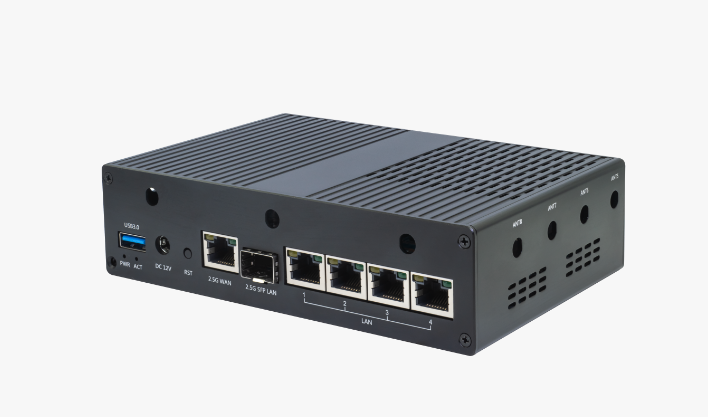
Define MSM466 as alternative name, to explicitly show the device is
supported using existing image (MSM460).  The only difference between
the MSM460 and MSM466 is that the MSM466 has external antenna.

Signed-off-by: Raylynn Knight <rayknight@me.com>
Link: https://github.com/openwrt/openwrt/pull/20937
Signed-off-by: Hauke Mehrtens <hauke@hauke-m.de>
Add the missing symbol to fix build halt on aarch64 targets:
```
Contiguous PTE mappings for user memory (ARM64_CONTPTE) [Y/n/?] (NEW) make[7]: *** [scripts/kconfig/Makefile:85: syncconfig] Error 1
make[6]: *** [Makefile:686: syncconfig] Error 2
```

Signed-off-by: Shiji Yang <yangshiji66@outlook.com>
Link: https://github.com/openwrt/openwrt/pull/20954
Signed-off-by: Christian Marangi <ansuelsmth@gmail.com>
The kernel update commit also changed the name of the dtsi node. Adapt
the other dts files.

Fixes: 738876e76b ("kernel: bump 6.12 to 6.12.58")
Signed-off-by: Hauke Mehrtens <hauke@hauke-m.de>
Fortinet FortiWiFi 30E (FWF-30E) is a UTM, based on Armada 385 (88F6820).

Specification:

- SoC          : Marvell Armada 385 88F6820
- RAM          : DDR3 1 GiB (4x Nanya NT5CC256M8IN-D1)
- Flash        : SPI-NOR 128 MiB (Macronix MX66L1G45GMI-10G)
- Ethernet     : 5x 10/100/1000 Mbps
  - Switch     : Marvell 88E6176
- Wireless     : Atheros AR9382 2x2 802.11abgn (mini-PCIe)
- LEDs/Keys    : 16x/1x
- UART         : "CONSOLE" port (RJ-45, RS-232C level)
  - port       : ttyS0
  - settings   : 9600bps 8n1
  - assignment : 1:NC , 2:NC , 3:TXD, 4:GND,
                 5:GND, 6:RXD, 7:NC , 8:NC
  - note       : compatible with Cisco console cable
- HW Monitoring: nuvoTon NCT7802Y
- USB          : 1x USB 3.0
- Power        : 12 VDC, 2 A
  - plug       : Molex 5557-02R

Flash instruction using initramfs image:

 1. Power on FWF-30E and interrupt to show bootmenu
 2. Call "[I]: System information." -> "[S]: Set serial port baudrate."
    and set baudrate to 9600 bps
 3. Call "[R]: Review TFTP parameters.", check TFTP parameters and
    connect computer to "Image download port" in the parameters
 4. Prepare TFTP server with the parameters obtained above
 5. Rename OpenWrt initramfs image to "image.out" and put to TFTP
    directory
 6. Call "[T]: Initiate TFTP firmware transfer." to download initramfs
    image from TFTP server
 7. Type "r" key when the following message is showed, to boot initramfs
    image without flashing to spi-nor flash

    "Save as Default firmware/Backup firmware/Run image without saving:[D/B/R]?"

 8. On initramfs image, backup mtd if needed

    minimum:

    - "firmware-info"
    - "kernel"
    - "rootfs"

 9. On initramfs image, upload sysupgrade image to the device and perform
    sysupgrade
10. Wait ~200 seconds to complete flashing and rebooting.
    If the device is booted with stock firmware, login to bootmenu and
    call "[B]: Boot with backup firmware and set as default." to set the
    first OS image as default and boot it.

Notes:

- Both colors of Bi-color LEDs on the front panel cannot be turned on at
  the same time.

- "PWR" and "Logo" LEDs are connected to power source directly.

- The following partitions are added for OpenWrt.
  These partitions are contained in "uboot" partition (0x0-0x1fffff) on
  stock firmware.

  - "firmware-info"
  - "dtb"
  - "u-boot-env"
  - "board-info"

Image header for bootmenu tftp:

  0x0 - 0xf  : ?
 0x10 - 0x2f : Image Name
 0x30 - 0x17f: ?
0x180 - 0x183: Kernel Offset*
0x184 - 0x187: Kernel Length*
0x188 - 0x18b: RootFS Offset (ext2)*
0x18c - 0x18f: RootFS Length (ext2)*
0x190 - 0x193: DTB Offset
0x194 - 0x197: DTB Length
0x198 - 0x19b: Data Offset (jffs2)
0x19c - 0x19f: Data Length (jffs2)
0x1a0 - 0x1ff: ?

*: required for initramfs image

MAC addresses:

(eth0): 70:4C:A5:xx:xx:42 (board-info, 0xd880 (hex))
WAN   : 70:4C:A5:xx:xx:43
LAN 1 : 70:4C:A5:xx:xx:44
LAN 2 : 70:4C:A5:xx:xx:45
LAN 3 : 70:4C:A5:xx:xx:46
LAN 4 : 70:4C:A5:xx:xx:47

Signed-off-by: Jimmy Cavanaugh <jamie@cavanaugh.co.nz>
Link: https://github.com/openwrt/openwrt/pull/20787
Signed-off-by: Hauke Mehrtens <hauke@hauke-m.de>
There is no reason to limit USB to 2.0 mode by default. This
limitation should be done when both gmac2 and USB are enabled.

Signed-off-by: Chukun Pan <amadeus@jmu.edu.cn>
Remove I2C, PCIe, PWM, UART and USB from the MT7987A SoC dtsi.
These should not be enabled by default, but rather enabled based
on the device.

Signed-off-by: Chukun Pan <amadeus@jmu.edu.cn>
The D-Link DNS-325 A1 is NAS with 2x HDD (3.5 inch) bays, 1x 10/100/1000Base-T port and 1x USB 2.0 port

Device specification:

    SoC: Marvell 88F6281-A1 1.2 GHz
    RAM: 256 MB (2xSEC K4T1G084QF-HCF7:128Mx8 @400 CL6)
    Flash: 128 MB (SAMSUNG 946 K9F1G08U0B PCB0)
    SATA: 2x internal SATA II drives
    Ethernet: 1x Gigabit (Marvell 88E1116R-NNC1)
    LED: 7x (white: Power, white/red: Right SATA Activity, USB Activity, Left SATA Activity)
    Key: 3x (Power, Reset, USB Copy/Unmount)
    Serial: 5 pin header (RXD,GAP,3.3V,GND,TXD), (115200,8,N,1), 3.3V TTL
    USB ports: 1x USB 2.0

Flash instruction:

NOTE: this process uses a serial connection. It will upgrade the bootloader and reset the bootloader environment variables

USB flash stick setup

    Format to FAT32 without mbr
    Copy these files to USB flash stick: dlink_dns-325-a1-initramfs-uImage dlink_dns-325-a1-squashfs-factory.bin dlink_dns-325-a1-squashfs-sysupgrade.bin u-boot.kwb (from u-boot-dns325 directory)

NAS setup

    Connect LAN cable between router and NAS device
    Connetc USB flash stick to NAS device
    Connect serial to NAS device

Boot from new u-boot and install it

    $ kwboot -p -b u-boot.kwb -B115200 -t /dev/ttyUSB0
    Power on NAS
    After download copleted and booted NAS device with new u-boot stop in bootloader by pressing any key
    => usb start
    => fatload usb 0 0x1000000 /u-boot.kwb
    => nand erase.part u-boot
    => nand write 0x1000000 u-boot ${filesize}
    => reset

Update MAC address in u-boot env

    Stop in bootloader by pressing any key
    Get your MAC address from label on chassis
    => setenv ethaddr XX:XX:XX:XX:XX:XX
    => saveenv

Install OpenWrt by flashing factory image from u-boot

    => usb start
    => fatload usb 0 0x1000000 /dlink_dns-325-a1-squashfs-factory.bin
    => nand erase.part ubi
    => nand write 0x1000000 ubi ${filesize}
    => reset

Based-on: #9296
Signed-off-by: Konstantin Meshkov <skyline@mail.ru>
[ refresh uboot patches ]
Link: https://github.com/openwrt/openwrt/pull/17924
Signed-off-by: Christian Marangi <ansuelsmth@gmail.com>
These patches fix the remaining issues with BCM5325 switches and allow
dropping the default VLAN on Huawei HG556a.

Signed-off-by: Álvaro Fernández Rojas <noltari@gmail.com>
This device has one USB2.0 port, plus ethernet, 2x wifi, ethernet, xPON
and VoIP.

Installation instructions: (Assuming root shell via SSH or serial)
1. Place OpenWrt TRX file on a USB stick formatted VFAT
2. Plug in the stick to the modem
3. Type: mtd write -f -e tclinux /mnt/usb2_sda1/<name of file>.trx tclinux

At this point, both OpenWrt and the vendor OS will be installed
because the device has space for two operating systems. Switch the OS
to boot to OpenWrt:

1. mtd readflash tmpdata 999999999 0 reservearea
2. echo -n '0' | dd of=./tmpdata bs=1 count=1 seek=397311 conv=notrunc
3. mtd write -f -e reservearea ./tmpdata reservearea
4. reboot

WARNING: While you can install with SSH alone, you need serial to use
OpenWrt on EcoNet devices because the Ethernet driver has not yet been
developed.

Signed-off-by: Caleb James DeLisle <cjd@cjdns.fr>
Link: https://github.com/openwrt/openwrt/pull/20580
Signed-off-by: Hauke Mehrtens <hauke@hauke-m.de>
The parameters must be aligned based on the last opened parenthesis
(+1). If this not a multiple of the tab size (8) then the rest
alignment must be done using spaces.

Signed-off-by: Sven Eckelmann <sven@narfation.org>
Link: https://github.com/openwrt/openwrt/pull/20906
Signed-off-by: Hauke Mehrtens <hauke@hauke-m.de>
uint(8|16|32|64)_t and int(8|16|32|64)_t types should not be used in
kernel code. The shorter s(8|16|32|64) and u(8|16|32|64) or the
endianness specific versions (le*, be*) must be used instead.

Signed-off-by: Sven Eckelmann <sven@narfation.org>
Link: https://github.com/openwrt/openwrt/pull/20906
Signed-off-by: Hauke Mehrtens <hauke@hauke-m.de>
It is preferred in the Linux kernel to use the short type name
"unsigned long" instead of "unsigned long int". The same is true
for short and the signed version of the types.

Signed-off-by: Sven Eckelmann <sven@narfation.org>
Link: https://github.com/openwrt/openwrt/pull/20906
Signed-off-by: Hauke Mehrtens <hauke@hauke-m.de>
It is not allowed in the Linux kernel to have the condition and
the actual statement(s) on the same line. This is required to
make it easier to identify the body of an if/do/while/for/..

Signed-off-by: Sven Eckelmann <sven@narfation.org>
Link: https://github.com/openwrt/openwrt/pull/20906
Signed-off-by: Hauke Mehrtens <hauke@hauke-m.de>